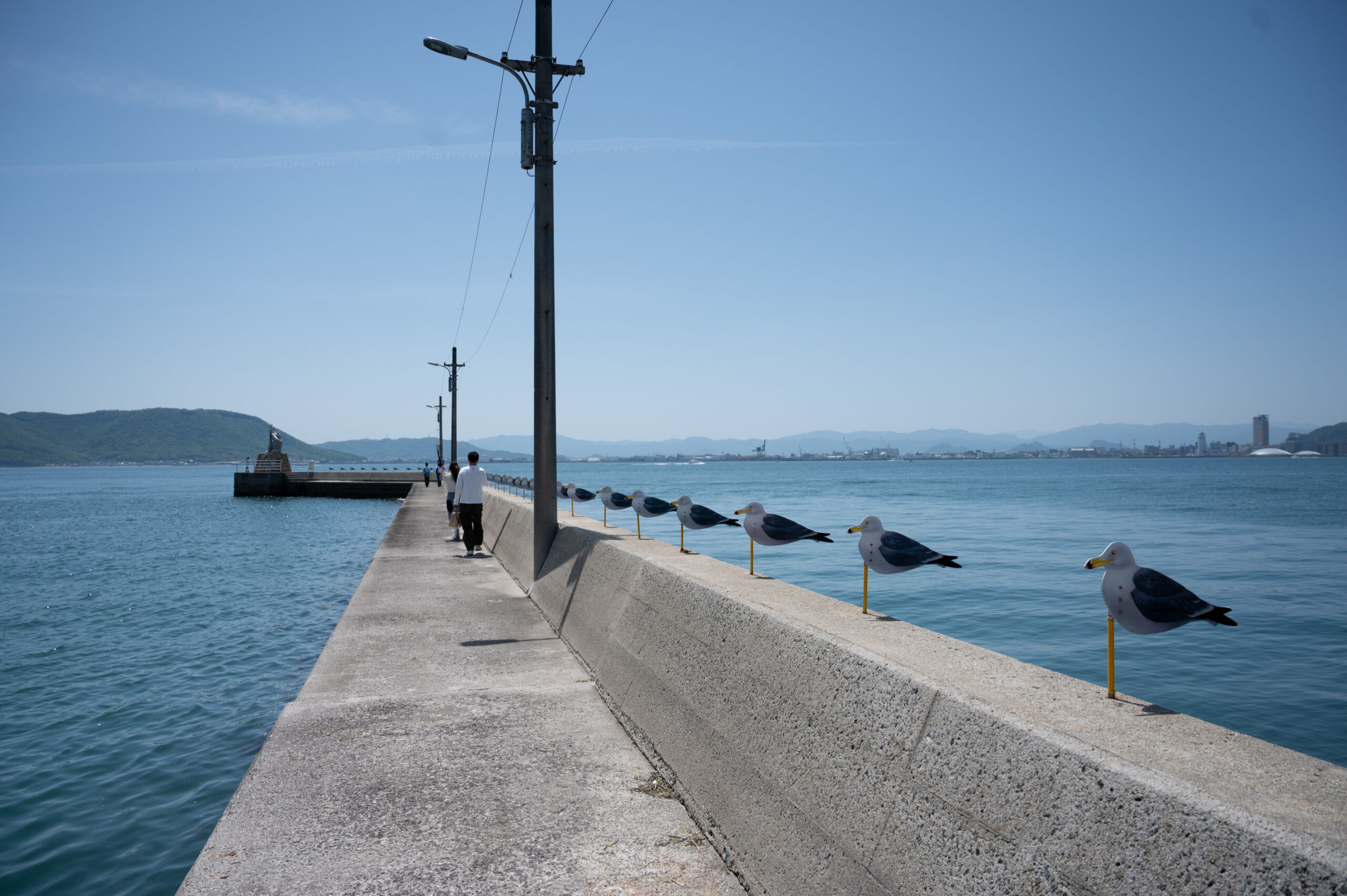
Megijima Island in Kagawa Prefecture, Japan is best known as the legendary “Ogre Island” (Onigashima) from the Momotaro folktale — but just steps from the ferry terminal, it’s also home to a cluster of striking public art installations from the Setouchi Triennale. Here’s a guide to the three must-see art pieces waiting right at the port: the Seagull Parking Lot, 20th Century Recollection, and a surprising Moai statue.
About Megijima Island
Megijima is only a 20-minute ferry ride from Takamatsu Port in the Seto Inland Sea. While most visitors come for the Onigashima Great Cave, the island has quietly held on to several outdoor artworks installed for the 2010 Setouchi Triennale, all clustered within walking distance of the port.
The Seagull Parking Lot: 300 Wind-Powered Seagulls
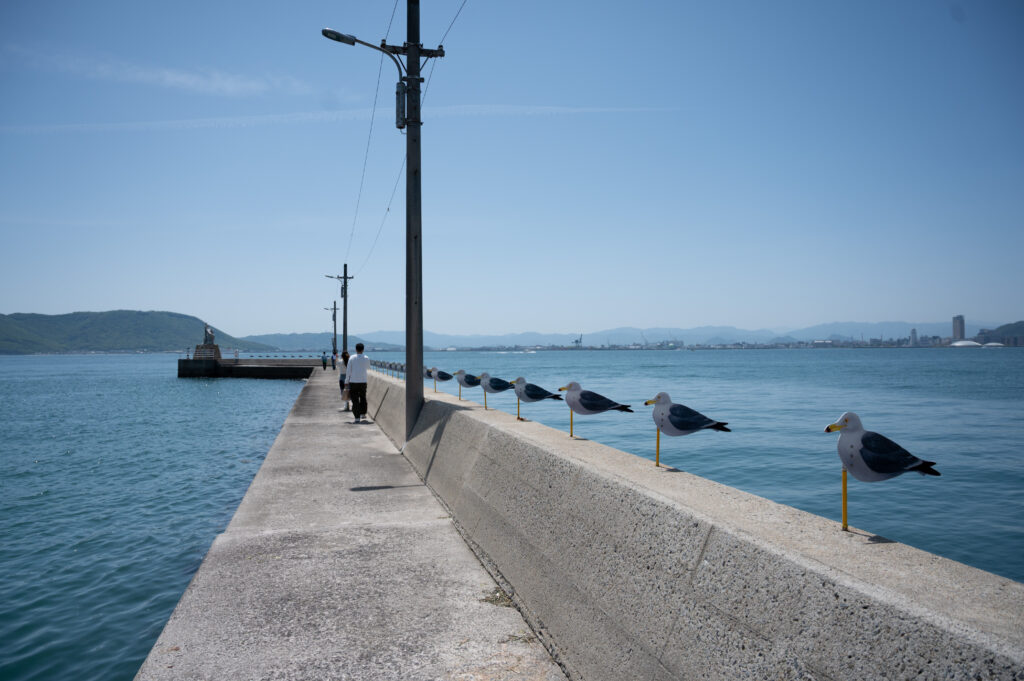
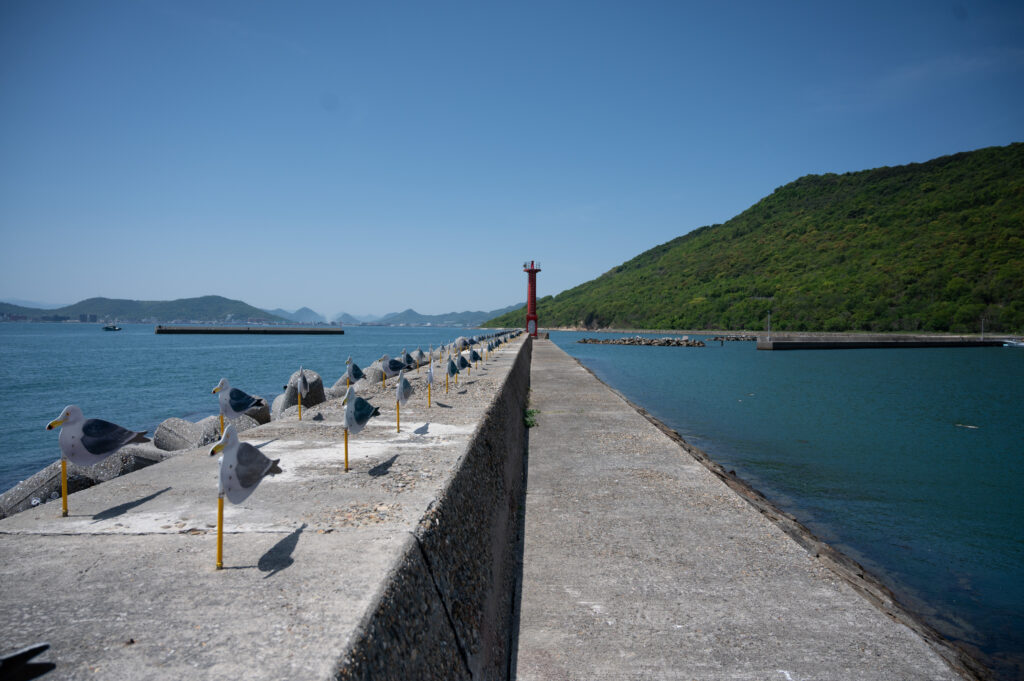
Lined up along the breakwater near Megi Port, this installation by artist Takahito Kimura features roughly 300 seagull-shaped weathervanes. Each figure’s pivot point is deliberately offset from center, so the whole flock swings around together whenever the Seto Inland Sea’s seasonal winds pick up — a striking way of making an invisible wind visible.
- Artwork: Seagull Parking Lot
- Artist: Takahito Kimura
- Installed: 2010, Setouchi Triennale
- Tip: Visit on a breezy day to catch the seagulls turning in unison
Note that some of the seagulls may be removed during winter (roughly November to March) to protect them from strong seasonal winds, so it’s worth checking ahead if you’re visiting in that period.
20th Century Recollection: A Bronze Piano with Sails
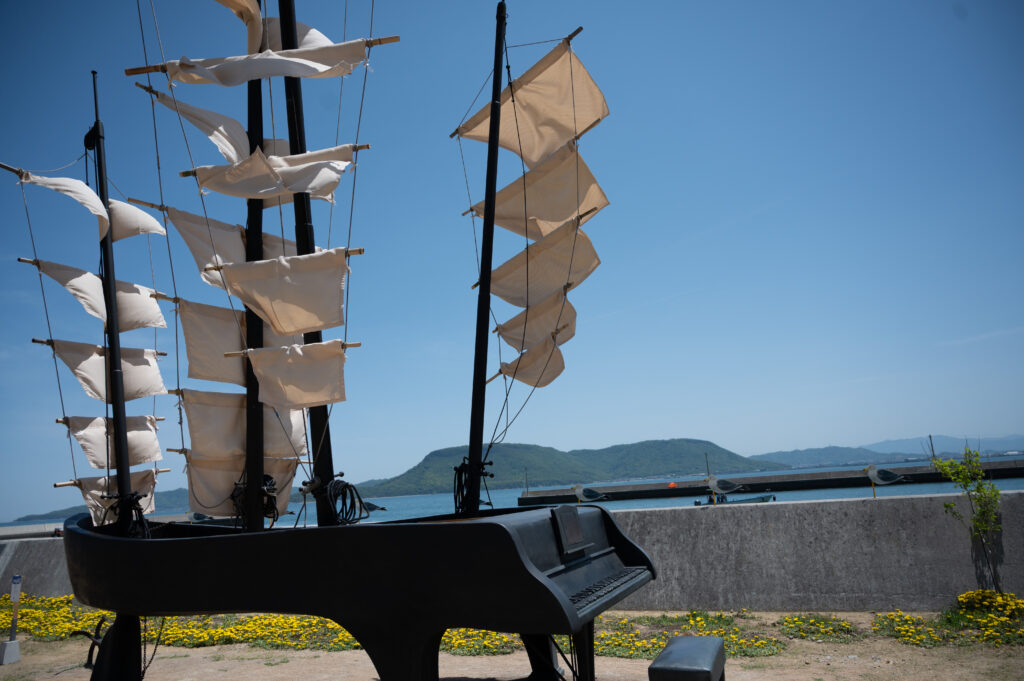
Set along the coastline near the port, this sound installation by artist Funjo Hagetaka pairs a bronze grand piano with four ship-like sails. The sound of waves and wind against the sails blends with the piano’s form, creating a piece that can even be admired from the ferry as it approaches.
- Artwork: 20th Century Recollection
- Artist: Funjo Hagetaka
- Materials: Bronze grand piano and four sails
- Tip: On a calm day, take a moment to listen for how the waves seem to “play” the piano
The Moai Statue: A Practice Piece from an Easter Island Restoration Project
Standing near the port’s tourist information center, “Oni ga Shima Oni no Yakata,” is a moai statue that has nothing to do with the art triennale at all. It was created by Tadano, a globally known crane manufacturer headquartered in Takamatsu. From 1991, Tadano took part in a restoration project to re-erect the fallen moai statues on Easter Island, and this replica was built as a practice piece for the lifting and installation work. After the project’s completion, Tadano donated the replica to the city of Takamatsu, where it was placed on Megijima.
- Height: approximately 3.9 meters
- Weight: approximately 10.8 tons
- Material: tuff stone, the same type used for the original Easter Island moai
- Origin: a practice replica made by crane manufacturer Tadano for its Easter Island moai restoration project
It’s a genuinely surprising find for most visitors — a little piece of Chile sitting quietly on a small Japanese island.
Megijima Art at a Glance
| Artwork | Artist | Type | Highlight |
|---|---|---|---|
| Seagull Parking Lot | Takahito Kimura | Kinetic wind art | ~300 seagulls that turn together in the wind |
| 20th Century Recollection | Funjo Hagetaka | Sound installation | Bronze piano and sails that resonate with the waves |
| Moai Statue | Tadano (crane manufacturer) | Commemorative monument | Practice replica from an Easter Island restoration project |
Getting There
Ferries run from Takamatsu Port to Megi Port on Megijima in about 20 minutes. All three artworks are within a short walk of the port, making them an easy stop even if you only have time between ferries.
FAQ
Is the art on Megijima always on display? The Seagull Parking Lot may have some pieces removed during winter (roughly November–March) for wind protection, but 20th Century Recollection and the Moai statue can be seen year-round.
Is there an admission fee? No — all three works are permanently installed outdoors and free to view.
How much time should I plan for? Since all three pieces are close to the port, about 30 minutes on foot is enough to see everything.
Why is there a Moai statue on Megijima? It’s a practice replica made by Takamatsu-based crane manufacturer Tadano for its Easter Island moai restoration project, later donated to the city after the project wrapped up.
Final Thoughts
Megijima offers more than its famous ogre cave — right at the port, you’ll find a flock of wind-powered seagulls, a piano that seems to sing with the sea, and an unexpected link to a restoration project on the other side of the Pacific. It’s a rewarding short walk for anyone passing through on the way to or from the ferry.
コメント