East of central Sapporo, inside Nopporo Forest Park, the Historical Village of Hokkaido (Hokkaidō Kaitaku-no-Mura) is an open-air museum of buildings from the Meiji era to the early Showa era, relocated or reconstructed from all over Hokkaido.
Government offices in Western style, merchant houses, a soba shop, an inn, a doctor’s clinic and more line the streets, and a horse-drawn railway runs down the middle. In this article, with photos from my visit in September 2024, I introduce the highlights of the village, tips for getting around, and admission, opening hours and access.
*Admission, hours and other details were checked on the official website on October 23, 2026. Please check the latest information before you go.
- What Is the Historical Village of Hokkaido?
- The Former Sapporo Head Office and Other Offices of the Hokkaido Development Commission
- The Former Temiya Station Master’s Residence, Linked to Otaru’s Railway
- The Town Area, Lined with Merchant Houses, a Soba Shop and an Inn
- The Horse-Drawn Railway Running Through the Village
- Admission, Opening Hours and Access
- Tips for Getting Around
- Summary
What Is the Historical Village of Hokkaido?
The Historical Village of Hokkaido is an open-air museum that opened in April 1983. The grounds cover 54.2 hectares, and the village map shows 52 numbered buildings.
The buildings are divided into four main areas.
- Town area: government offices, shops, houses and schools from Sapporo, Otaru, Asahikawa and other towns
- Fishing village area: storehouses and fishermen’s houses connected with herring fishing
- Farm village area: a post station (ekitei), tondenhei (farmer-soldier) houses, and farmhouses and barns
- Mountain village area: a forest railway engine shed, a logging camp and a charcoal-making hut
The entrance is a 4/5-scale reconstruction of the Sapporo Station building (Sapporo Teishajō) built in 1908 (Meiji 41). Pass through it, and the street of the town area begins.
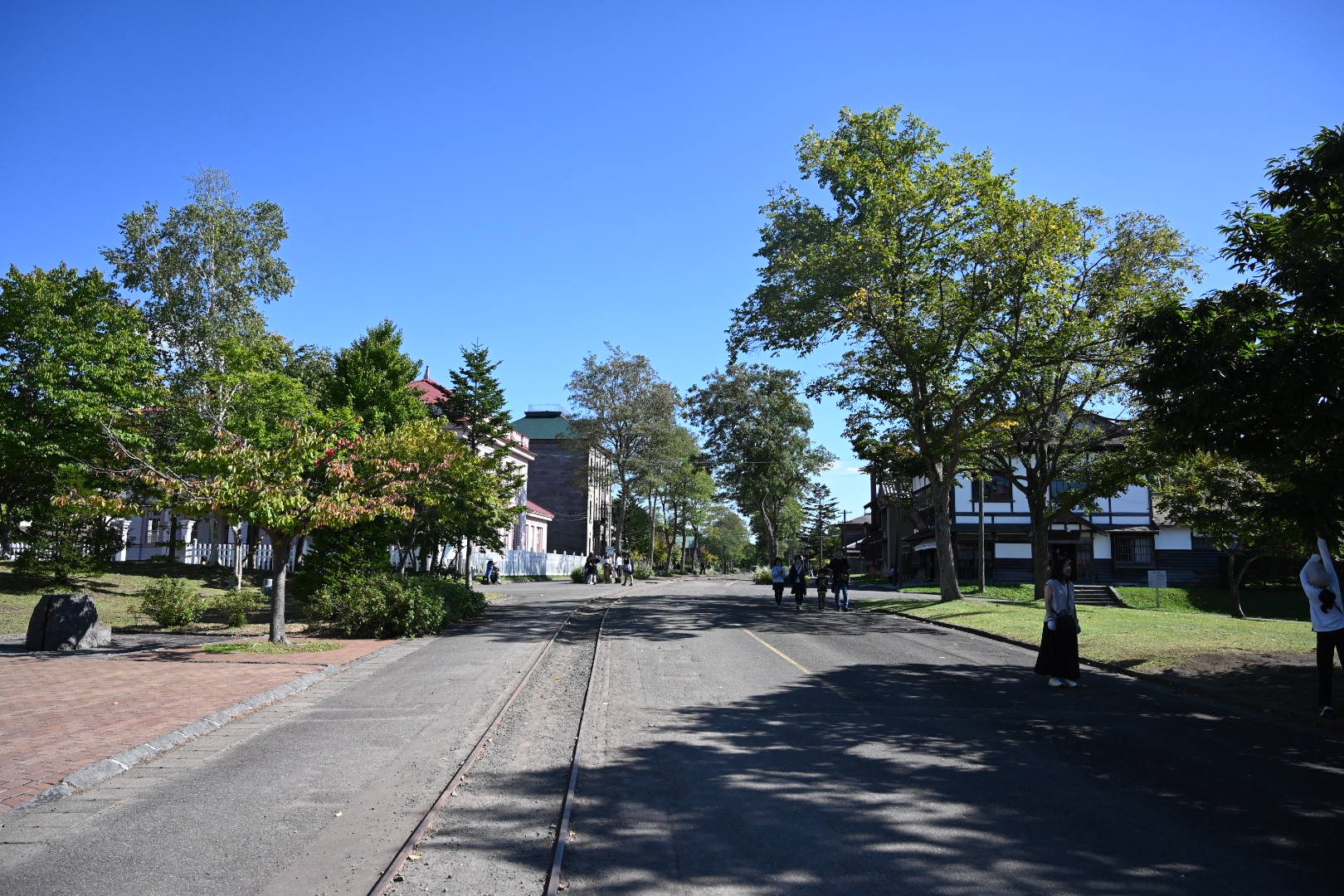
The street just past the entrance. The tracks of the horse-drawn railway run down the middle.
The Former Sapporo Head Office and Other Offices of the Hokkaido Development Commission
Former Sapporo Head Office of the Hokkaido Development Commission (Visitor Center)
The first building you see as you enter the street is the Former Sapporo Head Office of the Hokkaido Development Commission (Kaitakushi), with its white walls, green window frames and a dome on the roof.
In 1869 (Meiji 2), the Meiji government chose Sapporo as the center of government for Hokkaido, and this head office was completed in October 1873 (Meiji 6). The original building burned down in a fire in 1879 (Meiji 12), and the building you see today is a reconstruction. In the village, it is used as the visitor center.
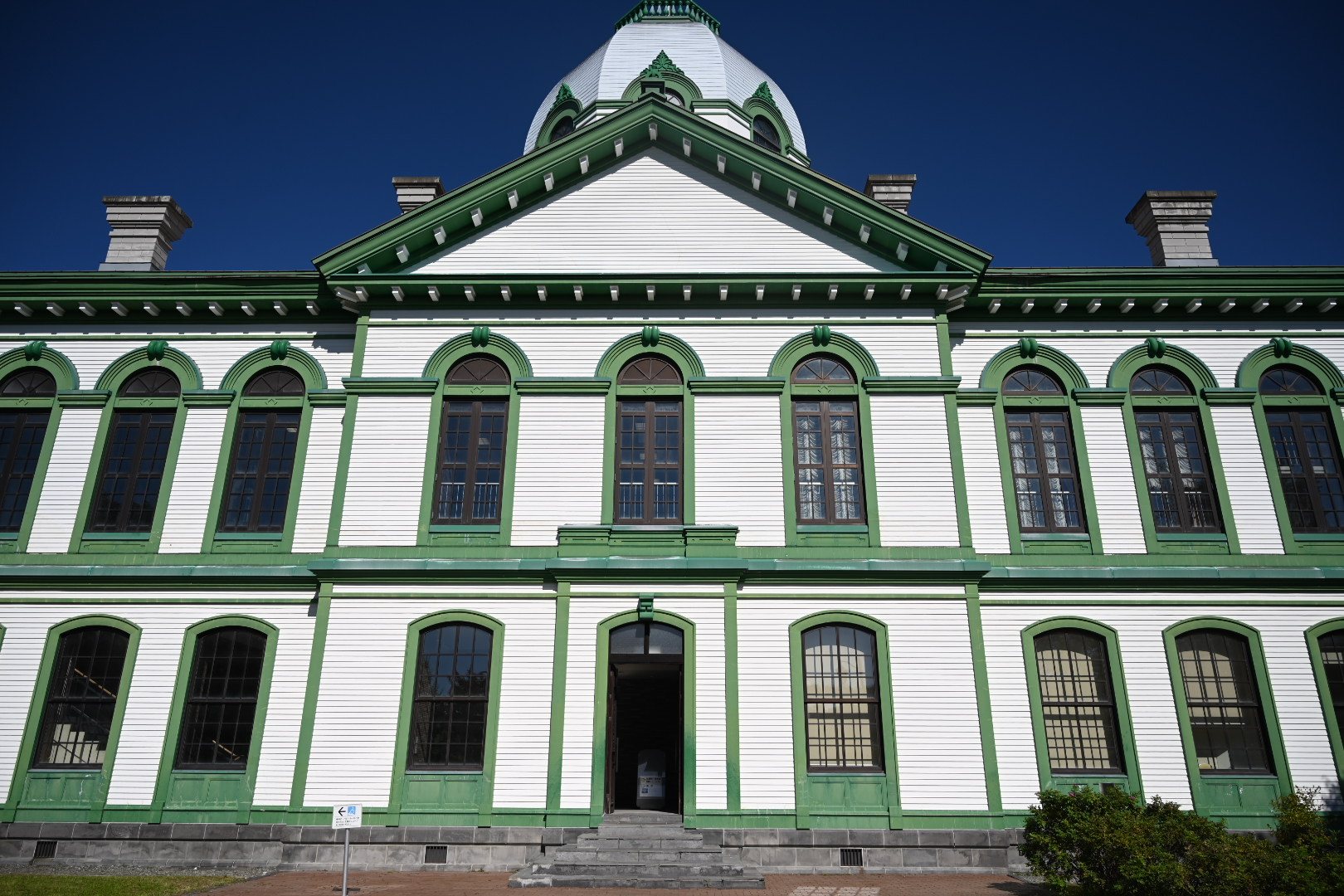
The Former Sapporo Head Office of the Hokkaido Development Commission (reconstruction). It is now the visitor center.
Seeing Western-style buildings and wooden buildings displayed side by side, I felt that this was the era when Hokkaido was moving from wooden buildings to Western-style architecture.
Former Industrial Bureau Office of the Hokkaido Development Commission (National Important Cultural Property)
Walking on from the head office, you come to the Former Industrial Bureau Office of the Hokkaido Development Commission, with green decorations around its entrance. Built in 1877 (Meiji 10), it is the only surviving office building of the Hokkaido Development Commission. It was designated a National Important Cultural Property on August 7, 2013.
The Industrial Bureau of the Hokkaido Development Commission built roads, bridges, government offices and schools, and also made many kinds of products. The building originally stood at Ōdōri Higashi 2-chōme in Sapporo.
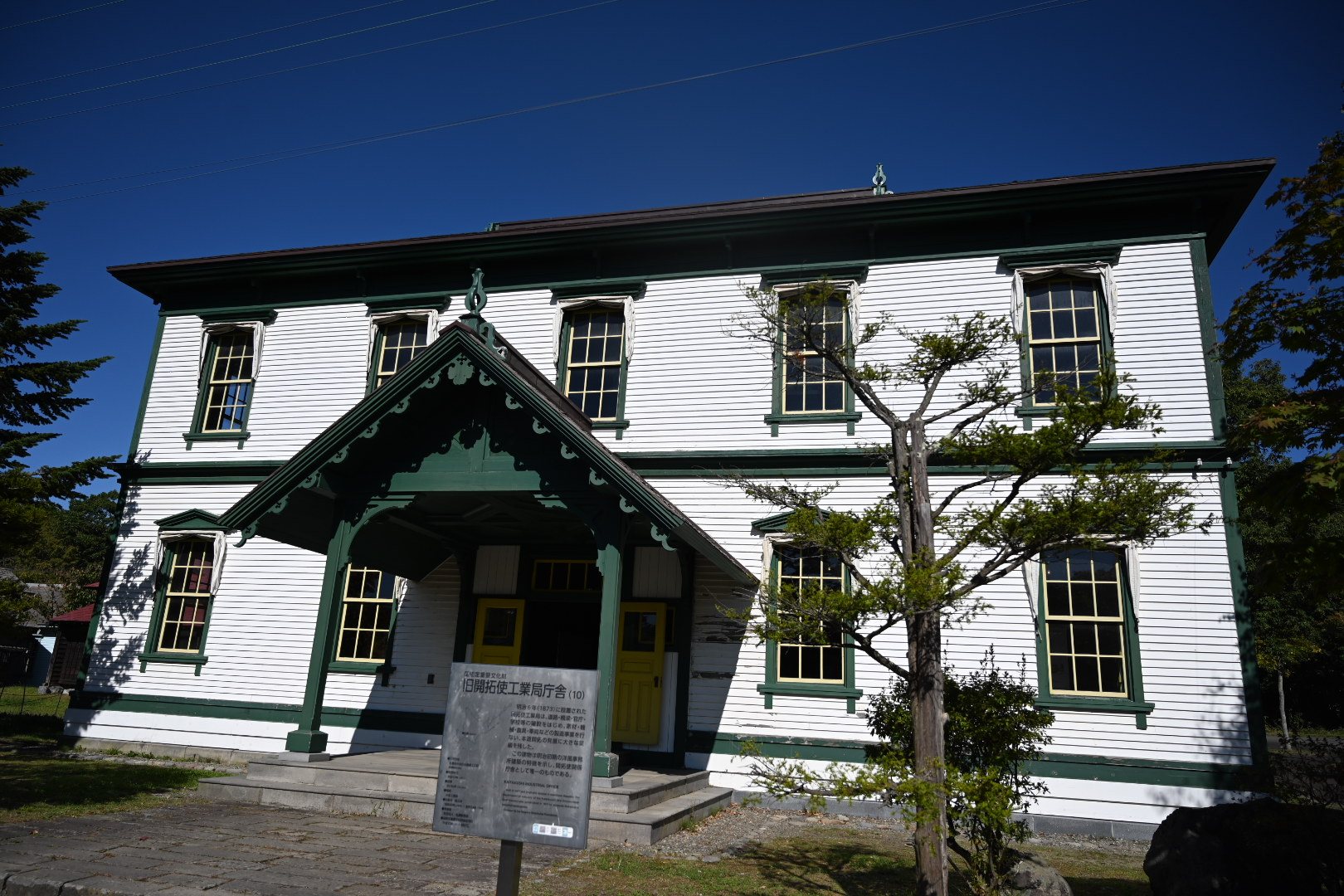
The Former Industrial Bureau Office. It is a Western-style office building from the early Meiji era.
Former Urakawa Subprefectural Office
The Western-style building with a red roof and pale pink walls is the Former Urakawa Subprefectural Office. It was built in the town of Urakawa in 1919 (Taishō 8), paid for by the local community and the Hokkaido government. In 1932 (Shōwa 7) it was renamed the Hidaka Subprefectural Office, and after it was sold to the town of Urakawa in 1956 (Shōwa 31), it was used as a public hall and a museum.
The marker post in front of the building reads “Urakawa-mura, Urakawa-chō, Urakawa-gun,” showing where it originally stood.
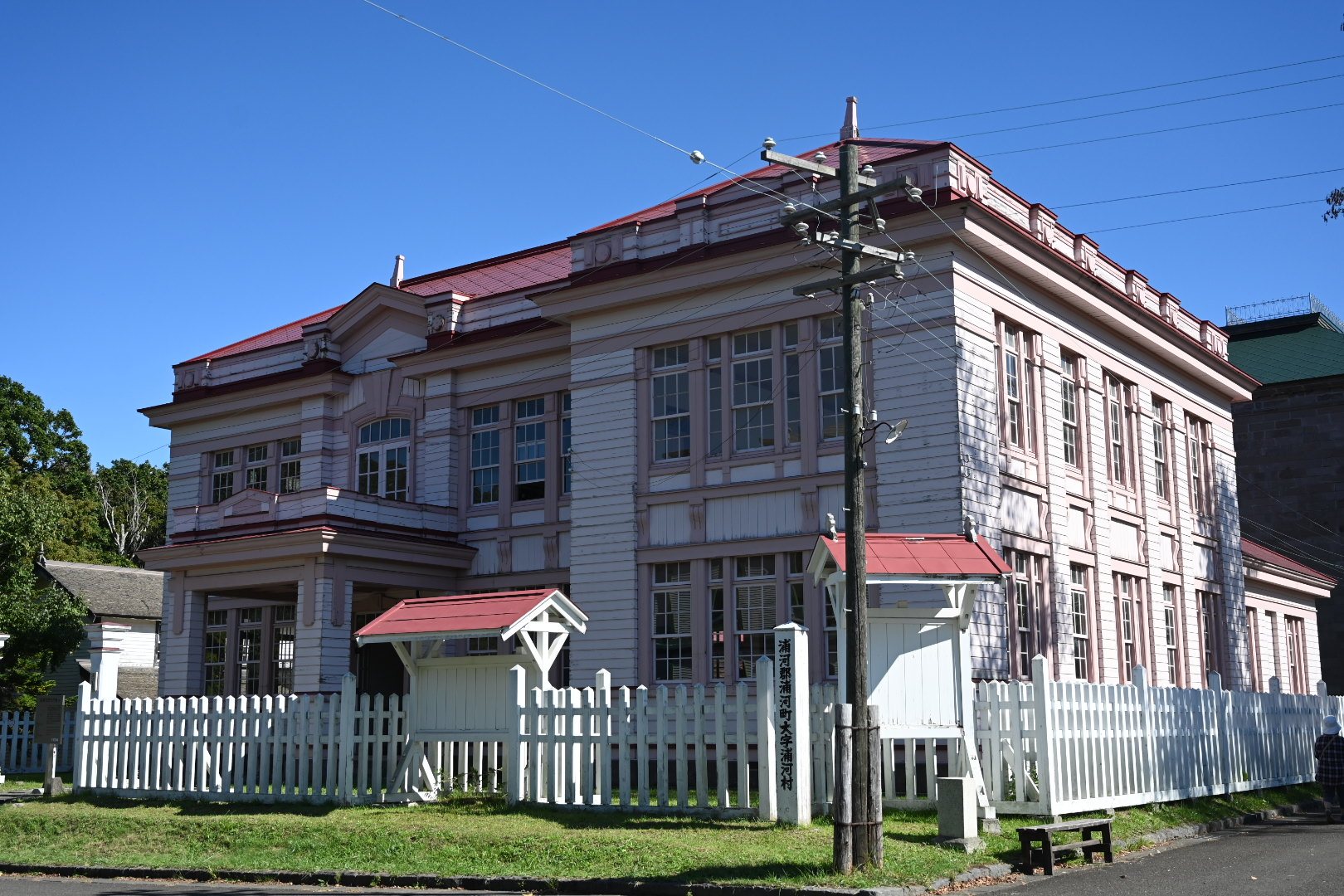
The Former Urakawa Subprefectural Office. The marker post in front shows its original location.
The Former Temiya Station Master’s Residence, Linked to Otaru’s Railway
The two-story wooden building with board walls is the Former Temiya Station Master’s Residence. It was built in 1884 (Meiji 17) in Temiya, Otaru, as housing for staff of the Horonai Railway. There were six buildings of the same design, and this one was called “Temiya Residence No. 5.” Western building methods were used for its framework and sash windows.
Temiya is where Hokkaido’s railways began. The site is now the Otaru City Museum Main Building, where you can see historic railcars (Otaru City Museum Main Building: 50 Historic Railcars at the Birthplace of Hokkaido’s Railways).
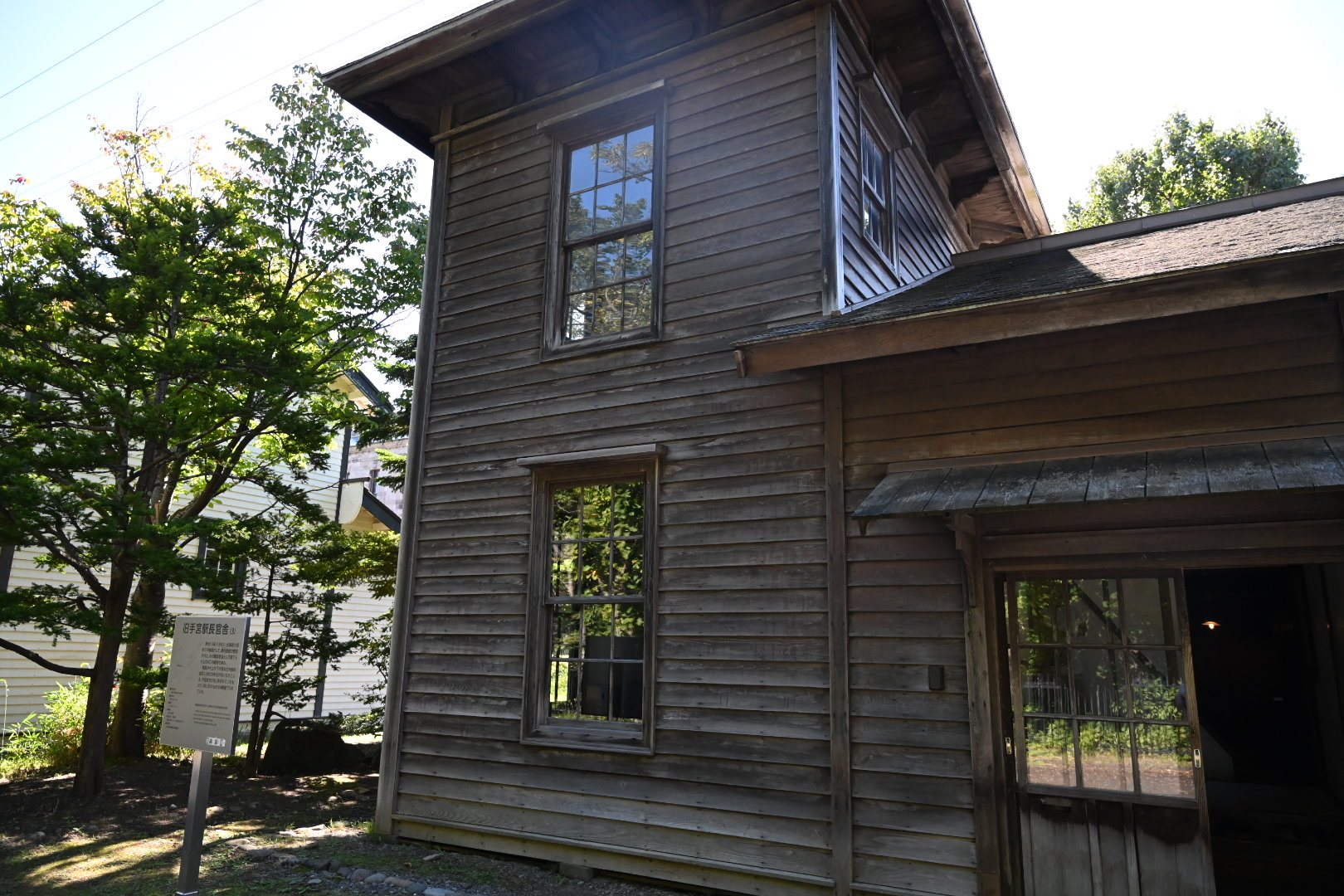
The Former Temiya Station Master’s Residence. The information board on the left explains the building.
You can go inside many of the buildings in the village. Some have furniture and tools of the time placed in their tatami rooms and on their verandas.
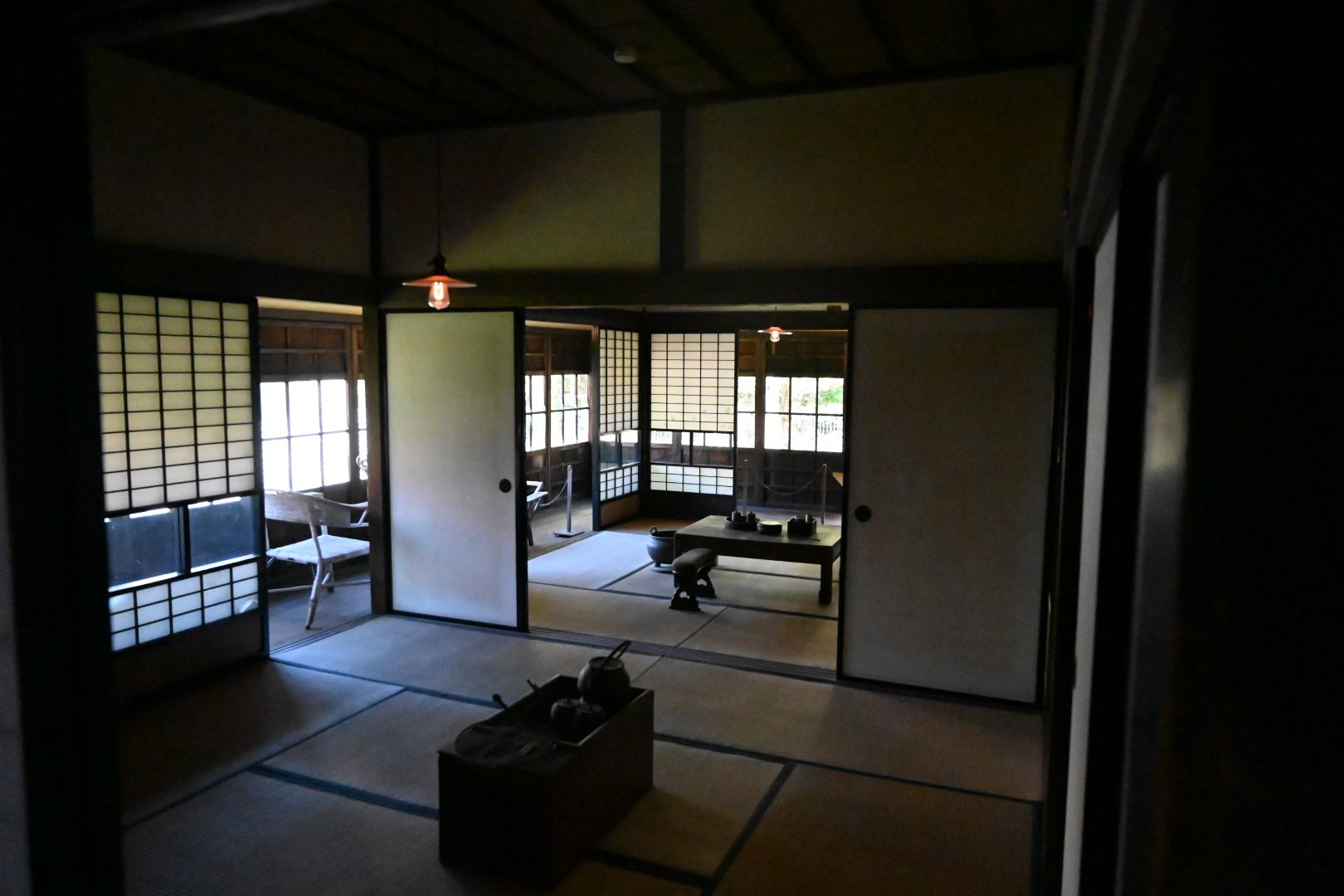
A tatami room inside a building. Rattan chairs were set out on the veranda.
The Town Area, Lined with Merchant Houses, a Soba Shop and an Inn
As you go further along the street, the Western-style government offices give way to a townscape of shops and homes.
Former Ōishi Sanseidō Branch Store (a Confectionery Shop from Obihiro)
The small shop with the “Ōishi Sanseidō Branch” sign is a confectionery shop from Obihiro. Ōishi Taizō, who had trained at a confectionery shop in Sapporo, began making and selling sweets on Denshin-dōri street in Obihiro in 1925 (Taishō 14), and the shop was run by two generations, father and son, until 1955 (Shōwa 30).
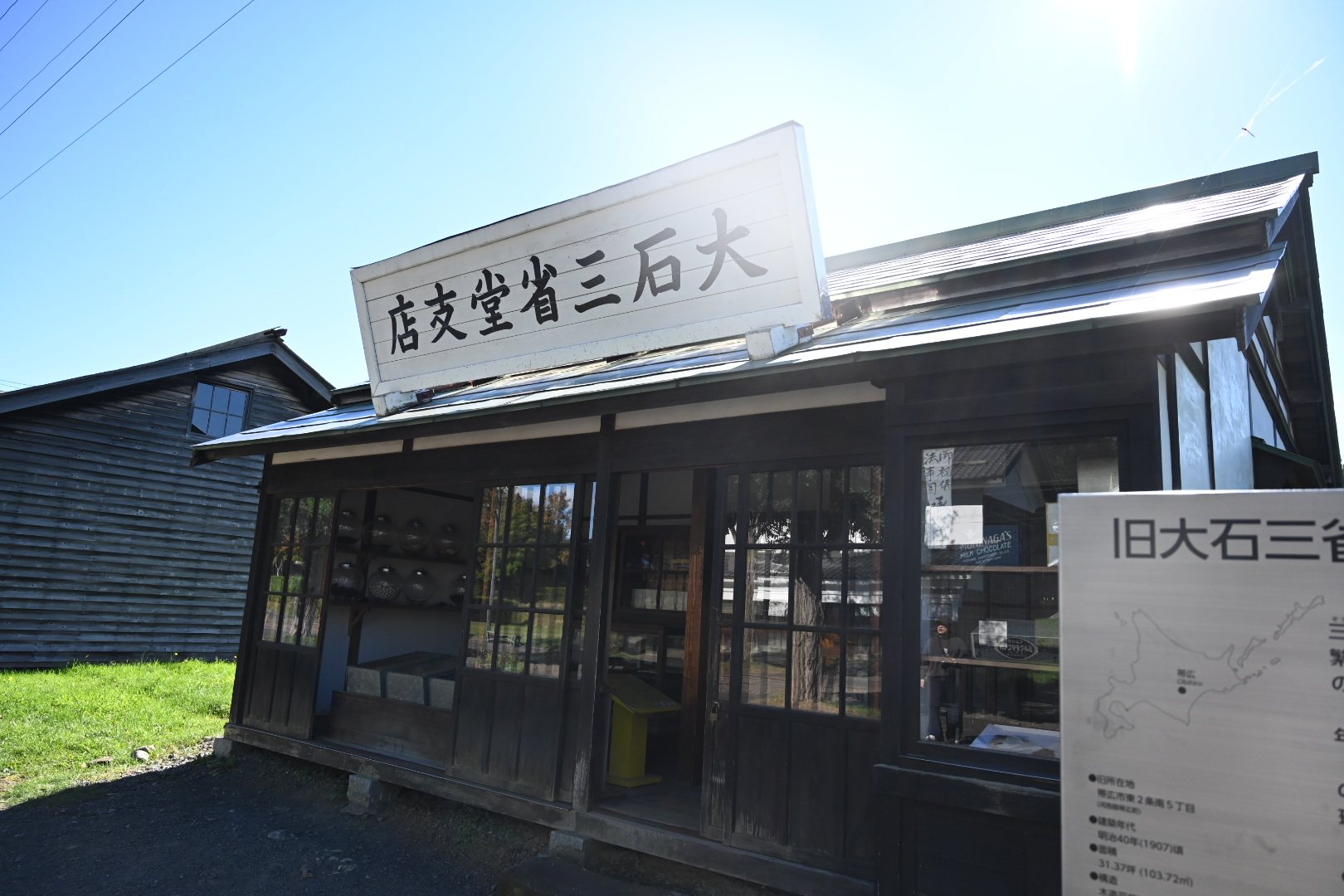
The Former Ōishi Sanseidō Branch Store. Glass jars can be seen through the window.
Inside the shop, old-fashioned sweets were displayed in glass cases and tin boxes.
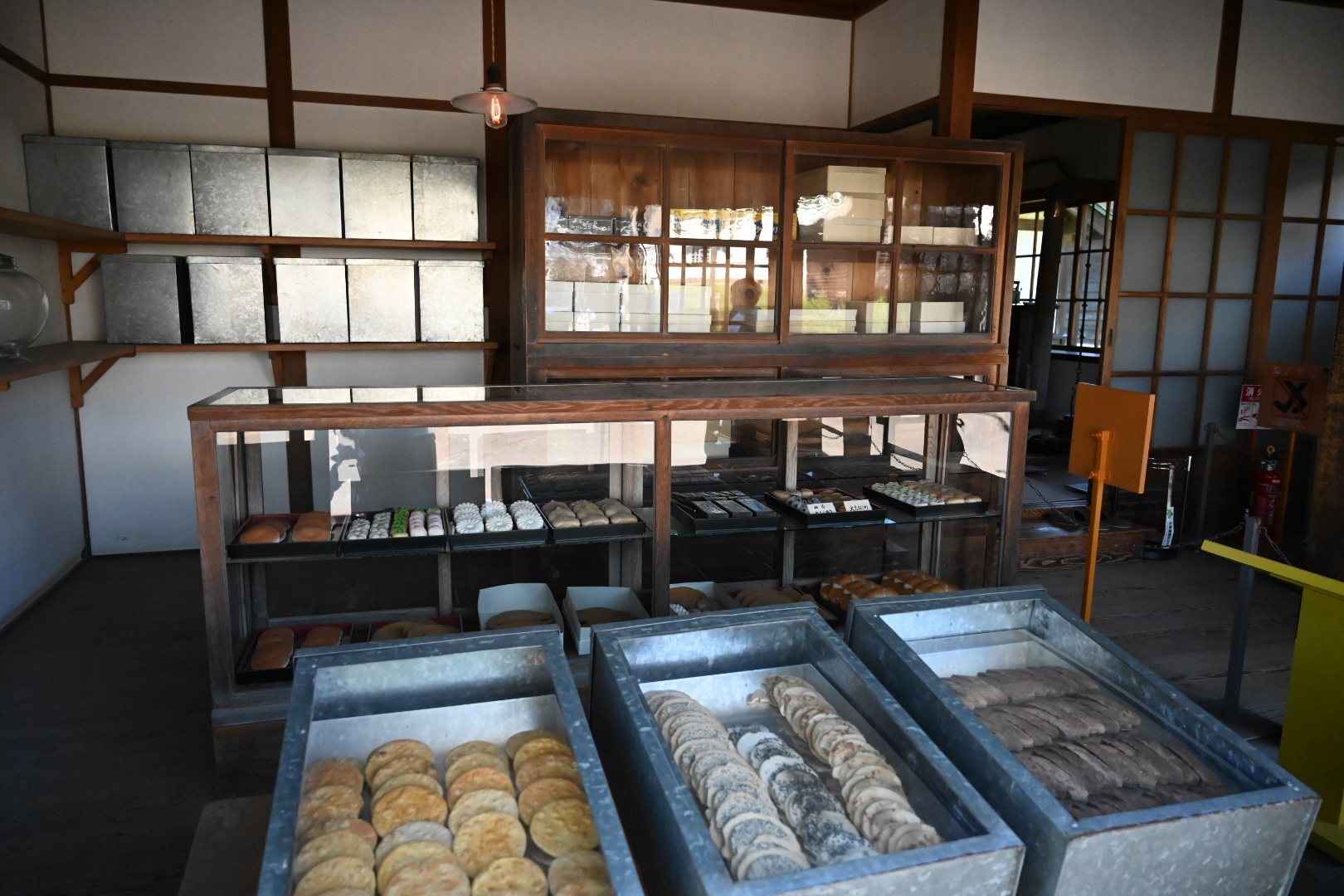
Sweets displayed in glass cases and tin boxes.
Former Sanmasu Kawamoto Soba Shop (Otaru)
The building with a large “Soba” sign and a brick chimney is the Former Sanmasu Kawamoto Soba Shop. It was built by Kawamoto Tokumatsu, who moved from Ishikawa Prefecture to Otaru around 1885 (Meiji 18), trained at a soba shop, and then took over its name. It stood in one of the busiest parts of Otaru and was used for meals and banquets. The main building dates from around 1909 (Meiji 42).
I also introduce the history of the town of Otaru in Otaru Canal History: Why Was It Built?
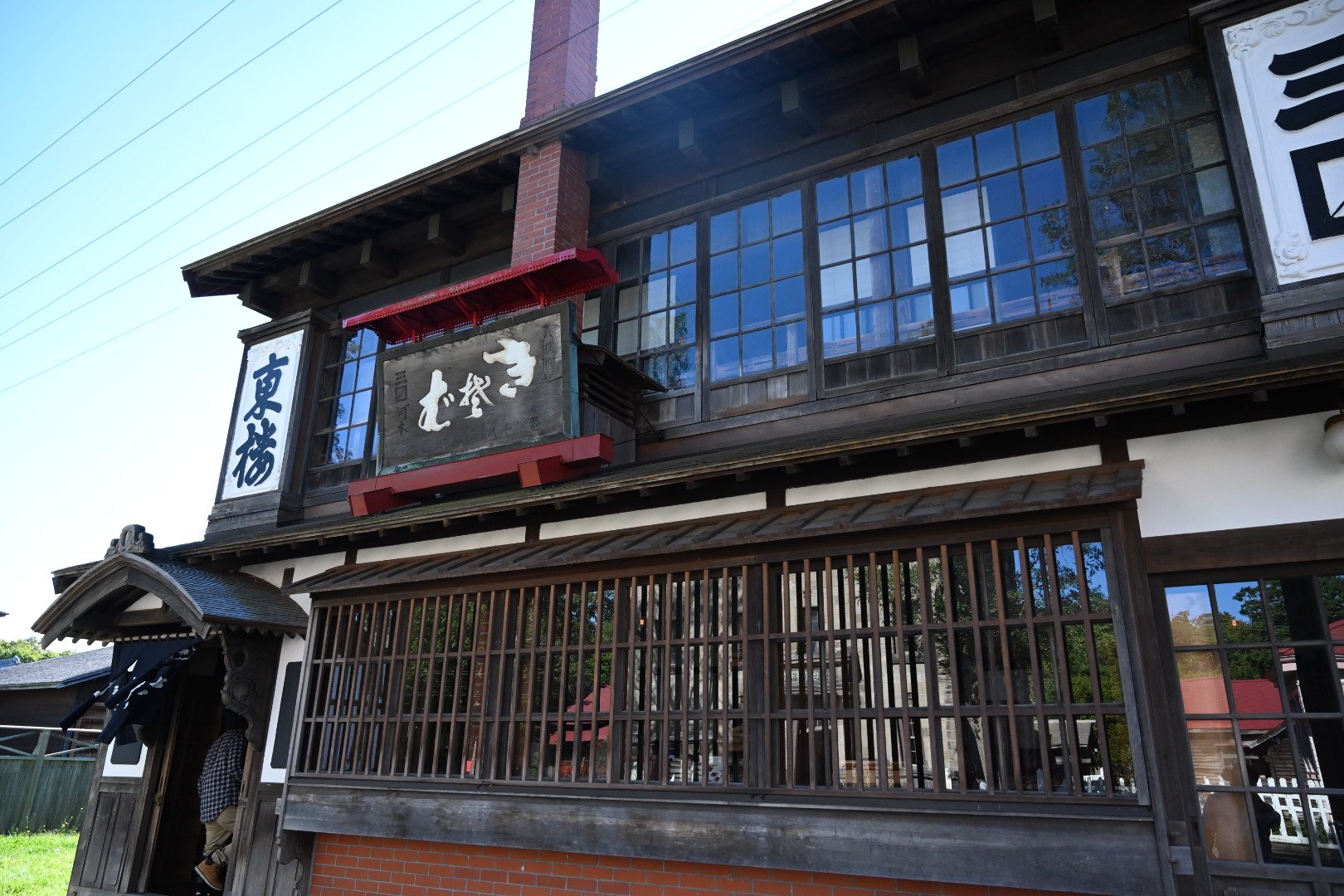
The Former Sanmasu Kawamoto Soba Shop. Its large second-floor windows and first-floor latticework stand out.
Former Kishō Inn (Nagayama, Asahikawa)
【要確認:旅館名「来正」の読み。訳では Kishō Inn・Kishō Sakuma としたが、公式の英語ページ(kaitaku.or.jp/en/)では「Kurumasa Inn」。案1:見出し・本文・写真の説明・alt を Kurumasa Inn に、人名を Kurumasa Sakuma に直す 案2:今のまま】
The building with the large “Machiai Ryokan” (waiting room and inn) sign is the Former Kishō Inn. Kishō Sakuma, who had settled in Higashi-Nagayama, Asahikawa, as a tondenhei farmer-soldier, opened a waiting room in front of Nagayama Station in 1898 (Meiji 31) after leaving the service. After damage from a flood in 1918 (Taishō 7), he rebuilt it the following year, 1919 (Taishō 8), as a building that served as both an inn and a waiting room.
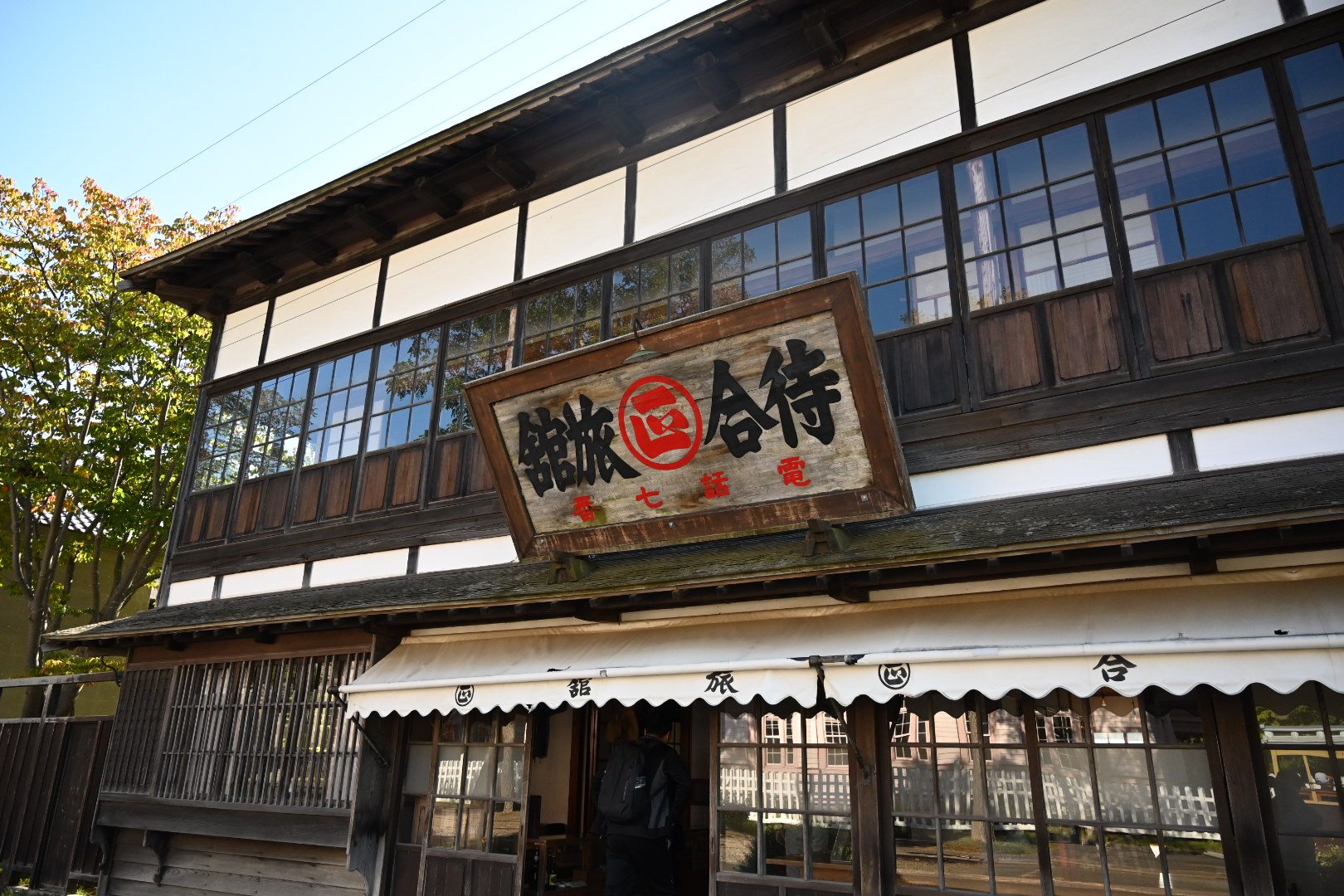
The Former Kishō Inn. It was an inn that also served as a waiting room in front of the station.
The Horse-Drawn Railway Running Through the Village
The village’s signature attraction is the horse-drawn railway, where a horse pulls a passenger car along the tracks. In winter, a horse-drawn sleigh runs in place of the railway.
According to the 2026 timetable, it runs from April 11 to the end of November (except on days the village is closed), covering about 500 meters from the front of the former Sapporo Station building to the front of the Sōkeshu-omabetsu Post Station in about 5 minutes. The fare is 250 yen per ride for ages 15 and over and 100 yen for ages 3 to 14 (cash only), and each run carries up to 10 passengers. It may be suspended in heavy rain or snow.
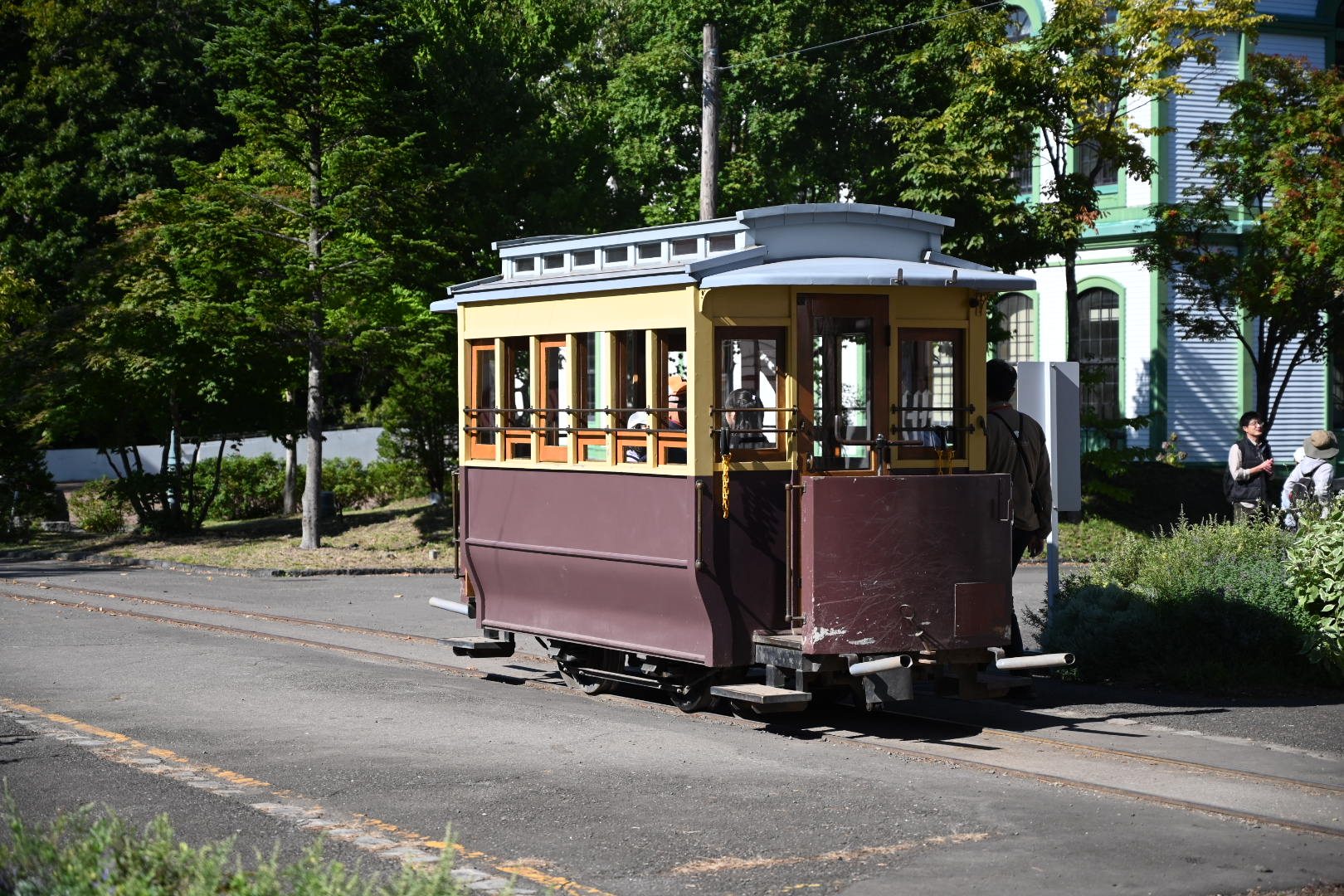
The passenger car of the horse-drawn railway. It runs on the tracks along the street.
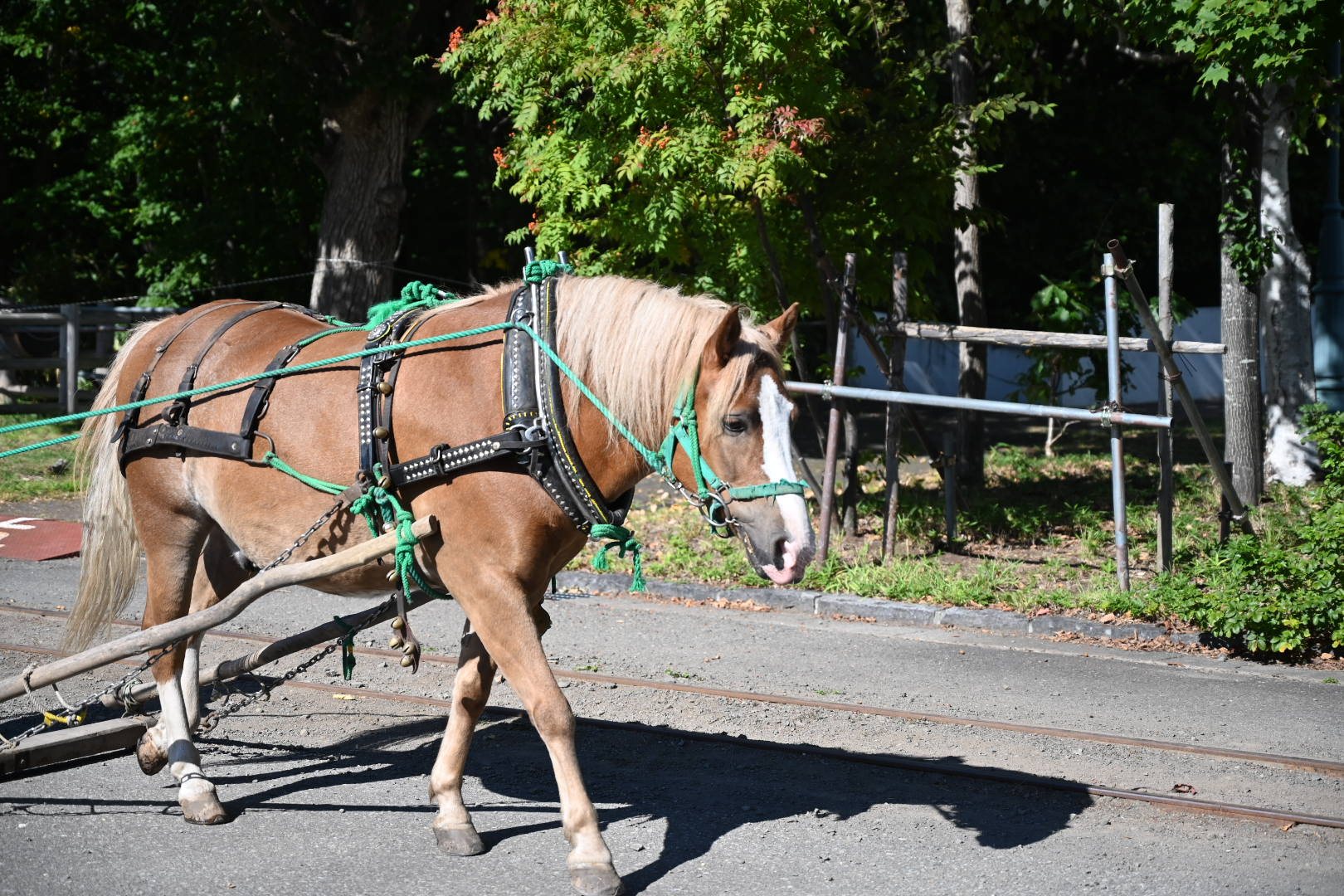
The horse that pulls the car. It walks right alongside the tracks.
Admission, Opening Hours and Access
Opening Hours and Closing Days
| Period | Opening hours | Closed |
|---|---|---|
| May–September | 9:00–17:00 (last entry 16:30) | None |
| October–April | 9:00–16:30 (last entry 16:00) | Mondays (the next day if Monday is a national holiday or substitute holiday), December 29–January 3 |
During the Sapporo Snow Festival, the village is open on Mondays too.
Admission
- Adults, university students and high school students: 1,000 yen
- Free: junior high school students and younger, people aged 65 and over, and holders of a disability certificate
- High school students enter free on Saturdays, Children’s Day, Culture Day and some other days
- Hokkaido residents (proof required) pay 800 yen, and groups of 10 or more receive a discount
- A combined ticket with the nearby Hokkaido Museum and an annual passport (1,800 yen) are also available
Please check group rates and the price of the combined ticket in the “User Guide” (Goriyō Annai) on the official website.
Access
- Address: 札幌市厚別区厚別町小野幌50-1 (50-1 Konopporo, Atsubetsu-chō, Atsubetsu-ku, Sapporo)
- Bus: From JR Shin-Sapporo Station or Shin-Sapporo Station on the Tōzai Subway Line, take the JR Hokkaido Bus bound for “Kaitaku-no-Mura” from Stop No. 10 in the North Lane of the Shin-Sapporo Bus Terminal. It takes about 20 minutes; get off at the last stop
- Car: There is a free parking lot (400 spaces)
Tips for Getting Around
According to the FAQ on the official website, you should allow 2 hours or more to look around at a relaxed pace, or about 1 hour to see just the outside of the buildings and the main spots. The four areas are connected by the street, so if you start with the town area near the entrance and take the horse-drawn railway on the way back, you can cut down on walking.
- From mid-April to the end of October (and on weekends and holidays in November and December), free volunteer guided tours are available. At the general information desk inside the former Sapporo Station building at the entrance, you can ask about sightseeing routes
- For meals, there is the “Kaitaku-no-Mura Shokudō” restaurant near the entrance
- The Hokkaido Museum is also in Nopporo Forest Park, and you can visit both with a combined ticket
Summary
The Historical Village of Hokkaido is a place where you can walk along the streets and see buildings from the Meiji era to the early Showa era gathered from all over Hokkaido. The Western-style offices of the Hokkaido Development Commission, the soba shop from Otaru, the confectionery shop from Obihiro, the inn from Asahikawa — each building carries the history of the town where it once stood.
Walking around and looking at everything actually took me a little under 2 hours. That was while taking my time, so I think that is about right.
If you are also heading from Sapporo to Otaru, take a look at my Otaru articles too.
- Otaru City Museum Main Building: 50 Historic Railcars at the Birthplace of Hokkaido’s Railways
- Otaru Canal History: Why Was It Built?
References (checked on October 23, 2026)
- Historical Village of Hokkaido official website (Japanese)
- User Guide | Historical Village of Hokkaido (Japanese)
- About the Village | Historical Village of Hokkaido (Japanese)
- FAQ | Historical Village of Hokkaido (Japanese)
コメント