Atagawa Onsen, on the east coast of the Izu Peninsula, is a hot spring town where you can see steam rising the moment you step out of the station. Inns and hotels line the slopes where the mountains come right down to the sea, and white steam drifts up from the wooden hot spring towers (yagura) that stand all over town.
In this article, I introduce, with photos, the sights you can walk to from Izu-Atagawa Station: the hot spring towers, the source-water footbath, the steaming river, and the slopes with Shōwa-era retro signs. I have also summarized the footbath’s hours and price, and how to get to the station.
Note: Opening hours, prices, and other details were checked on October 23, 2026, on the official websites of Higashiizu Town and the Atagawa Onsen Ryokan Association. The photos were taken on July 28, 2024.
- What Is Atagawa Onsen? A “Town of Towers” Linked to Ōta Dōkan
- Starting the Walk at Izu-Atagawa Station
- Atagawa Yunohana Park | The Hot Spring Tower and Source-Water Footbath in Front of the Station
- Walking Along the Steaming River
- Shōwa-Retro Slopes | Signs for Shooting Galleries and Ball-Throwing Games
- The Red Bridge and the “Atagawa Onsen” Sign | The Townscape Seen from the Top of the Slope
- Tips for Walking Around Atagawa Onsen
- Frequently Asked Questions
- Summary | Atagawa Onsen, a Hot Spring Town Where the Steam Greets You at the Station
What Is Atagawa Onsen? A “Town of Towers” Linked to Ōta Dōkan
Atagawa Onsen is a hot spring resort in Higashiizu Town, Kamo District, Shizuoka Prefecture. According to the official website of the Atagawa Onsen Ryokan Association, it is known as a “miracle spring,” where Ōta Dōkan, the samurai who built Edo Castle, is said to have healed a deep wound.
What catches your eye as you walk around Atagawa are the wooden hot spring towers (yagura) built over the hot spring sources. The official website says that Atagawa Onsen has 13 hot spring towers, the most in Japan for its area. The source water is as hot as 100°C, which is why steam rises all over town.
The association’s website also mentions that about half a century ago, the TV drama Hosoude Hanjōki (roughly, “The Chronicle of a Delicate Woman’s Thriving Business”), set in Atagawa, was a huge hit, and the town was crowded with visitors. Even today, you can see signs and buildings on the slopes that keep the atmosphere of those days.
Starting the Walk at Izu-Atagawa Station
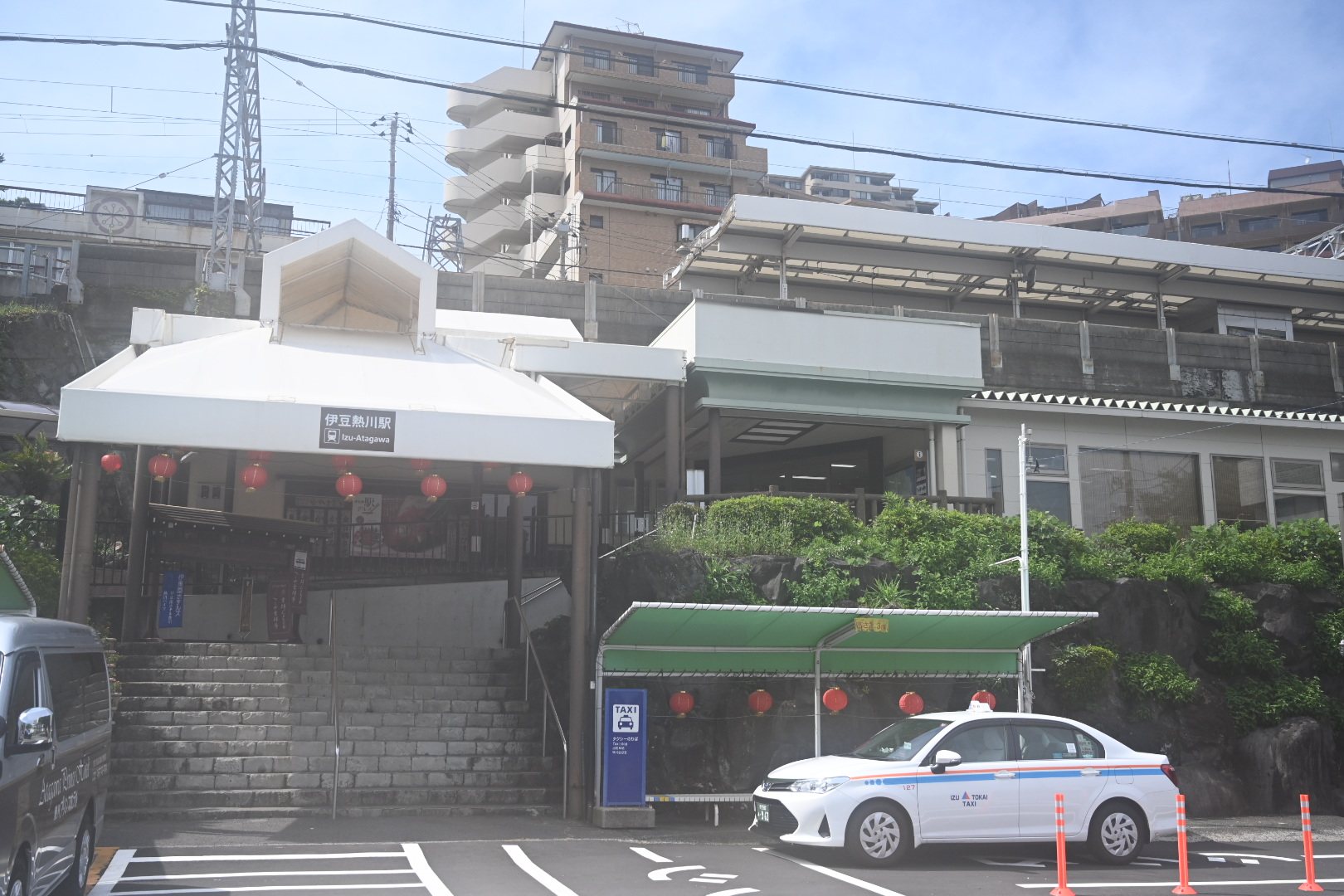
Izu-Atagawa Station. Red lanterns hang at the entrance of the station building.
The starting point of the walk is Izu-Atagawa Station on the Izukyū Line. According to the association’s official website, it takes about 2 hours from Tokyo on a direct train with no transfers. You can also take the shinkansen to Atami and change to the Izukyū Line (about 52 minutes from Atami to Izu-Atagawa). Some of the limited express “Odoriko” trains from Tokyo stop at Izu-Atagawa Station.
The station sits partway up the slope, so the easiest route is to walk around the hot spring town while heading downhill toward the sea. As soon as you leave the ticket gate, you can see a steaming tower right in front of you.
Atagawa Yunohana Park | The Hot Spring Tower and Source-Water Footbath in Front of the Station
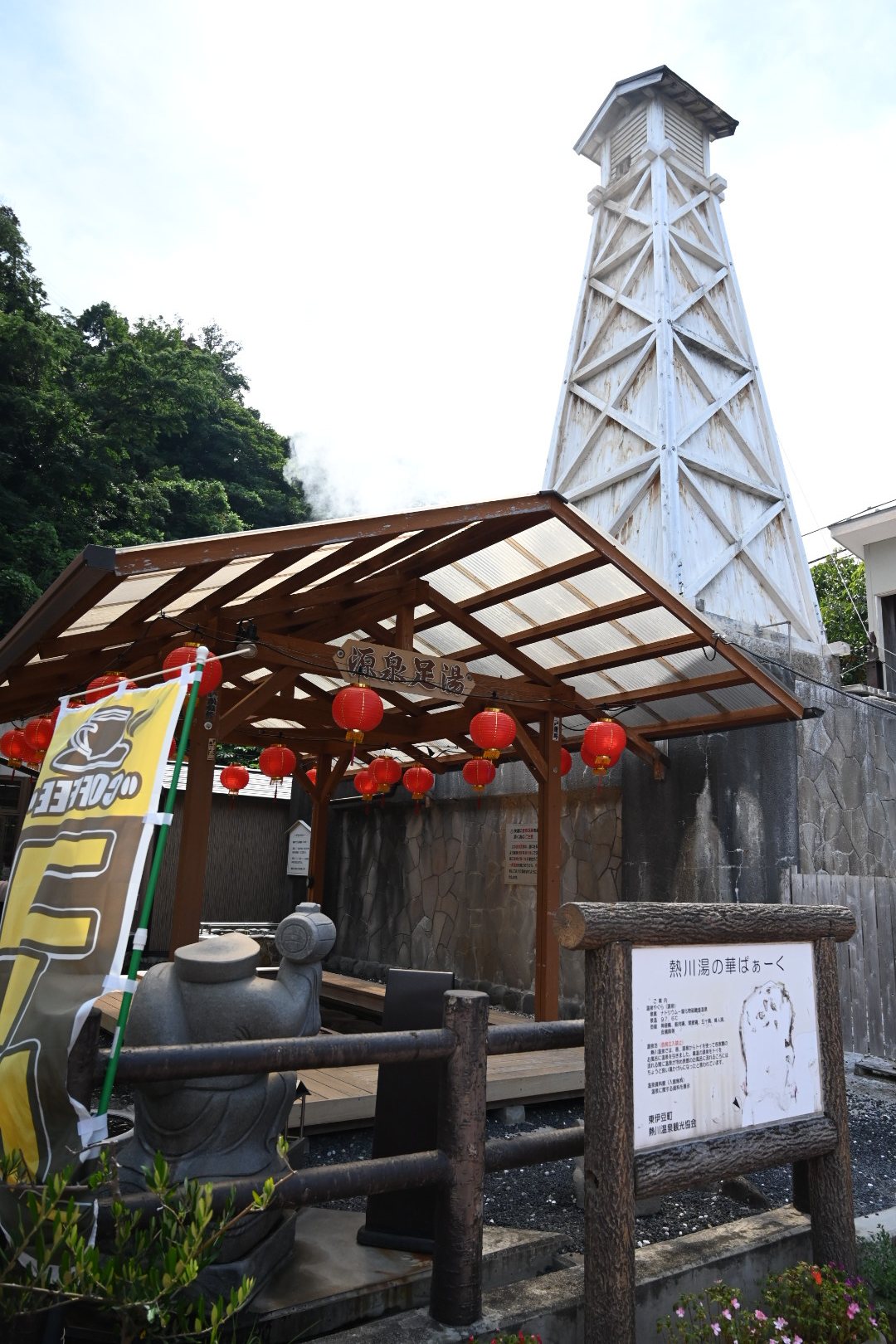
Behind the roof of the source-water footbath stands the white hot spring tower.
Just outside the station is Atagawa Yunohana Park (Atagawa Yu-no-Hana Pāku). The Higashiizu Town website describes it as “a hot spring-themed tourist facility in front of Izu-Atagawa Station.” It has a 7-meter-tall wooden hot spring tower, a small hot spring museum, and a source-water footbath.
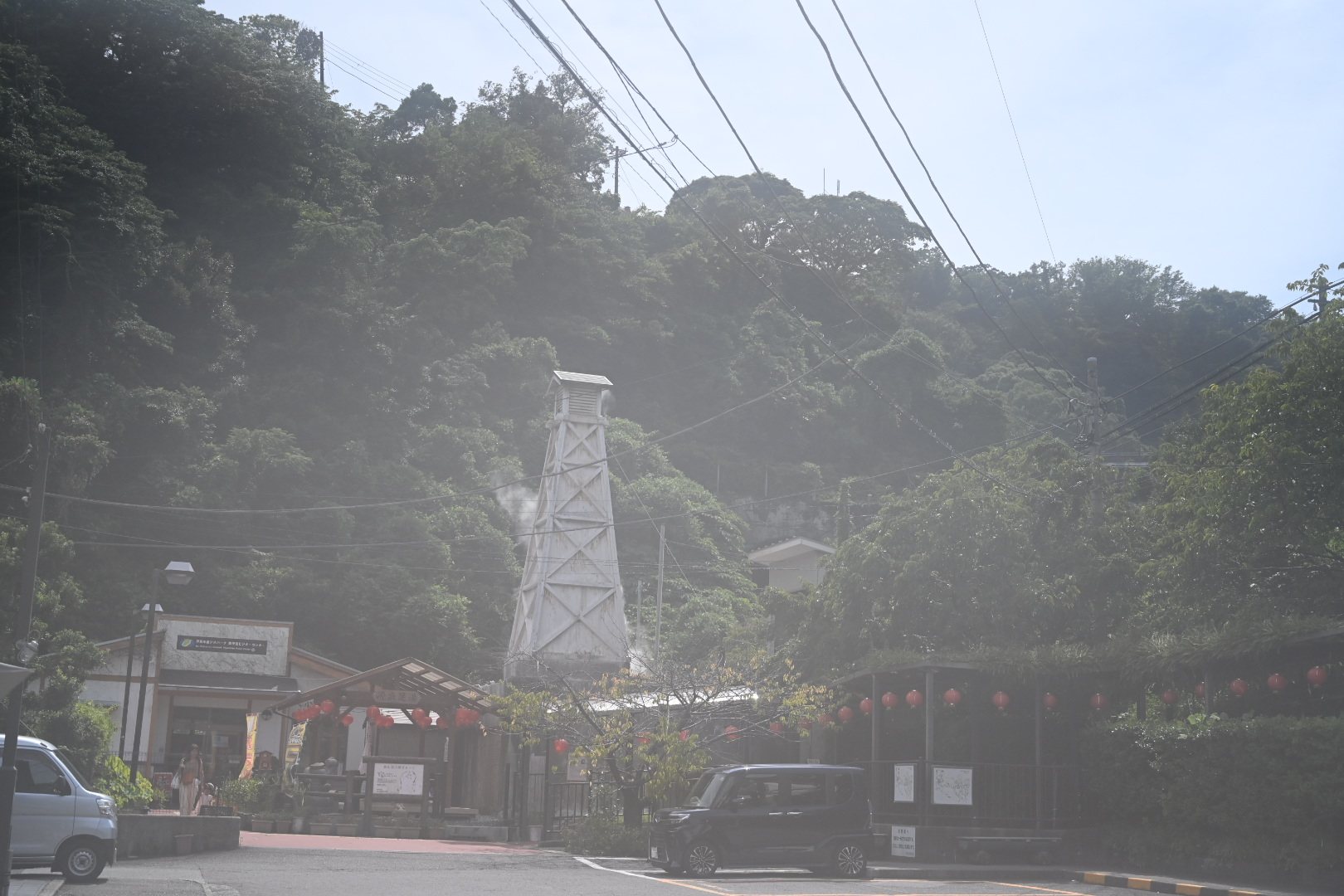
From the street in front of the station. Steam drifts from the tower, with the mountains behind it.
According to the Higashiizu Town website, the sidewalk at the station’s exit has a ramp. There are also restrooms.
| Item | Details (checked on October 23, 2026) |
|---|---|
| Location | Atagawa, Higashiizu Town (in front of Izu-Atagawa Station) |
| Footbath hours | 9:30–17:00 |
| Price | Free |
| Closed | Not listed on the Higashiizu Town website |
Sites such as Rurubu&more also say that you can try boiling eggs in the hot spring source water.
Looking Up at the Wooden Tower from Its Base
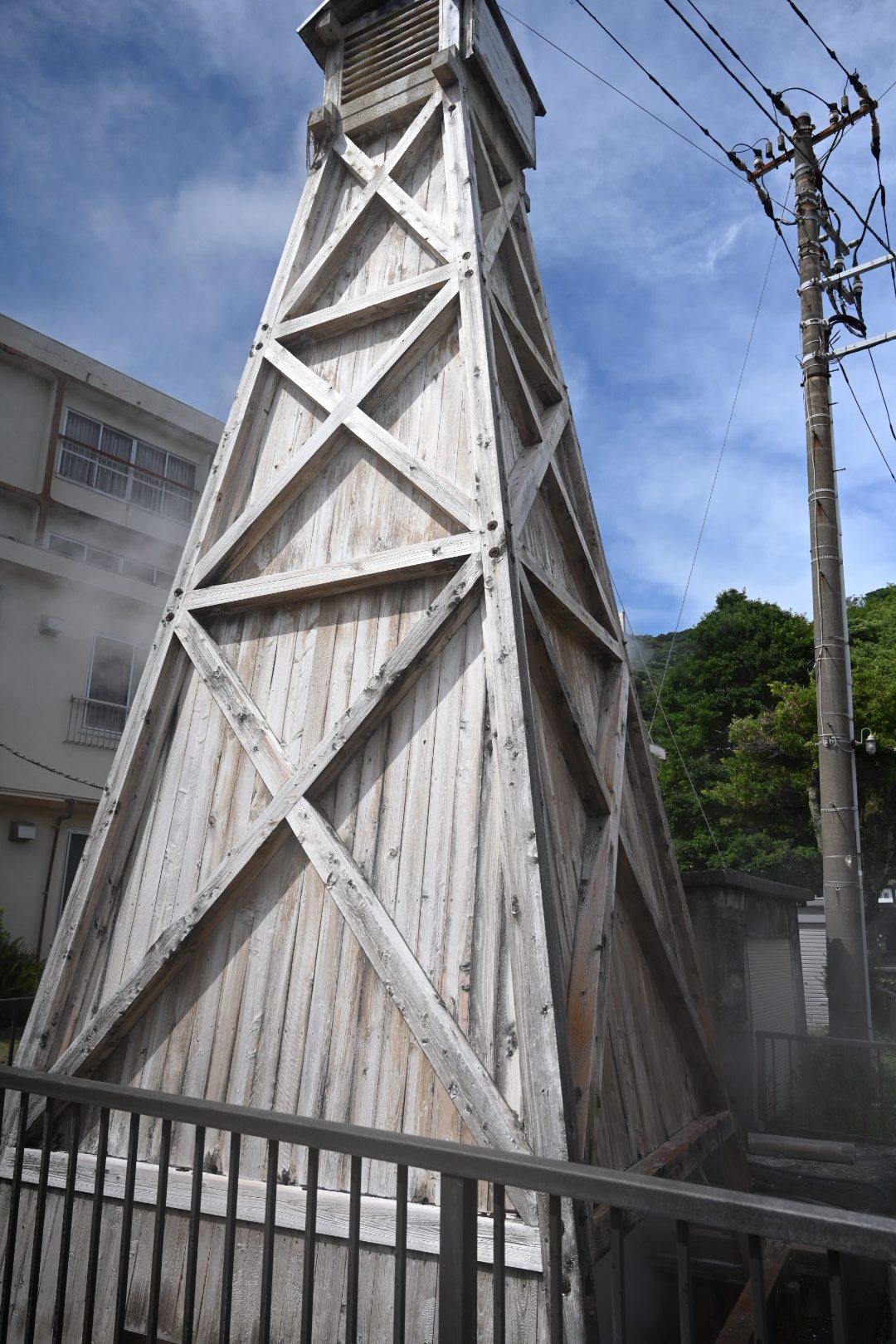
The tower is built of boards set at an angle. Looking up from below, it seems taller than you might expect.
The tower is made of weathered, whitish boards supported by timbers crossed in an X shape. At the top are a small roof and slatted wooden windows that let the steam escape.
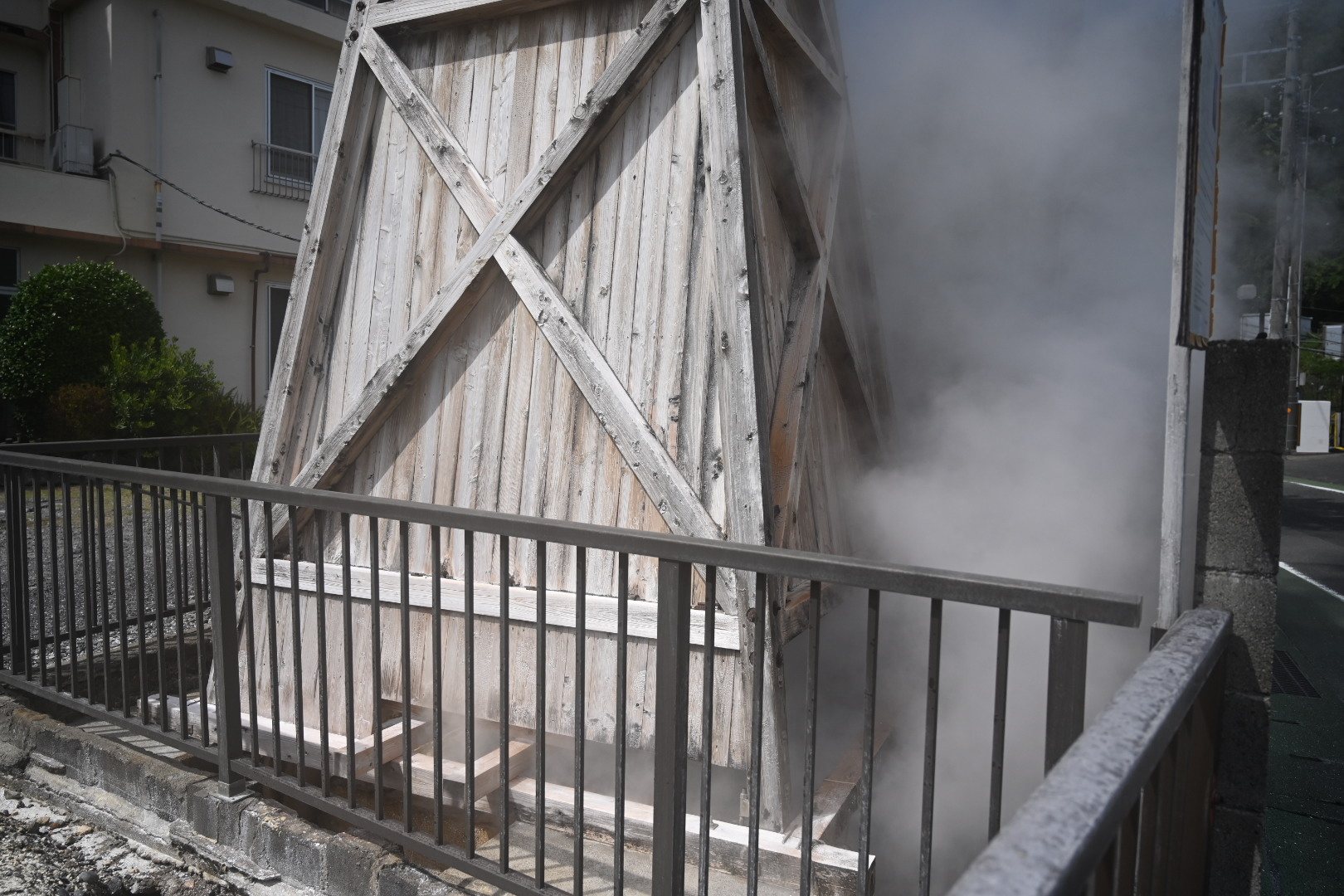
Steam was gushing out from the base of the tower.
Walking Along the Steaming River
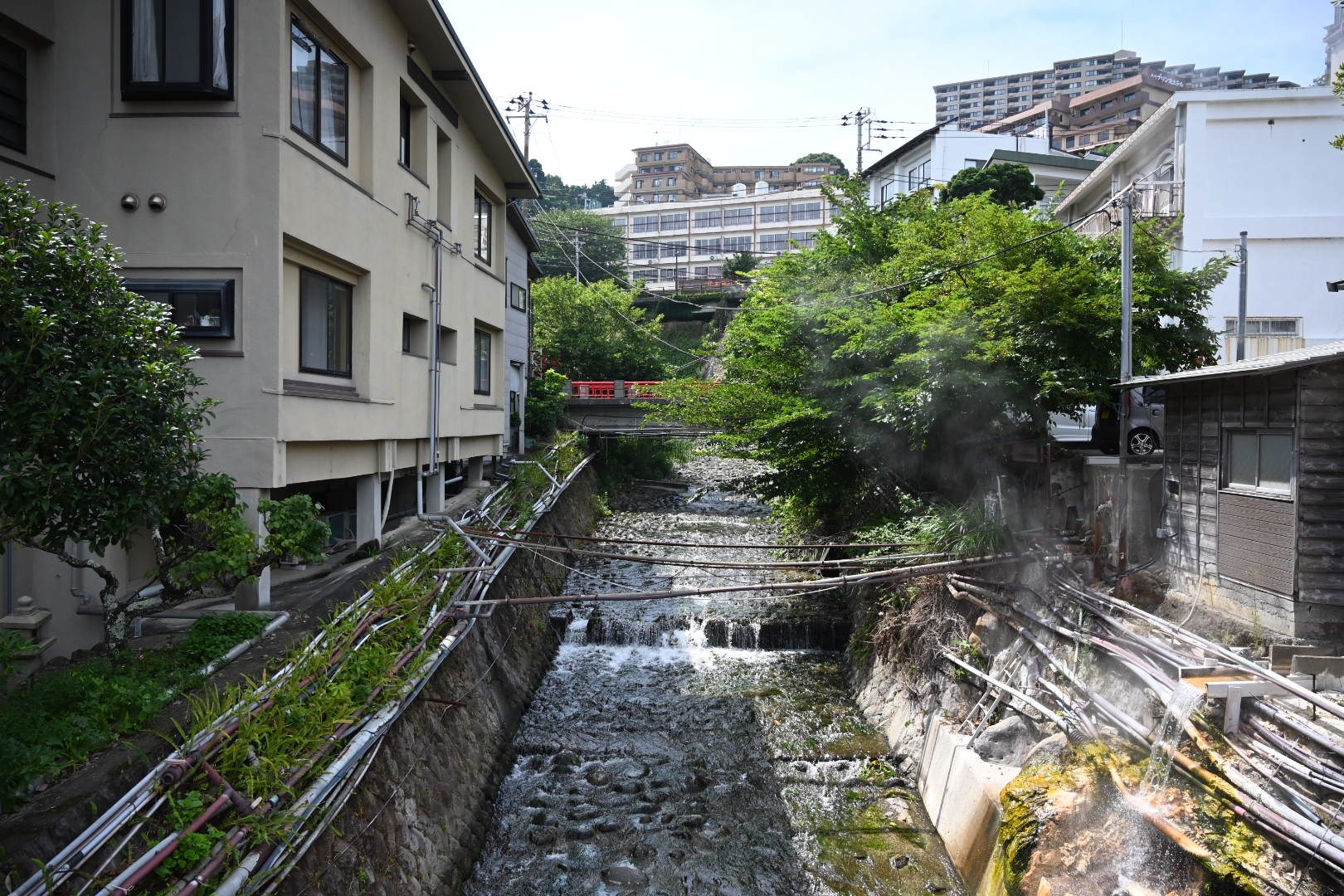
Many pipes carrying hot spring water run along both banks of the river. There is steam at the lower right, too.
Heading down from Yunohana Park toward the sea, you come to a narrow river flowing through the middle of the hot spring town. Along both banks run many pipes that send hot water from the sources to the inns, and steam rises here and there. This is the view that best shows what a “town of 100°C hot springs” is like.
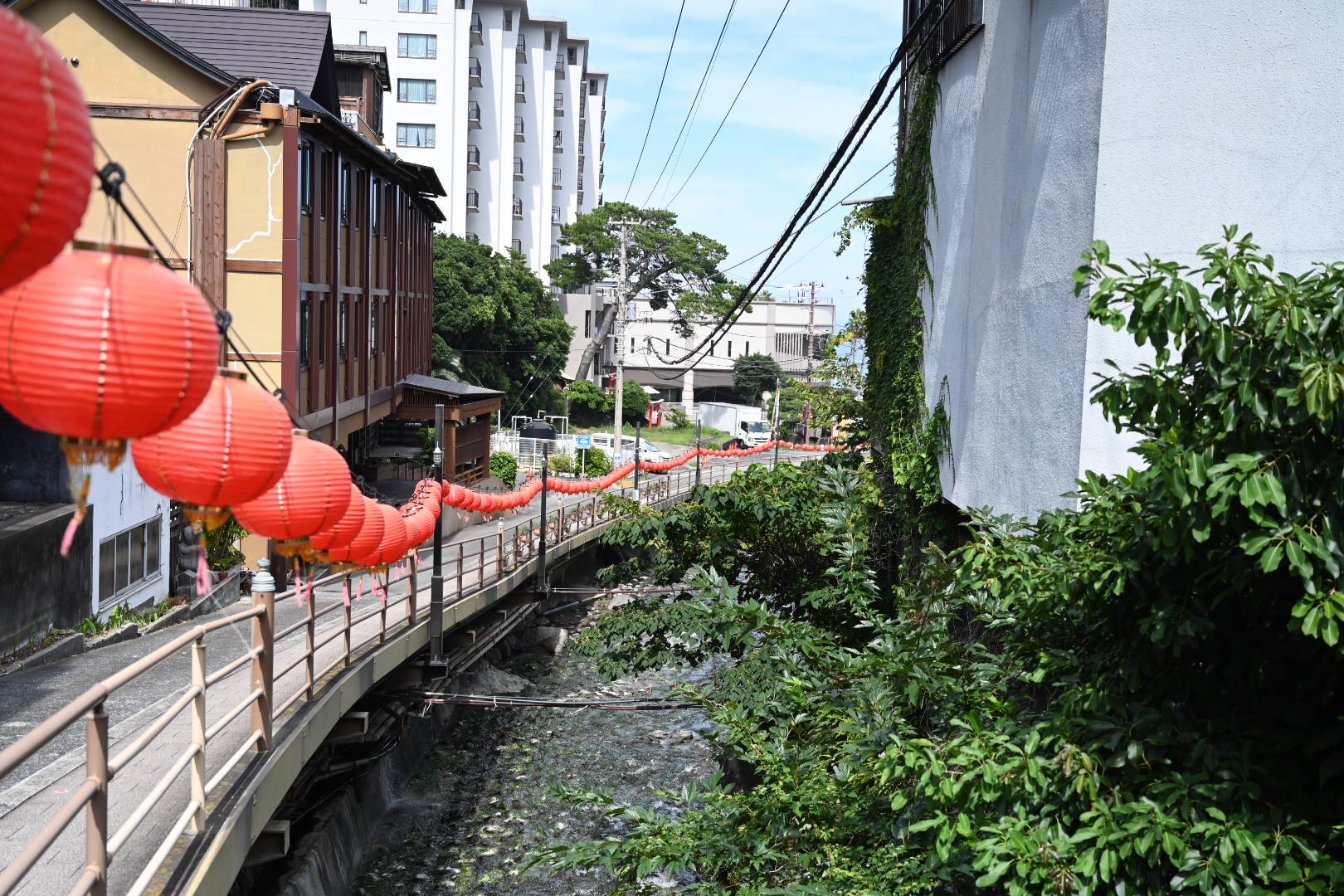
Red lanterns were lined up all along the riverside walkway.
The red lanterns along the riverside walkway continue far into the distance. The association’s official website says that the lantern corridor at Atagawa Onsen’s “Hanahana Park” is lit every day. Walking here at night would likely give you a different view.
Shōwa-Retro Slopes | Signs for Shooting Galleries and Ball-Throwing Games
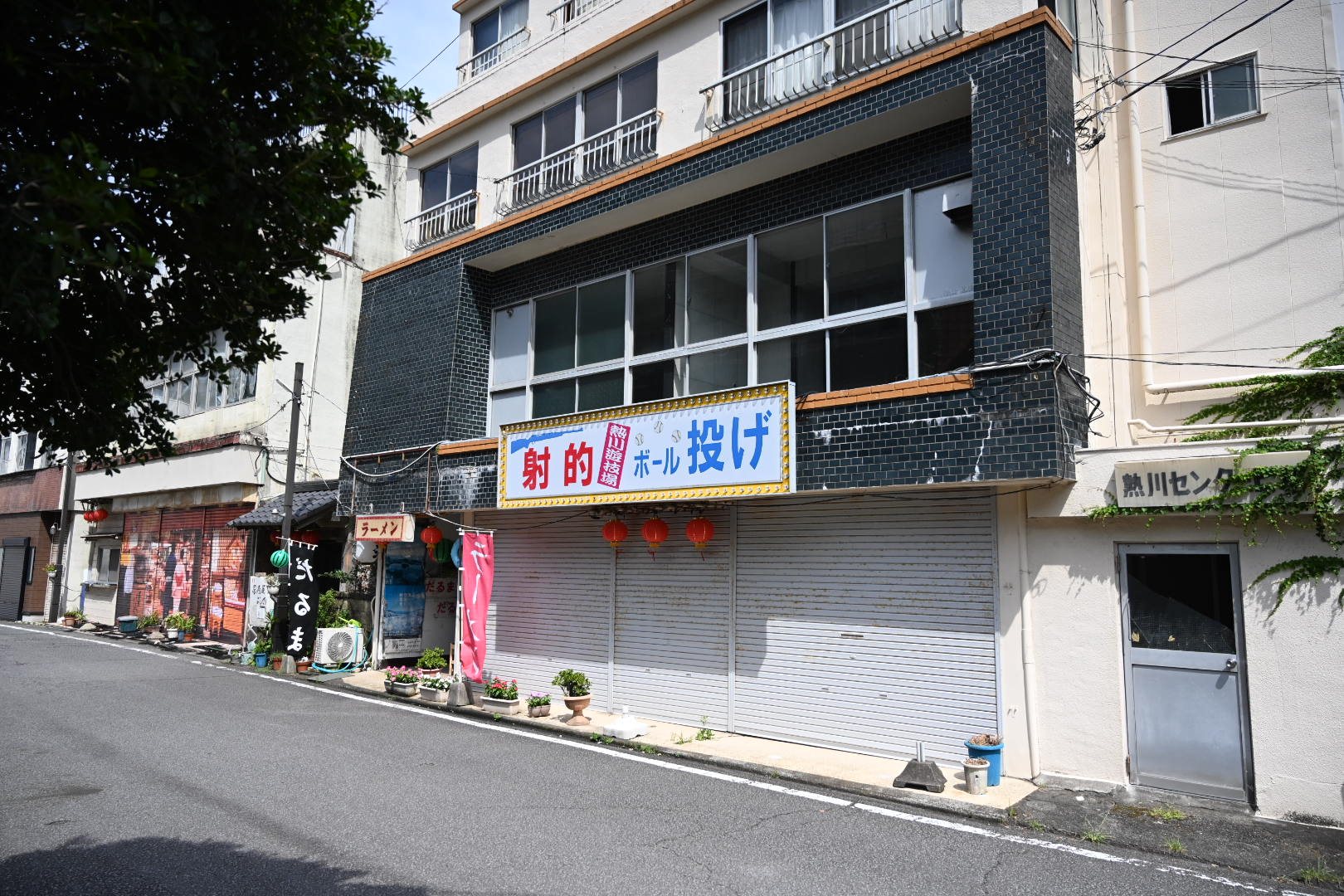
Large signs reading “Shateki” (shooting gallery) and “Bōru-nage” (ball throwing). The black-tiled building also has a very Shōwa-era feel.
On a slope one street off the river, buildings with signs for shooting galleries and ball-throwing games still remain. The association’s official website also lists “amusement halls where you can enjoy retro games” as one of Atagawa’s attractions.
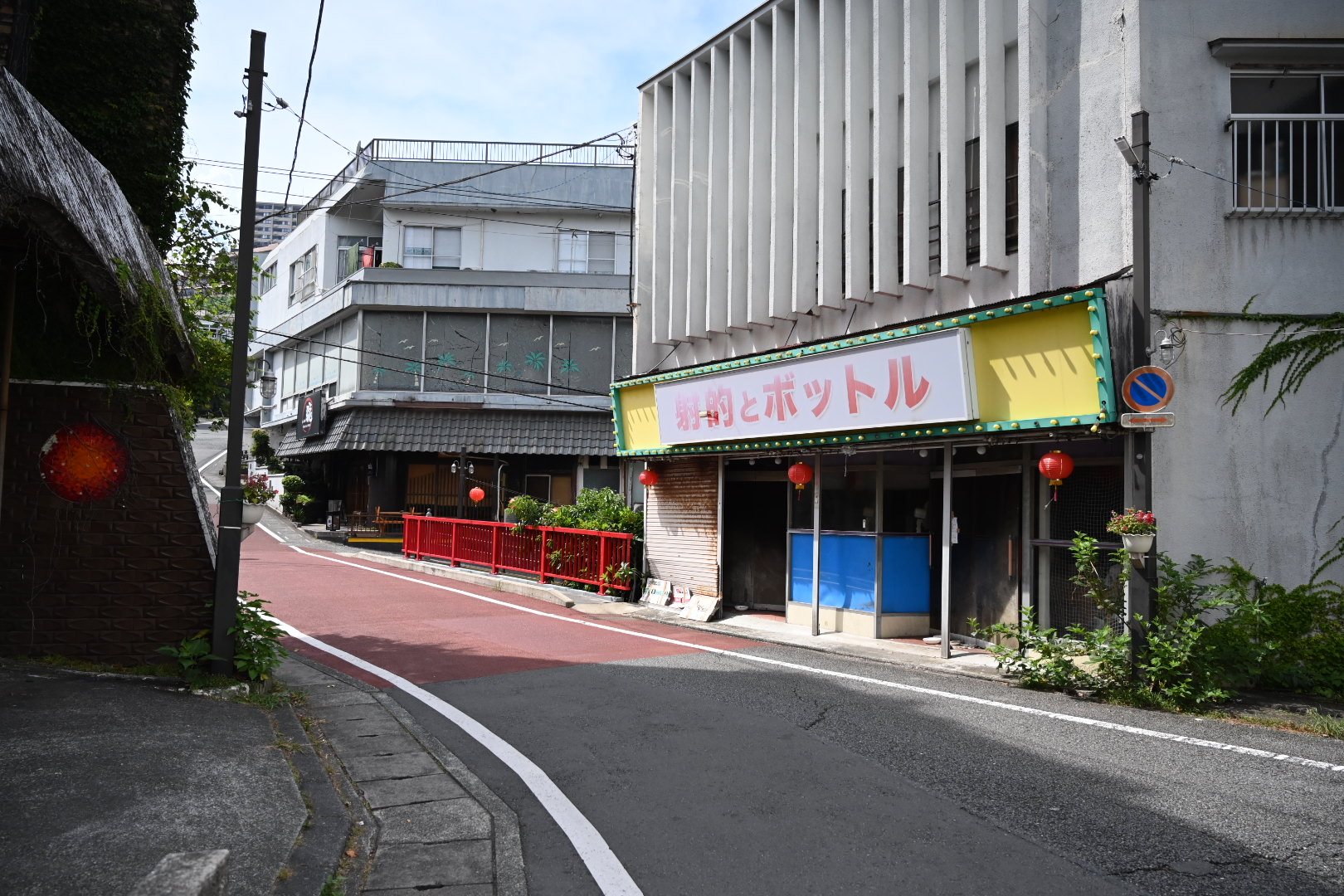
The “Shateki to Bottoru” (shooting gallery and bottles) sign, decorated with light bulbs. A bridge with red railings can be seen at the back left.
With signs framed in light bulbs, black-tiled walls, and red lanterns under the eaves, this corner keeps the atmosphere of a Shōwa-era hot spring town just as it was. It was daytime when I took the photos, and some shops had their shutters down.
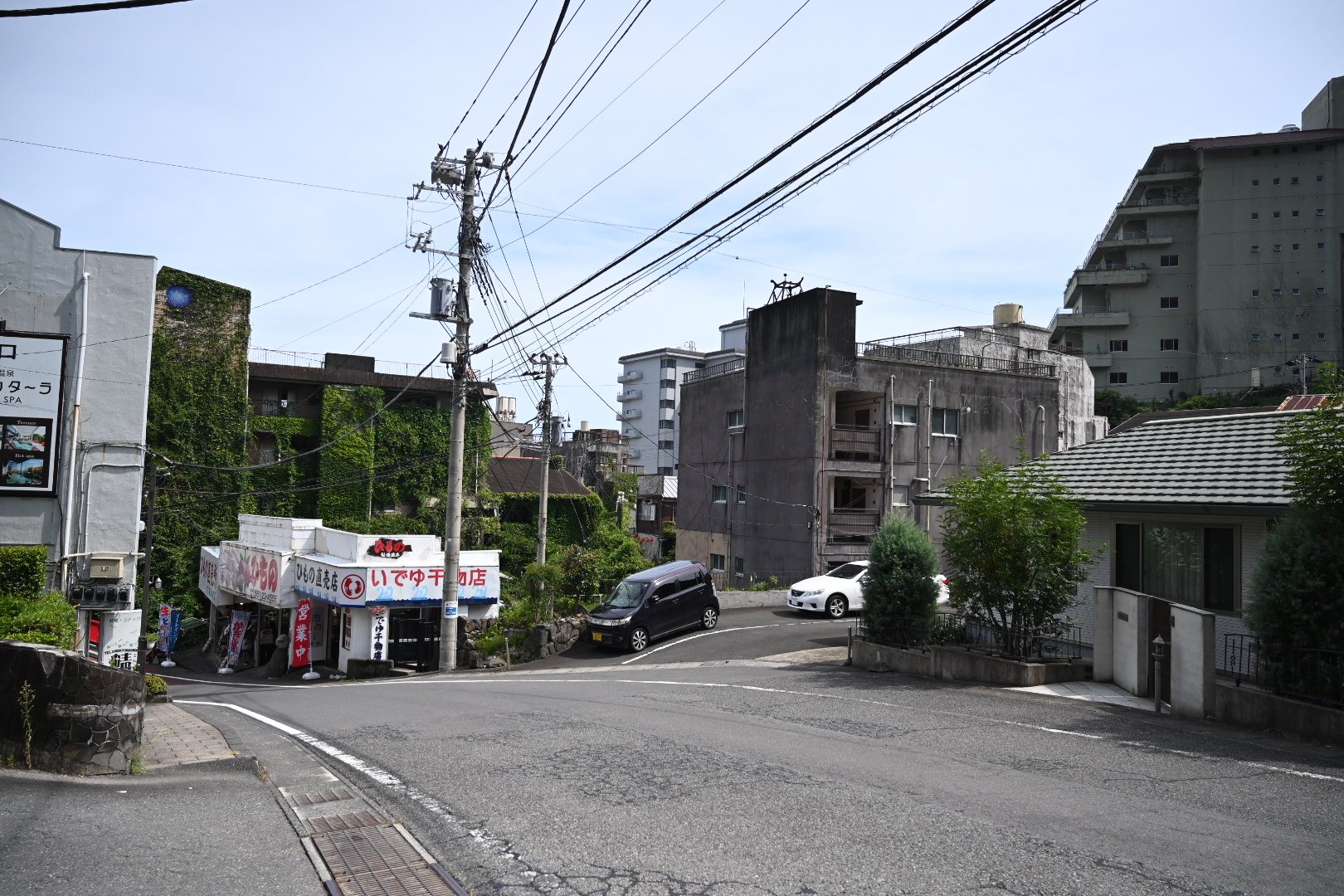
Partway down the slope, there is also a shop selling himono (dried fish), a classic Izu specialty.
As you walk down the slope, you will also see shops selling himono, a popular souvenir of Izu.
I actually walked around the streets of Atagawa Onsen, and everywhere had the feel of an old-fashioned hot spring town, with lots to see. However, even though it was a holiday, many shops were closed, and it felt quiet.
The Red Bridge and the “Atagawa Onsen” Sign | The Townscape Seen from the Top of the Slope
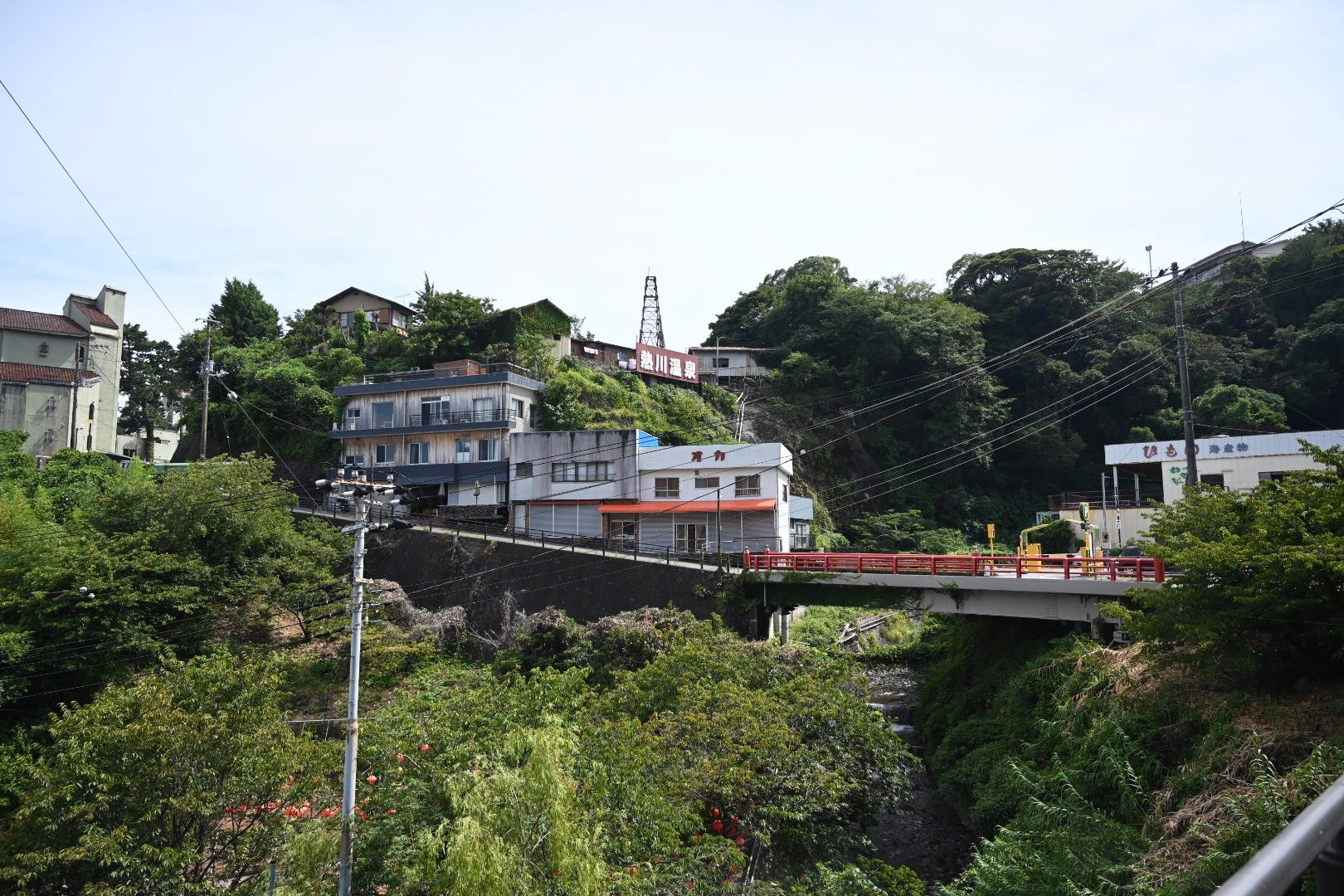
The “Atagawa Onsen” sign and a steel tower on top of the cliff. In the foreground is a bridge with red railings.
Several bridges with red railings cross the river in the hot spring town. Looking up, I saw a large “Atagawa Onsen” sign and a steel-frame tower standing on top of the cliff. It is fun to look around town for towers with shapes different from the wooden one in front of the station.
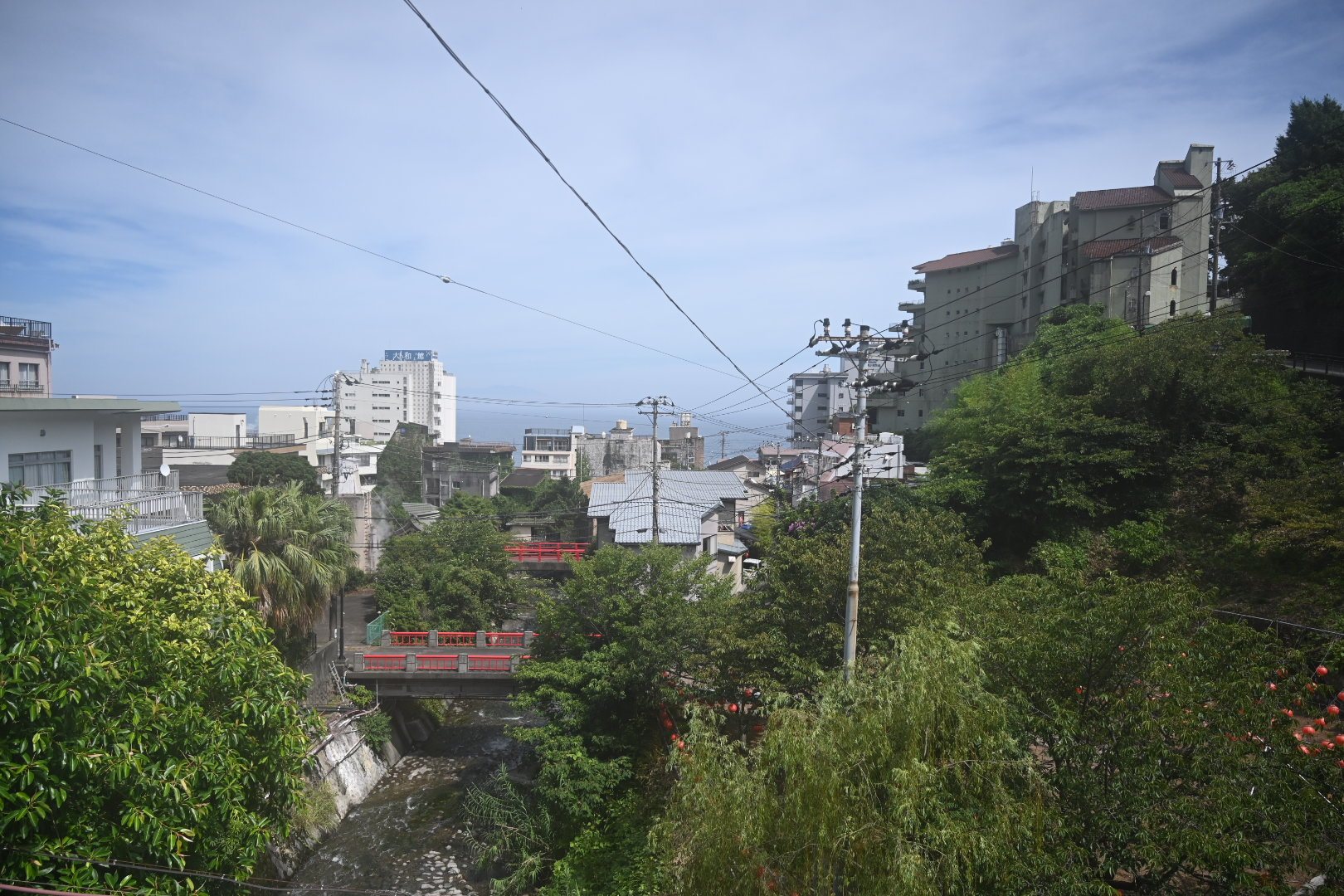
From the top of the slope. The sea can be seen past the inns and hotels, with the red bridge and steam in the foreground.
Looking back from the top of the slope, you can see the sea beyond the inn and hotel buildings. Steam is rising on the left, too. This view shows clearly how Atagawa is squeezed in by the mountains on one side and the sea on the other.
Tips for Walking Around Atagawa Onsen
- Start at Izu-Atagawa Station: Yunohana Park is in front of the station, and it is easiest to walk around from there while heading down toward the sea.
- The footbath is open 9:30–17:00 and is free (checked on the Higashiizu Town website on October 23, 2026). A towel is handy.
- There are many slopes: The hot spring town is on a hillside, so comfortable walking shoes are recommended.
- Count the towers as you walk: According to the official website, there are 13 hot spring towers in town. They come in various shapes, some wooden and some steel-framed.
- Lanterns at night: The lantern corridor is said to be lit every day, so if you stay overnight, an evening stroll is worth considering.
Frequently Asked Questions
Is the footbath at Atagawa Onsen free?
Yes. The “Yunohana Park Source-Water Footbath” in front of Izu-Atagawa Station is free and open 9:30–17:00 (checked on the Higashiizu Town website on October 23, 2026).
How many hot spring towers are there in Atagawa Onsen?
The official website of the Atagawa Onsen Ryokan Association says there are 13 hot spring towers, the most in Japan for its area.
Can I walk from Izu-Atagawa Station to Yunohana Park?
Yes. It is right in front of the station, and according to the Higashiizu Town website, the sidewalk at the station’s exit has a ramp.
Who discovered Atagawa Onsen?
The association’s official website says it is believed to have been discovered by Ōta Dōkan, who built Edo Castle, and describes it as a “miracle spring” that is said to have healed his deep wound.
Summary | Atagawa Onsen, a Hot Spring Town Where the Steam Greets You at the Station
At Atagawa Onsen, a hot spring tower and a source-water footbath are waiting just outside the station, and from there you can walk along the steaming river and up and down the slopes where shooting-gallery signs remain. With its 100°C hot springs, 13 towers, red lanterns, and red bridges, simply walking around gives you a real feel for a “hot spring town.”
Please also read our articles on other towns in Izu.
- [Ito City, Shizuoka] Ito is a quiet, relaxing place, but a little lonely (Japanese)
- (Kawazu Town, Shizuoka) The famous early-blooming Kawazu cherry blossoms will soon be in bloom (Japanese)
- For another hot spring resort, see Gero Onsen Kua Garden Open-Air Bath: Prices, Hours, Baths and Access.
- Our hot spring articles are collected on Onsen HOME.
References (checked on October 23, 2026)
- Higashiizu Town: Yunohana Park Source-Water Footbath (Japanese)
- Izu Atagawa Onsen Ryokan Association official website (Japanese)
- About Atagawa Onsen | Izu Atagawa Onsen Ryokan Association (Japanese)
- Access | Izu Atagawa Onsen Ryokan Association (Japanese)
コメント