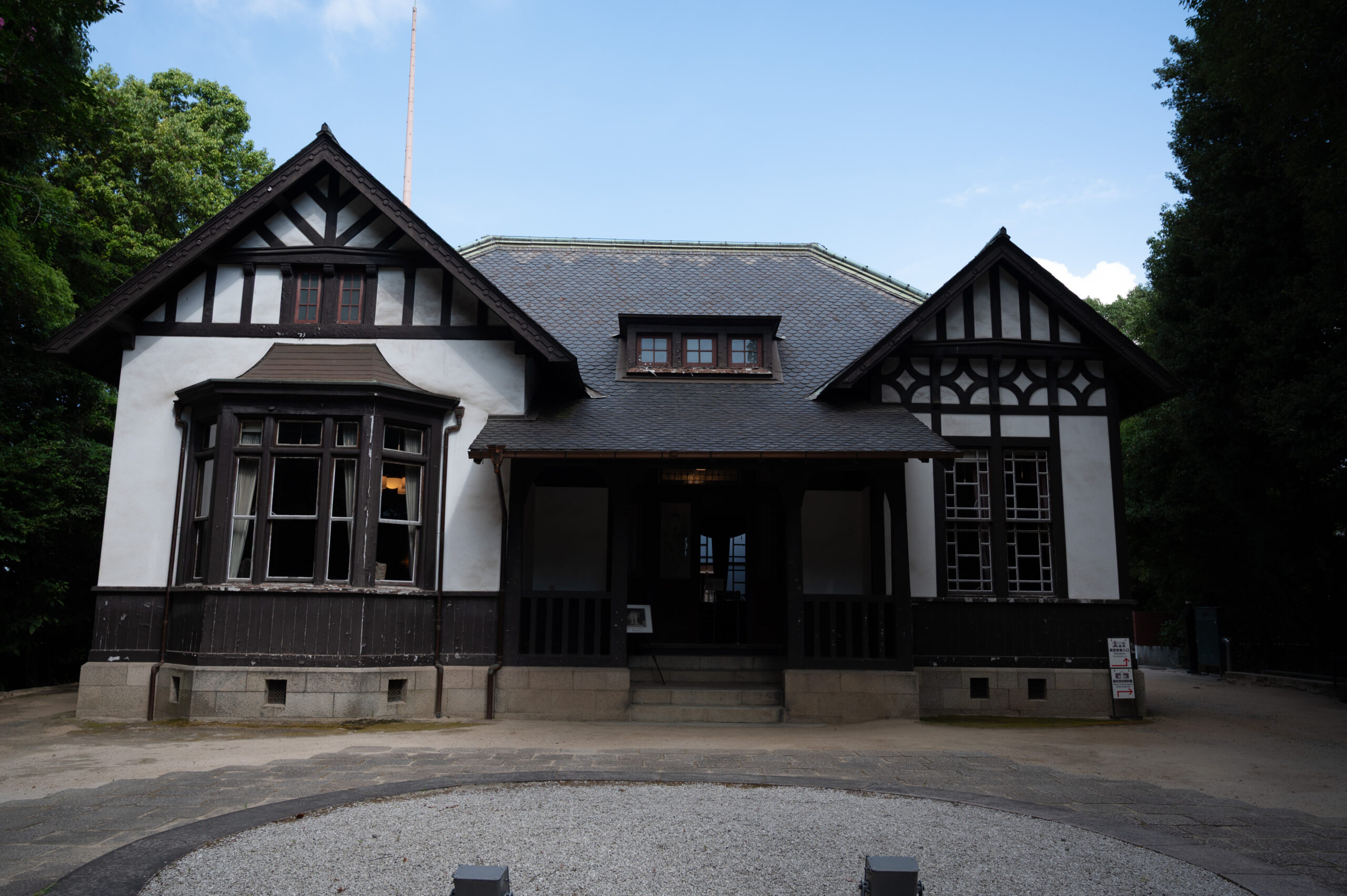
The Irifuneyama Memorial Museum in Kure, Hiroshima Prefecture, is centered on the Former Residence of the Commander-in-Chief of the Kure Naval District – the home of the top officer of Kure’s Meiji-era naval base. This rare building, which joins a British-style Western wing to a Japanese-style wing, is designated an Important Cultural Property of Japan.
This article explains how the museum came to be, and how the residence survived an earthquake and the postwar occupation before being restored to its original appearance.
- Key Points
- What Is the Irifuneyama Memorial Museum?
- Timeline of the Irifuneyama Memorial Museum
- The Birth of Naval Kure and Irifuneyama
- Destroyed by the Geiyo Earthquake, Rebuilt in a Western-Japanese Style
- Kinkarakami Wallpaper and Stained Glass in the Western Wing
- Home of the Commonwealth Occupation Force Commander After the War
- Back to Its Original Form: Restoration and Cultural Property Status
- Historic Buildings on the Grounds
- Irifuneyama Memorial Museum: Basic Information
- FAQ
- My Impressions from Visiting
- Summary
Key Points
- Irifuneyama was once home to Kameyama Shrine and became navy land when the Kure Naval District was established
- The first residence collapsed in the Geiyo Earthquake of 1905 (Meiji 38) and was rebuilt the same year as a single-story house mixing Western and Japanese styles
- After WWII it served as the residence of the British Commonwealth Occupation Force commander, and opened as the Irifuneyama Memorial Museum in 1967
- Restored based on original construction records, it was designated a national Important Cultural Property in 1998
What Is the Irifuneyama Memorial Museum?
The Irifuneyama Memorial Museum sits on Irifuneyama, a small hill in Saiwaicho, Kure. Besides the former commander’s residence, the grounds include the detached cottage where Admiral Togo Heihachiro lived, the clock tower of the former Kure Naval Arsenal, the Local History Museum and the Historical Folk Museum. Together with the neighboring Kure Municipal Museum of Art, it forms the cultural zone of Irifuneyama Park.
Timeline of the Irifuneyama Memorial Museum
| Year | Event |
|---|---|
| 703 | Kameyama Shrine is said to have been moved to this hill |
| 1886 | The navy acquires the Irifuneyama land as the Kure Naval District is established |
| 1889 | A two-story Western-style wooden building (a naval administration hall and officers’ club) is built |
| 1890 | Togo Heihachiro is posted to Kure and lives there for about 1 year and 7 months (the later Former Togo Residence Cottage) |
| 1892 | The building begins to be used as the commander’s residence |
| 1905 | The first residence collapses in the Geiyo Earthquake in June; it is rebuilt the same year as a single-story house mixing Western and Japanese styles |
| 1921 | A clock is installed on the roof of the Kure Naval Arsenal’s engine works |
| 1945– | After the war, the British Commonwealth Occupation Force requisitions the residence for its commander |
| 1956 | The requisition ends and the property is returned to Japan |
| 1967 | The Irifuneyama Memorial Museum opens to the public |
| 1971 | The former Kure Naval Arsenal clock tower is moved to Irifuneyama |
| 1992– | Restoration work to return the residence to its original appearance takes about three years |
| 1998 | The residence is designated a national Important Cultural Property |
The Birth of Naval Kure and Irifuneyama
Irifuneyama was originally the site of Kameyama Shrine. In the Meiji era, Japan decided to establish naval districts (chinjufu) around the country to defend its seas, and one of them was to be in Kure. In 1886, as the naval district was set up, Irifuneyama became navy land.
In 1889, a two-story Western-style wooden building was built on the hill. It was first used for meetings and gatherings of naval officers, but from 1892 it became the official residence of the Commander-in-Chief of the Kure Naval District. Overlooking Kure’s harbor and town, this spot truly symbolized the naval city of Kure.
Destroyed by the Geiyo Earthquake, Rebuilt in a Western-Japanese Style
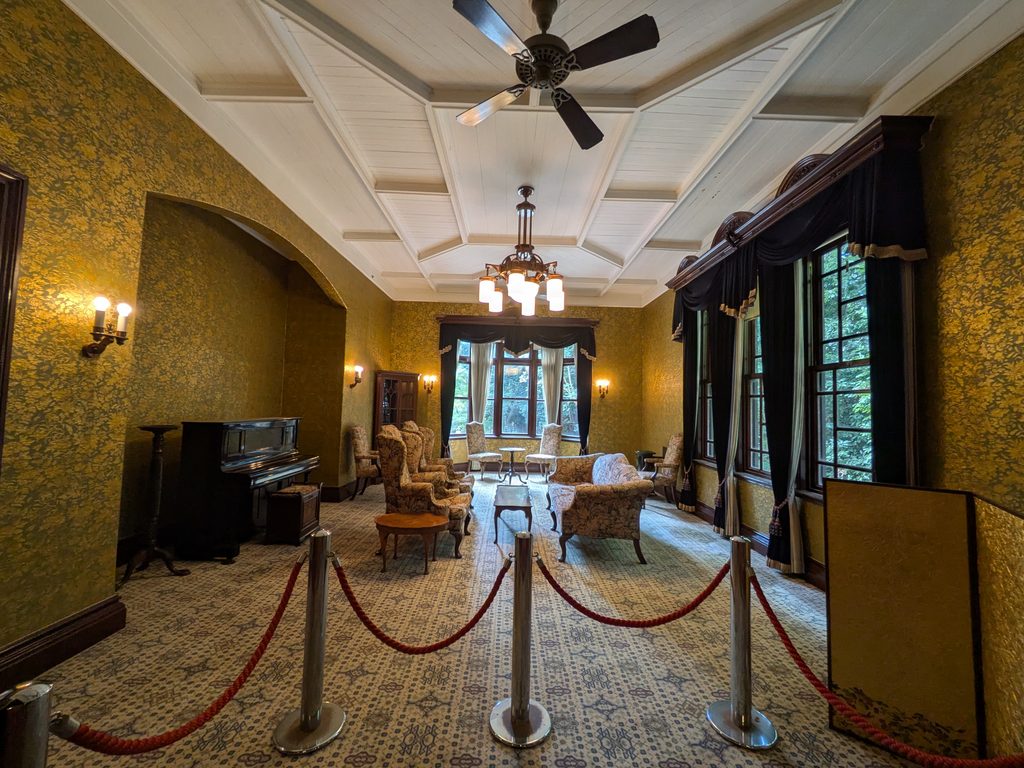
In June 1905, a large earthquake struck the Geiyo region of the Seto Inland Sea. The first residence collapsed in this Geiyo Earthquake.
The residence was rebuilt within the same year, partly reusing materials from the collapsed building. It was designed by Sakurai Kotaro, the first Japanese to qualify as an architect in Britain. The new residence changed from two stories to an earthquake-resistant single-story wooden house, made up of two connected parts:
- Western wing: rooms for receiving guests and official work, in the British half-timber style with a natural slate roof laid like fish scales
- Japanese wing: a traditional Japanese house where the commander and his family lived day to day
Because the Japanese navy modeled itself on the Royal Navy, the Western wing was given a distinctly British design. Choosing a calm Japanese-style house for everyday life, meanwhile, shows the thoughtful balance of the Meiji era.
Kinkarakami Wallpaper and Stained Glass in the Western Wing
The highlight of the Western wing is the kinkarakami covering its walls and ceilings. Kinkarakami is a luxurious wallpaper made by embossing patterns into Japanese washi paper and coloring them with metal leaf and lacquer; it was used in important buildings of the Meiji era.
Together with the British stained glass, it shows that the drawing room and dining room were the height of luxury in their day. The kinkarakami you see now was recreated with the original techniques during the restoration.
Home of the Commonwealth Occupation Force Commander After the War
After the Pacific War ended, the headquarters of the British Commonwealth Occupation Force (BCOF) was set up in Kure. The residence was requisitioned and used as the home of the BCOF commander, and the building was heavily altered to make it more livable during this period.
When the requisition ended in 1956 and the property was returned, it opened to the public in 1967 as Kure City’s Irifuneyama Memorial Museum.
Back to Its Original Form: Restoration and Cultural Property Status
The residence had changed a great deal during the occupation, but the discovery of records from its construction in 1905 led to restoration work to bring it back to its original form. The work, which began in 1992 and took about three years, also brought the beautiful kinkarakami of the Western wing back to life.
Having regained its Meiji-era appearance, the residence was designated a national Important Cultural Property in December 1998.
Historic Buildings on the Grounds
Former Togo Residence Cottage
Admiral Togo Heihachiro, who later led the Combined Fleet at the Battle of Tsushima in the Russo-Japanese War, lived in Kure for about 1 year and 7 months from 1890. A detached cottage from his home remains on the grounds. It is a single-story wooden building with a tiled roof, registered as a national Tangible Cultural Property in 1997.
Former Kure Naval Arsenal Clock Tower
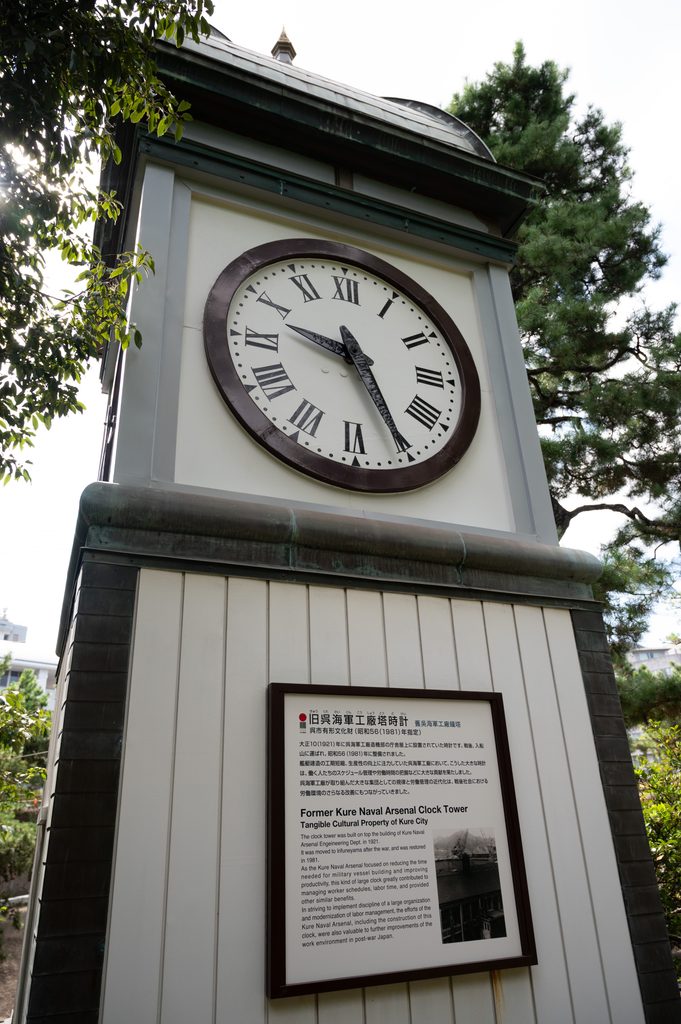
This clock was installed on the roof of the Kure Naval Arsenal’s engine works in 1921 and moved here in 1971. It stands about 10m tall, with a 1.5m dial on a 2.4m cube. It is considered one of the oldest Japanese-made electric master-slave impulse clocks and is designated a Tangible Cultural Property of Kure City.
Local History Museum and Historical Folk Museum
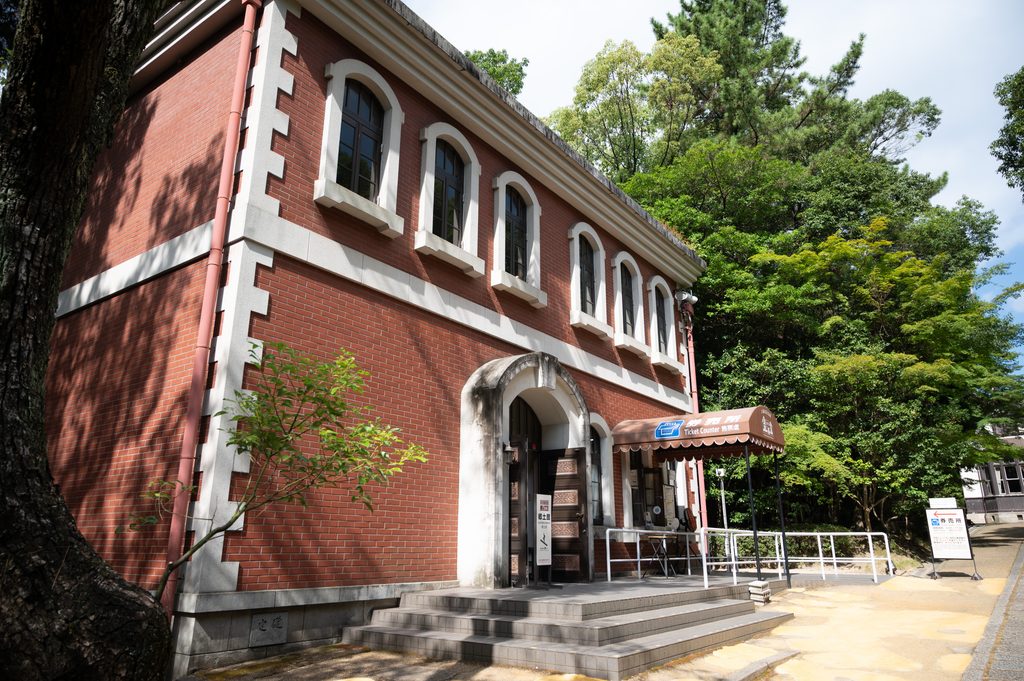
The Local History Museum introduces the history of Kure, while the Historical Folk Museum displays old documents from the Edo period and more. Visiting them together with the residence gives you a clear picture of how Kure changed before and after it became a naval city.
Irifuneyama Memorial Museum: Basic Information
| Item | Details |
|---|---|
| Address | 4-6 Saiwaicho, Kure, Hiroshima |
| Opening hours | 9:00–17:00 (last entry 16:30) |
| Closed | Tuesdays (the next day if Tuesday is a holiday); Dec 29–Jan 3 |
| Admission | Adults ¥250 / High school students ¥150 / Elementary & junior high students ¥100 |
| Access | About 13 minutes on foot from JR Kure Station |
| Parking | Irifuneyama Park parking lot (122 cars, ¥100 per hour) |
A combined ticket with the Yamato Museum is also available (¥1,050 for adults not living in Kure). See our article Yamato Museum (Kure) Guide 2026: 5 Must-Sees, Tickets & Visit Time. Please check the official website for the latest information.
FAQ
What was the Irifuneyama Memorial Museum originally?
It was the official residence of the Commander-in-Chief of the Kure Naval District. The current building was rebuilt in 1905, the same year the first residence collapsed in the Geiyo Earthquake.
Who designed the former Kure Naval District commander’s residence?
Sakurai Kotaro, the first Japanese to qualify as an architect in Britain.
Since when has the Irifuneyama Memorial Museum been open to the public?
It has been open as the Irifuneyama Memorial Museum since 1967, after the postwar requisition by the British Commonwealth Occupation Force ended in 1956.
What is the connection between the museum and Admiral Togo Heihachiro?
Togo Heihachiro lived in Kure for about 1 year and 7 months from 1890, and a detached cottage from his home remains on the grounds as the Former Togo Residence Cottage.
My Impressions from Visiting
Visiting the Irifuneyama Memorial Museum gave me a chance to understand what kind of city Kure was. I learned what role Kure was expected to play during the war, and what kind of history the city has walked.
If you want to learn more, there are volunteer guides who give free tours. If one is available, don’t hesitate to ask them.
Summary
The Irifuneyama Memorial Museum reflects Kure’s history as it is – from the Meiji era, when Kure began its path as a naval city, through the Geiyo Earthquake and the postwar occupation, to its restoration. Highlights include the residence joining British-style and Japanese wings, its lavish kinkarakami wallpaper and Admiral Togo’s cottage.
Combine it with the Yamato Museum and immerse yourself in the history of Kure.
コメント