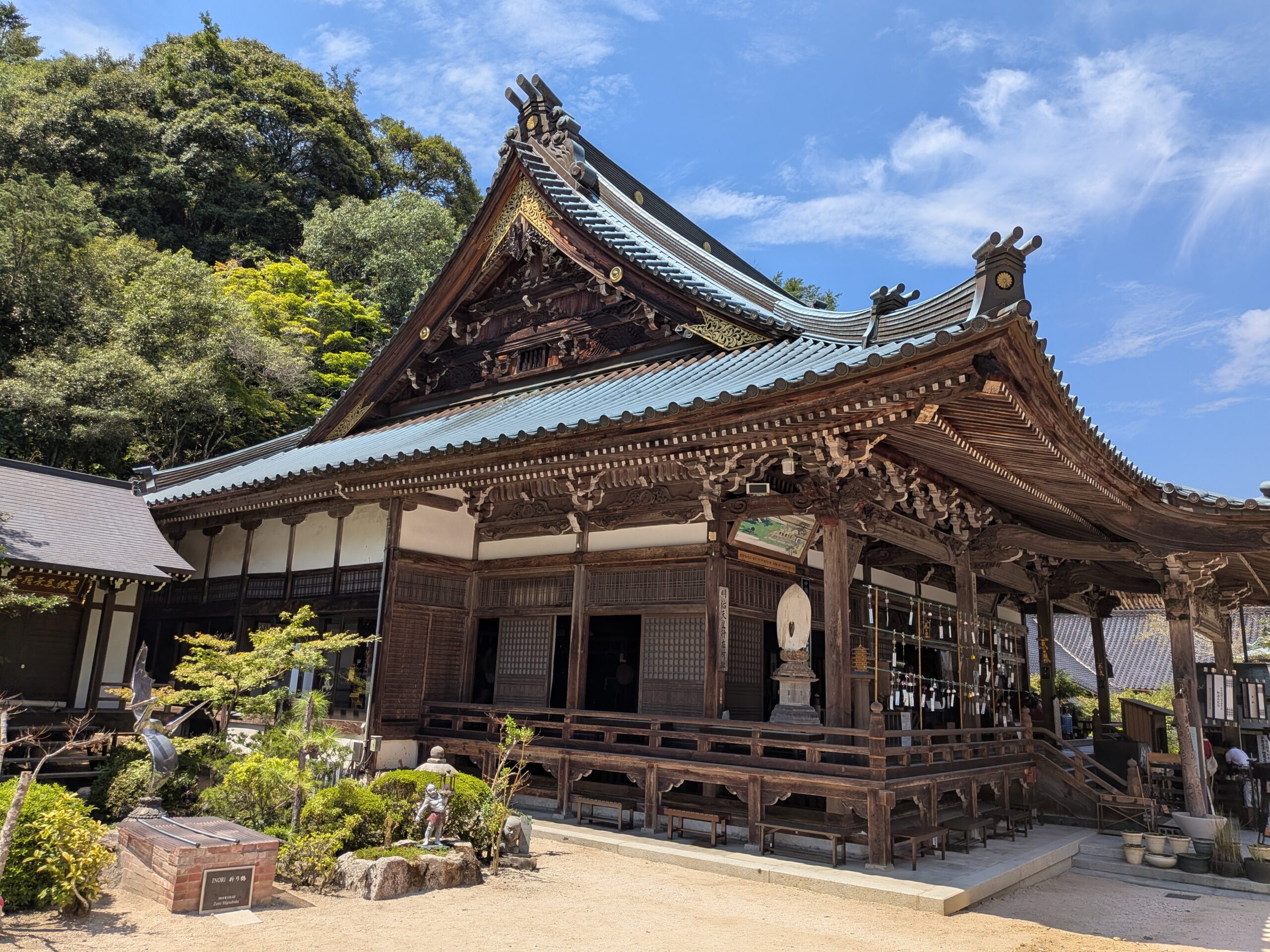
Alongside Itsukushima Shrine, Daisho-in, spread across the foot of Mount Misen, is well worth visiting on any trip to Miyajima. It’s the island’s oldest temple, and until the early Meiji era, it held authority over Itsukushima Shrine itself.
This guide covers the legend of Daisho-in’s founding, its ties to the imperial court, its Meiji-era separation from Shinto and a devastating fire, and its highlights today.
Key Facts
- Said to have been founded in 806 CE by the monk Kukai, making it Miyajima’s oldest temple
- The head temple of the Omuro school of Shingon Buddhism (whose main temple is Ninna-ji)
- Until the early Meiji era, it served as the administering temple of Itsukushima Shrine
- A major fire in 1887 destroyed most of its buildings, which were rebuilt over the following decades
The Legend of Kukai’s Founding (806 CE)
According to temple tradition, Daisho-in was founded in 806 CE by Kukai, the founder of Shingon Buddhism. Having just returned from studying in Tang China, Kukai is said to have climbed Mount Misen and performed the goma fire ritual and other core Shingon practices there (though this is not historically verified).
The flame Kukai is said to have lit that day is known as the “Eternal Flame,” said to have burned continuously atop Mount Misen for over 1,200 years.
Deep Ties to the Imperial Court (Heian Period)
The earliest verifiable record of what is now Daisho-in dates to the 12th century, documenting a grand temple on Miyajima. Its main hall is said to have been built by order of Emperor Toba (1103–1156), who visited the island to pray for peace and stability in his realm.
Toba’s son, Prince-Monk Kakusho (1129–1169), was the abbot of Ninna-ji in Kyoto, a temple with especially close ties to the imperial family. Like his father, Kakusho held Daisho-in in high regard, and the temple eventually became a branch temple of Ninna-ji.
A record of the retired Emperor Takakura‘s visit to Miyajima in 1180 describes Daisho-in as the “bettoji” (administering temple) of Itsukushima Shrine — evidence of the considerable authority the temple held at the time.
Peak Prosperity as a Leading Branch of Ninna-ji (Muromachi to Azuchi-Momoyama Periods)
With imperial backing, Daisho-in became one of Ninna-ji’s principal branch temples by the 16th century. At its peak, it oversaw 12 subordinate temples of its own and was devoutly supported by many powerful figures, including Toyotomi Hideyoshi, the warlord who unified Japan.
Separation from Shinto and a Major Fire (Meiji Period)
The Meiji era brought a major turning point for Daisho-in. In 1868, the new Meiji government issued a decree separating Shinto and Buddhism, ending over a thousand years of syncretic tradition in Japan. As a result, Daisho-in — which had administered Itsukushima Shrine until then — lost much of its land and standing, as did many temples across the country.
The temple suffered a further blow in 1887, when a major fire destroyed nearly all of its buildings except a few. The halls, gates, and other structures seen today were rebuilt in the months, years, and decades that followed.
Daisho-in Today: Highlights
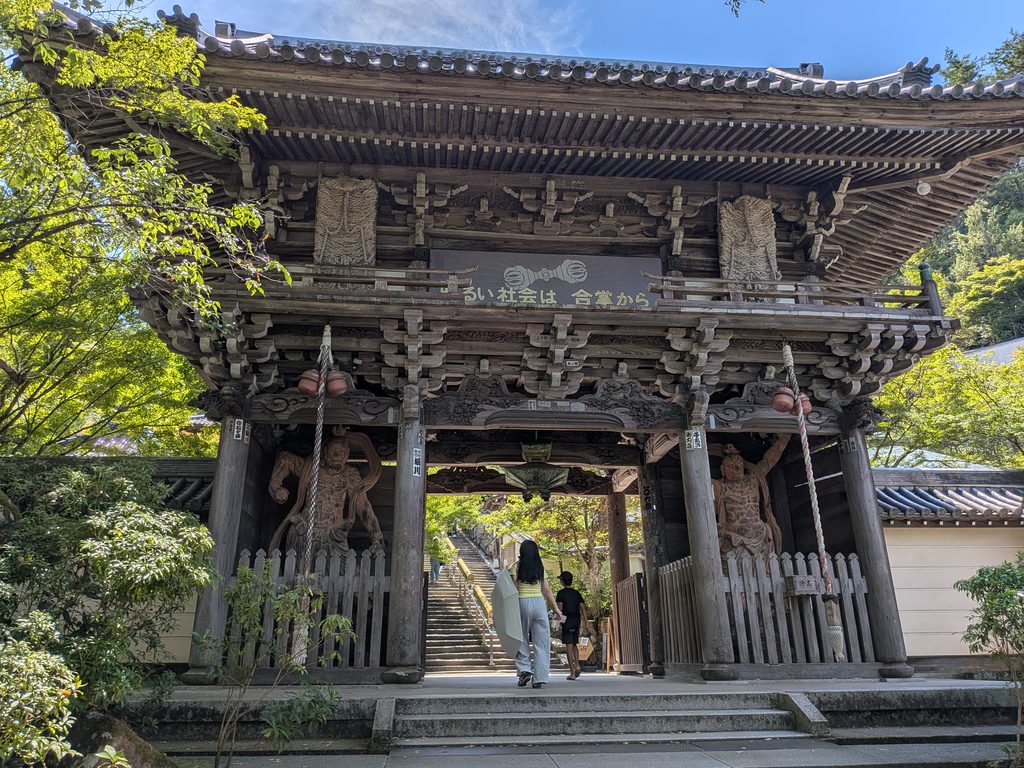
Despite this long and eventful history, Daisho-in today offers visitors plenty to see.
- Henjokutsu: An underground chamber directly beneath the Daishi Hall, lined with 88 Buddha statues representing the principal images of the 88-temple Shikoku pilgrimage — a “miniature pilgrimage” letting visitors complete the 1,200-kilometer route in one stop. Beneath the paving stone in front of each statue lies a small bag of sand brought from the corresponding temple site
- Misen Hondo and the Eternal Flame Hall: Located near the summit of Mount Misen, where Kukai is said to have practiced for 100 days, and home to the “Eternal Flame” said to have burned for over 1,200 years
- Sankido Hall: Also on Mount Misen, enshrining Sanki Daigongen, the guardian deity depicted in the form of three demons
- The approach from the Nio Gate: Lined with statues of the 500 Rakan, greeting visitors as they climb toward the main precinct
Daisho-in Timeline
| Period | Event |
|---|---|
| 806 CE | Kukai said to have practiced on Mount Misen and founded the temple |
| 12th century | Records describe the main hall being built by order of Emperor Toba |
| 1180 | Recorded as the “bettoji” of Itsukushima Shrine during Emperor Takakura’s visit |
| 16th century | Reaches its peak as a leading branch temple of Ninna-ji |
| 1868 | Separated from Itsukushima Shrine under the Shinto-Buddhist separation decree |
| 1887 | A major fire destroys most of the temple’s buildings |
FAQ
When and by whom was Daisho-in founded?
According to temple tradition, it was founded in 806 CE by the monk Kukai.
What Buddhist sect does Daisho-in belong to?
It’s the head temple of the Omuro school of Shingon Buddhism, whose main temple is Ninna-ji in Kyoto.
What was Daisho-in’s relationship with Itsukushima Shrine?
Until the Meiji government’s 1868 decree separating Shinto and Buddhism, Daisho-in served as the “bettoji,” the temple that administered Itsukushima Shrine.
How old are the current buildings?
Since a major fire in 1887 destroyed most of the temple’s buildings, most of what stands today was rebuilt over the following months to decades.
Conclusion
From its legendary founding by Kukai, through its deep ties to Emperor Toba and Ninna-ji, Daisho-in has carried the longest history of any temple on Miyajima. Despite the upheaval of the Meiji-era separation from Shinto and a devastating fire, it still offers visitors striking sights today, from the Henjokutsu cave to the Eternal Flame.
When you visit Itsukushima Shrine, be sure to make time for Daisho-in as well.
コメント