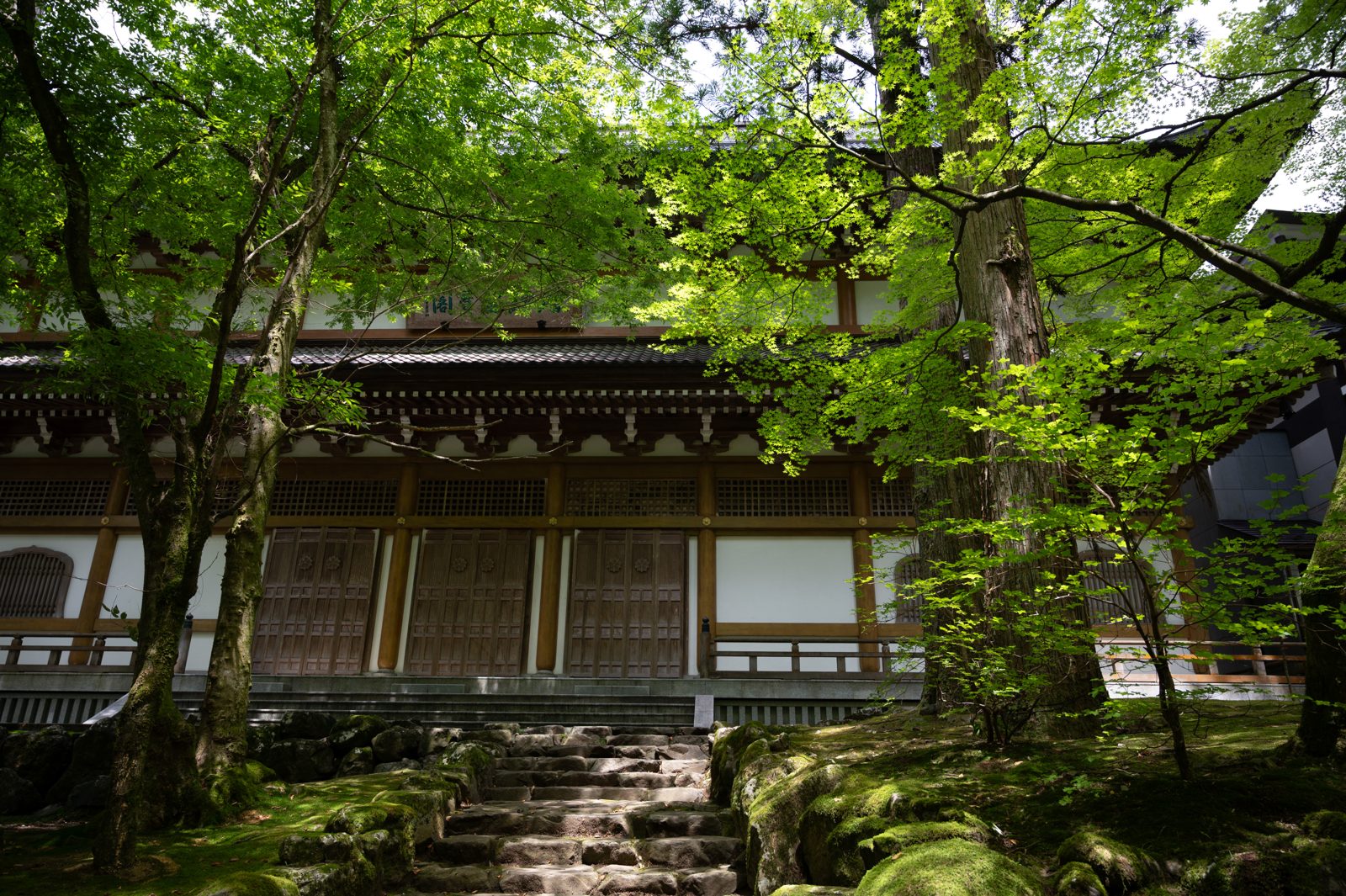
Hidden in a forest of towering cedars in Fukui Prefecture, Eiheiji Temple is one of the most important Zen Buddhist sites in Japan. It is not just a historic attraction. Eiheiji is still a working monastery where monks train in strict Zen practice every day.
This guide walks you through the history of Eiheiji, from the life of its founder Dogen to the buildings you can visit today. Knowing the story first makes walking through its halls far more meaningful.
What Is Eiheiji?
Eiheiji is one of the two head temples of Soto Zen Buddhism (the other is Sojiji in Yokohama). Because it was founded by Dogen himself, the founder of Japanese Soto Zen, it is regarded as the school’s original training center.
Its formal name is Kichijozan Eiheiji. The vast precinct holds more than 70 buildings, and the core seven, called the Shichido Garan (“Seven-Hall complex”), form the heart of monastic life.
Who Was Dogen?
Eiheiji’s story begins with Dogen Zenji (1200–1253).
- Born in Kyoto, he became a monk at Enryakuji on Mount Hiei
- He traveled to Song-dynasty China and trained under Master Rujing at Mount Tiantong
- He returned to Japan with the teaching of shikantaza, “just sitting” in zazen meditation
- He founded Koshoji Temple in Fukakusa, south of Kyoto
In Kyoto, however, pressure from the powerful Mount Hiei establishment grew. Dogen found a supporter in Hatano Yoshishige, a samurai lord of Shihi in Echizen Province (today’s Fukui) and a devoted follower, who invited him north.
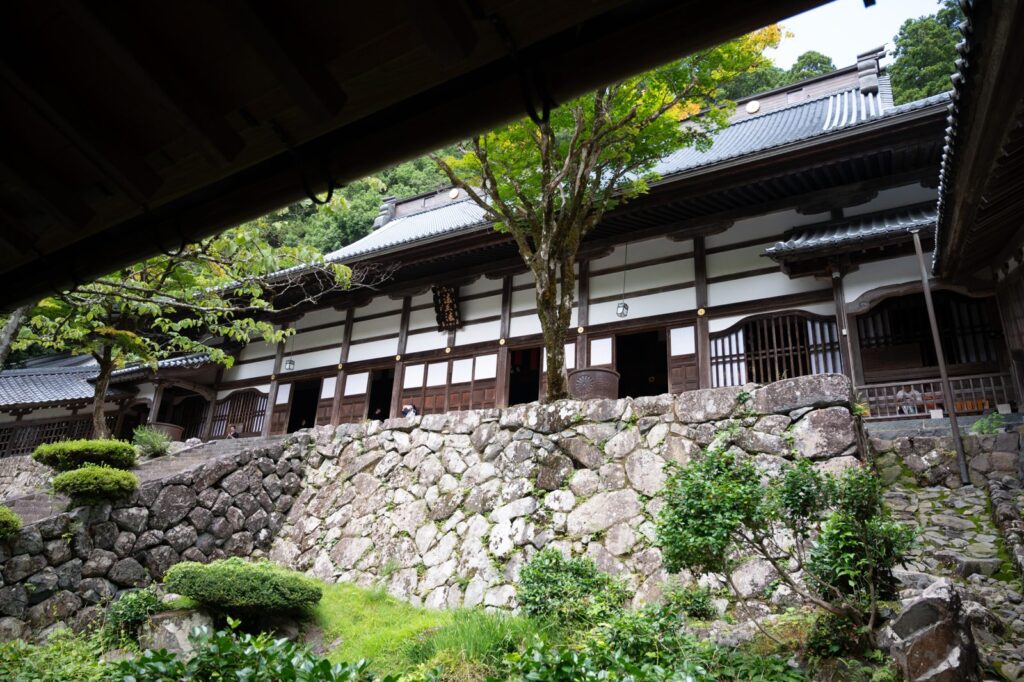
Eiheiji History Timeline
| Year | Event |
|---|---|
| 1243 | Dogen moves to Echizen at Hatano Yoshishige’s invitation |
| 1244 | Founds Sanshoho Daibutsu-ji, the beginning of Eiheiji |
| 1246 | Renames the temple Kichijozan Eiheiji |
| 1253 | Dogen dies in Kyoto; his disciple Koun Ejo becomes second abbot |
| 1340 | Buildings destroyed by fire during warfare |
| 1372 | Emperor Go-En’yu grants a plaque naming it “Japan’s Foremost Soto Training Center” |
| 1473 | Burned again amid the turmoil of the Onin War era |
| 1539 | Emperor Go-Nara reissues the imperial decree recognizing its status |
| 1749 | The Sanmon (main gate) is completed, the oldest surviving building |
| 1844 | The Chokushimon (Imperial Messenger Gate) is built |
| 1902 | Buddha Hall and Monks’ Hall built for Dogen’s 650th memorial |
| 1930 | Sanshokaku, the Daikuin kitchen hall, and corridors completed |
| 2019 | The Seven-Hall complex and other buildings designated Important Cultural Properties |
From Daibutsu-ji to Eiheiji (1244–1246)
In 1243 Dogen left Kyoto with his disciples. After spending a winter at nearby temples, in 1244 he founded Daibutsu-ji with Hatano’s support.
Two years later, in 1246, he renamed it Eiheiji. The name comes from “Yongping” (Eihei in Japanese), the era name of China’s Later Han dynasty, when Buddhism is said to have first arrived in China. It also means “eternal peace.” The name reflects Dogen’s hope that the true Dharma would take root in Japan just as it once had in China.
Here Dogen devoted himself to training disciples and writing. Much of his masterwork, the Shobogenzo, was compiled in this period, along with guides such as the Tenzo Kyokun (Instructions for the Cook), which still shape daily life at Eiheiji.
Decline and Revival After Dogen
In 1253 Dogen traveled to Kyoto for medical treatment and passed away there at 54. His closest disciple, Koun Ejo, succeeded him.
Under the third abbot, Tettsu Gikai, the temple grounds were developed further, but a dispute over succession, known as the Sandai Soron (“Third-Generation Controversy”), led Gikai to leave. With the Hatano family’s support also fading, Eiheiji fell into serious decline. The fifth abbot, Giun, revived the temple and laid the foundation for its future.
Fires and Imperial Recognition
Over nearly 800 years Eiheiji has burned many times, notably in 1340 and again in 1473. Even so, it earned high respect from the imperial court. In 1372 Emperor Go-En’yu named it “Japan’s Foremost Soto Training Center,” and in 1539 Emperor Go-Nara reaffirmed that status after the original documents were lost to fire.
Because of these repeated fires, every building standing today dates from the Edo period or later.
Building Today’s Eiheiji
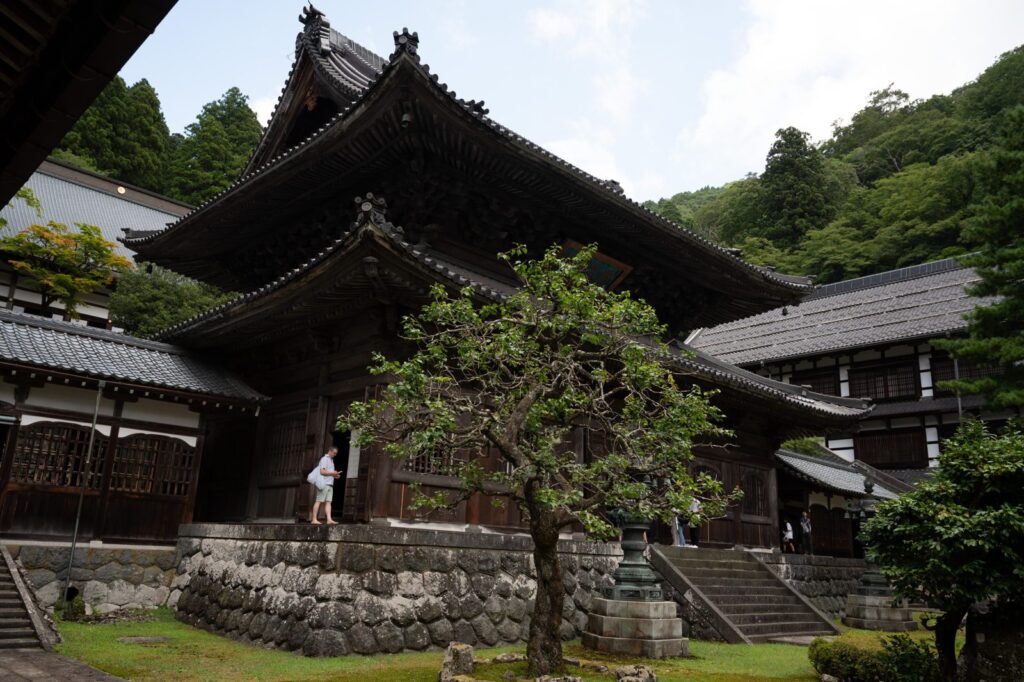
During the Edo period, the shogunate recognized Eiheiji and Sojiji as the head temples of Soto Zen, bringing stability. The Sanmon gate (1749) is the oldest building on the grounds, followed by the Hatto Dharma Hall (framework raised in 1842), the Chokushimon (1844), and others.
For Dogen’s 650th memorial in 1902, the Butsuden (Buddha Hall) and Sodo (Monks’ Hall) were built. By 1930, with the Sanshokaku hall, Daikuin, and covered corridors, Eiheiji looked much as it does today. In 2019, these buildings were designated National Important Cultural Properties.
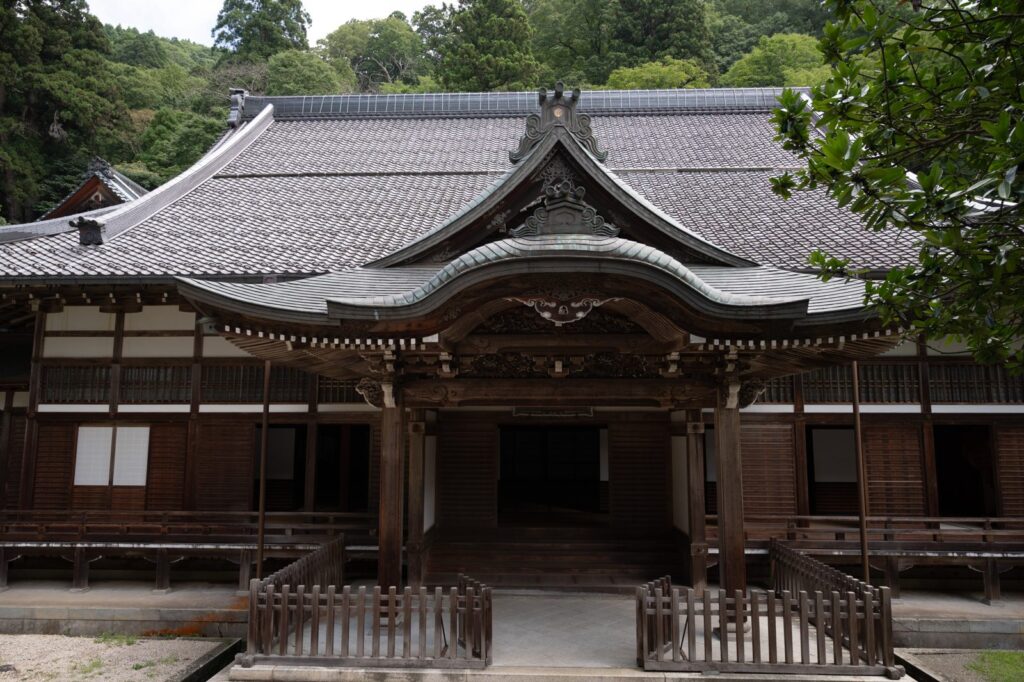
Highlights to See
The Seven-Hall Complex
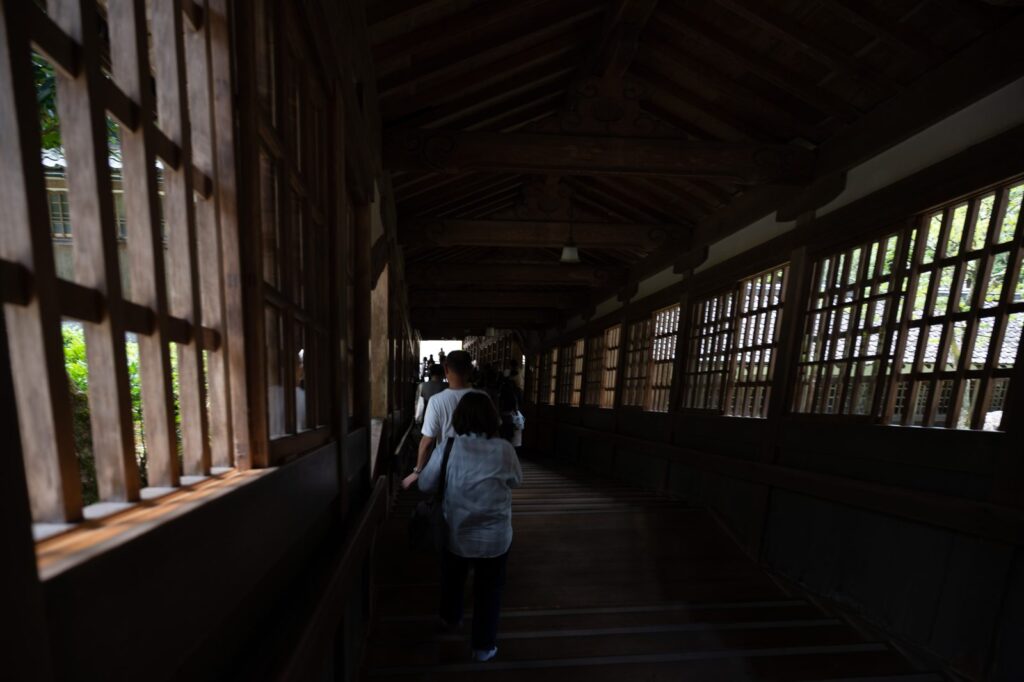
The Sanmon, Butsuden, Hatto, Sodo, Daikuin, bathhouse, and toilet hall are linked by long covered corridors. Visitors climb stairs and walk polished wooden floors through the actual spaces where monks train. The layout is often compared to a human body, with the Hatto as the head and the Butsuden as the heart.
Sanmon Gate
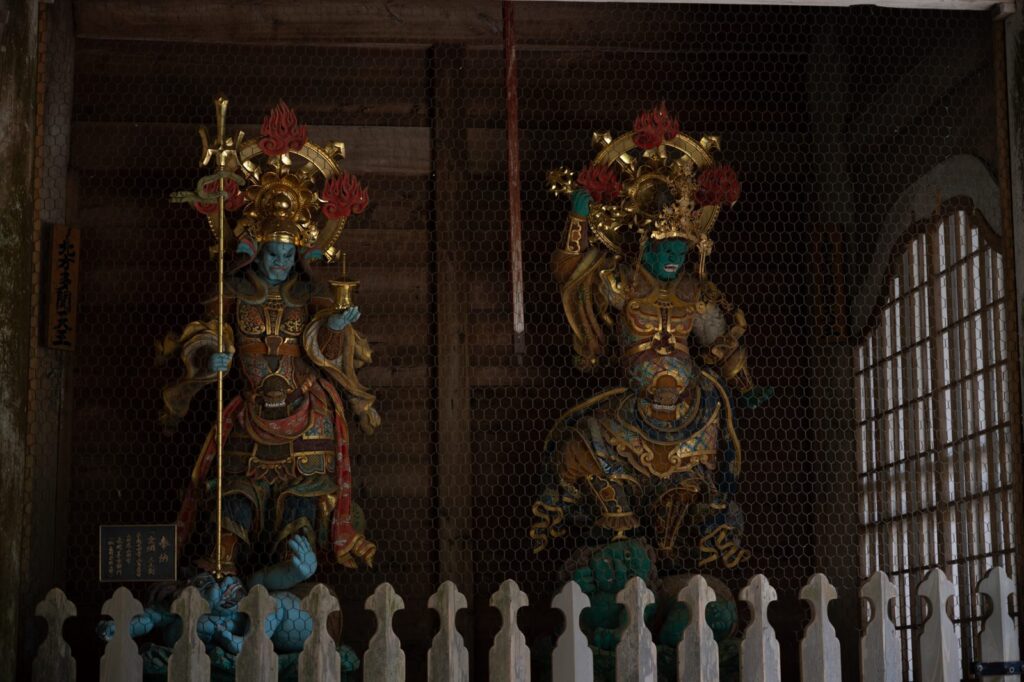
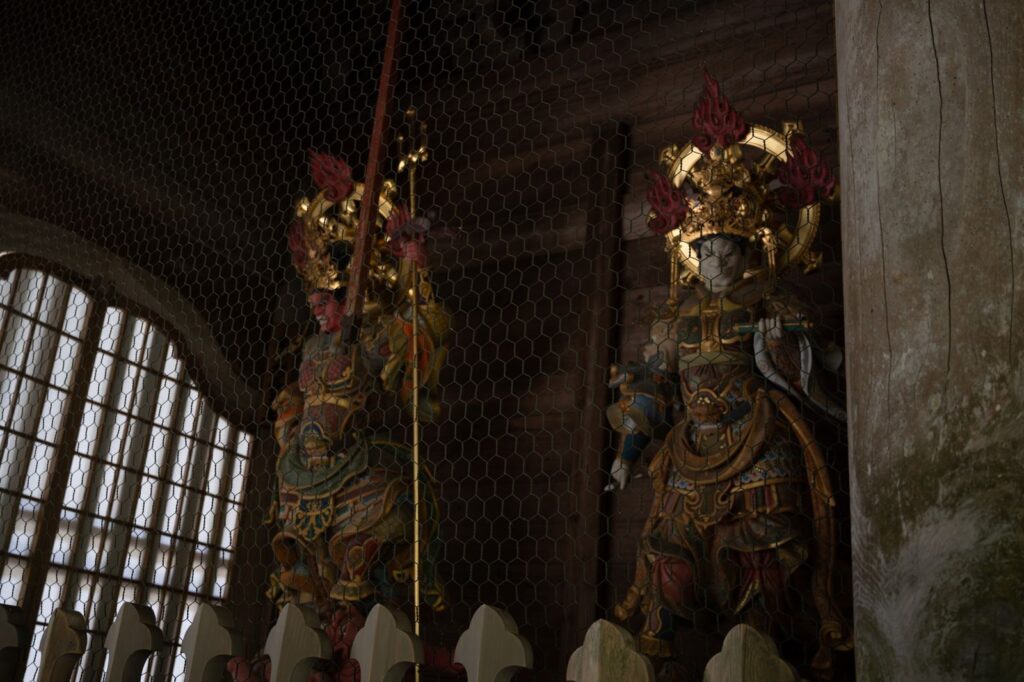
Built in 1749, this is Eiheiji’s oldest structure. Trainee monks pass through it only twice: when they enter the monastery and when they complete their training. Look up to see the Four Heavenly Kings guarding it.
Sanshokaku’s Painted Ceiling
The first hall on the visitor route is famous for its ceiling of 230 paintings by 144 Japanese artists, mostly birds and flowers. Hidden among them are two carp, two lions, and one squirrel. Legend says that if you find all five, your wish will come true.
Joyoden
This hall enshrines Dogen’s remains and is one of the most sacred places at Eiheiji, essentially the founder’s mausoleum.
Chokushimon (Imperial Messenger Gate)
This ornate gate opens only to receive envoys from the emperor, a reminder of the temple’s long imperial ties.
Visitor Information
| Item | Details |
|---|---|
| Name | Daihonzan Eiheiji (Kichijozan Eiheiji) |
| Address | 5-15 Shihi, Eiheiji-cho, Yoshida-gun, Fukui |
| Hours | 8:30–16:30 (please arrive by 16:00) |
| Admission | Adults ¥700 / Elementary & junior high ¥300 / Preschool free |
| Closed | Open daily |
| Phone | +81-776-63-3102 |
| Website | https://daihonzan-eiheiji.com/ |
Hours may change by season or for ceremonies. Check the official website before visiting.
How to Get There
- Bus: From JR Fukui Station (East Exit), take the Keifuku “Eiheiji Liner” express bus, about 30 minutes
- Train + bus: Echizen Railway to Eiheijiguchi Station, then a Keifuku bus, about 15 minutes
- Car: About 15 minutes from Eiheiji Sando IC on the Chubu Jukan Expressway (paid parking near the gate)
Visitor Tips
- There are many stairs, and strollers are not allowed inside (they can be left at reception)
- Pets other than assistance dogs must be kept in a carrier
- Eiheiji is an active monastery. Follow photography rules and do not photograph the monks
FAQ
Who founded Eiheiji, and when?
Dogen, the founder of Japanese Soto Zen, founded it in 1244 as Daibutsu-ji and renamed it Eiheiji in 1246.
What does “Eiheiji” mean?
It comes from the Chinese era name “Yongping,” when Buddhism first reached China, and means “Temple of Eternal Peace.”
What is the oldest building at Eiheiji?
The Sanmon gate, completed in 1749. All current buildings date from the Edo period or later because of repeated fires.
What is the difference between Eiheiji and Sojiji?
Both are head temples of Soto Zen. Eiheiji was founded by Dogen; Sojiji in Yokohama was founded by Keizan, honored in Soto Zen as Taiso, the “Great Patriarch”.
How much is admission?
¥700 for adults and ¥300 for elementary and junior high school students.
Summary
Founded by Dogen in 1244 and renamed in 1246, Eiheiji has survived succession disputes, decline, and repeated fires to remain a living Zen monastery for nearly 800 years. The buildings you see today were rebuilt between the Edo and Showa periods, but the daily rhythm of zazen inside them continues just as Dogen taught. Walk its corridors knowing this history, and the silence feels even deeper.
コメント