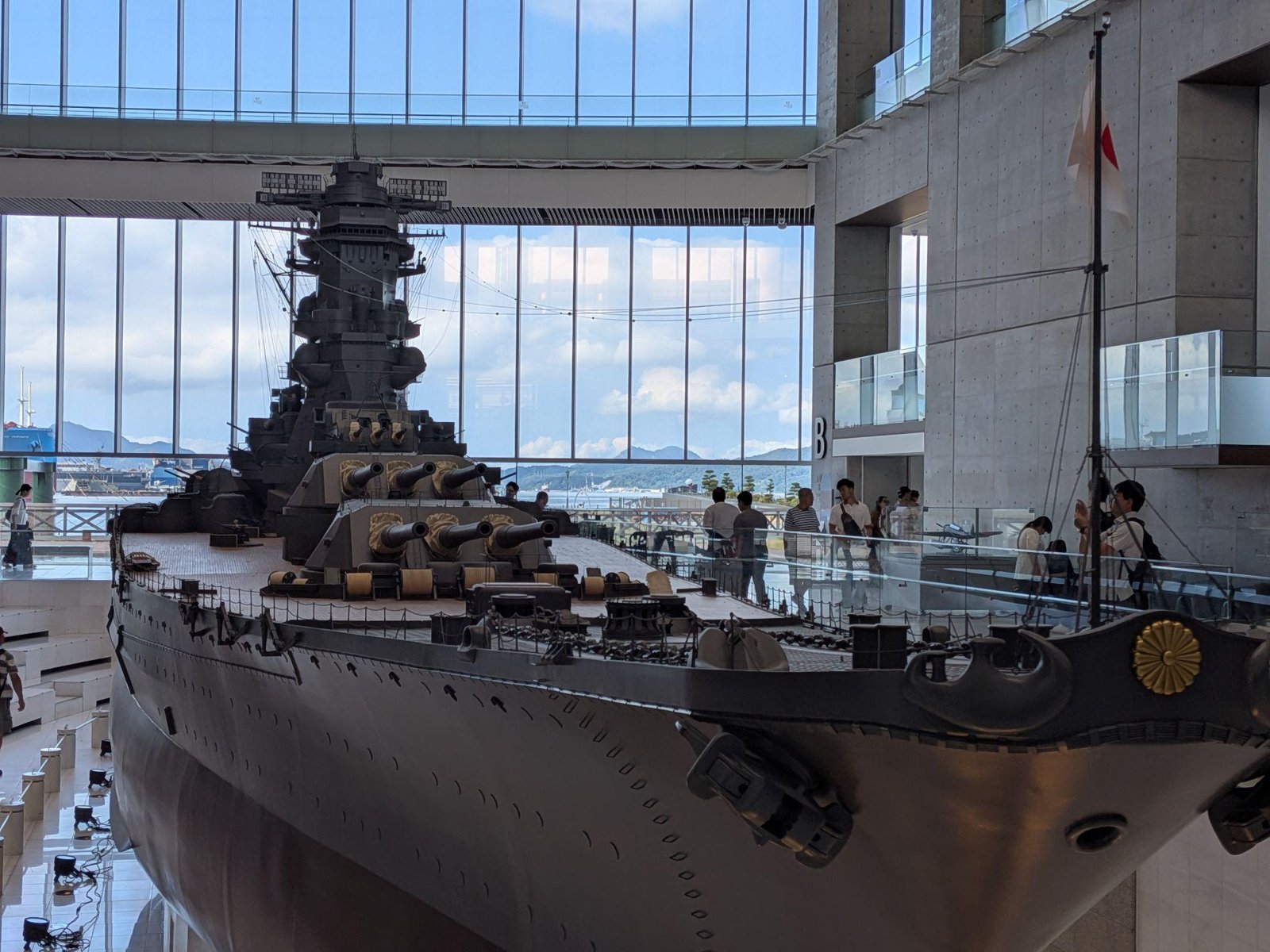
The Yamato Museum (officially the Kure Maritime Museum) in Kure, Hiroshima Prefecture, tells the story of Kure – the city where the battleship Yamato was built – and of the shipbuilding and science that powered Japan’s modernization. Twenty years after it first opened in 2005, the museum reopened on April 23, 2026 after a renovation closure of about one year.
This guide covers the highlights of the renewed Yamato Museum, along with ticket prices, access and ways to get in for less.
- Key Points
- Yamato Museum: Basic Information
- Must-See 1: The 26.3m, 1/10-Scale Battleship Yamato
- Must-See 2: Real Artifacts, from the Zero Fighter to the Kaiten
- Must-See 3: The Redesigned 3F “Science and Technology Gallery”
- Must-See 4: Exhibits Made Easier for Everyone
- Must-See 5: Views of the Seto Inland Sea and the Free Satellite
- How to Save on Admission
- How to Get to the Yamato Museum
- Tips for Your Visit
- FAQ
- Summary
Key Points
- The museum’s centerpiece is a 26.3m-long, 1/10-scale model of the battleship Yamato – 19 details were corrected in the 2026 renovation
- The 1F Large Exhibits Room displays real artifacts, including a Mitsubishi A6M Zero fighter and the Kaiten human torpedo
- The 3F gallery was completely redesigned, adding the history of the Kure and Hiro naval arsenals and hands-on exhibits
- About a 5-minute walk from JR Kure Station, and admission is free with the Miyajima-Setouchi tabiwa Gururin Pass
Yamato Museum: Basic Information
| Item | Details |
|---|---|
| Official name | Kure Maritime Museum (Yamato Museum) |
| Address | 5-20 Takaramachi, Kure, Hiroshima |
| Opening hours | 9:00–18:00 (last entry to the galleries 17:30) |
| Closed | Tuesdays (Wednesday if Tuesday is a national holiday) *Open every day Apr 29–May 5, Jul 21–Aug 31 and Dec 29–Jan 3 |
| Admission (non-Kure residents) | Adults (university students and older) ¥1,000 / High school students ¥300 / Elementary & junior high students ¥200 / Preschoolers free |
| Access | About 5 minutes on foot from JR Kure Station |
| Suggested visit time | About 1 hour |
*Kure residents pay ¥500 (adults); high school and younger are free. Please check the official website for the latest information.
Must-See 1: The 26.3m, 1/10-Scale Battleship Yamato
Right past the entrance, the museum’s symbol awaits in the 1F “Yamato Hiroba” hall: a 1/10-scale model of the battleship Yamato. The real ship was 263m long, so even the model stretches 26.3m. Everything down to the main guns and screw propellers is reproduced in fine detail – you can’t help but look up in awe.
In the 2026 renovation, 19 parts of the model were corrected based on some 20 years of research and seabed surveys since the museum opened. For example, the chrysanthemum crest on the bow was changed from 15cm to 10cm. It’s an exhibit that rewards repeat visits.
Must-See 2: Real Artifacts, from the Zero Fighter to the Kaiten
In the 1F Large Exhibits Room, you can see genuine wartime artifacts up close.
- A real Mitsubishi A6M Zero fighter
- The Kairyu midget submarine
- An actual Yarrow boiler from the battleship Kongo
- Shells the same size as those used on the battleship Yamato
The real attraction is feeling their true scale – something photos and text can hardly convey.
Must-See 3: The Redesigned 3F “Science and Technology Gallery”
The entire 3rd floor was rebuilt in this renovation. Alongside the Kure Naval Arsenal, which built warships, it now also presents the history of the Hiro Naval Arsenal, which researched and developed aircraft such as flying boats.
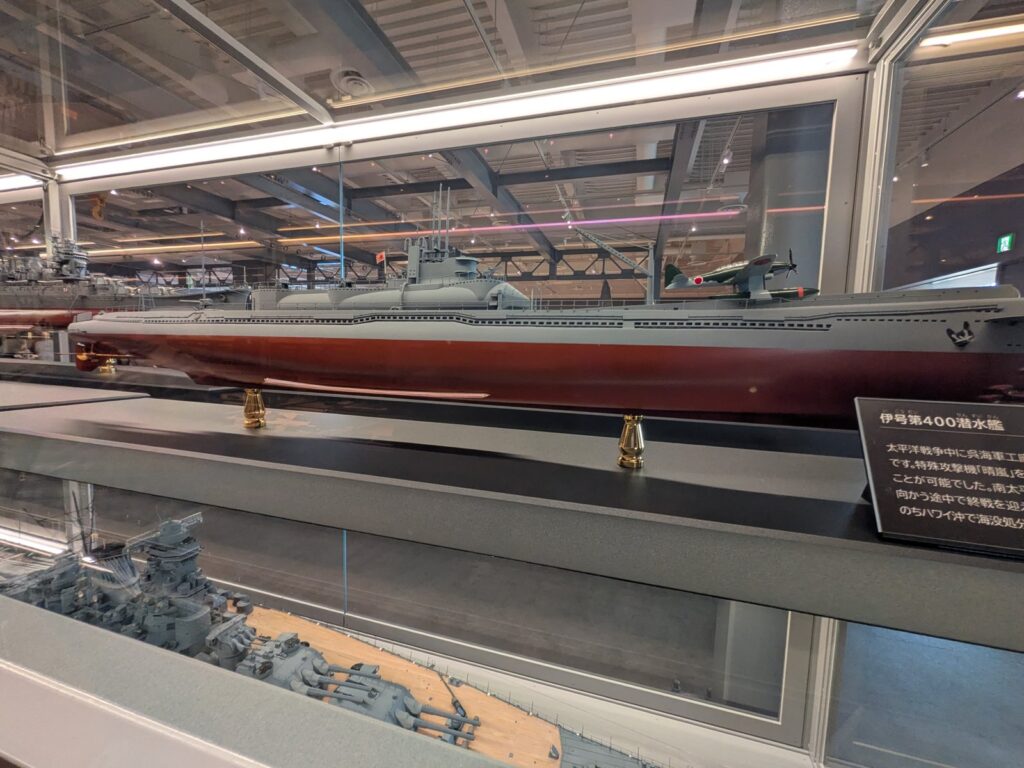
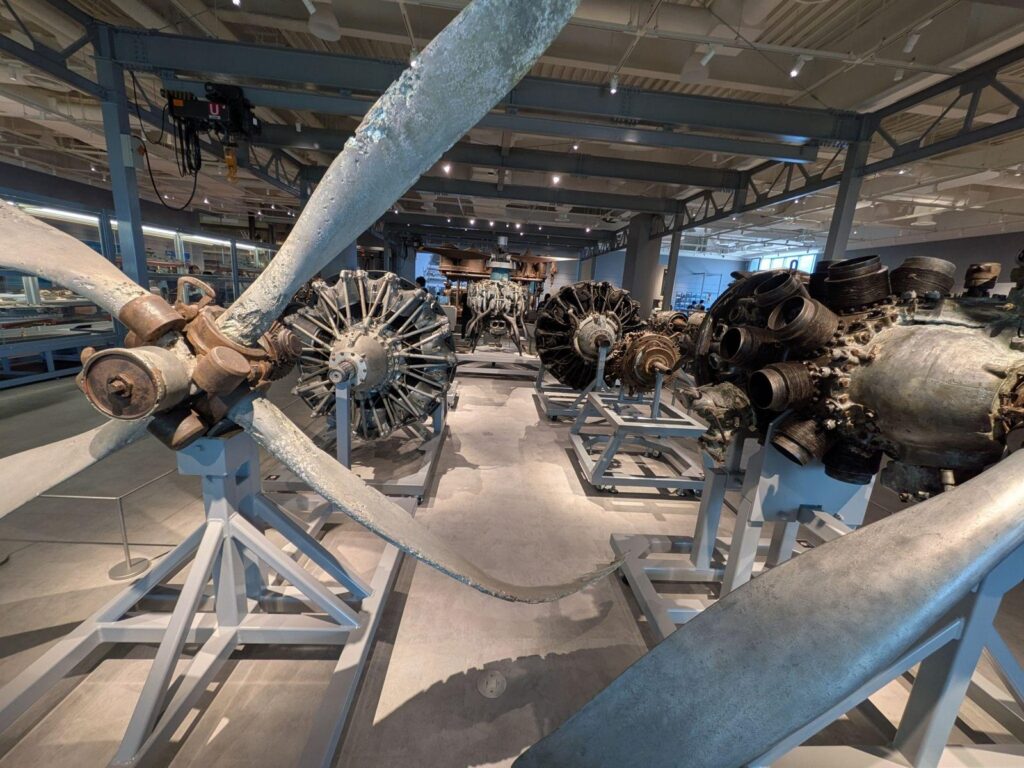
Real engines are on display too, including a Homare engine found on a U.S. military facility in Hiro and a Kasei engine donated by the Smithsonian National Air and Space Museum. There’s also a corner where you can touch a 36cm main-gun shell and armor plate from the Kongo-class battleships – more exhibits now let you learn with your hands, not just your eyes.
Must-See 4: Exhibits Made Easier for Everyone
The renovation also focused on making the museum enjoyable for all visitors.
- Text on the explanation panels is now about 30–40% larger
- A smartphone audio guide now supports 24 languages
- New “touchable models” let visitors with visual impairments feel the shapes
- Space under the display cases lets wheelchair users get close
International visitors, families and people of all ages can now explore at their own pace.
Must-See 5: Views of the Seto Inland Sea and the Free Satellite
Large windows inside the museum look out over Kure Port and the Seto Inland Sea. After the exhibits, it’s worth taking a seat and enjoying the view for a while.
With a same-day Yamato Museum ticket, you can also visit the Yamato Museum Satellite inside “Viewport Kure” in front of JR Kure Station for free. Be sure to stop by.
How to Save on Admission
Besides regular tickets, there are a few ways to get into the Yamato Museum for less.
- Miyajima-Setouchi tabiwa Gururin Pass: the pass includes a Yamato Museum admission ticket, so entry is effectively free (see our guide: How to Use the Miyajima-Setouchi tabiwa Gururin Pass)
- Combined ticket with the Irifuneyama Memorial Hall: ¥1,050 for non-Kure-resident adults to visit both
How to Get to the Yamato Museum
From JR Hiroshima Station, take the JR Kure Line and get off at Kure Station. The Yamato Museum is about a 5-minute walk from there. If you drive, use one of the paid parking lots nearby.
Right next door is the free JMSDF Kure Museum, nicknamed the “Iron Whale Museum” (Tetsu no Kujira-kan), where you can step inside a real submarine. We recommend visiting both.
Tips for Your Visit
- Photography is prohibited for many exhibits – check which areas allow photos when you enter
- During busy periods such as summer vacation, Golden Week and New Year, ticket sales hours may change
- Check the opening calendar on the official website for exact opening days
FAQ
When did the Yamato Museum reopen?
It reopened on April 23, 2026, after being closed for about one year for renovation.
How much is admission to the Yamato Museum?
For individual visitors living outside Kure: adults (university students and older) ¥1,000, high school students ¥300, elementary and junior high students ¥200. Preschoolers are free.
When is the Yamato Museum closed?
Tuesdays (or Wednesday if Tuesday is a national holiday). However, it is open every day from April 29 to May 5, July 21 to August 31, and December 29 to January 3.
How long does it take to see the Yamato Museum?
Based on my own visit, about one hour. If you plan to combine it with the Iron Whale Museum and other nearby sights, allow extra time.
What is the nearest station to the Yamato Museum?
Kure Station on the JR Kure Line. It’s about a 5-minute walk from the station.
Summary
The renewed Yamato Museum is packed with highlights: the 26.3m, 1/10-scale battleship Yamato, real artifacts such as the Zero fighter and Kaiten, the redesigned 3F gallery and an audio guide in 24 languages. It’s just a 5-minute walk from JR Kure Station, and the Miyajima-Setouchi tabiwa Gururin Pass makes admission even more affordable.
If you’re visiting Kure, be sure to add the Yamato Museum to your itinerary.
コメント