*This article contains affiliate links (advertising).
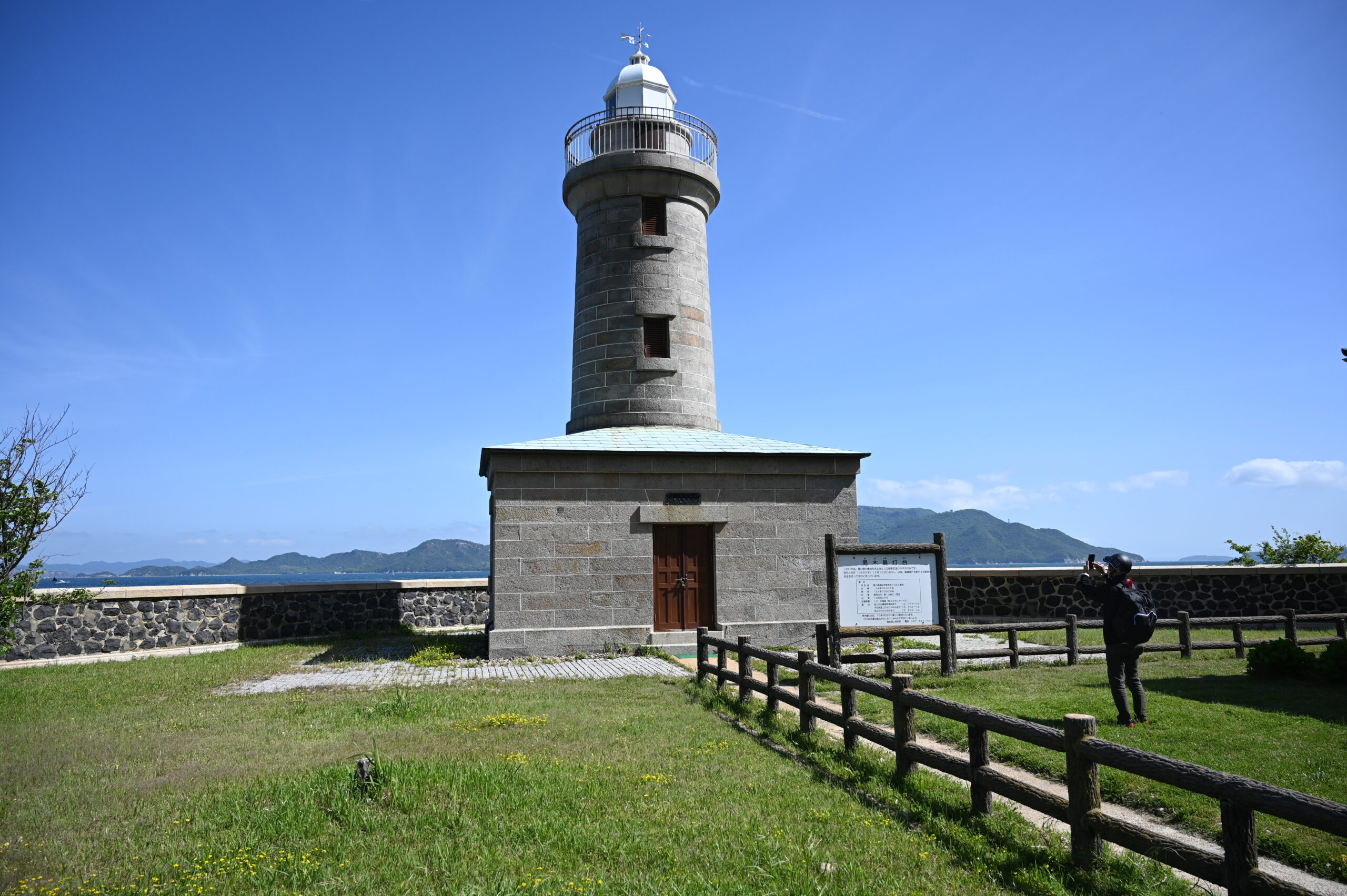
Of all the lighthouses in Japan, only three have never been painted — and one of them stands at the northern tip of Ogijima, a small island in the Seto Inland Sea near Takamatsu. This is Ogijima Lighthouse, a hidden gem that rarely appears on typical Japan itineraries but rewards the trip many times over.
“How do I get there?” “What’s worth seeing?” “What’s the history?” — in this guide, we answer all of that, drawing on our own visit to the island. By the end, you’ll have everything you need to appreciate Ogijima Lighthouse to the fullest.
What Is Ogijima Lighthouse
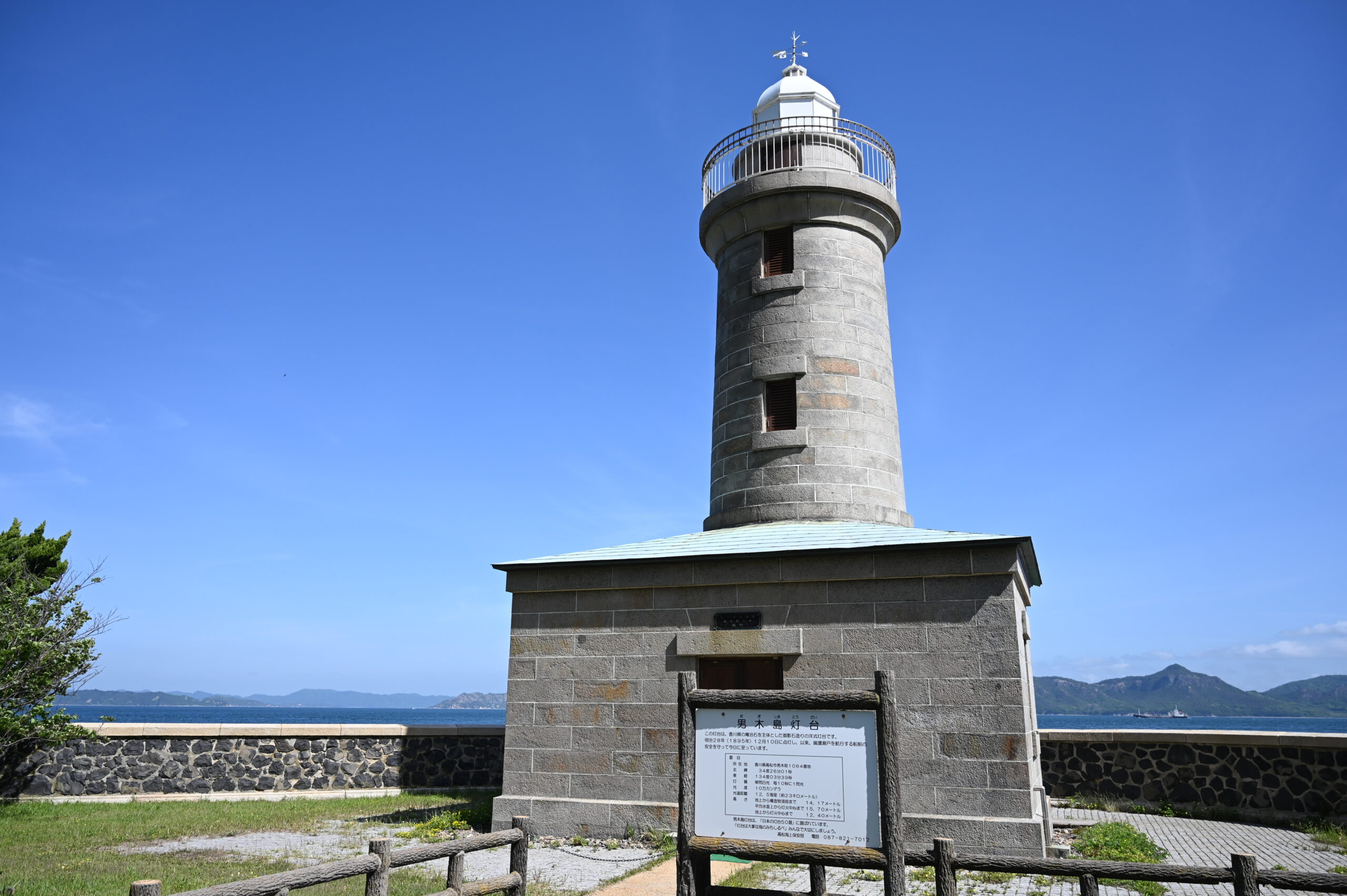
Ogijima Lighthouse stands on “Tōga-hana,” the northern tip of Ogijima in Takamatsu, Kagawa Prefecture. It was built in 1895 by Japanese engineers alone, after Richard Henry Brunton — known as the “father of Japanese lighthouses” — had already left Japan, in response to growing sea traffic in the Seto Inland Sea following the First Sino-Japanese War.
Its most striking feature is that the entire tower is built of granite (Aji stone) and has never been painted. Unpainted stone lighthouses like this are exceptionally rare in Japan — only three remain nationwide, and the other two, Tsunoshima Lighthouse and Mutsure-shima Lighthouse, are both in Yamaguchi Prefecture.
Thanks to its historical and cultural significance, Ogijima Lighthouse has been selected as one of Japan’s “50 Selected Lighthouses,” and in January 2026 it was designated a National Important Cultural Property. The surrounding area falls within the Seto Inland Sea National Park, and from the lighthouse you can watch ships pass through waters that see the second-highest volume of maritime traffic in Japan, after the Akashi Strait.
Quick Facts
| Item | Details |
|---|---|
| Location | Ogijima-chō, Takamatsu, Kagawa (Tōga-hana, northern tip of Ogijima) |
| Completed | 1895 |
| Structure | Solid granite (Aji stone), unpainted |
| Cultural property status | National Important Cultural Property (designated January 2026) |
| Other recognition | One of Japan’s “50 Selected Lighthouses” |
| Visiting | Exterior viewing only |
You can’t go inside the lighthouse itself, but the exterior is freely viewable at any time. Rising unpainted against the backdrop of the Seto Inland Sea, it has a striking presence you won’t find anywhere else in Japan.
Getting There from Ogijima Port
The only way to reach Ogijima Lighthouse is on foot — there are no rental bicycles on the island, so comfortable walking shoes are a must.
After arriving at Ogijima Port, take the path on the left. Heading right toward the torii gate instead will lead you into the island’s maze-like residential streets, so pay close attention to your direction from the start.
It takes about 25 minutes on foot from the port to the lighthouse. Parts of the path have overgrown grass, so if you’re visiting in summer, bringing insect repellent is a good idea.
For a more detailed walking route, including a tricky fork in the road that’s easy to miss, see our companion access guide.
A Filming Location for Films and Games
Thanks to its striking, photogenic silhouette, Ogijima Lighthouse has appeared as a filming location in a number of films and games over the years:
- The film “Times of Joy and Sorrow” (1957): A story about a lighthouse keeper and his family, filmed in part at Ogijima Lighthouse.
- “Love Letter”, a special program marking the 40th anniversary of the TBS drama series “Ai no Gekijō”: The coastline around the lighthouse was used as a setting.
- The visual novel “Summer Pockets” by Visual Arts: A lighthouse modeled on Ogijima Lighthouse plays a central role in the story, and the real-life location draws many fans on pilgrimage visits.
Knowing this backstory before you visit adds another layer of meaning to the view.
The Ogijima Lighthouse Museum
Right beside the lighthouse is the Ogijima Lighthouse Museum, housed in the former staff quarters where the lighthouse keeper and their family once lived. Inside, you’ll find exhibits on lighthouses across Japan as well as displays on Ogijima’s own history and daily life.
| Item | Details |
|---|---|
| Hours | 9:00 AM – 4:30 PM |
| Open days | Sundays and public holidays only, in principle (open daily from July 1 to August 31) |
| Admission | Free |
The museum may close temporarily in bad weather or for renovation work, so it’s worth checking the latest information on the official website before you go.
One Thing to Know Before You Go: No Restrooms Along the Way
This is something we learned firsthand: there are no restrooms anywhere along the path from Ogijima Port to the lighthouse.
That means about 25 minutes with no facilities in sight. If there’s any chance you’ll need one, we strongly recommend stopping at the waiting room at Ogijima Port before you set off. There are facilities once you reach the lighthouse, but nothing along the way — worth keeping in mind.
FAQ
Q. Can you go inside Ogijima Lighthouse? A. No, the interior isn’t open to visitors — you can only view it from the outside.
Q. How long does it take to walk from Ogijima Port to the lighthouse? A. About 25 minutes one way. Walking is the only option, as there are no rental bicycles on the island.
Q. Is the Ogijima Lighthouse Museum always open? A. It’s generally open Sundays and public holidays only, from 9:00 AM to 4:30 PM, but it’s open daily from July 1 to August 31. It’s a good idea to check for the latest hours before visiting.
Q. Are there restrooms along the path to the lighthouse? A. No, there are none along the way. It’s best to use the facilities at the Ogijima Port waiting room before setting off.
Where to stay: Takamatsu
Ferries to Megijima and Ogijima leave from Takamatsu Port, right next to JR Takamatsu Station. Staying near the station makes it easy to catch the first boat of the day, and gives you time to visit both islands.
Summary
Ogijima Lighthouse is one of only three unpainted stone lighthouses left in Japan, and a site of real historical importance — it was designated a National Important Cultural Property in January 2026. Learning about its construction by Japanese engineers alone in 1895, and its appearances in works like “Times of Joy and Sorrow,” “Love Letter,” and “Summer Pockets,” only deepens its appeal.
It’s about a 25-minute walk from the port to the lighthouse. Just remember there are no restrooms along the way, and pair your visit with a stop at the neighboring museum for the fullest experience of this remarkable, rarely-visited corner of the Seto Inland Sea.
Thank you for reading to the end.
コメント