
*This article contains affiliate links (advertising).
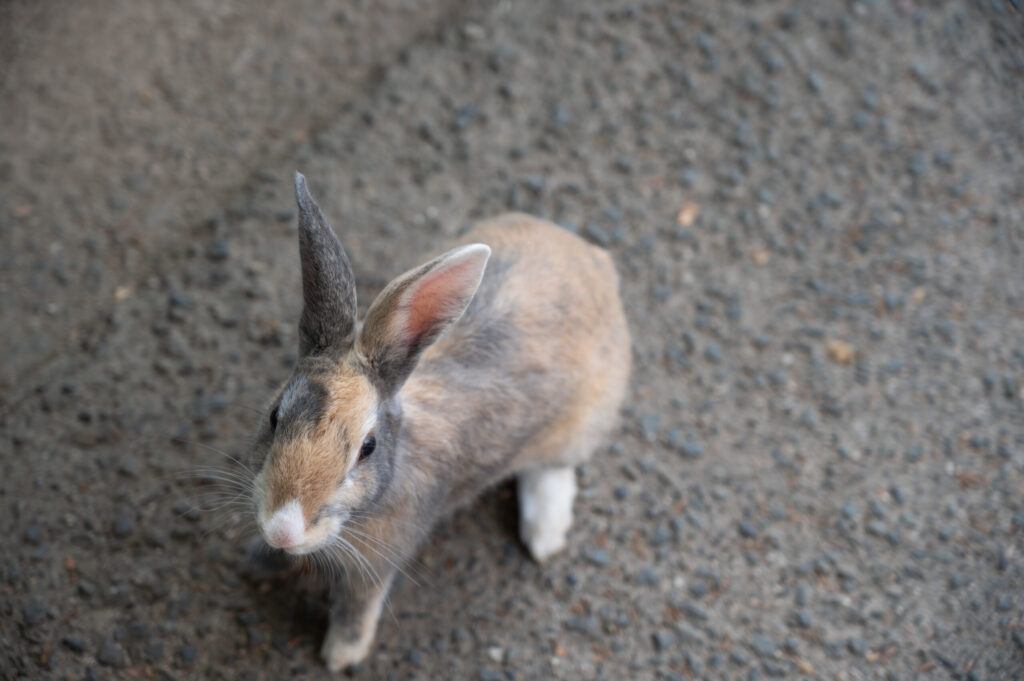
Just a 15-minute ferry ride from Tadanoumi Port in Takehara City, Hiroshima Prefecture, lies a small island in the Seto Inland Sea called Okunoshima. In recent years it’s become popular as “Rabbit Island,” where friendly wild rabbits greet visitors — but the island has another side, one that was erased from maps until the end of World War II.
During the war, the Japanese Imperial Army built a poison gas factory here, and the island’s very existence was kept secret. In this article, we’ll walk through Okunoshima’s history alongside photos taken on an actual visit to its war ruins.
The Geiyo Fortress Era — Before the Poison Gas Factory
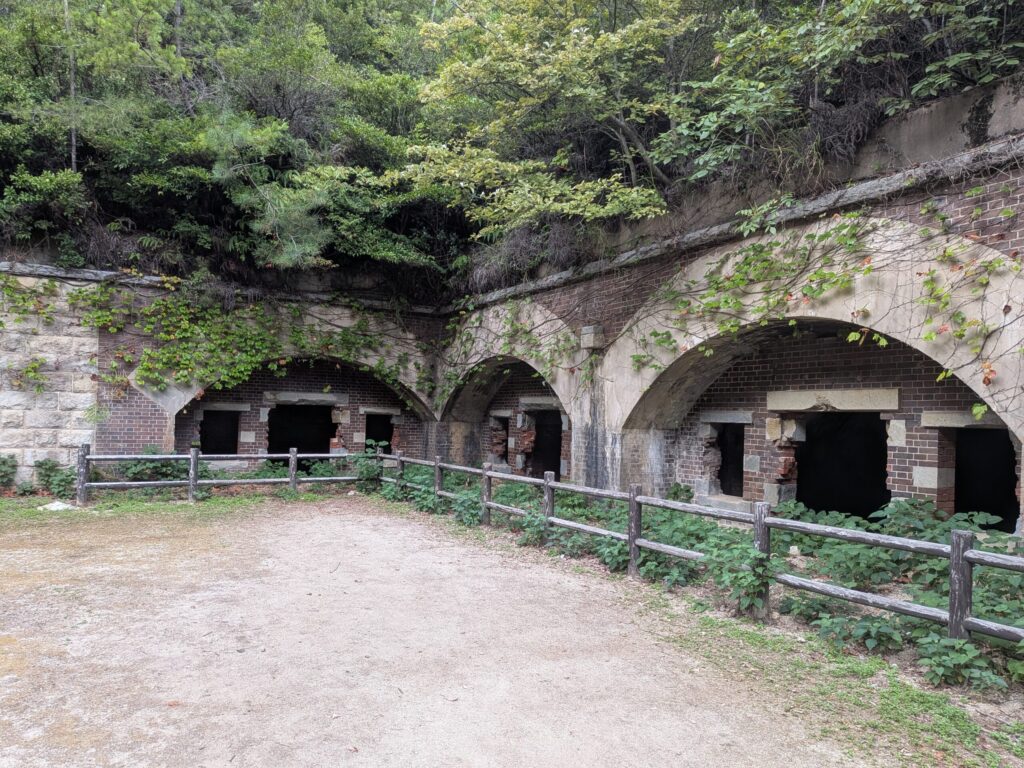
Okunoshima’s military use predates the poison gas factory. In 1902, before the outbreak of the Russo-Japanese War, a coastal defense position was established on the island as part of the “Geiyo Fortress,” a system of fortifications guarding the Seto Inland Sea. Three gun batteries — north, central, and south — were built on the island, with a total of 22 cannons.
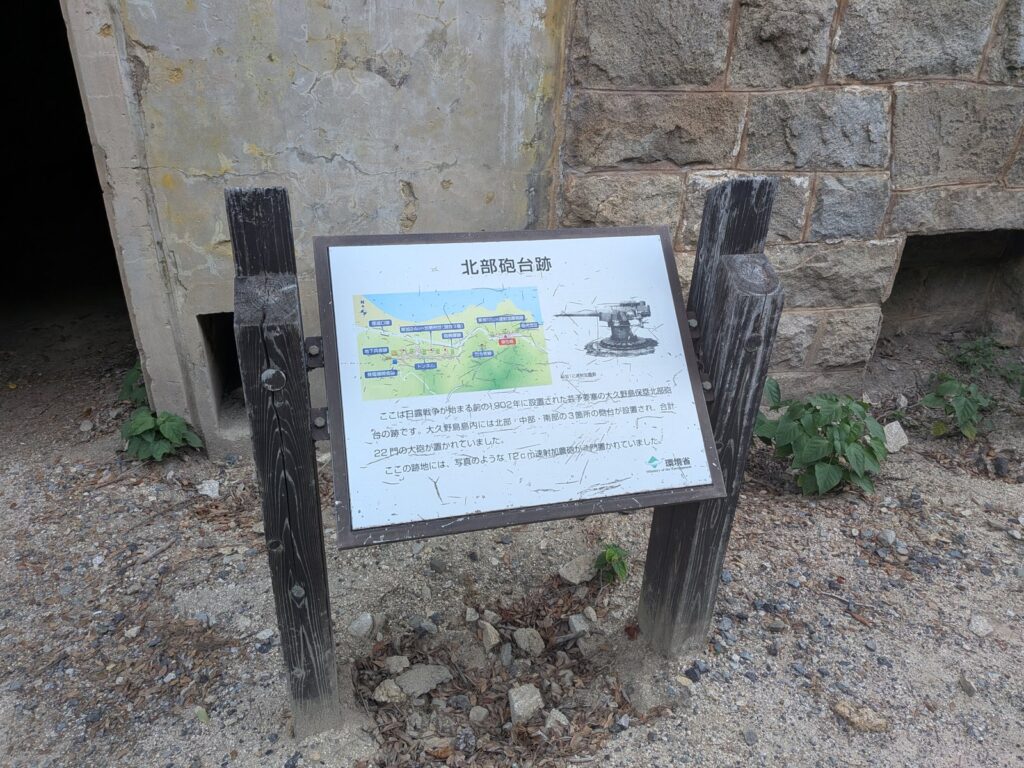
The Geiyo Fortress was decommissioned in 1924, but tunnels, underground barracks, and gun emplacements from that era still remain on the island today, with information boards set up by the Ministry of the Environment explaining their history.
Building the Poison Gas Factory and the “Island Erased from the Map”
After the fortress was decommissioned, the town of Tadanoumi (as it was then known) worked to attract army facilities as an economic measure. Construction began in 1927, and on April 1, 1929, the “Army Arsenal Tadanoumi Ordnance Factory” opened its doors. Under army policy adopted after the Great Kanto Earthquake, the island was chosen because labor and materials were easy to secure, any accident could be contained to the island itself, and it was relatively close to mainland China.
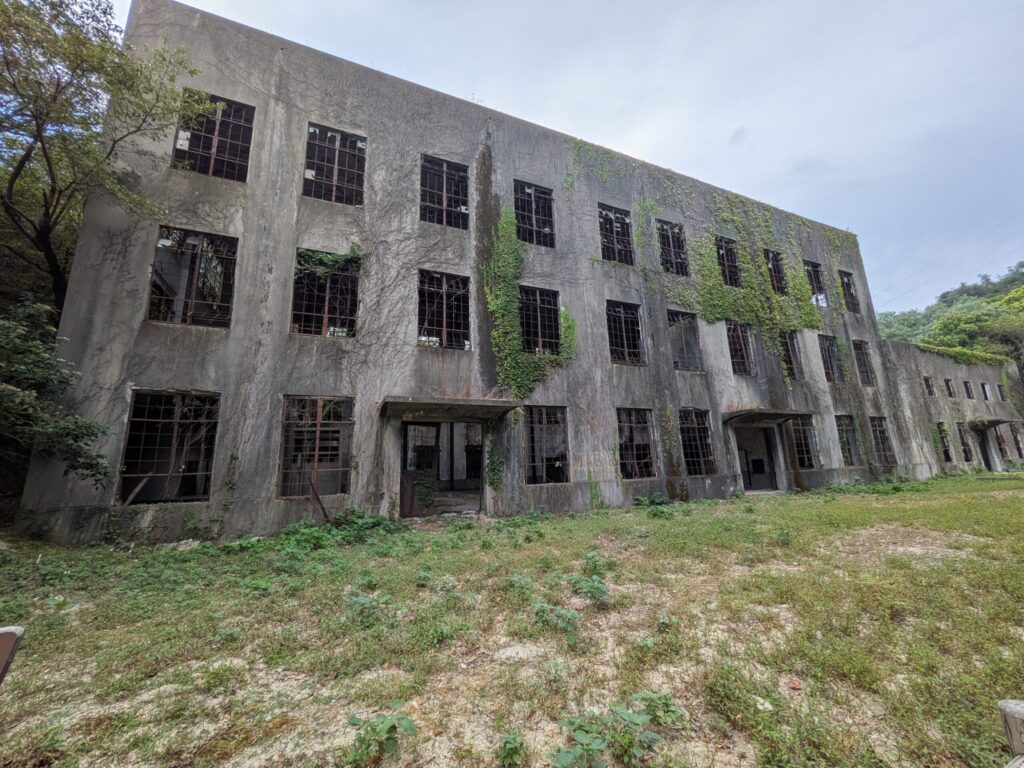
The factory’s existence was kept under strict secrecy. Maps published by the Army Land Survey Department at the time showed Okunoshima as a blank space, which is why it’s known as “the island erased from the map.” A gag order was enforced and military police kept close watch; the entire island was planted with trees to hide it under greenery, and buildings were camouflaged. It’s said that on the nearby Kure rail line, the window shutters were closed whenever trains passed the stretch where the island came into view.
The Poison Gases Produced Here
Between roughly 1929 and 1944, an estimated 6,600 tons of poison gas were manufactured on Okunoshima. To maintain secrecy, each agent was referred to by a color code rather than its chemical name.
| Category | Agent |
|---|---|
| Yellow Agent (blister agent) | Mustard gas (Yperite) |
| Red Agent (vomiting agent) | Diphenylcyanoarsine (DC) |
| Green Agent (tear agent) | Chloroacetophenone |
| Blood Agent | Hydrogen cyanide |
Smoke candles and the spherical warhead components of balloon bombs were also produced here. At its peak, up to about 5,000 people worked on the island at once, with a cumulative total of more than 6,500 workers over the years; roughly 6,800 people are estimated to have suffered health effects from poison gas exposure through production or postwar disposal work.
The End of the War and What Came After
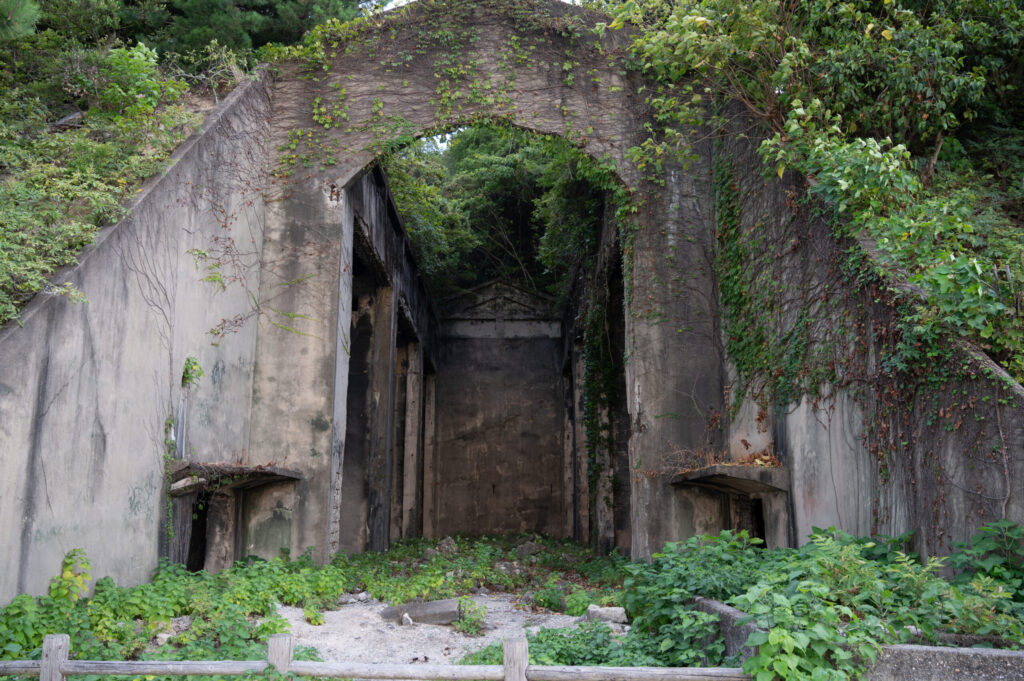
On August 15, 1945, factory workers on the island heard the surrender broadcast. Afterward, the Imperial Army ordered equipment dismantled and evidence destroyed; Hatsuichi Murakami, a machinist at the time, testified that starting on August 18 he dismantled newly installed production equipment and dumped it in the nearby sea.
In November of that year, the U.S. Army’s 41st Infantry Division surveyed the site, and the 58th Chemical Company began disposing of smoke candles and raw materials. Full-scale disposal was handed over to the British Commonwealth Occupation Force (BCOF) in May 1946 in an operation known as “Operation Lewisite.” About 300 Japanese workers were mobilized: roughly 1,854 tons of mustard gas and lewisite were dumped at sea off the coast of Kochi Prefecture, the sneezing agent (Red Agent) was buried in air-raid shelters on the island, and smoke candles were incinerated. This disposal work continued for about a year, from May 8, 1946 to May 27, 1947.
The Okunoshima Poison Gas Museum
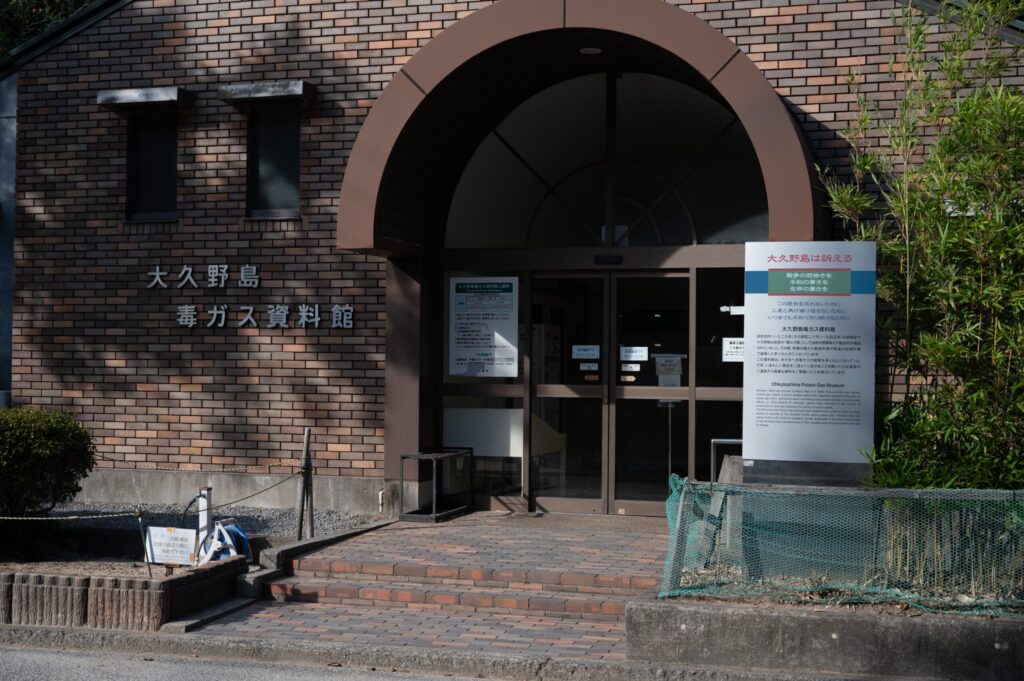
The island is home to the Okunoshima Poison Gas Museum, which displays materials documenting this history. Many of its most valuable items were donated by former factory workers and their families. The museum exists to pass on the tragedy of war and the value of peace to future generations. A sign at the entrance reads, “Okunoshima appeals: the tragedy of war, the preciousness of peace, the weight of life” — a reminder of the history this island carries.
Beyond the museum, ruins connected to both the poison gas factory and the earlier Geiyo Fortress are scattered across the island. Many are off-limits due to age and deterioration, so it’s best to follow the posted signs when exploring.
Why It Became “Rabbit Island”
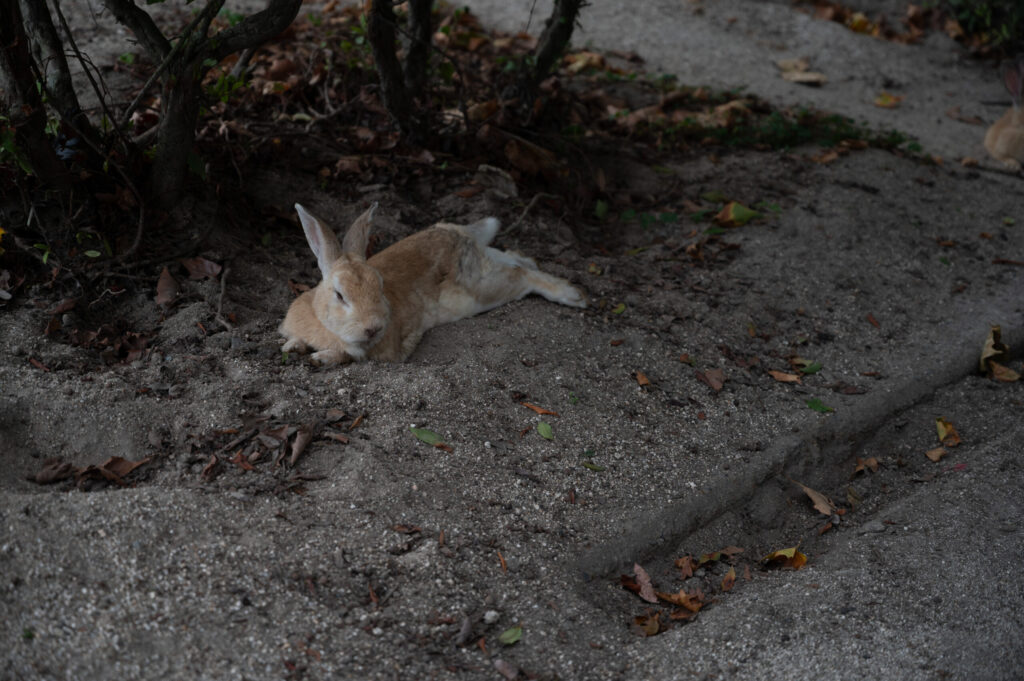
Today, Okunoshima is best known as “Rabbit Island,” home to friendly wild rabbits that greet visitors. You may hear the story that they’re descendants of rabbits used in poison gas testing, but this is generally considered a myth. Hatsuichi Murakami, the museum’s first director, testified that he never once saw a wild rabbit on the island during the war, and any rabbits used in testing are believed to have been culled after the war during facility disposal — meaning today’s rabbits have no blood connection to them.
According to the more widely accepted account, the island began moving toward becoming a National Vacation Village in 1961, and rabbits were chosen as a mascot animal for the park. In 1971, eight rabbits kept at a local elementary school were released on the island; they went feral and bred, becoming the ancestors of today’s population. Additional rabbits were released over the years as well, further increasing their numbers.
The rabbit population is heavily influenced by feeding from visitors. Numbers reportedly grew to an estimated 920 or more by 2018, but a visual survey in 2021 found only around 400 — likely due to reduced feeding as tourist numbers dropped during the COVID-19 pandemic.
Getting There and Tips for Visiting
Okunoshima is about a 15-minute ferry ride from Tadanoumi Port, which is roughly a 3-minute walk from Tadanoumi Station on the JR Kure Line. The island has accommodation at Kyukamura Okunoshima and a campsite, so you can visit as a day trip or stay overnight to explore at a more leisurely pace.
- Admission to the Poison Gas Museum requires a fee; it’s worth checking opening hours on the official site beforehand.
- Many of the war ruins have deteriorated with age, and several areas are off-limits. Always follow posted signs and barriers.
- Feed the rabbits only with pellets sold on the island — vegetable scraps, bread, and other human food can harm their health.
- Avoid picking up or chasing the rabbits; let them approach you at their own pace.
Okunoshima offers a rare kind of trip — one where you can be charmed by adorable rabbits while also reflecting on the weight of the history this island carries. It’s well worth experiencing for yourself.
Where to stay: Takehara
Staying overnight in Takehara lets you explore at a relaxed pace and head out early before the crowds arrive.
コメント