Hiroshima Castle was built by the warlord Mori Terumoto at the mouth of the Ota River. In the Edo period, it was the center of the Hiroshima Domain, and after the Meiji era, military facilities were placed there. The main keep collapsed in the atomic bombing of 1945, and its exterior was rebuilt after the war.
In this article, I explain the history of Hiroshima Castle in an easy-to-follow way, with a timeline: its construction, the atomic bombing, the rebuilding of the main keep, and the closing of the main keep in March 2026. I also introduce the highlights of the castle grounds with photos I took while walking around.
I walked around the Hiroshima Castle grounds in the early afternoon of August 22, 2026. The main keep had already closed, so I saw it from the outside. All photos in this article were taken that day.
About the information in this article
- Information checked on: October 17, 2026 (on the official websites of Hiroshima Castle and Hiroshima City)
- The main keep of Hiroshima Castle closed on March 22, 2026. You cannot go inside, but you can see the exterior.
- Please check the latest information before you go.
- 1. What is Hiroshima Castle? | A flatland castle also called “Rijo” (Carp Castle)
- 2. The history of Hiroshima Castle
- Built by Mori Terumoto (1589-)
- The era of Fukushima Masanori and the confiscation of his fief (1600-1619)
- The Asano family ruled for 12 generations, about 250 years (1619 to the Meiji era)
- Military facilities after the Meiji era | Imperial General Headquarters in the First Sino-Japanese War
- The National Treasure main keep and the atomic bomb (1931 and 1945)
- Reconstruction of the keep’s exterior (1958) and the Ninomaru (1989-1994)
- Closing of the main keep (March 22, 2026)
- 3. Timeline of Hiroshima Castle
- 4. Highlights of the Hiroshima Castle grounds
- 5. Combine it with the Peace Memorial Park
- 6. FAQ
- 7. Summary
1. What is Hiroshima Castle? | A flatland castle also called “Rijo” (Carp Castle)
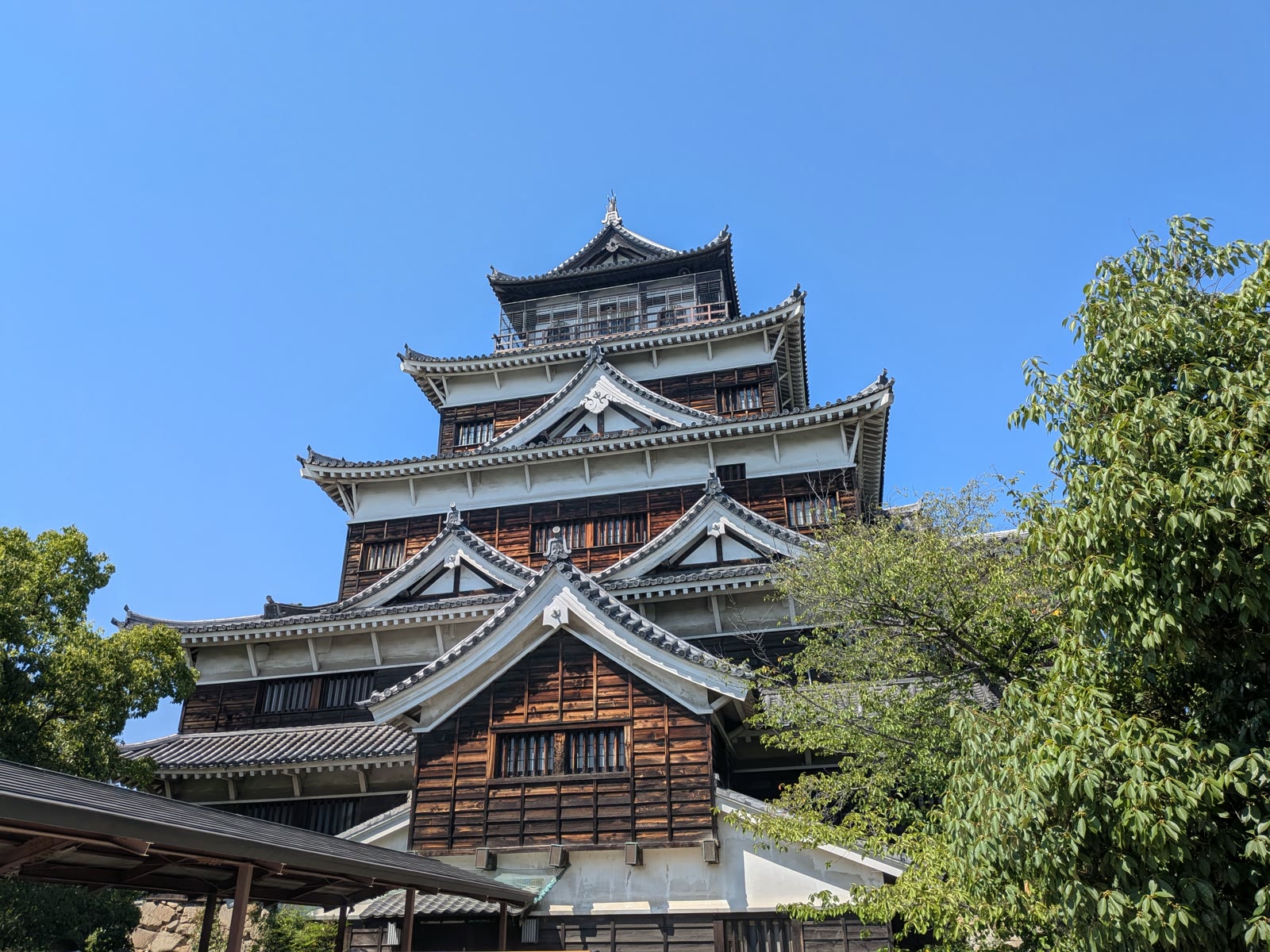
Hiroshima Castle is in Naka Ward, Hiroshima City. It is a “hirajiro” (flatland castle) built on the flat land of the delta at the mouth of the Ota River, and it is also known by the nickname “Rijo” (Carp Castle).
The Edo-period main keep consisted of a large keep connected by corridors to two smaller keeps. When it was built, it is thought to have been second in size only to the main keep of Osaka Castle. The present main keep is a postwar reconstruction of the exterior.
2. The history of Hiroshima Castle
Built by Mori Terumoto (1589-)
In 1589 (Tensho 17), Mori Terumoto, a daimyo of the Chugoku region, began building the castle at the mouth of the Ota River. Although the soft ground of the delta caused great difficulty, the castle is said to have been completed around 1599. Terumoto made it his base in 1591.
A castle town was built along with Hiroshima Castle, and this is said to be the beginning of today’s city of Hiroshima.
The era of Fukushima Masanori and the confiscation of his fief (1600-1619)
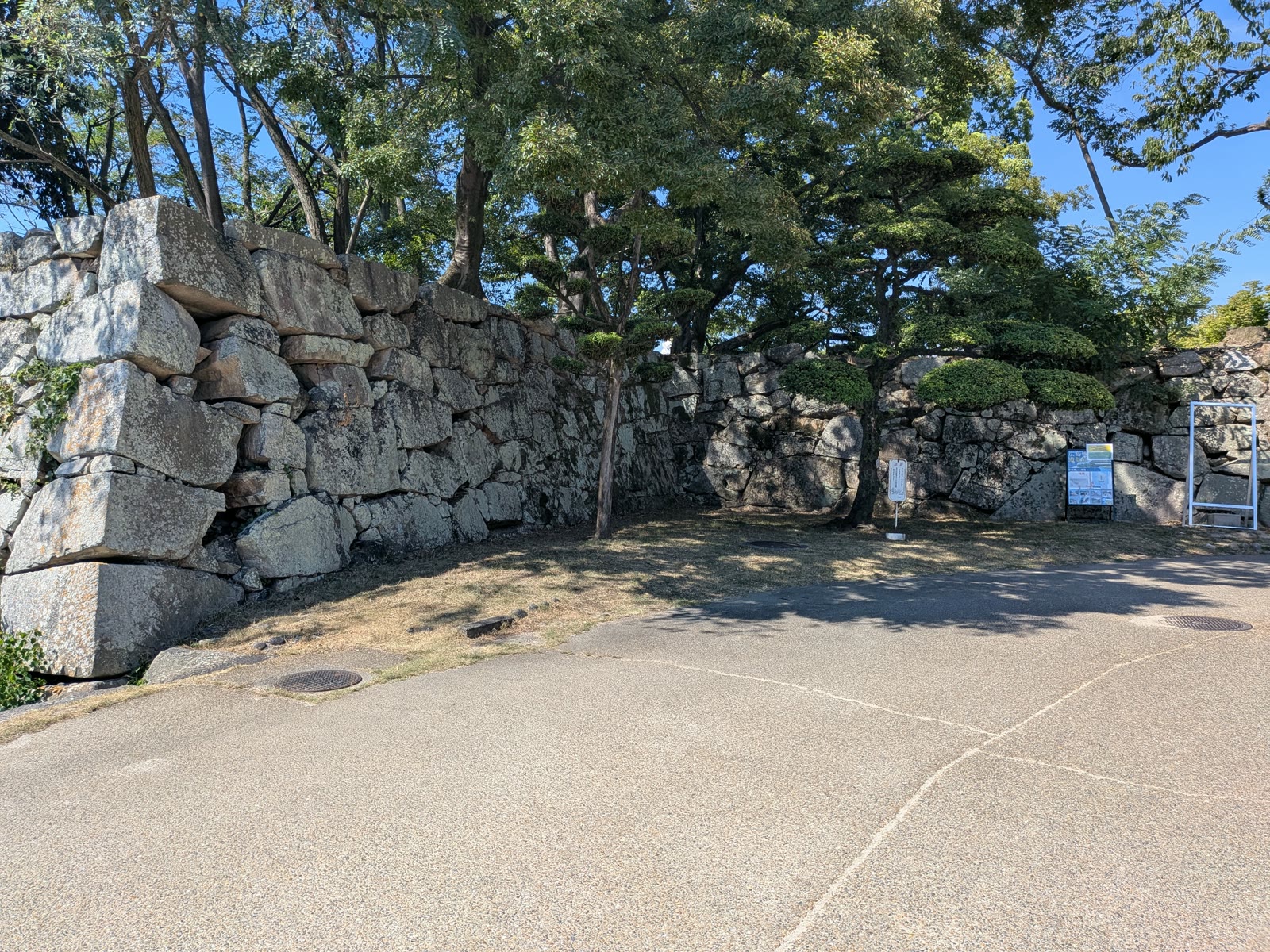
At the Battle of Sekigahara in 1600, Terumoto, the supreme commander of the Western Army, was defeated by Tokugawa Ieyasu and moved to what is now Yamaguchi Prefecture. Fukushima Masanori entered Hiroshima Castle in his place.
The stone walls remaining on the north and west sides of the castle are thought to have been built in Masanori’s time. However, Masanori was blamed for repairing the flood-damaged castle without the shogunate’s permission, and in 1619 his fief was confiscated (kaieki).
The Asano family ruled for 12 generations, about 250 years (1619 to the Meiji era)
In 1619 (Genna 5), Asano Nagaakira entered Hiroshima Castle and became the first lord of the Hiroshima Domain under the Asano family. The Asano family went on to rule Hiroshima for 12 generations, about 250 years, until the beginning of the Meiji era.
Military facilities after the Meiji era | Imperial General Headquarters in the First Sino-Japanese War
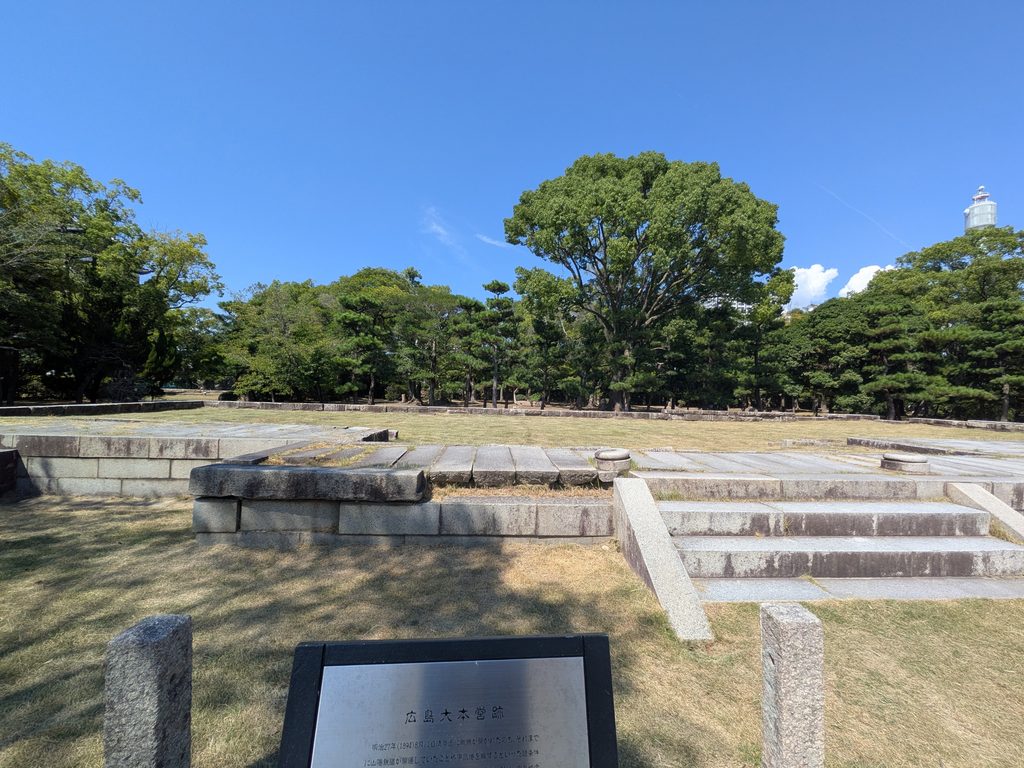
In the Meiji era, while many castles were torn down, the main keep of Hiroshima Castle was kept. Army facilities were placed inside the castle, and during the First Sino-Japanese War, the “Imperial General Headquarters” that directed the war was set up in a building in the Honmaru (inner citadel).
The Imperial General Headquarters building collapsed in the atomic bombing, and now only its foundation stones remain. As in the photo, you can see them in the Honmaru.
The National Treasure main keep and the atomic bomb (1931 and 1945)
The main keep, which had survived since the Edo period, was designated a National Treasure in 1931 (Showa 6). However, on August 6, 1945 (Showa 20), the atomic bomb brought down the main keep, and all of the castle’s buildings were lost.
On the castle grounds there are also “A-bombed trees” that survived the atomic bomb and are still alive today. The highlights map on the official website introduces a Kurogane holly, a Maruba willow and a eucalyptus.
Reconstruction of the keep’s exterior (1958) and the Ninomaru (1989-1994)
After the war, in 1958 (Showa 33), a main keep with its exterior rebuilt in reinforced concrete was completed and opened as a history museum, the “Hiroshima Castle Local History Museum.”
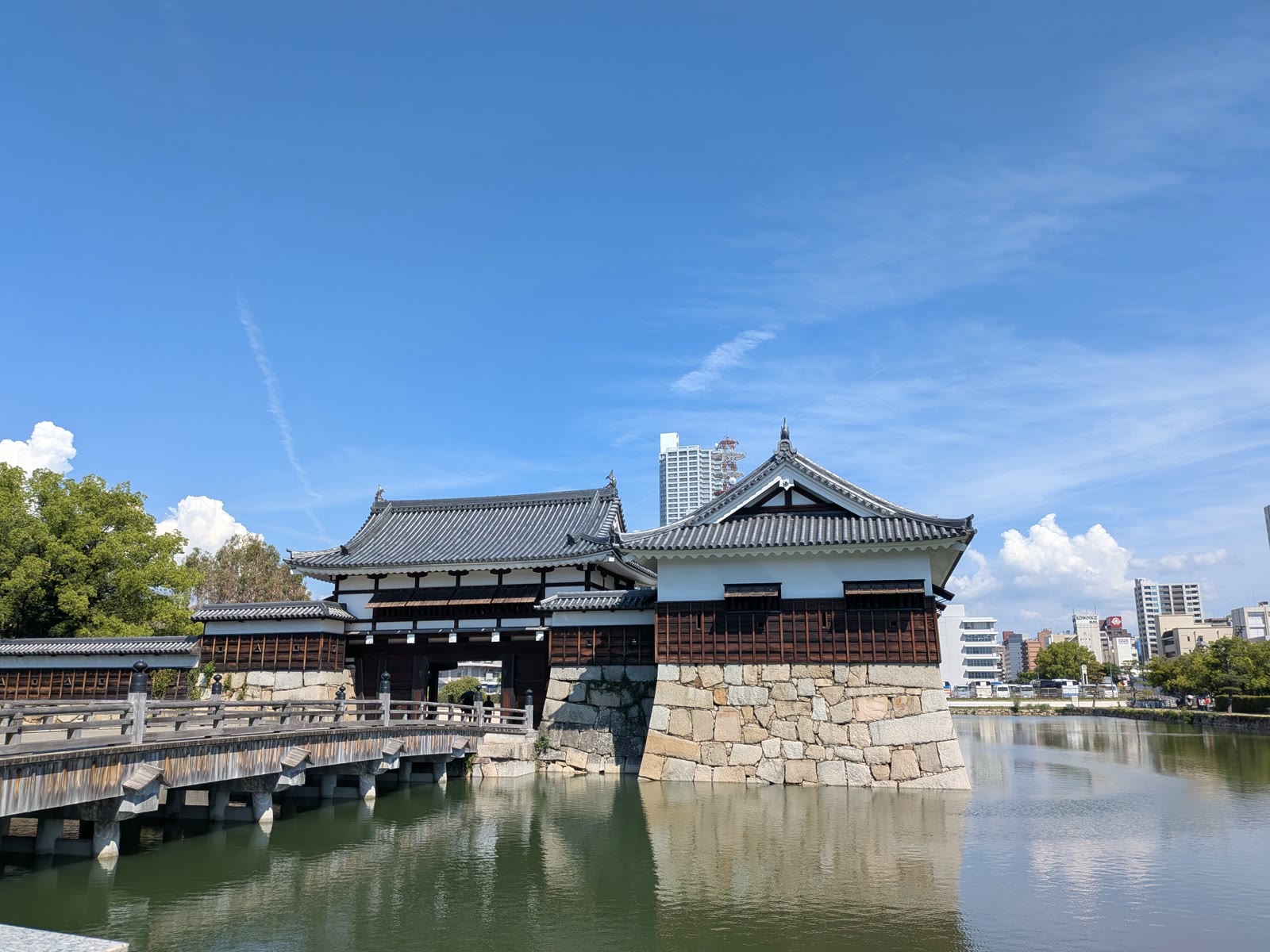
In addition, from 1989 to 1994 (Heisei 1-6), the Omote Gomon gate, Hira Yagura, Tamon Yagura and Taiko Yagura turrets of the Ninomaru (second citadel) were rebuilt in wood as they looked in the Edo period. The Omote Gomon gate in the photo and the wooden “Gomon Bridge” over the inner moat form the entrance.
Closing of the main keep (March 22, 2026)
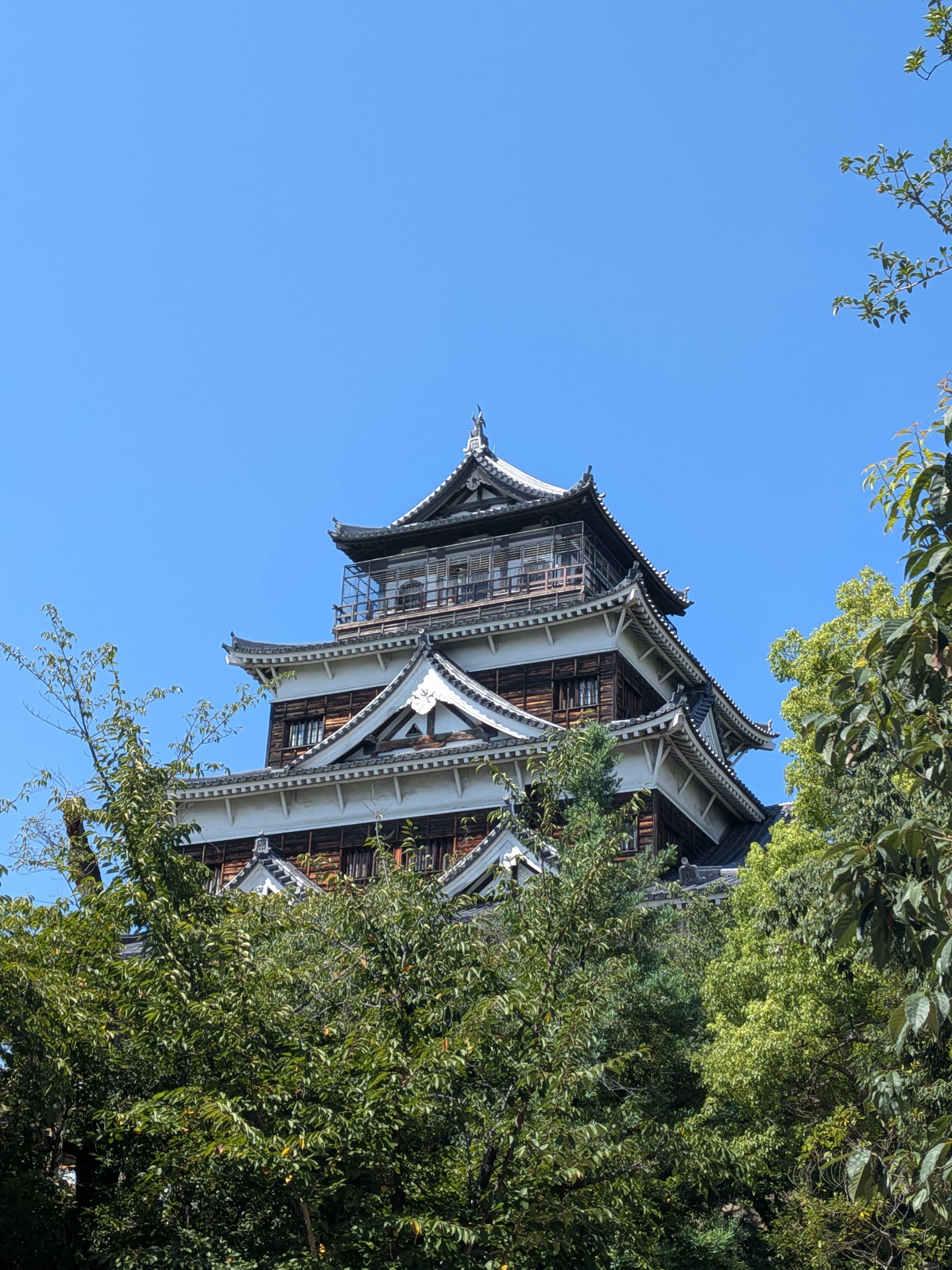
The main keep rebuilt in 1958 closed on March 22, 2026, for safety reasons, due to the deterioration of its concrete and aging facilities. According to Hiroshima City, there are no plans to demolish the keep, and you can still see its exterior.
The keep’s role as a museum will be taken over by the new “Hiroshima Castle Sannomaru History Museum.” The first floor is scheduled to open on June 1, 2027, and the second-floor exhibition rooms on October 1, 2027. Whether the keep will be rebuilt in wood has not yet been decided (as of October 17, 2026).
3. Timeline of Hiroshima Castle
| Year | Event |
|---|---|
| 1589 (Tensho 17) | Mori Terumoto begins building the castle |
| 1591 | Terumoto makes it his base |
| Around 1599 | The castle is completed |
| 1600 | After the Battle of Sekigahara, Fukushima Masanori enters the castle |
| 1619 (Genna 5) | Masanori’s fief is confiscated, and Asano Nagaakira enters the castle |
| Meiji era | Army facilities are placed there. The Imperial General Headquarters is set up during the First Sino-Japanese War |
| 1931 (Showa 6) | The main keep is designated a National Treasure |
| August 6, 1945 (Showa 20) | The main keep collapses in the atomic bombing |
| 1958 (Showa 33) | The exterior of the main keep is rebuilt in reinforced concrete |
| 1989-1994 (Heisei 1-6) | The Omote Gomon gate, Hira Yagura, Tamon Yagura and Taiko Yagura of the Ninomaru are rebuilt in wood |
| March 22, 2026 (Reiwa 8) | The main keep closes |
4. Highlights of the Hiroshima Castle grounds
The exterior of the main keep
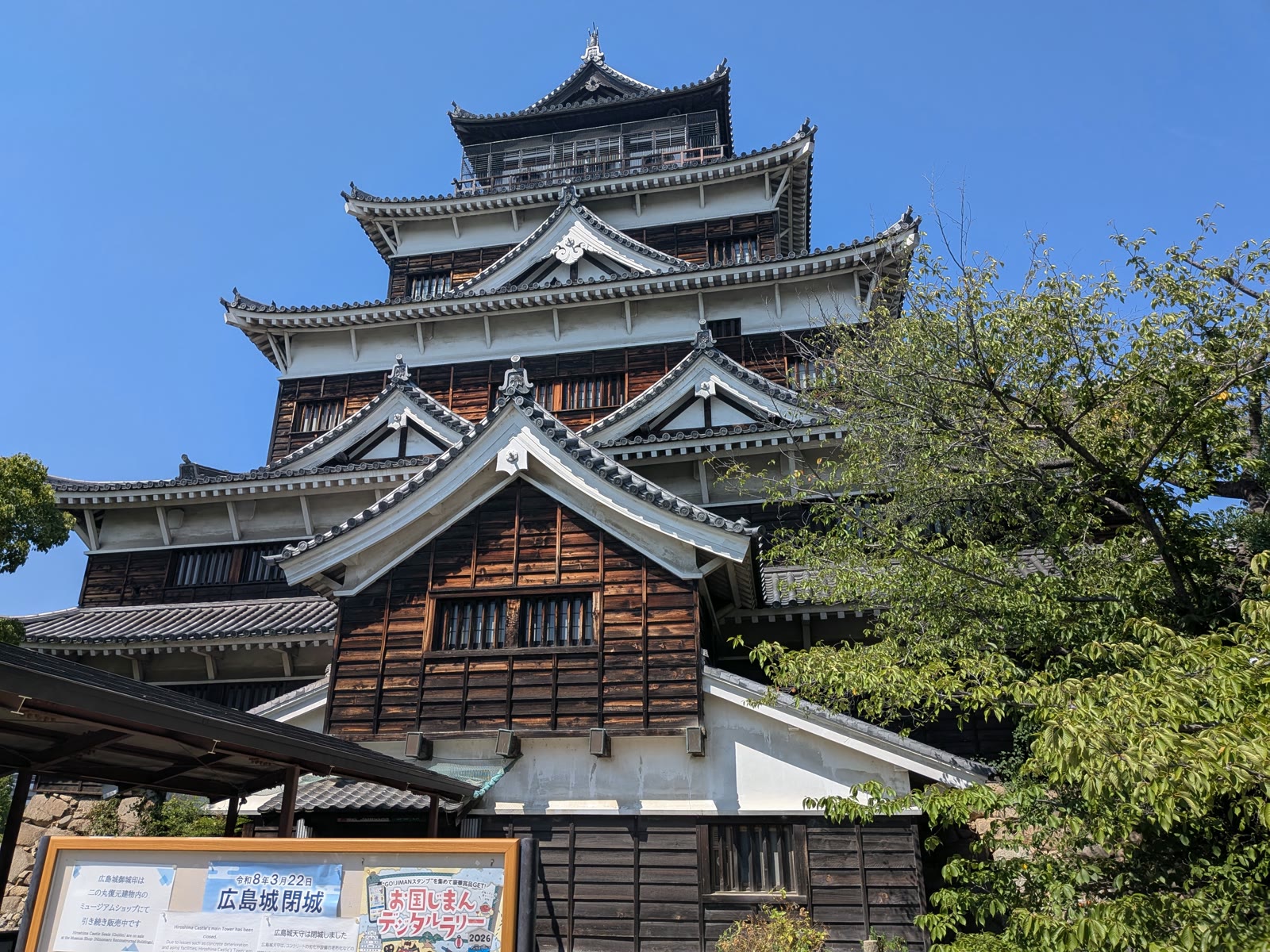
You can no longer go inside, but you can look up at the black wood-paneled main keep up close from the Honmaru.
The Omote Gomon gate and turrets of the Ninomaru
You can still enter the rebuilt buildings of the Ninomaru (the Omote Gomon gate, Hira Yagura, Tamon Yagura and Taiko Yagura) after the main keep’s closing. According to the official website of Hiroshima Castle, they are open 9:00-17:30 from April to September and 9:00-16:30 from October to March, and admission is free.
Hiroshima Gokoku Shrine
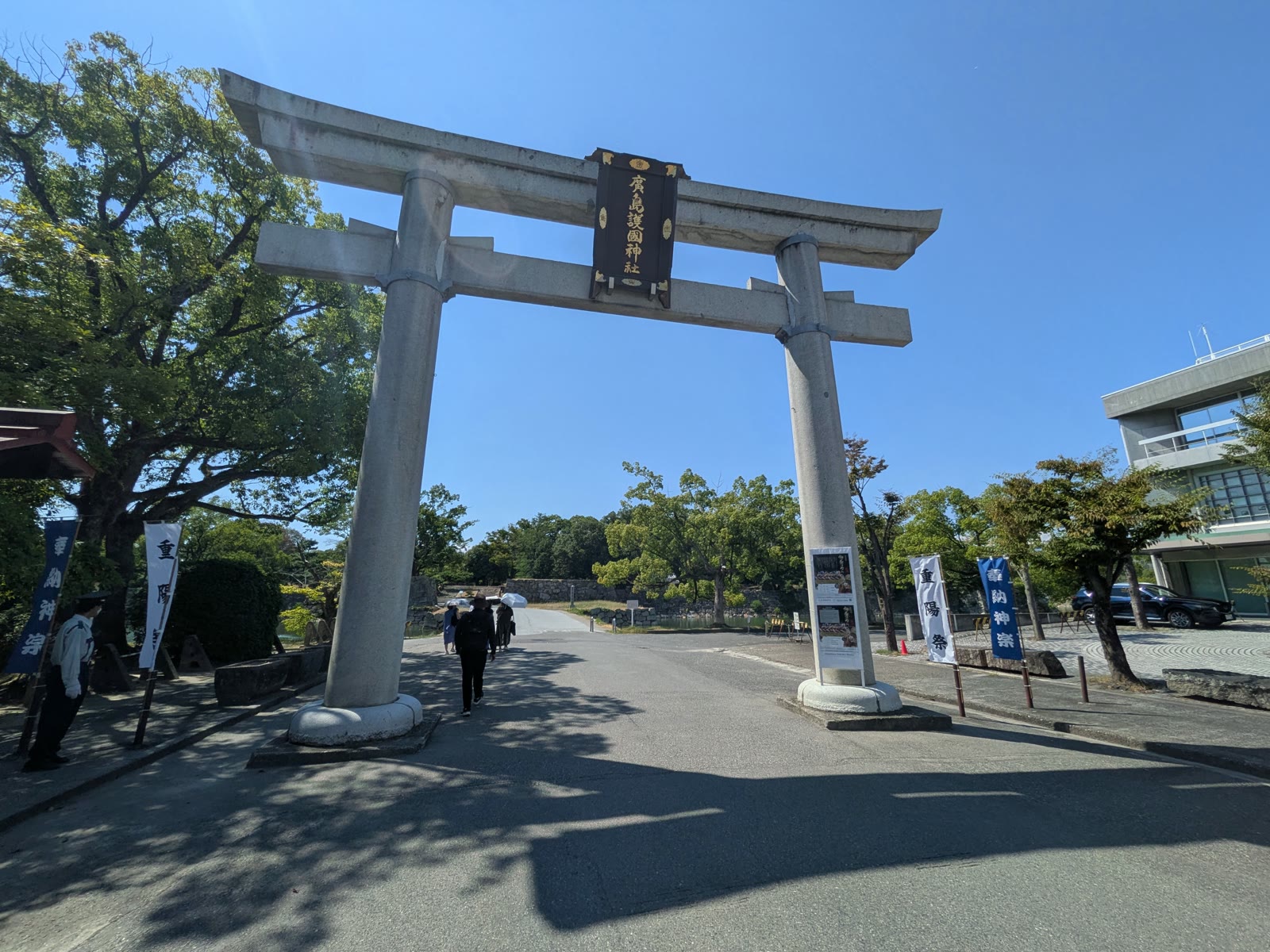
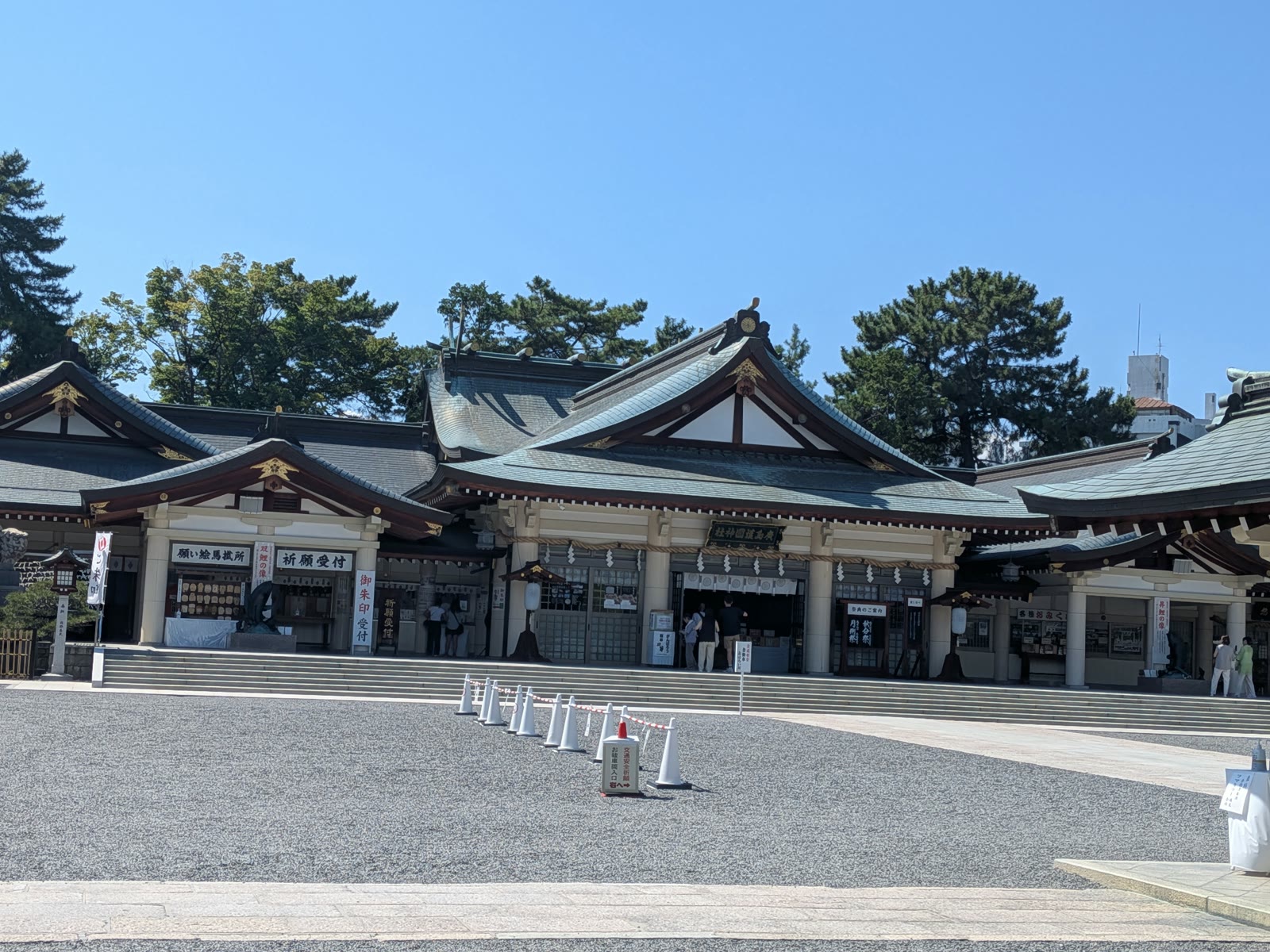
Hiroshima Gokoku Shrine stands on the site of the Honmaru. When you pass through the large white torii gate, you will see the spacious grounds and the shrine buildings.
Imperial General Headquarters site and A-bombed remains
In the Honmaru, in addition to the foundation stones of the Imperial General Headquarters site, there is the “Nakagomon Gate site,” where stones turned red by the heat of the fires after the atomic bombing remain, and the “Air Defense Operations Room of the Chugoku Military District Headquarters,” built near the end of the war. They show how deeply Hiroshima Castle has been involved in the history of war.
5. Combine it with the Peace Memorial Park
On that day, after walking around the Hiroshima Castle grounds, I went on foot to the Atomic Bomb Dome and the Peace Memorial Park. Hiroshima Castle and the Peace Memorial Park are within walking distance of each other.
In the morning of the same day, I visited the Yamato Museum and the Irifuneyama Memorial Hall in Kure. I introduce the history of the naval port of Kure in 5 Highlights of the Yamato Museum and The History of the Irifuneyama Memorial Hall.
6. FAQ
Q. Who built Hiroshima Castle?
A. The warlord Mori Terumoto. He began building it in 1589, and it is said to have been completed around 1599.
Q. Is the present main keep from the Edo period?
A. No. The Edo-period main keep collapsed in the atomic bombing of 1945. The present main keep is a reconstruction of the exterior in reinforced concrete, built in 1958.
Q. Can I go inside the main keep of Hiroshima Castle?
A. The main keep closed on March 22, 2026, so you cannot go inside. You can see the exterior. You can enter the rebuilt buildings of the Ninomaru (free admission).
Q. Why is it called “Rijo” (Carp Castle)?
A. “Rijo” is another name for Hiroshima Castle. There are several theories about where the name comes from.
7. Summary
Hiroshima Castle is the castle where the city of Hiroshima began, and a place that also conveys the history of war and the atomic bomb.
- A flatland castle at the mouth of the Ota River, which Mori Terumoto began building in 1589
- After Fukushima Masanori, the Asano family ruled for 12 generations, about 250 years
- After the Meiji era, it became a military site, and the Imperial General Headquarters was set up there during the First Sino-Japanese War
- The National Treasure main keep collapsed in the atomic bombing of 1945, and its exterior was rebuilt in 1958
- The main keep closed on March 22, 2026. You can still see its exterior and visit the Ninomaru buildings
Information referred to (checked on October 17, 2026)
- Hiroshima Castle Grounds Highlights Map | Hiroshima Castle (Japanese)
- About the Hiroshima Castle main keep after its closing | Hiroshima Castle (Japanese)
- The Hiroshima Castle main keep closed on March 22, 2026 | Hiroshima City (Japanese)
- Hiroshima Castle: construction, the atomic bombing and today | Japan Tourism Agency Multilingual Commentary Database
- Hiroshima Castle | nippon.com (Japanese)
コメント