Kato Kiyomasa was the samurai commander who built Kumamoto Castle. He rests at Honmyoji Temple, halfway up a hill in Hanazono, Nishi Ward, Kumamoto City.
This article explains the ties of Honmyoji to Kato Kiyomasa while following the temple’s history. With photos from my visit in September 2023, I also show the way up the stone steps called the “Munatsuki Gangi,” which lead to Kiyomasa’s mausoleum, the “Jochibyo,” and on to the statue of Kiyomasa that stands at the top of the hill.
I have written about the history of Kumamoto Castle itself in “Kumamoto Castle History: From Kato Kiyomasa to the Earthquakes and Stone Wall Restoration.” Reading it together with this article should give you a clearer picture of who Kiyomasa was.
Note: Fees, access, and other information were checked on October 24, 2026. The photos were taken on September 27, 2023.
- What Is Honmyoji? The History of Kato Kiyomasa’s Family Temple
- The Approach, the Sub-Temples (Tatchū), and the Main Hall
- The 176 Stone Steps of the “Munatsuki Gangi” Leading to the Jochibyo
- The Kiyomasa Statue at the Top of the Hill and the View over Kumamoto
- How to Get to Honmyoji and Tips for Your Visit
- A Day Visiting Honmyoji Together with Kumamoto Castle
- Summary
What Is Honmyoji? The History of Kato Kiyomasa’s Family Temple
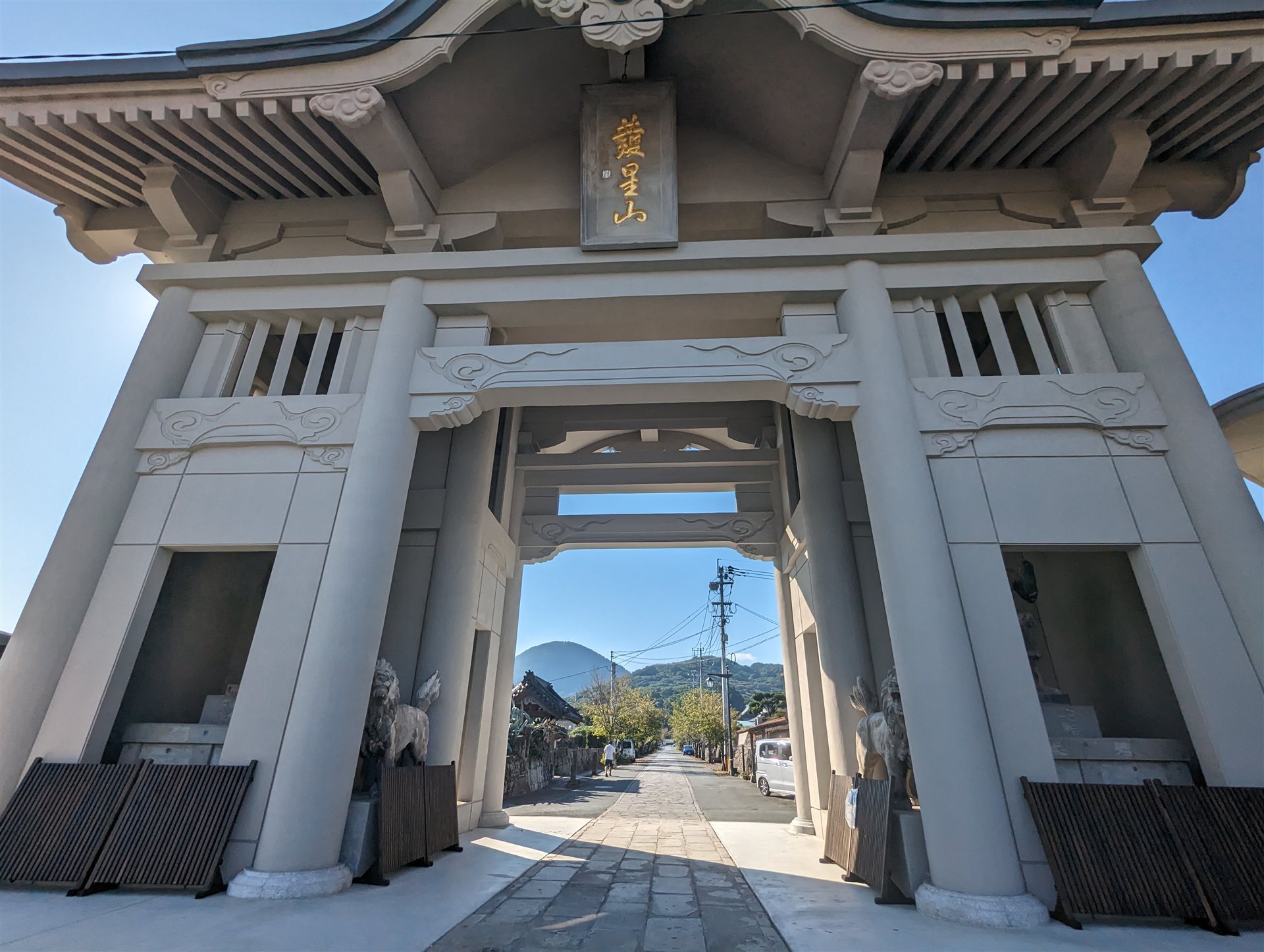
The Niōmon gate of Honmyoji. The plaque reading “發星山” shows the temple’s mountain name (sangō).
Honmyoji is a temple of the Nichiren school of Buddhism. It did not begin in Kumamoto, but in Osaka (Settsu Province).
According to the history on the official website, Honmyoji began in 1585 (Tenshō 13), when Kato Kiyomasa invited the priest Nisshin Shōnin and built the temple in Settsu to pray for his late father, Kiyotada. Later, after Kiyomasa became the lord of Higo Province, Honmyoji was moved inside Kumamoto Castle in 1591 (Tenshō 19).
In 1605 (Keichō 10), Emperor Go-Yōzei named it a temple for imperial prayers (chokugan dōjō), and the next year it was granted the right to wear purple robes for all time. This shows that it was a temple of high rank even in Kiyomasa’s day.
Kiyomasa’s Death and the Mausoleum on the Hillside
Kiyomasa died inside Kumamoto Castle in 1611 (Keichō 16). Following his will, a mausoleum was built halfway up Mt. Nakao, west of the castle. This was the beginning of today’s Jochibyo.
Three years later, in 1614 (Keichō 19), Honmyoji inside the castle burned down in a fire. The temple then moved to Mt. Nakao, where Kiyomasa’s mausoleum stood, and a ceremony marking the move was held in 1616 (Genna 2). In other words, today’s Honmyoji came about when the temple “moved next to Kiyomasa’s grave.”
The Satsuma Rebellion and Rebuilding in the Meiji Era
During the Satsuma Rebellion (Seinan War) of 1877 (Meiji 10), called “Seinan no Eki” on the official website, the main hall burned down. After more than ten years of work, the main hall was rebuilt in 1884 (Meiji 17).
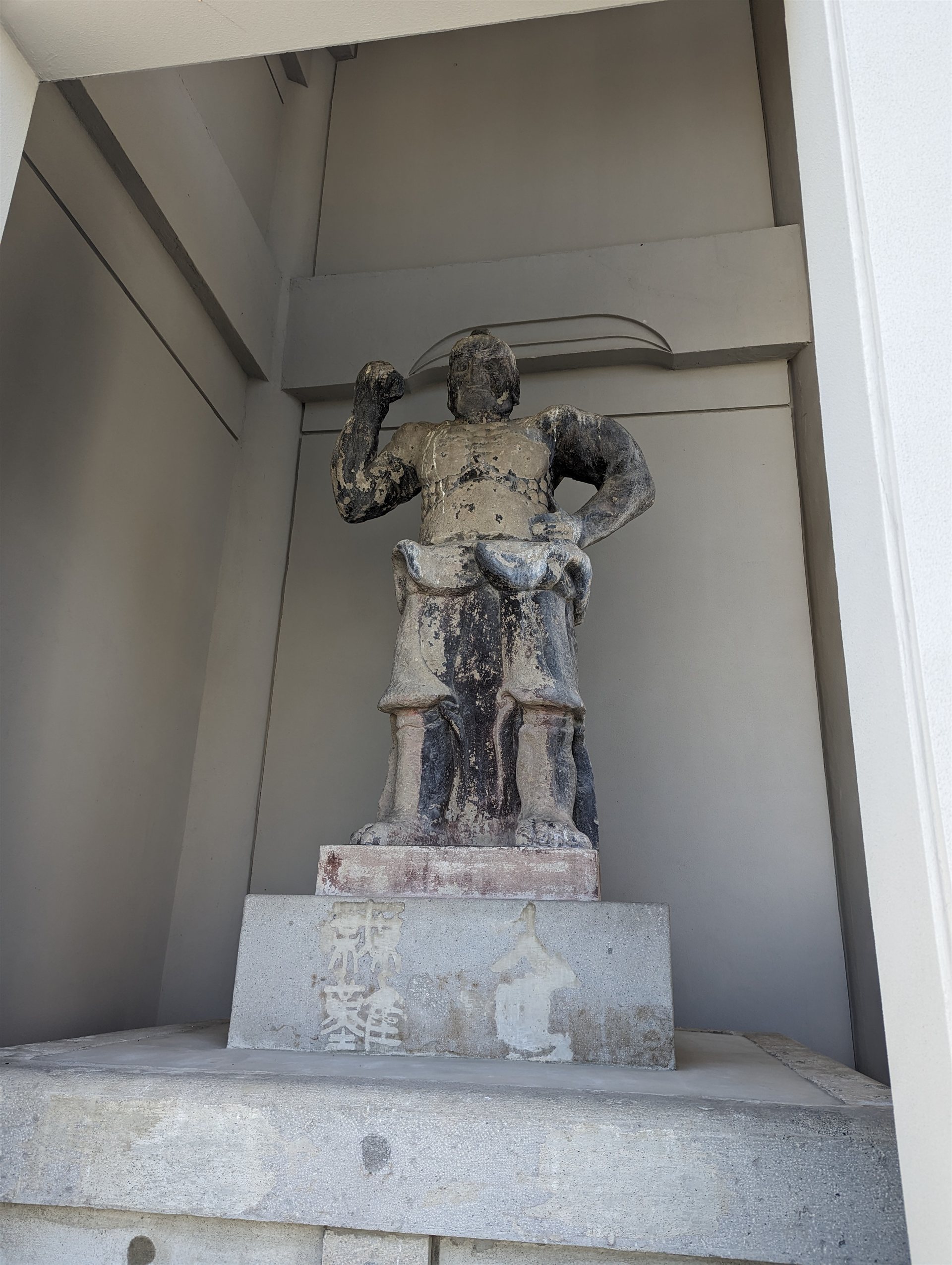
Stone Niō guardian statues stand on the left and right of the Niōmon gate.
According to the multilingual commentary of the Japan Tourism Agency, the Niōmon gate at the entrance was built in 1920 and is made of concrete, which was still rare in Japan at the time. If you are used to wooden temple gates, the large white gate may come as a bit of a surprise.
Beyond the Niōmon gate, a straight stone-paved approach leads toward the hill.
The Approach, the Sub-Temples (Tatchū), and the Main Hall
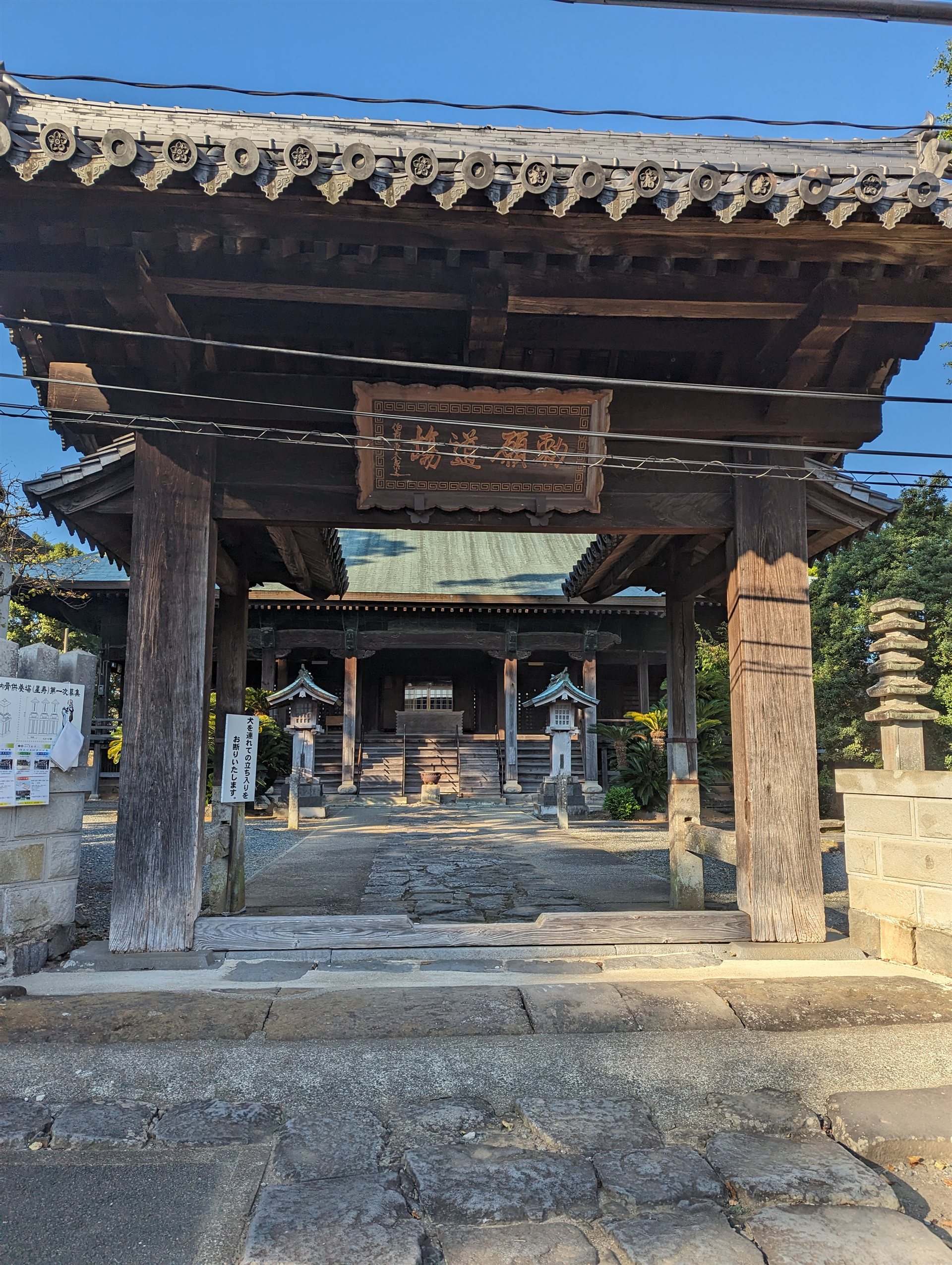
The gate with the “Chokugan Dōjō” plaque. It recalls that the temple was named a temple for imperial prayers in Keichō 10.
Along both sides of the approach stand the gates of Honmyoji’s tatchū (small sub-temples within a large temple). According to the Japan Tourism Agency commentary, because the main hall burned in the Satsuma Rebellion and was rebuilt, many of the other buildings along the approach are older than the main hall.
The photo above shows the gate with the “Chokugan Dōjō” plaque, with the main hall visible behind it.
The 176 Stone Steps of the “Munatsuki Gangi” Leading to the Jochibyo
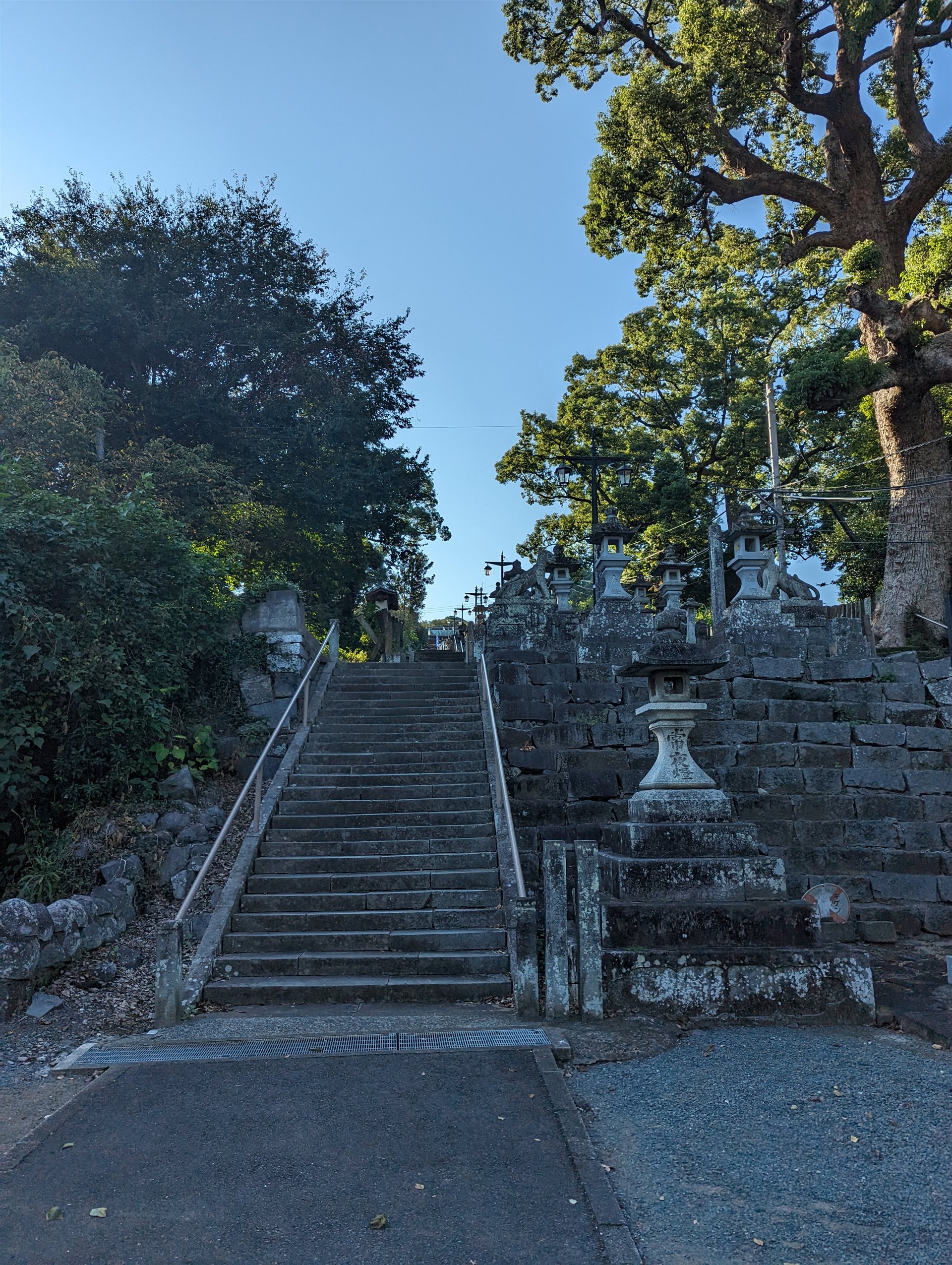
Stone steps lined with lanterns. On the right, a large tree spreads its branches.
From around the main hall, you climb steep stone steps to the Jochibyo. These steps are the “Munatsuki Gangi”. The name means “steps so steep they hit you in the chest.”
According to the Japan Tourism Agency commentary, there are 176 steps, lined with 400 to 500 donated stone lanterns. At the top of the steps, on the right, is the middle gate, and in front of it stands a large lantern called the “Chōyatō.” It is said that in the past the Chōyatō was lit at night, and its light could be seen even from the keep of Kumamoto Castle.
The steps were really tough. Part of it was the high temperature that day, but if you go in summer, I recommend that you always bring more than enough water.
The Jochibyo Stands at the Same Height as the Keep of Kumamoto Castle
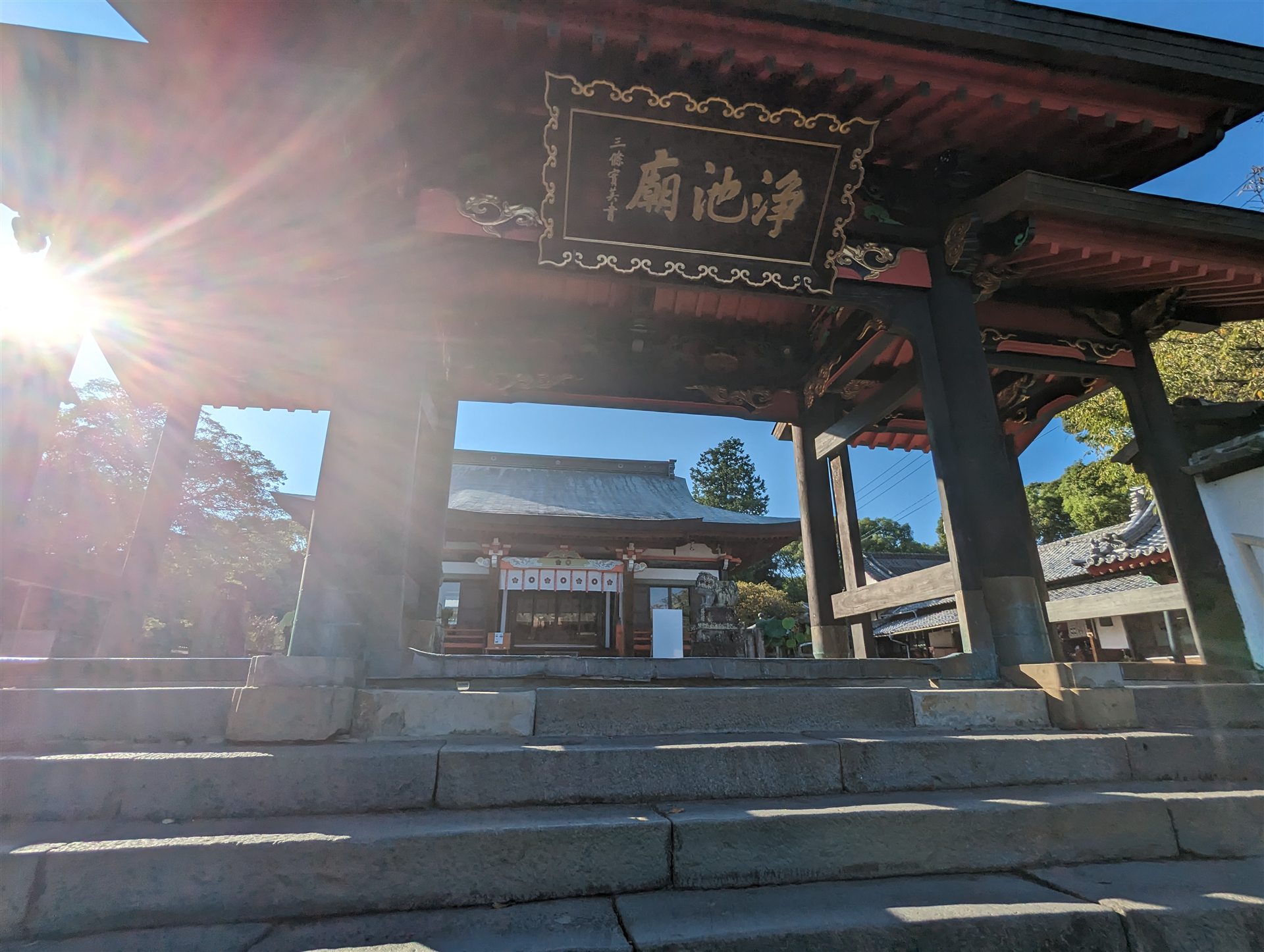
The gate with the “Jochibyo” plaque. Kiyomasa rests beyond it.
When you pass through the gate at the top of the steps, a worship hall and a main sanctuary stand at the far end of a stone-paved square. This is Kato Kiyomasa’s mausoleum, the Jochibyo.
Kiyomasa’s grave is in the main sanctuary, and next to it are the graves of two retainers who followed him in death after he died. According to the Japan Tourism Agency commentary, the main sanctuary was built with its balance with Kumamoto Castle in mind, and the height of its roof is the same as that of the Large Keep of Kumamoto Castle. It is a story that suits Kiyomasa: even after death, he keeps watch over his castle.
In the Meiji era, an order was issued to separate Shinto and Buddhism, and Kiyomasa, who had been worshipped as a god, was moved to Kato Shrine, which then stood inside Kumamoto Castle (according to the Japan Tourism Agency commentary).
On July 23, the anniversary of Kiyomasa’s death, a memorial service called the “Tonsha-e” is held in his honor. It began in 1612 (Keichō 17) on the first anniversary of his death, and the 416th service was held on July 23, 2026.
The Kiyomasa Statue at the Top of the Hill and the View over Kumamoto
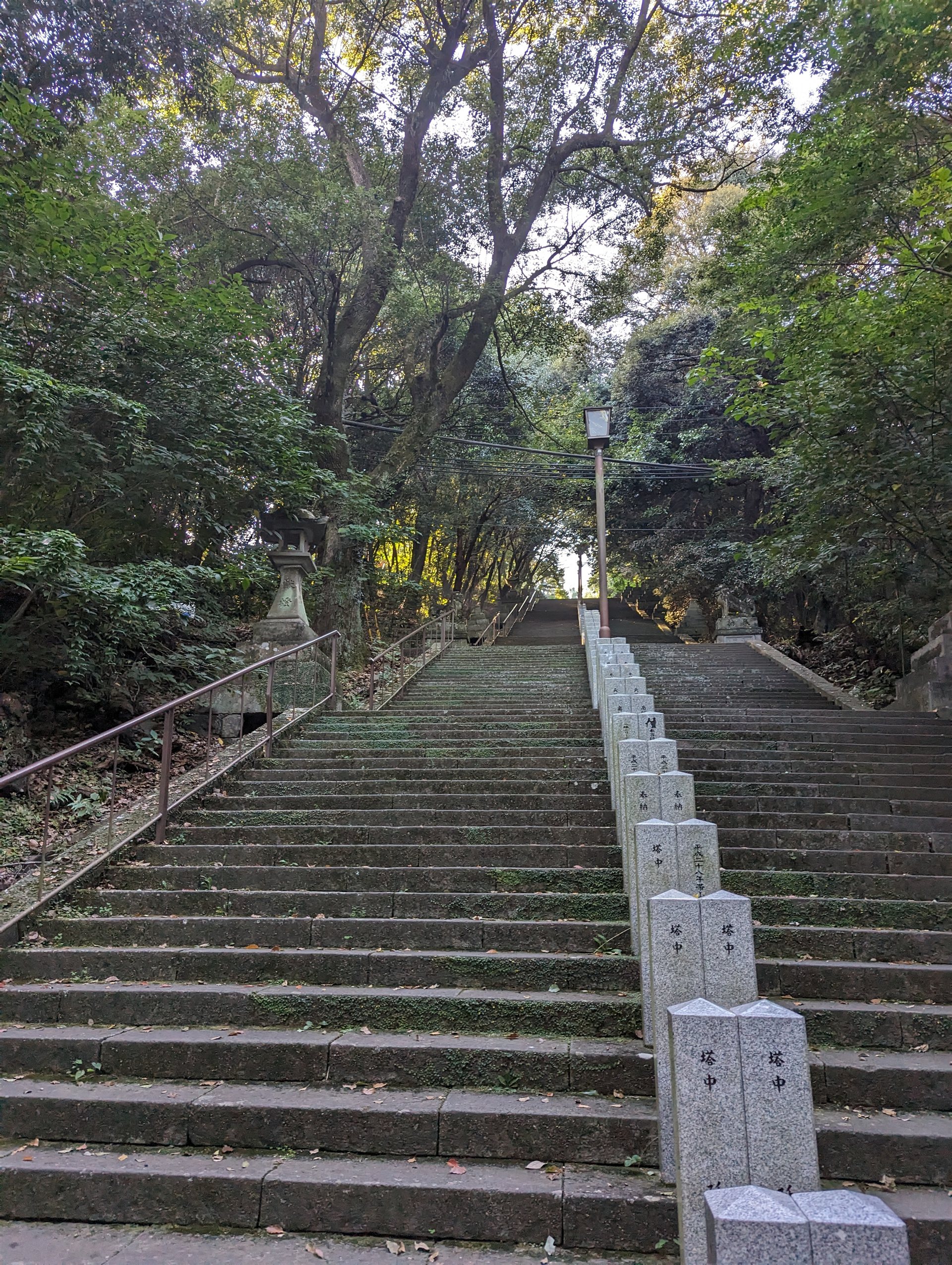
The stone steps leading to the statue. The stone posts on both sides are carved with the names of donors.
If you climb farther up the hill from the Jochibyo, you reach a statue of Kato Kiyomasa. The Japan Tourism Agency commentary says it stands about 300 more steps above the Jochibyo.
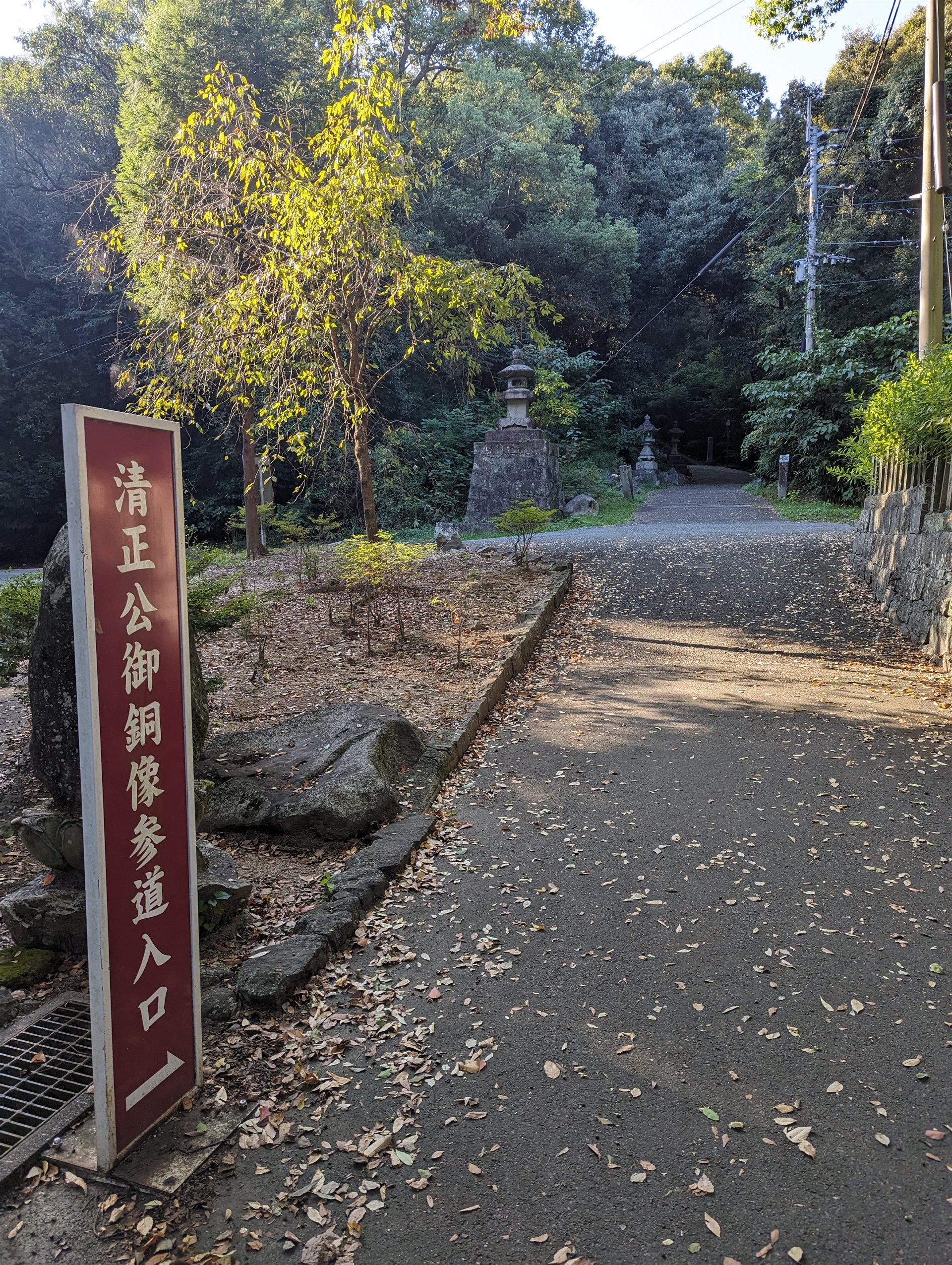
The sign for the “entrance to the approach to the Kiyomasa statue.” Lanterns can be seen farther along the path.
A sign reading “Seishōkō Godōzō Sandō Iriguchi” (entrance to the approach to the Kiyomasa statue) stands at the start of the path, so you will not get lost.
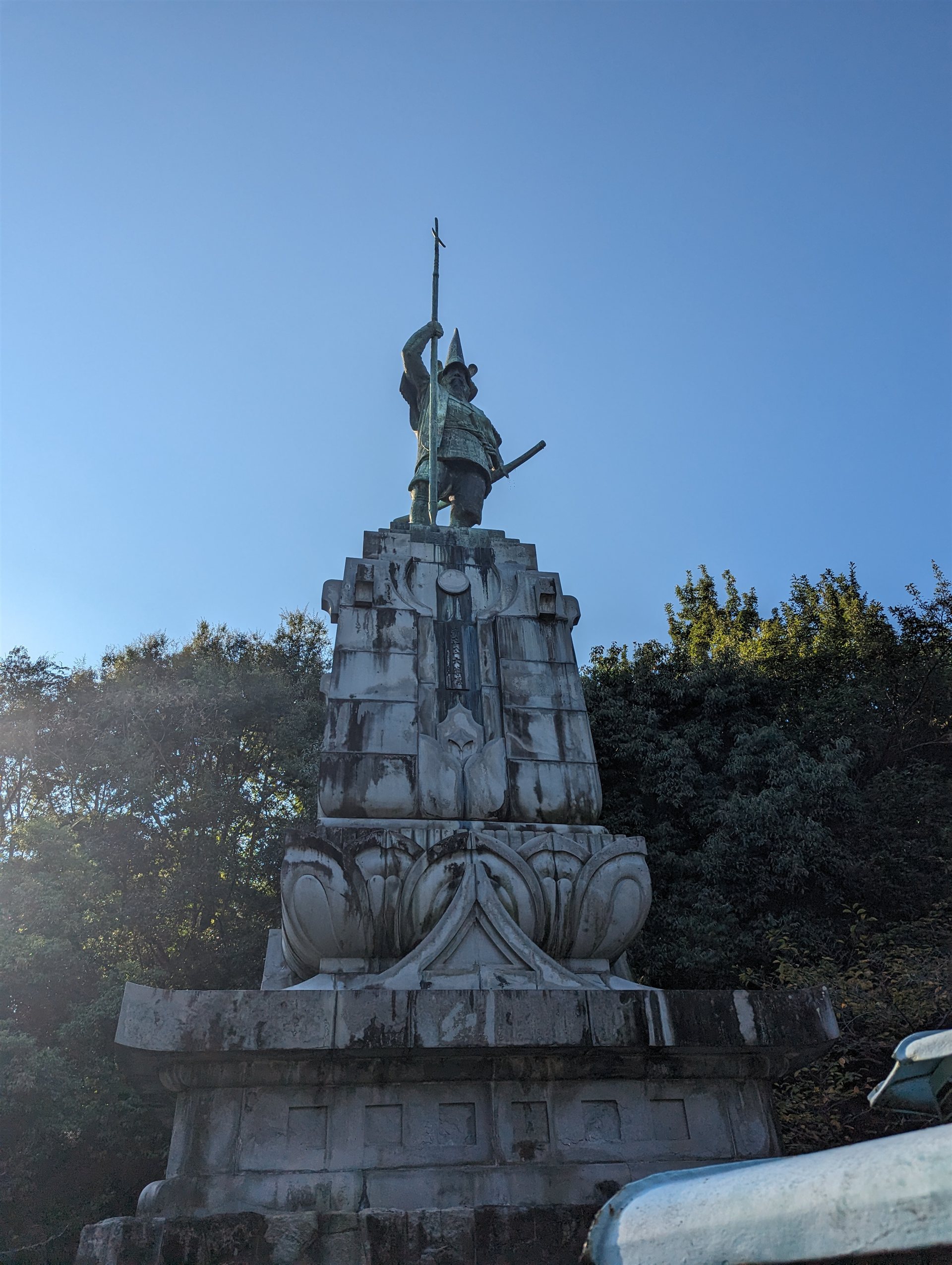
The Kiyomasa statue, wearing a tall naga-eboshi helmet and holding a spear.
The statue was built in 1960 by the sculptor Kitamura Seibō, who also created the Peace Statue in Nagasaki. On a tall pedestal stands Kiyomasa, wearing a helmet shaped like a tall eboshi cap and holding a long spear.
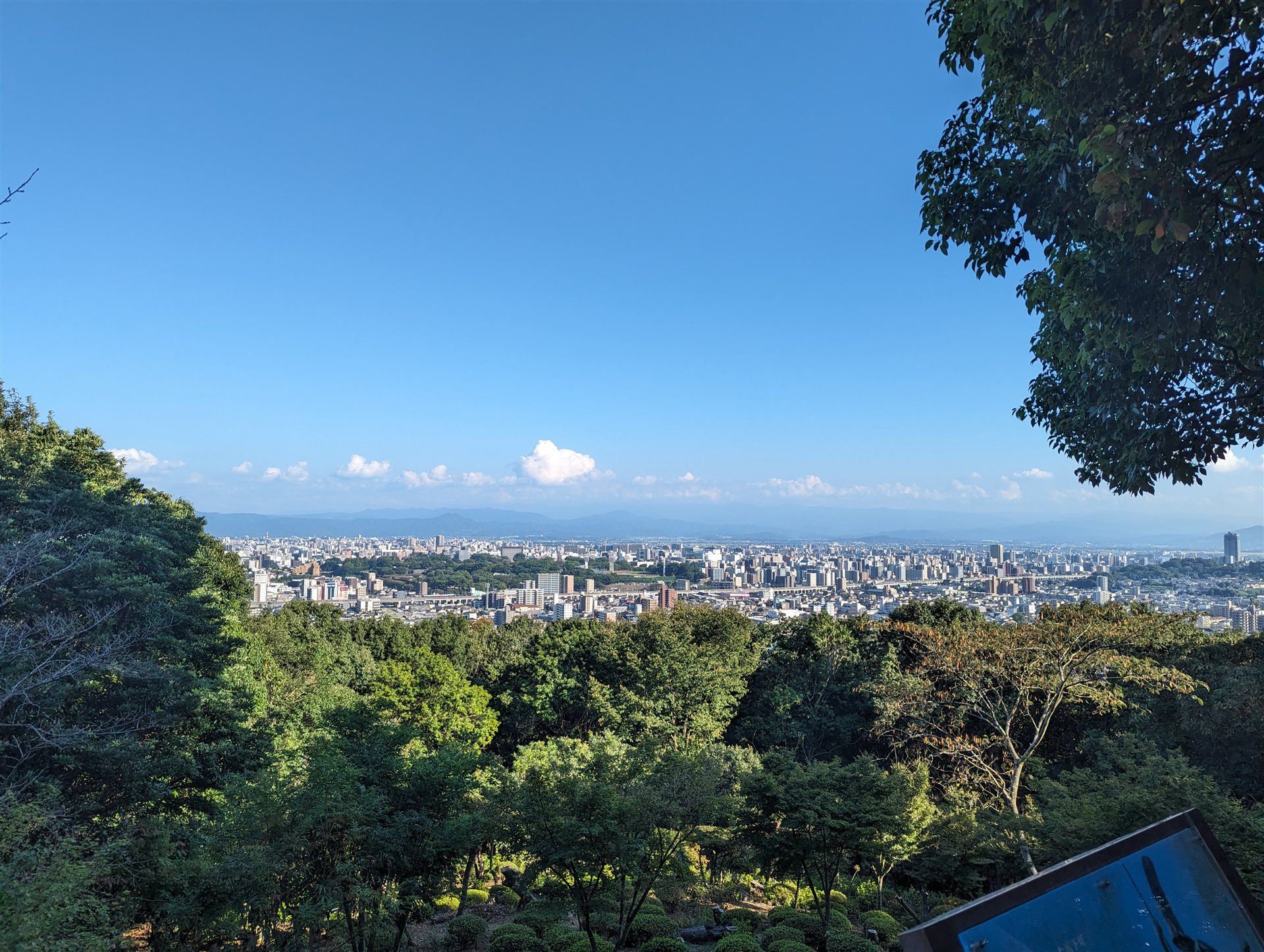
From the high ground near the statue, you can look out over the whole city of Kumamoto.
The area around the statue is high ground, and you can see all the way across the city of Kumamoto to the mountains beyond. Kumamoto Castle is also visible.
It was a very beautiful spot, with a view over the whole of Kumamoto City. Honestly, I was tired, but I feel it was worth climbing the steps.
How to Get to Honmyoji and Tips for Your Visit
Address and Access
| Item | Details |
|---|---|
| Address | 4-13-1 Hanazono, Nishi-ku, Kumamoto City, Kumamoto Prefecture (熊本県熊本市西区花園4-13-1; the official website writes “熊本市花園4-13-1”) |
| Phone | 096-354-1411 |
| Nearest streetcar stop | Honmyoji-iriguchi (本妙寺入口) on the Kumamoto City Tram |
| Parking | Available (the official website has a map to the parking lot) |
| Treasure hall | Preparing to open (as stated on the official website) |
| Official website | Honmyoji (Japanese) |
(Checked on October 24, 2026, on the official Honmyoji website and the Kumamoto City Transportation Bureau website)
Get off the streetcar at the Honmyoji-iriguchi stop and walk to the Niōmon gate.
Visiting hours and admission fees for the temple grounds were not listed on the official website.
Tips for Your Visit
- From the Niōmon gate → the approach → the Munatsuki Gangi → the Jochibyo → the Kiyomasa statue, the route is uphill slopes and stone steps all the way. Comfortable walking shoes are recommended.
- The statue is even higher up than the Jochibyo. Allow plenty of time and energy for your visit.
- The gates of the sub-temples had signs saying that dogs are not allowed (when the photos were taken in September 2023).
- Around the Tonsha-e on July 23, there are many more visitors. Traffic restrictions have been announced in past years, so it is a good idea to check the notices on the official website before you go.
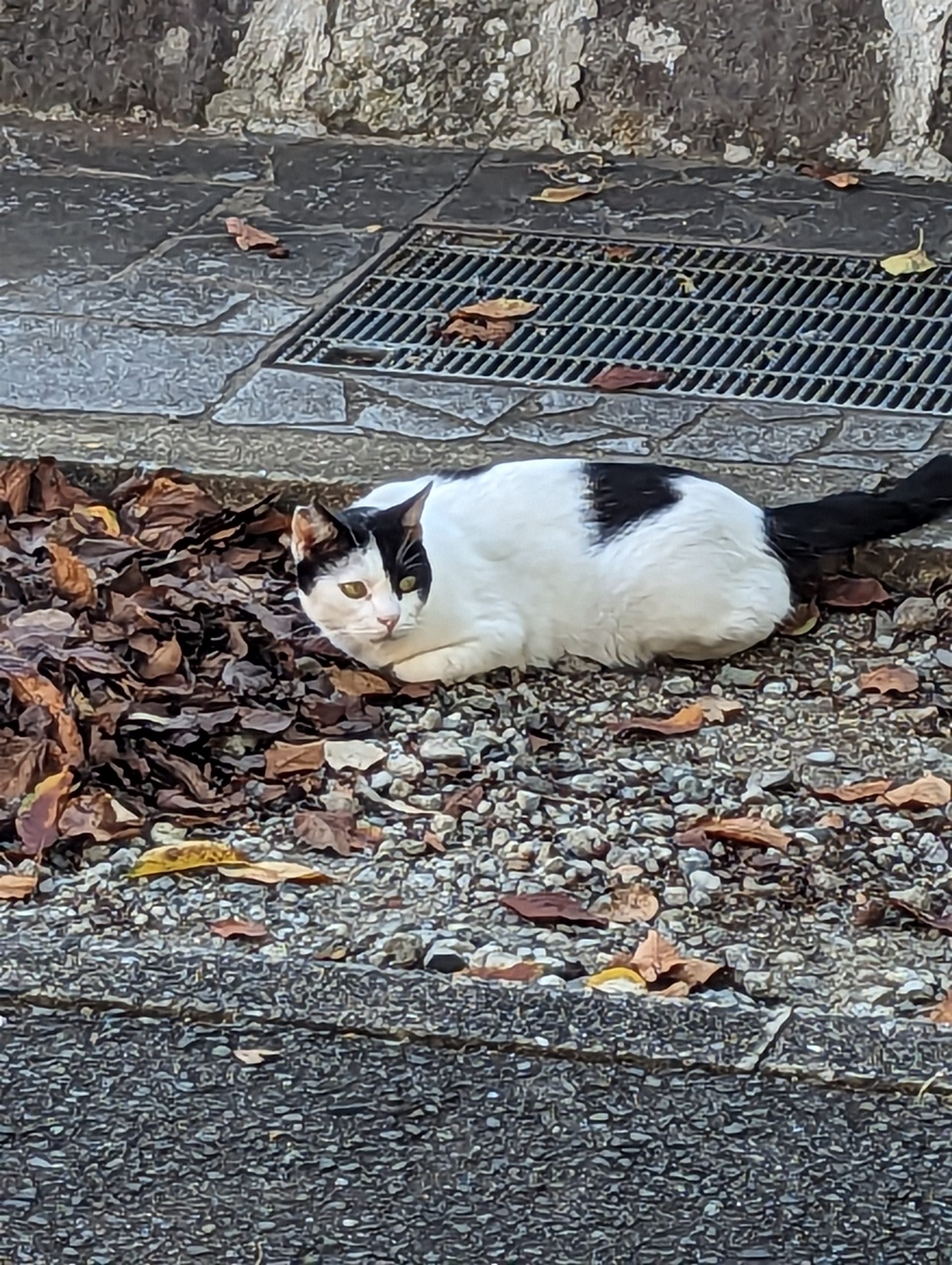
Beside the stone pavement of the approach, a cat was relaxing.
A Day Visiting Honmyoji Together with Kumamoto Castle
Honmyoji can be reached by streetcar from the city center, where Kumamoto Castle stands. An easy plan is to see Kumamoto Castle in the morning, have lunch in the city, and visit Honmyoji in the afternoon.
Kiyomasa died inside the castle, rests on the hill west of it, and the roof of his mausoleum was built at the same height as the keep. Walking both the castle and Honmyoji helps you clearly see how the two are connected.
- History of Kumamoto Castle: Kumamoto Castle History: From Kato Kiyomasa to the Earthquakes and Stone Wall Restoration
- Lunch in Kumamoto: Ramen Oppeshan Kumamoto Main Store: Kumamoto Ramen with Black Garlic Oil, Kae-meshi, and Access (Japanese)
- If you are crossing from Kumamoto to Shimabara: Kumamoto–Shimabara Ferry Guide: Timetable, Fares & Terminals
Summary
- Honmyoji is a Nichiren Buddhist temple that Kato Kiyomasa built in Osaka to pray for his late father. After Kiyomasa’s death, it moved to Mt. Nakao in Kumamoto, where his mausoleum stands.
- To reach the Jochibyo, where Kiyomasa rests, you climb the 176 stone steps of the “Munatsuki Gangi.” The roof of the main sanctuary is said to be the same height as the Large Keep of Kumamoto Castle.
- Farther up stands the Kiyomasa statue by Kitamura Seibō, built in 1960, with a view over the city of Kumamoto.
- The nearest stop is Honmyoji-iriguchi on the Kumamoto City Tram. You can visit it together with Kumamoto Castle in one day.
Honestly, it felt hard, but the view from the top was wonderful.
References (checked on October 24, 2026)
- Honmyoji official website (Japanese)
- History | Honmyoji (Japanese)
- Access | Honmyoji (Japanese)
- Japan Tourism Agency Multilingual Commentary Database: Honmyoji (Traditional Chinese version)
- Kumamoto City Transportation Bureau: Route Map and Stop List (Japanese)
コメント