Tōdai-ji in Nara is a temple that was born when Emperor Shōmu decided to “build a Great Buddha.” Nara Park spreads out in front of the Great Buddha Hall, and deer wander leisurely around the temple grounds.
Using photos from my walk around Tōdai-ji and Nara Park in November 2022, this article covers the history and highlights of the Nandaimon Gate, the Great Buddha Hall and Nigatsu-dō, tips for meeting the deer of Nara Park, and opening hours, admission fees and access. I also wrote about the flow of that day’s trip in Kansai Travel Diary Day 2: Nara (Japanese).
- The History of Tōdai-ji | Emperor Shōmu’s Great Buddha and Rebuilding After Two Fires
- The Deer of Nara Park | Wild Animals Designated as a National Natural Monument
- The Nandaimon Gate and the Kongō Rikishi Statues | A Huge Gate from the Kamakura Period
- From the Middle Gate to the Great Buddha Hall
- The Great Buddha Hall and the Great Buddha | One of the Largest Wooden Buildings in the World
- Nigatsu-dō | Looking Down on the Roof of the Great Buddha Hall and the City of Nara
- Tōdai-ji Opening Hours, Admission Fees and Access
- Summary | At Tōdai-ji, You Can Enjoy a “History of Rebuilding Again and Again” Along with the Deer
The History of Tōdai-ji | Emperor Shōmu’s Great Buddha and Rebuilding After Two Fires
Tōdai-ji dates back to the Nara period. According to the temple’s official website, Emperor Shōmu issued an imperial decree to build a Great Buddha (Vairocana Buddha) at Shigaraki Palace in 743 (Tenpyō 15). The body of the Buddha was cast in 749 (Tenpyō-shōhō 1), and a grand eye-opening ceremony was held in the 4th month of 752 (Tenpyō-shōhō 4).
Because Tōdai-ji was founded by four people—Emperor Shōmu, the Bodhisattva Gyōki, the priest Rōben and Bodhisena—it is also called “the temple founded by the Four Saints.”
However, the Great Buddha Hall you see today is not a Nara-period building. The hall was destroyed by fire in war twice, in the Jishō and Eiroku eras, and the present building was rebuilt in the Edo period under the leadership of the priest Kōkei. The rough timeline is as follows.
- 743 (Tenpyō 15): Emperor Shōmu issues the decree to build the Great Buddha
- 752 (Tenpyō-shōhō 4): The eye-opening ceremony of the Great Buddha
- Kamakura period: Restoration under the priest Chōgen. The Nandaimon Gate is completed in 1203 (Kennin 3)
- 1692 (Genroku 5): The eye-opening ceremony of the Great Buddha in the Edo period
- 1709 (Hōei 6): The dedication ceremony of the present Great Buddha Hall
If you know that this temple was built, burned and rebuilt again and again—in the Nara, Kamakura and Edo periods—the buildings on the grounds start to look different.
The Deer of Nara Park | Wild Animals Designated as a National Natural Monument
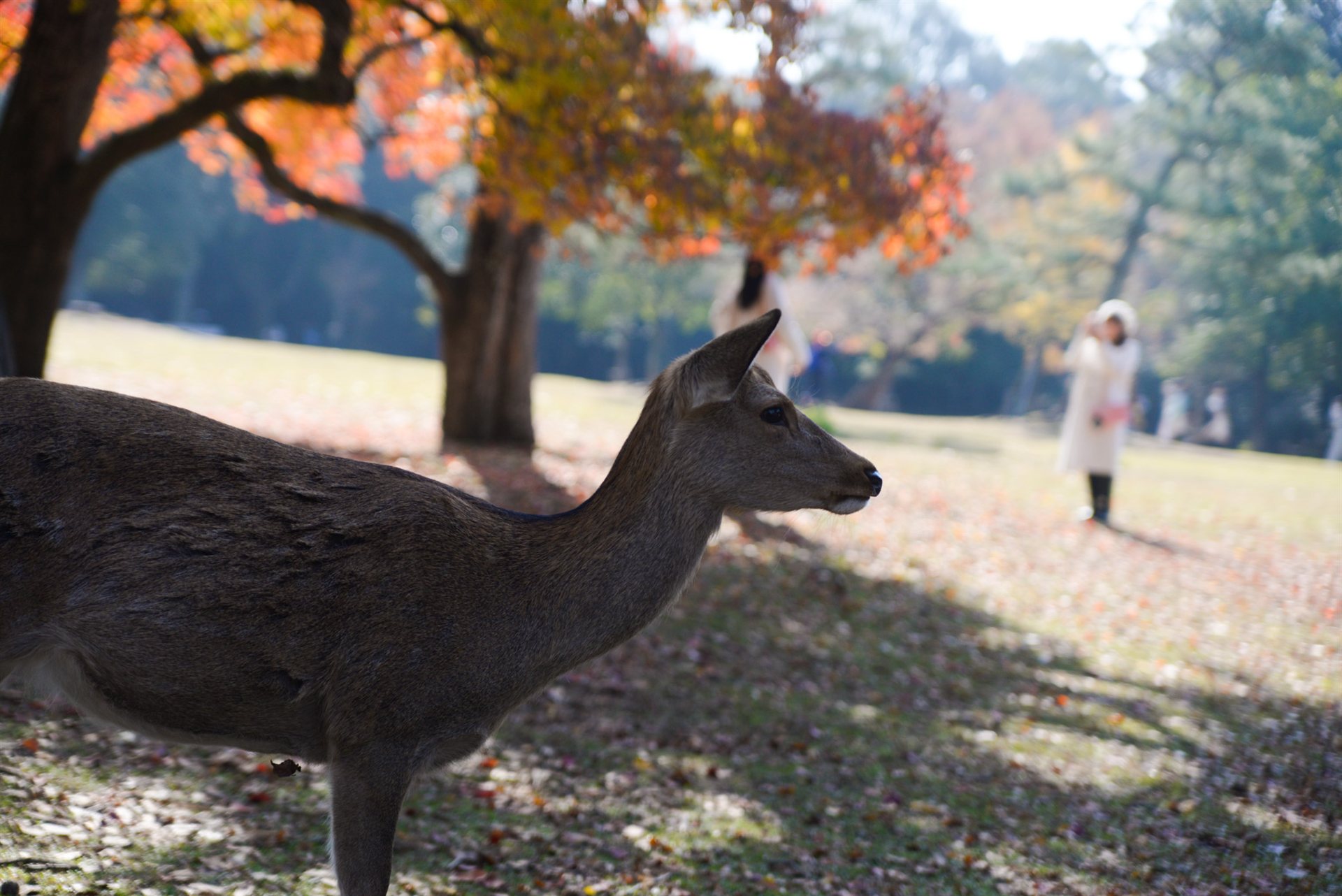
Both sides of the road leading to Tōdai-ji’s Nandaimon Gate are part of Nara Park, and there are deer everywhere. According to Nara Prefecture’s page on Nara Park, the deer of Nara Park are wild animals designated as a National Natural Monument, not animals kept by anyone.
According to a survey by the Nara Deer Preservation Foundation (as of July 16, 2026), there are 1,687 deer in total (411 bucks, 990 does and 286 fawns).
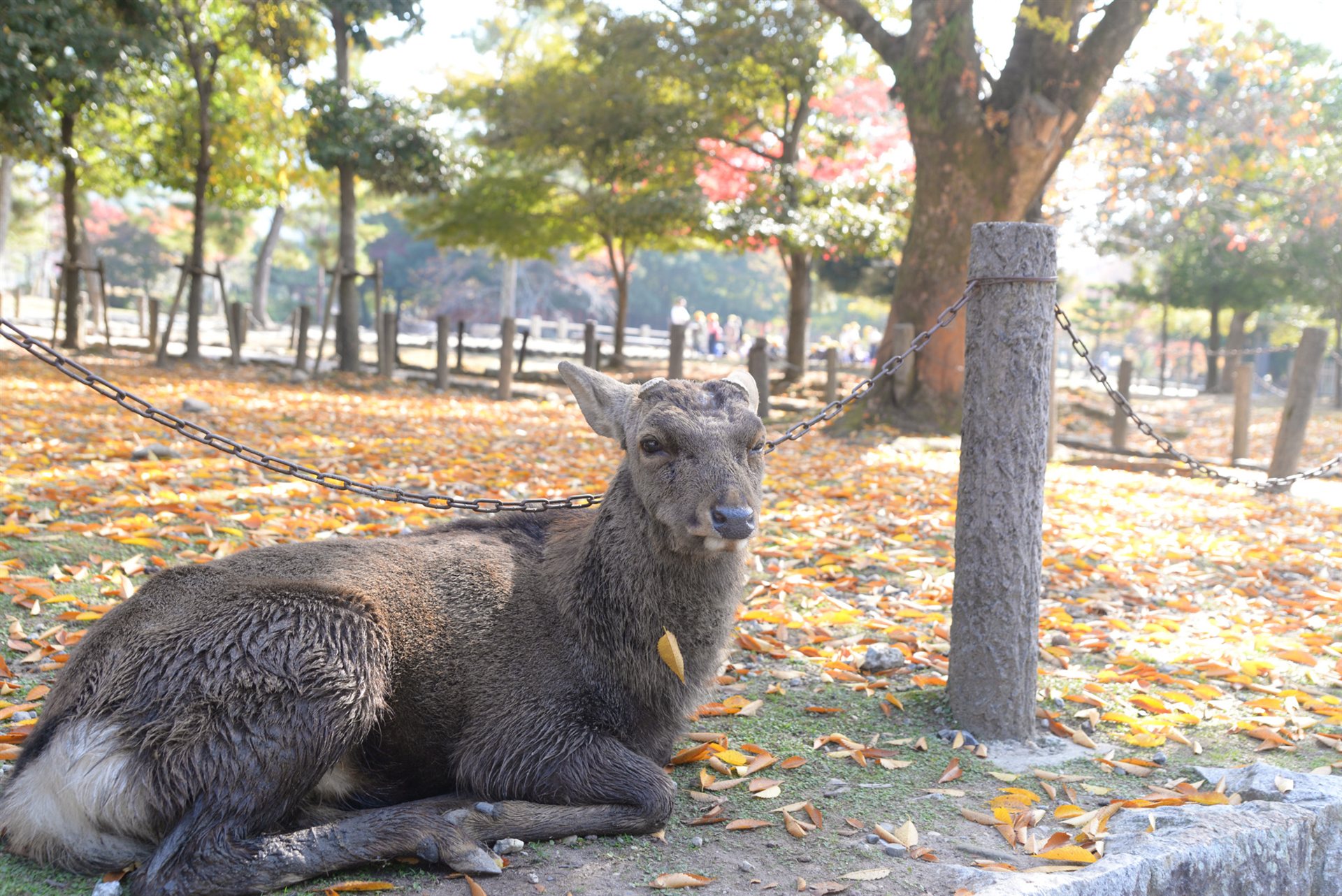
The deer are basically laid-back. But if you are holding deer crackers (shika senbei), they come up to you and gaze at you with their round eyes.
Tips for Meeting the Deer
The Nara Deer Preservation Foundation and Nara Prefecture ask visitors to follow these points.
- Do not give the deer any food other than deer crackers
- Give the deer crackers right away (teasing them makes them angry)
- Do not hit or chase the deer
- The deer are wild animals, so they may suddenly bite, strike, butt or charge. Take extra care if you are with elderly people or small children
From mid-May through June, the does give birth and may be on edge. Also, the event of cutting the bucks’ antlers, “Shika no Tsunokiri” (Deer Antler Cutting), has been held in November instead of October since 2025 (according to the Nara Deer Preservation Foundation).
The Nandaimon Gate and the Kongō Rikishi Statues | A Huge Gate from the Kamakura Period
Walking north through Nara Park, you reach the Nandaimon (Great South Gate), the main entrance of Tōdai-ji. The Nandaimon is a National Treasure and a Kamakura-period building. The priest Chōgen rebuilt it in a style of architecture called Daibutsuyō (“Great Buddha style”); the framework was raised in 1199 (Shōji 1), and the gate was completed in 1203 (Kennin 3).
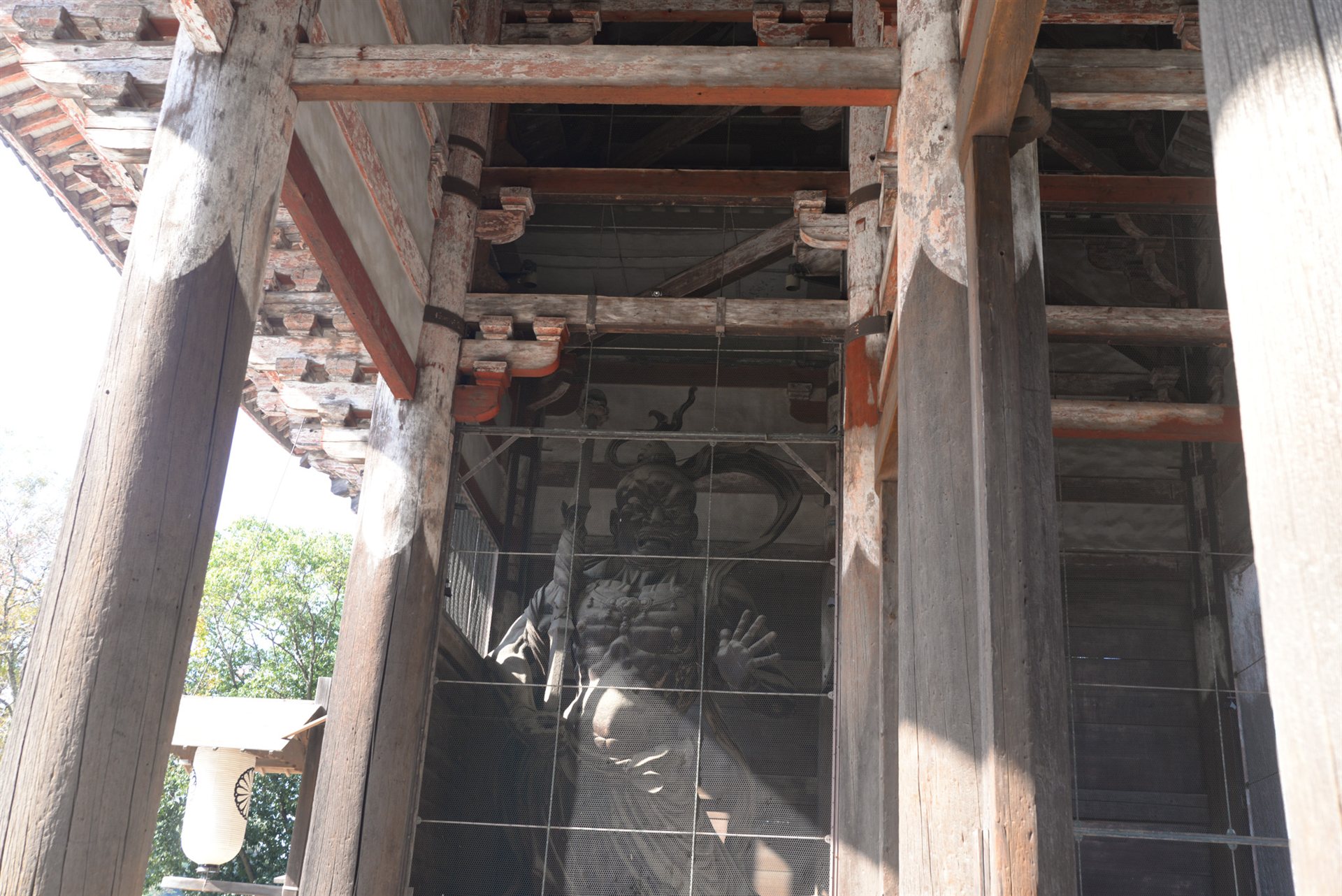
The Kongō Rikishi (Niō) statues standing on the left and right of the gate are said to have been made in 1203 (Kennin 3) by Buddhist sculptors including Unkei and Kaikei in only 69 days. Each statue is just under 8.4 m tall. Ink inscriptions found during repairs show that, in addition to Unkei and Kaikei, Jōkaku and Tankei also took part as master sculptors.
The statues stand behind netting, so I recommend looking up at them from under the gate and searching out the shapes of their faces and hands.
From the Middle Gate to the Great Buddha Hall
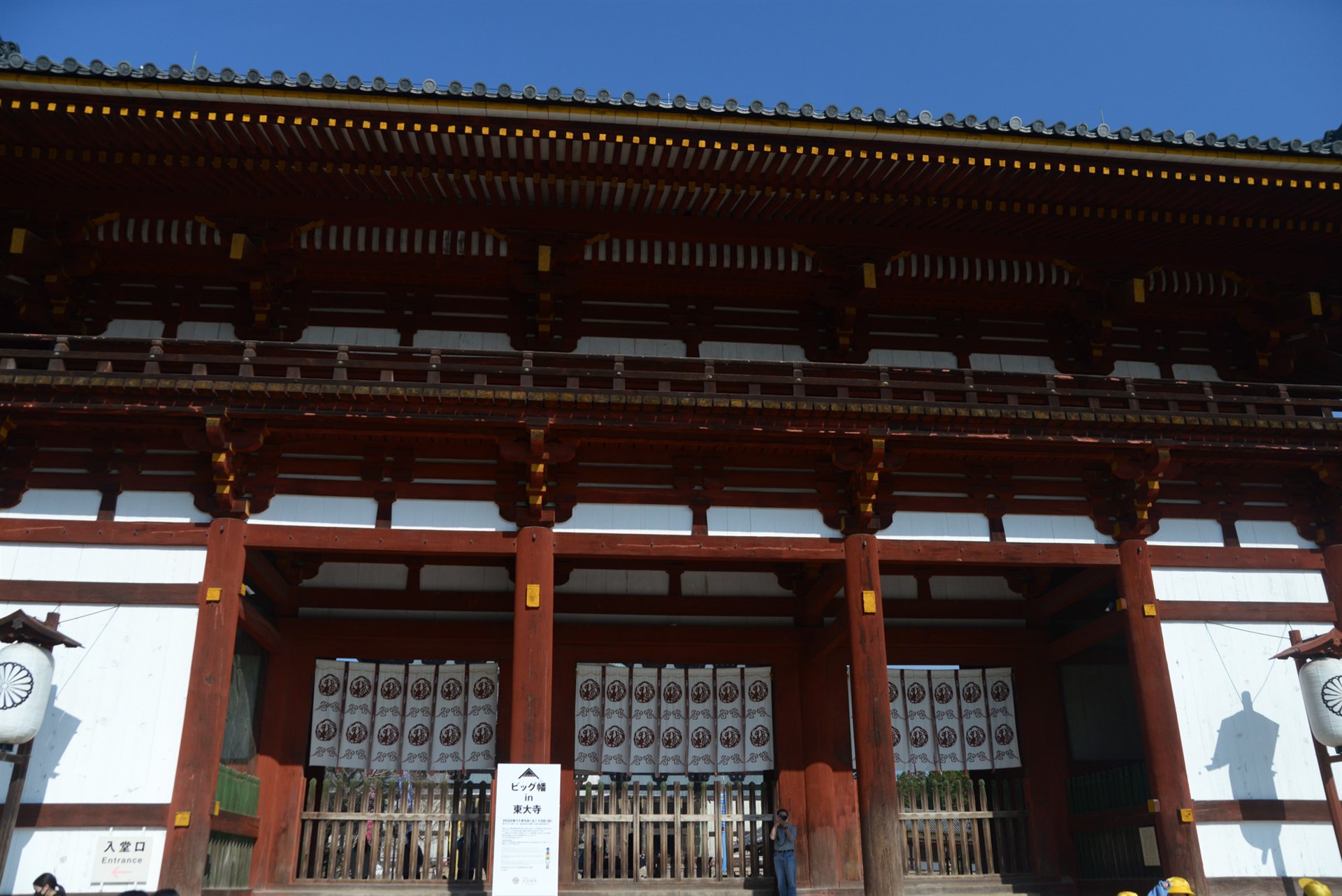
Past the Nandaimon Gate, the vermilion Middle Gate (Chūmon) and corridors surround the Great Buddha Hall. To enter the Great Buddha Hall, use the entrance on the left side of the Middle Gate. In November 2022, when I took these photos, the event “Big Ban in Tōdai-ji” (ビッグ幡 in 東大寺) was being held, and colorful banners (ban) stood in front of the Great Buddha Hall.
The Great Buddha Hall and the Great Buddha | One of the Largest Wooden Buildings in the World
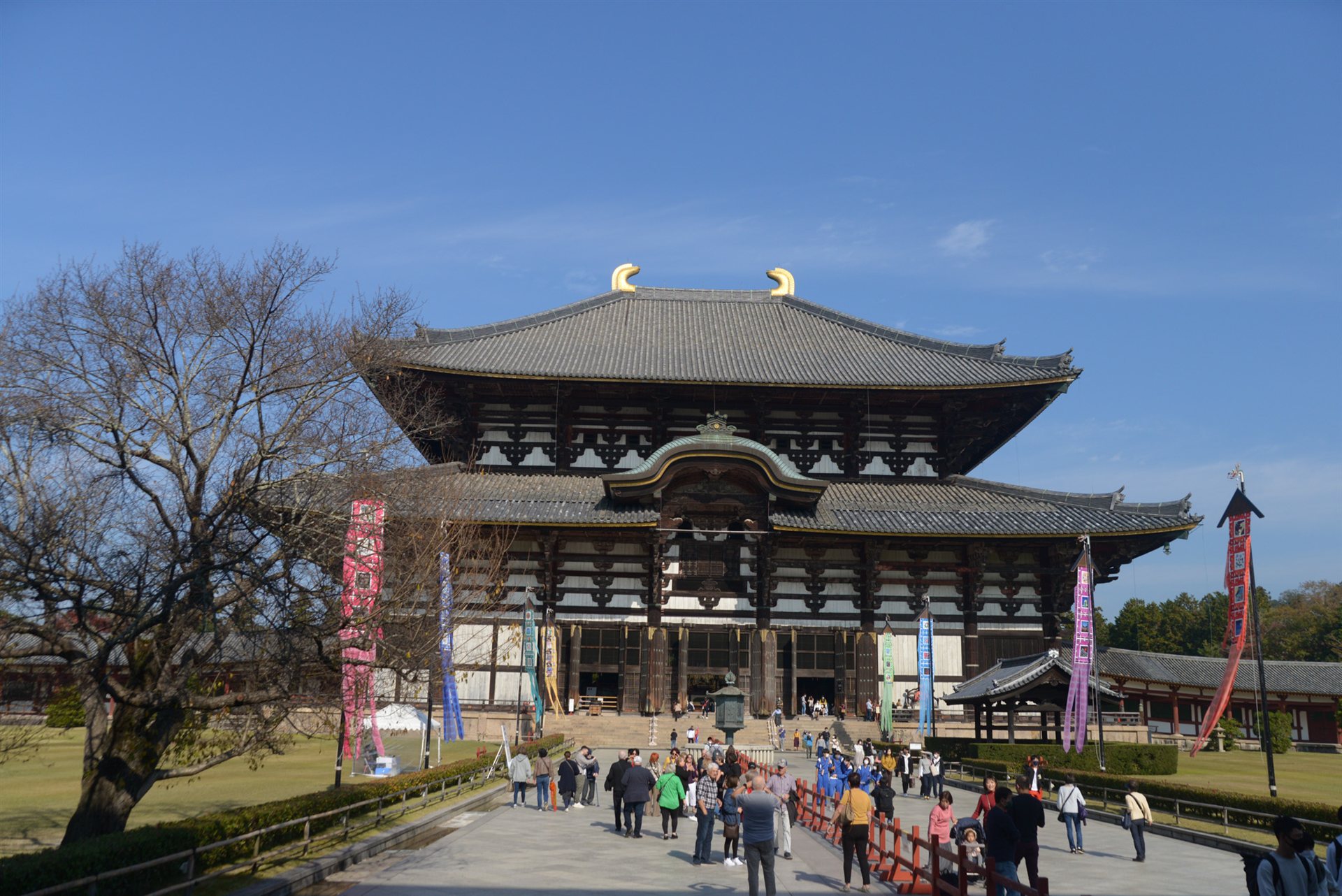
The Great Buddha Hall (Daibutsuden) is a National Treasure and an Edo-period building. According to the official website, the Great Buddha Halls of the Tenpyō and Kamakura periods were 11 ken (about 88 m) wide at the front, but when the hall was rebuilt in the Edo period there was not enough money, and the width was reduced to 7 ken. Even so, its height and depth remain the same as at its founding, and it is considered one of the largest wooden structures in the world.
The present Great Buddha Hall measures 57.012 m from east to west, 50.480 m from north to south, and 48.742 m in height. The golden ornaments at both ends of the roof can be seen clearly even from places far away, such as Nigatsu-dō.
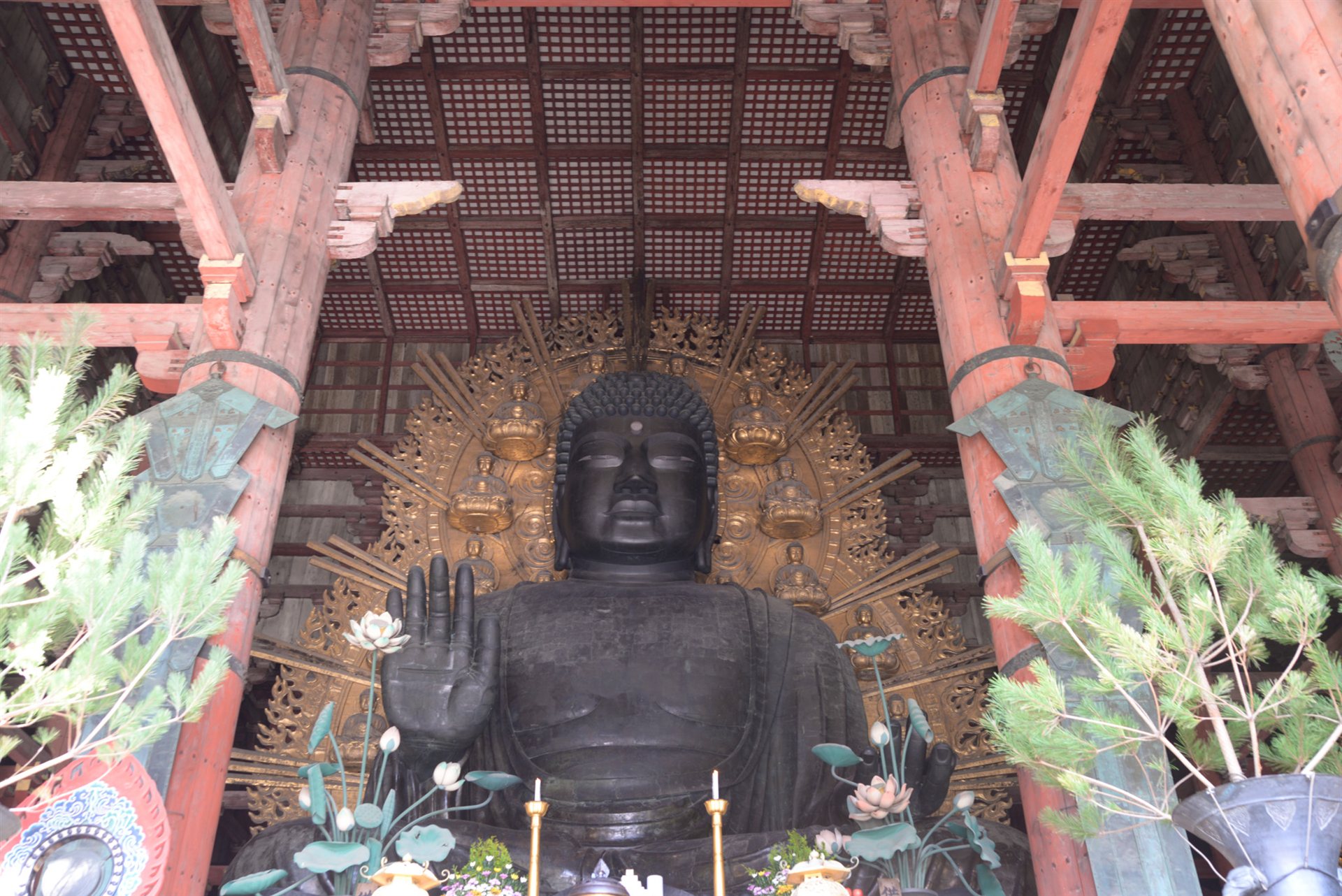
The statue of the Great Buddha is 14.98 m tall, and its pedestal is 3.05 m high. The Great Buddha made in the Nara period was also damaged by fires in war and repaired each time.
I visited on a weekday, so there were not that many people, but it is a famous tourist spot, so it is usually crowded.
The Great Buddha is also extremely large and overwhelming.
The Buddhist Statues Inside the Great Buddha Hall
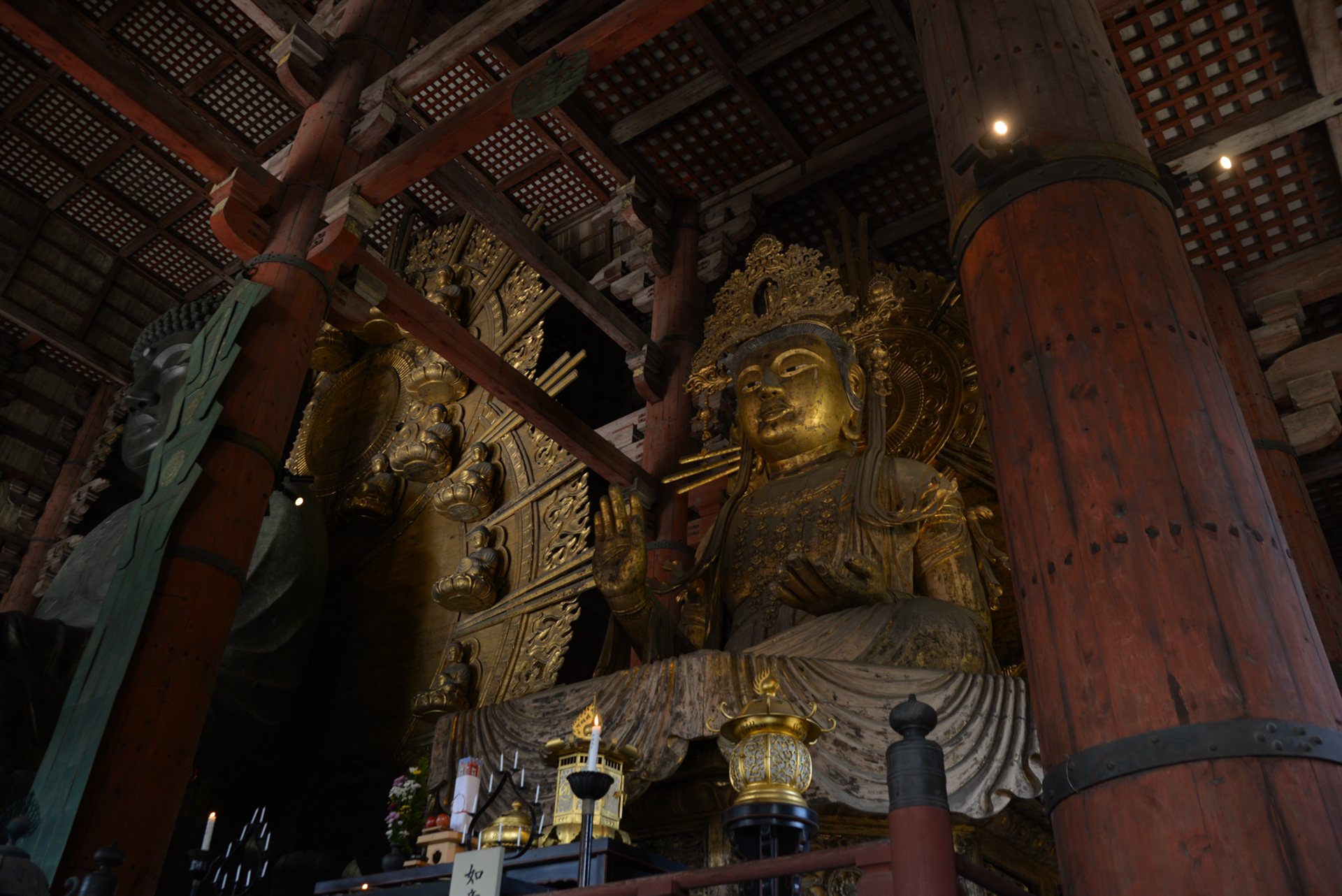
Golden bodhisattva statues are seated on both sides of the Great Buddha. Judging from the characters on its placard, the statue in the photo is Nyoirin Kannon.
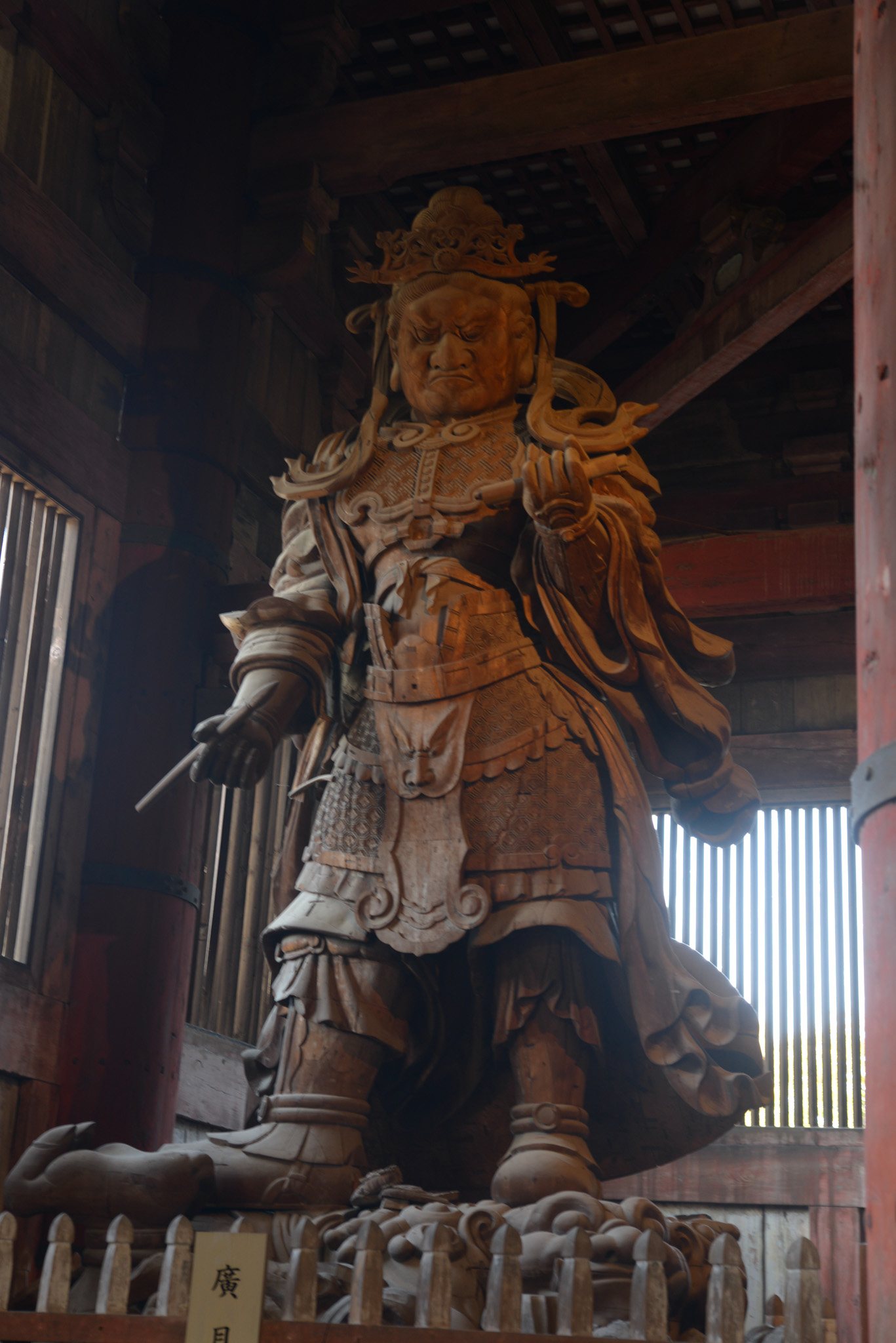
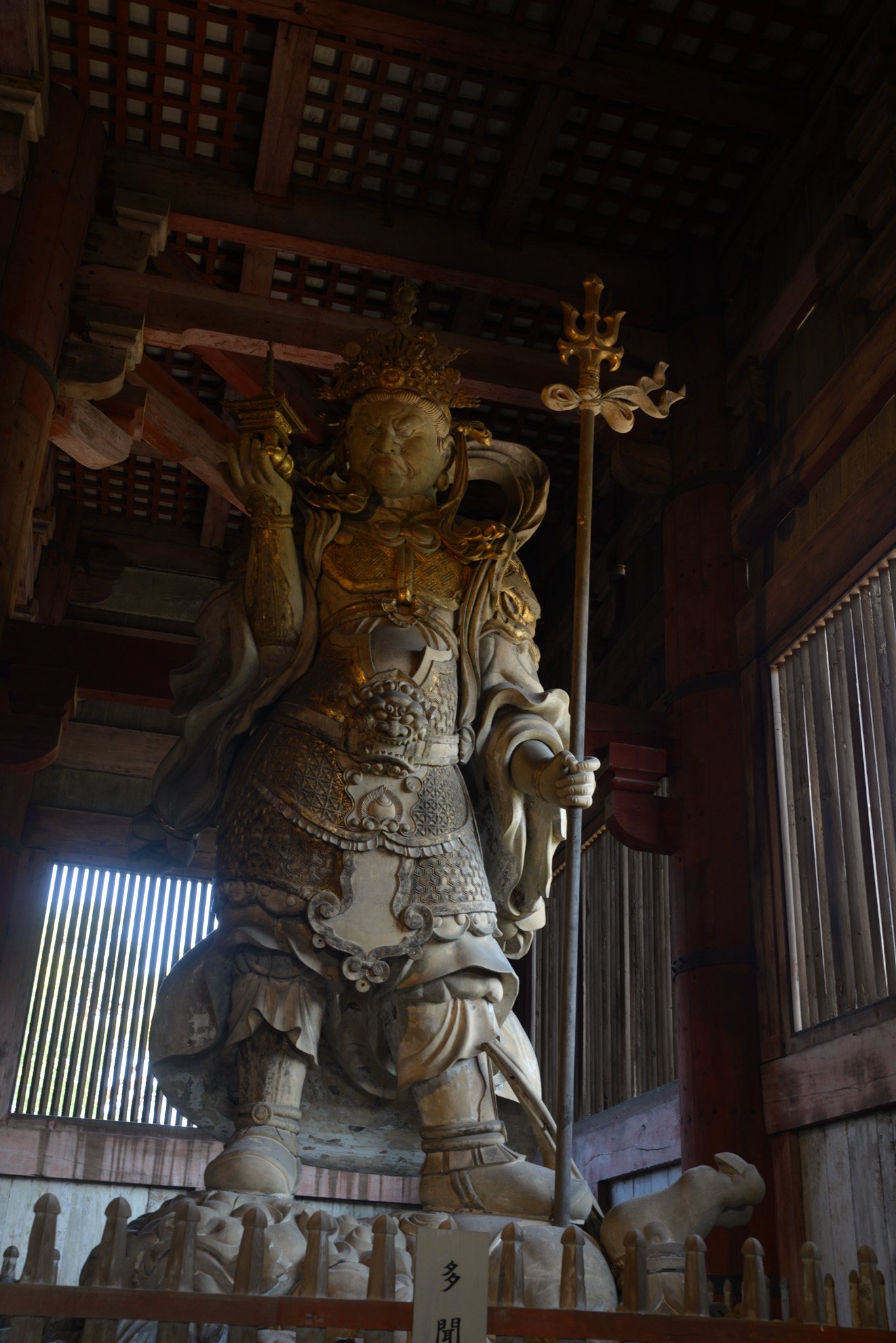
At the back of the Great Buddha Hall stand two of the Four Heavenly Kings, Kōmokuten and Tamonten.
A Model of Tōdai-ji at the Time of Its Founding
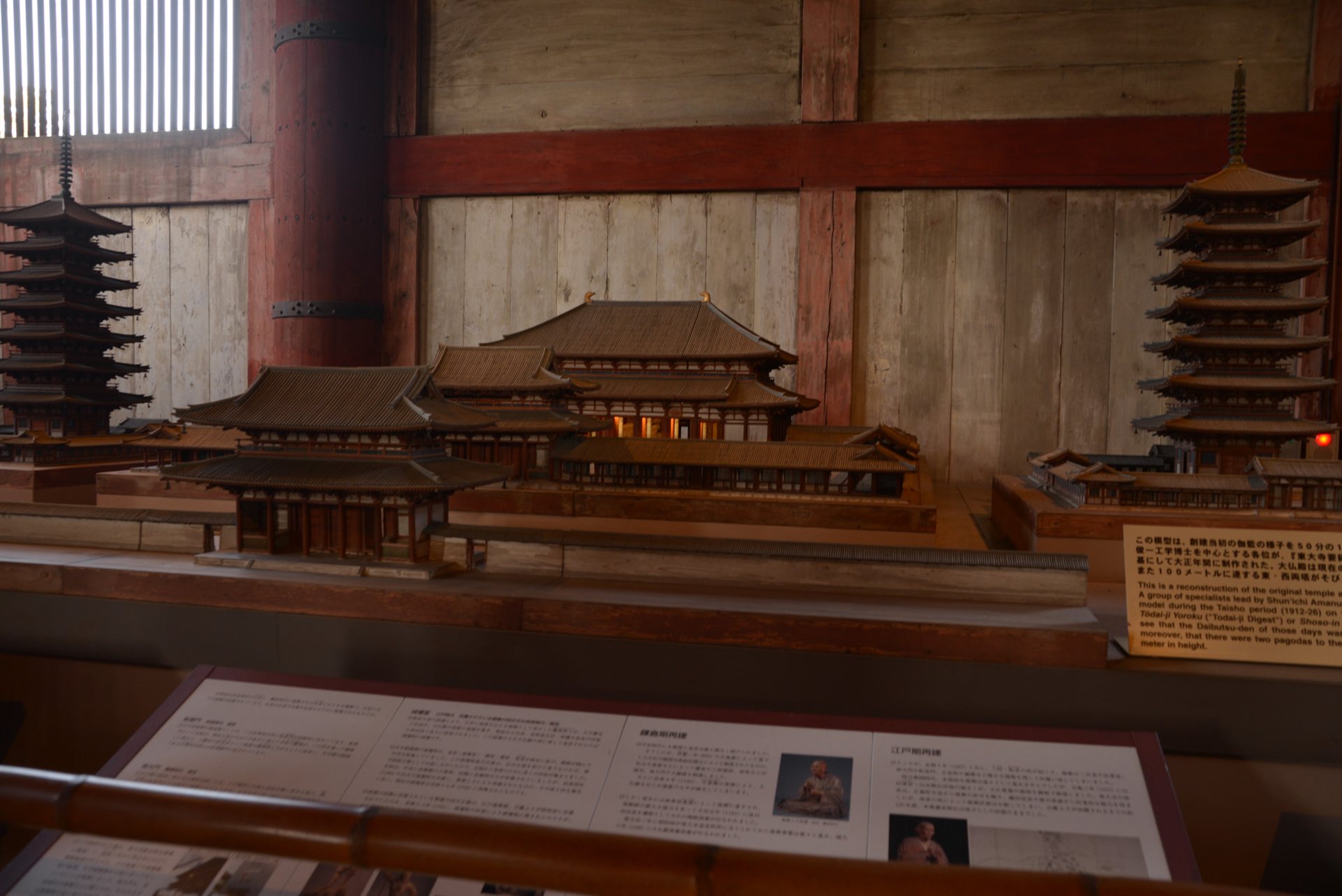
Inside the Great Buddha Hall there is also a 1/50 scale model that recreates Tōdai-ji at the time of its founding. According to the model’s information board, it was made in the Taishō era by a group led by Amanuma Shun’ichi, Doctor of Engineering, based on the Tōdai-ji Yōroku and other records.
The model shows that the Nara-period Great Buddha Hall was wider than today’s, and that pagodas about 100 m tall stood to the east and west. Comparing it with the present hall makes the story of the width being reduced to 7 ken in the Edo period easy to understand.
Nigatsu-dō | Looking Down on the Roof of the Great Buddha Hall and the City of Nara
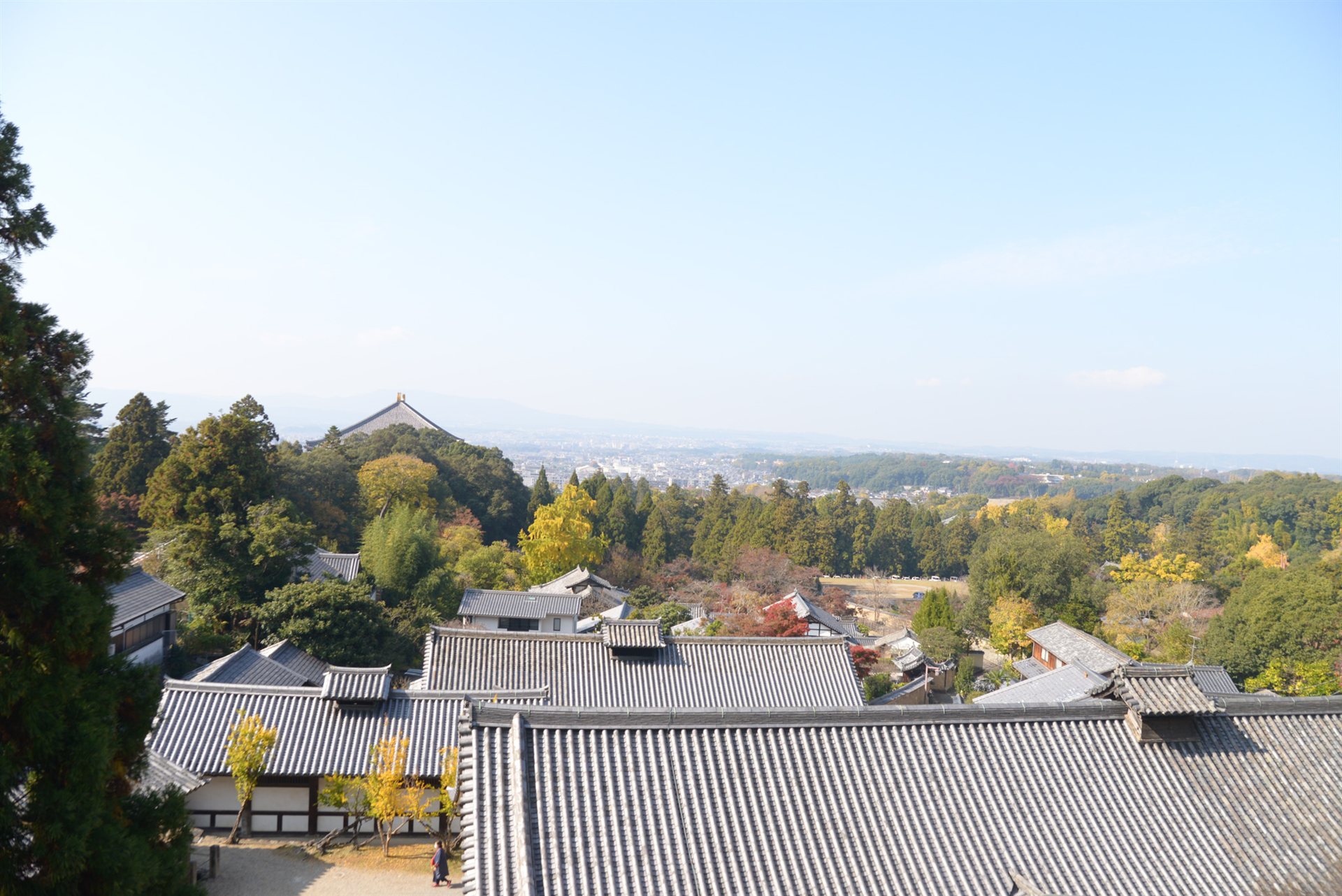
Climbing the slope east of the Great Buddha Hall brings you to Nigatsu-dō. Nigatsu-dō is a National Treasure and an Edo-period building. Its name (“Second Month Hall”) comes from the Shuni-e ceremony held in this hall in the 2nd month of the old lunar calendar. It burned down when a fire broke out during the Shuni-e in 1667 (Kanbun 7), and it was rebuilt two years later.
The official website states that Nigatsu-dō can be visited 24 hours a day (at night, visitors are asked not to make noise around the hall). No admission fee is listed.
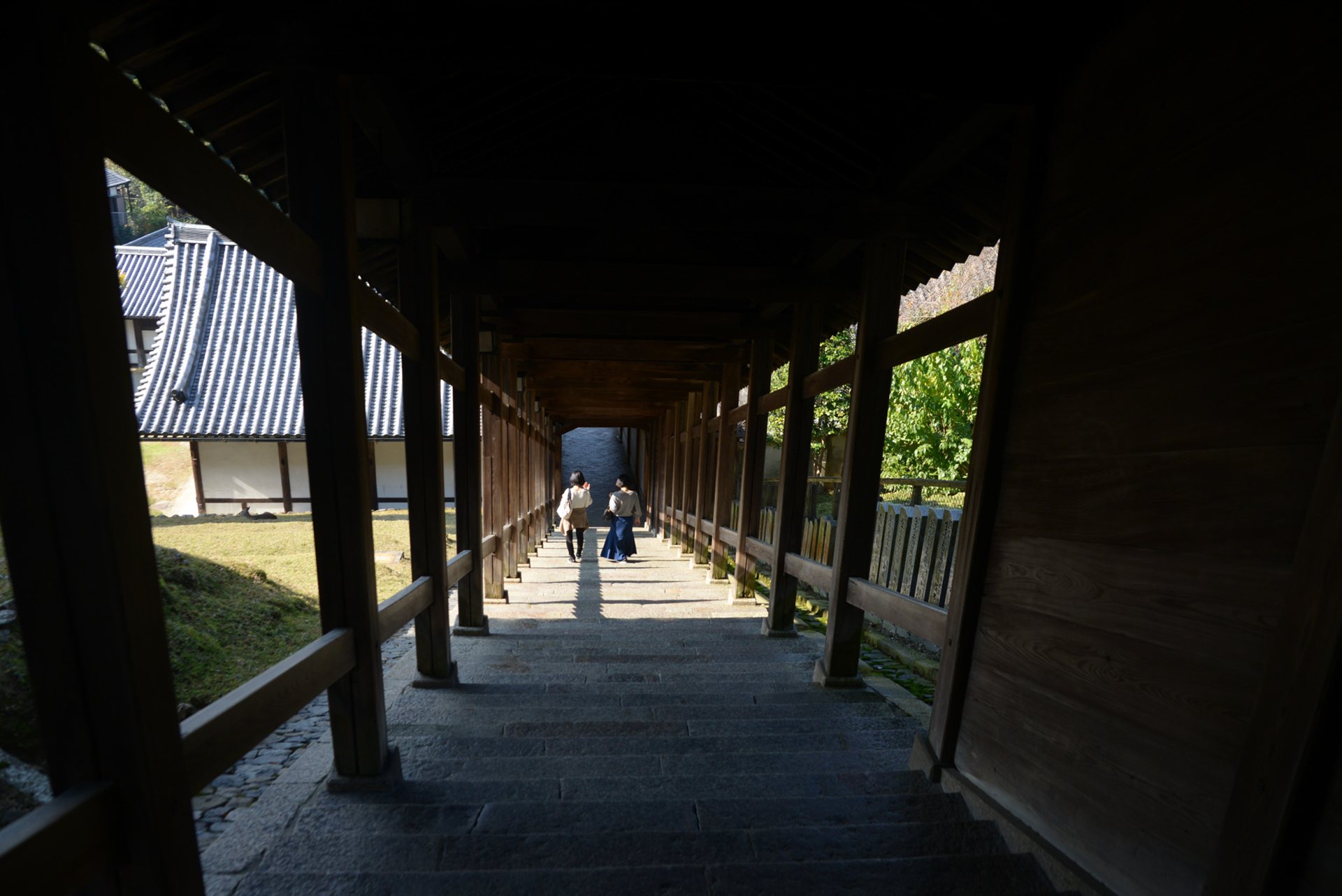
Near Nigatsu-dō is Hokke-dō (Sangatsu-dō), considered the oldest building at Tōdai-ji. According to the official website, it is thought to have been founded in the Tenpyō era, and its principal image is Fukūkenjaku Kannon.
Tōdai-ji Opening Hours, Admission Fees and Access
This information was checked on Tōdai-ji’s official website on November 9, 2026. Please check the official website for the latest information before you go.
Opening Hours
| Hall | Opening hours |
|---|---|
| Great Buddha Hall | April–October 7:30–17:30 / November–March 8:00–17:00 |
| Hokke-dō (Sangatsu-dō), Kaidan-dō | 8:30–16:00 |
| Tōdai-ji Museum | April–October 9:30–17:30 (last entry 17:00) / November–March 9:30–17:00 (last entry 16:30) |
| Nigatsu-dō | Open for worship 24 hours a day |
The temple is open every day, except during special events or emergencies.
Admission Fees (Individuals)
The Great Buddha Hall, Hokke-dō, Kaidan-dō and the Tōdai-ji Museum each charge a separate admission fee. Payment is cash only.
| Category | Fee |
|---|---|
| Adults (university students and older), high school students, junior high school students | 800 yen |
| Elementary school students | 400 yen |
| Combination ticket for the Great Buddha Hall and the Tōdai-ji Museum | Adults (junior high school students and older) 1,200 yen / elementary school students 600 yen |
Access
- About 20 minutes on foot from Kintetsu-Nara Station, heading east through Noborioji-chō
- From JR Nara Station or Kintetsu-Nara Station, take the city loop bus to “Tōdaiji Daibutsuden / Kasuga Taisha-mae,” then walk 5 minutes
- From Kintetsu-Nara Station, take the “Gurutto Bus” (Ōmiya-dōri Route or Nara Park Route) to “Daibutsuden-mae Chūshajō” (Great Buddha Hall Parking Lot); the temple is right there
- There is no dedicated parking lot on the temple grounds (and no dedicated parking for large buses)
If you walk from Kintetsu-Nara Station, you enter Nara Park partway and can reach the Nandaimon Gate while watching the deer.
Summary | At Tōdai-ji, You Can Enjoy a “History of Rebuilding Again and Again” Along with the Deer
- Tōdai-ji was built in the Nara period by the decree of Emperor Shōmu. The eye-opening ceremony of the Great Buddha was held in 752
- The Nandaimon Gate and the Kongō Rikishi statues were rebuilt in the Kamakura period, and the present Great Buddha Hall was rebuilt in the Edo period (dedicated in 1709)
- The model inside the Great Buddha Hall shows the huge original hall and the east and west pagodas
- From the veranda of Nigatsu-dō, you can look out over the roof of the Great Buddha Hall and the city of Nara
- The deer of Nara Park are wild animals designated as a National Natural Monument. Do not give them any food other than deer crackers
There are also articles on Kyoto from the same trip. Please also see the Senbon Torii of Fushimi Inari Taisha, the autumn leaves of Arashiyama and Togetsukyō Bridge, and Nijō Castle and the Kyoto Imperial Palace.
References (checked on November 9, 2026)
- Opening Hours and Admission Fees | Tōdai-ji Official Website (Japanese)
- Access | Tōdai-ji Official Website (Japanese)
- Great Buddha Hall | Tōdai-ji Official Website (Japanese)
- The Deer of Nara Park | Nara Prefecture (Japanese)
- Public Awareness | Nara Deer Preservation Foundation (Japanese)

コメント