*This article contains affiliate links (advertising).
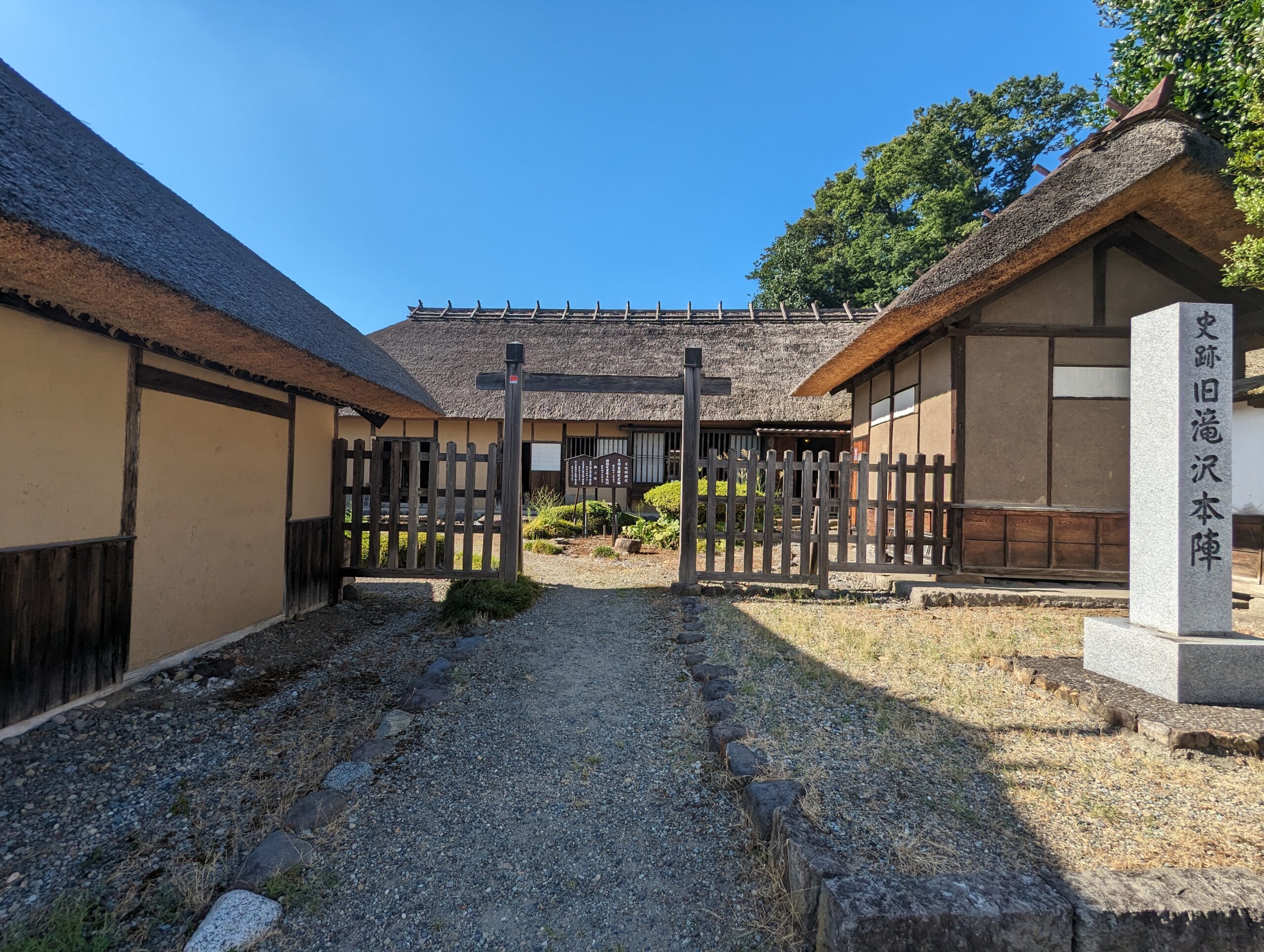
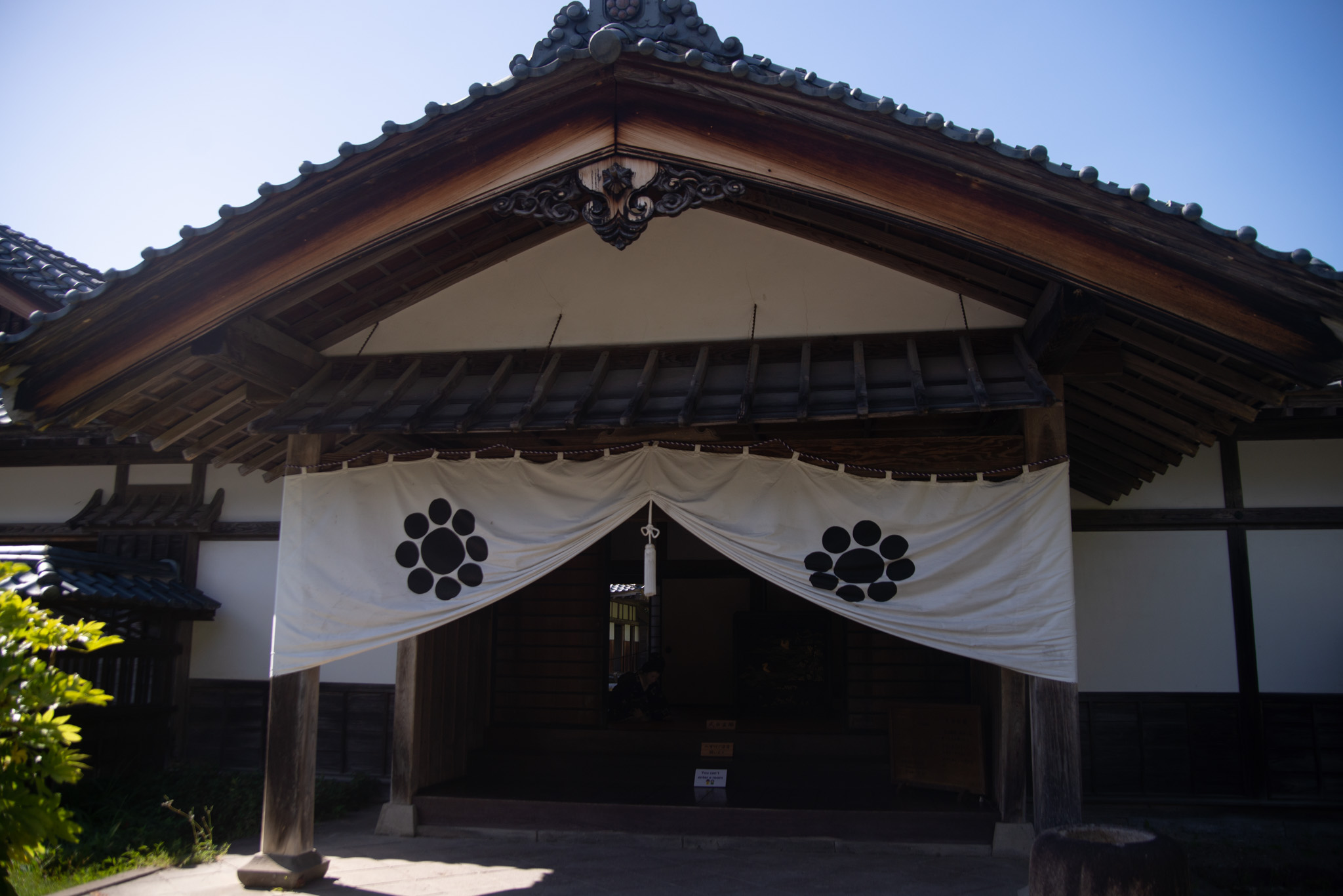
Mention Aizuwakamatsu, and many people immediately think of the Byakkotai (White Tiger Corps). This time, we’re introducing a historic site closely tied to that story: the Former Takizawa Honjin.
By the end of this article, you’ll understand exactly how the Former Takizawa Honjin connects to the Byakkotai, and what this site actually is.
What Is the Former Takizawa Honjin?
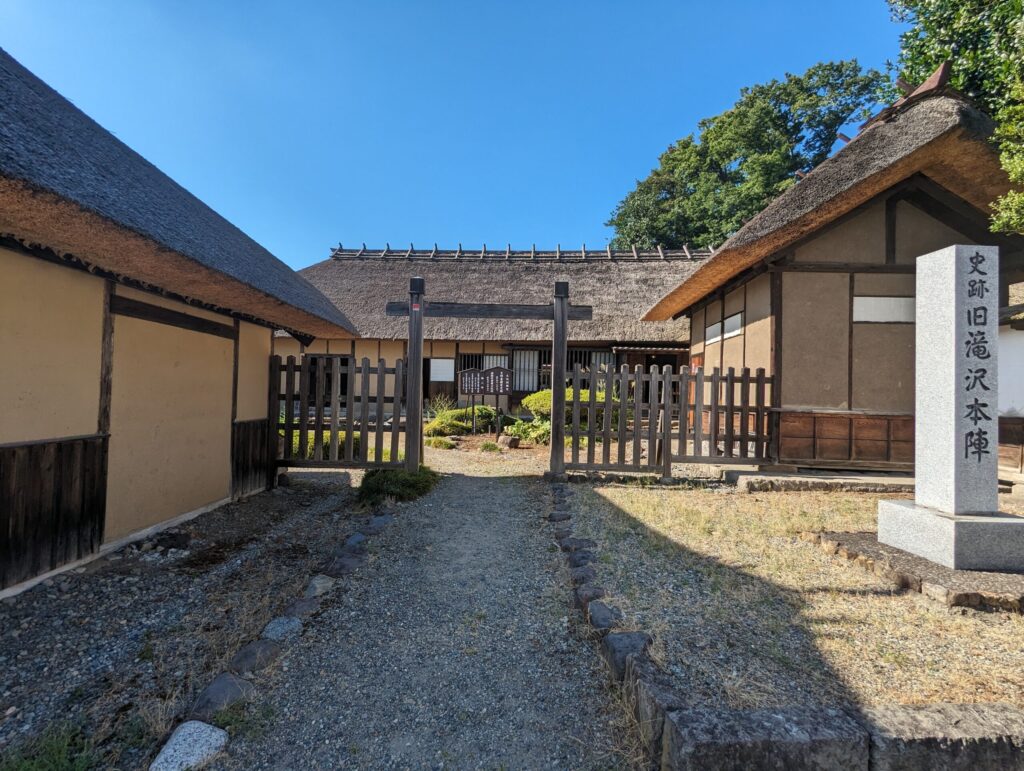
The Former Takizawa Honjin sits along the old Shirakawa Kaido, the historic road connecting the castle town of Aizuwakamatsu to Shirakawa and on to Edo. It was built as a resting place to prepare for the crossing of Takizawa Pass during the domain’s sankin-kotai processions to Edo. The surviving building dates to 1678 and was used as a rest stop for the Aizu domain lord whenever he traveled the Shirakawa Kaido.
Beyond sankin-kotai, it was also used during inspections of the domain’s territory and visits to Tsuchitsu Shrine, where the domain’s founding lord Hoshina Masayuki is enshrined. Today, the grounds and buildings are designated a National Historic Site, and the main hall and reception rooms are designated a National Important Cultural Property as the “Former Takizawa Honjin Yokoyama Family Residence” — considered one of the oldest surviving farmhouse-style buildings in the Tohoku region.
Where the Byakkotai Marched Out
By the final years of the Edo period, the Former Takizawa Honjin had become the Aizu domain’s field headquarters. During the Boshin War, domain lord Matsudaira Katamori set up his command post here — and it was from this very building that he ordered the Byakkotai’s Shichu Nitai (Second Company) to march out to the battlefield at Tonokuchihara.
The soldiers of Shichu Nitai were teenagers, just 16 and 17 years old. After being defeated at Tonokuchihara and retreating, they saw smoke rising near Tsuruga Castle from Iimoriyama hill and mistakenly believed the castle had fallen. In despair, the group took their own lives together on the hillside — one of the most tragic episodes of the Boshin War. The Former Takizawa Honjin still stands today as the actual site where that fateful order was given.
Bullet Holes and Sword Marks That Still Remain
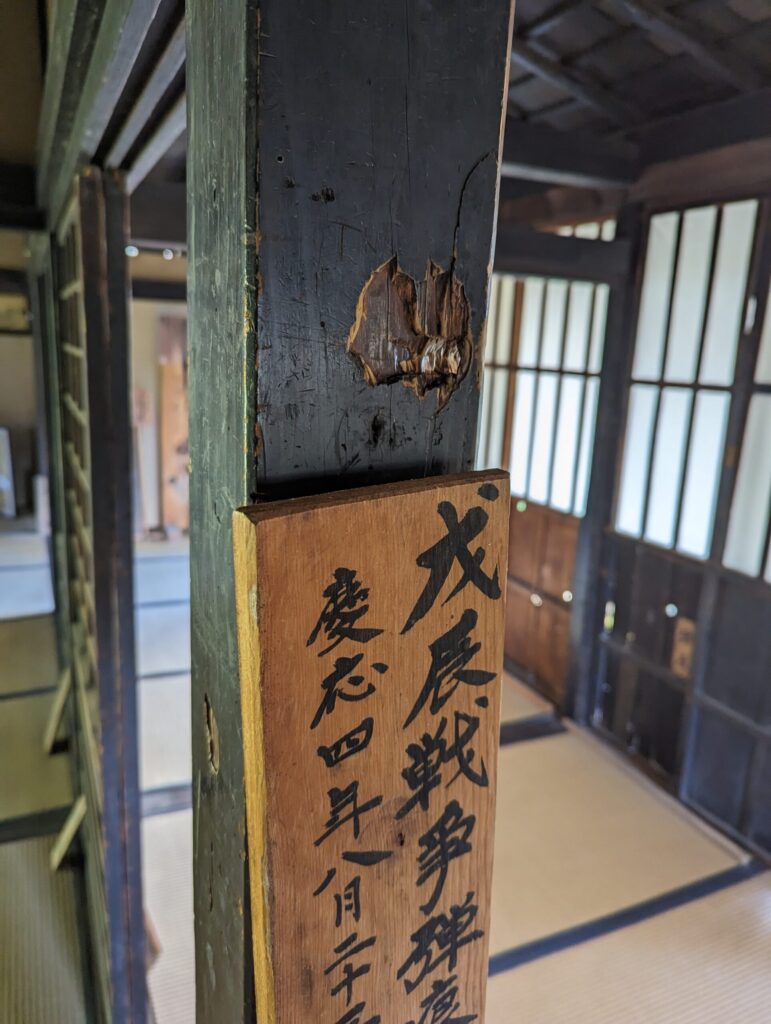
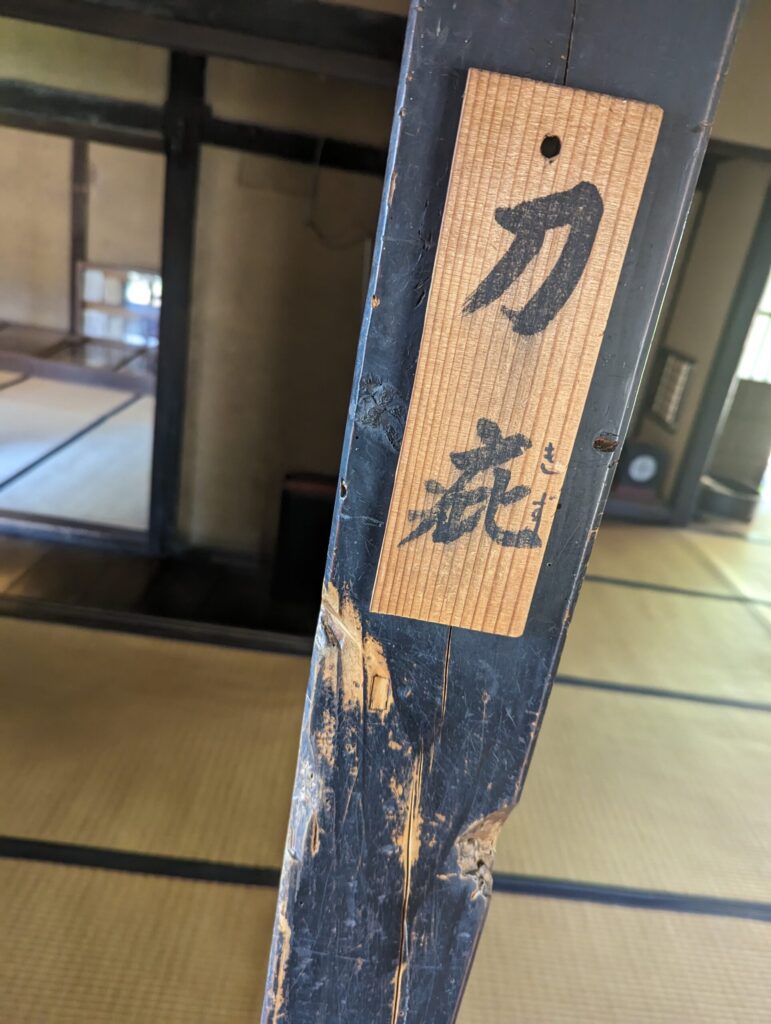
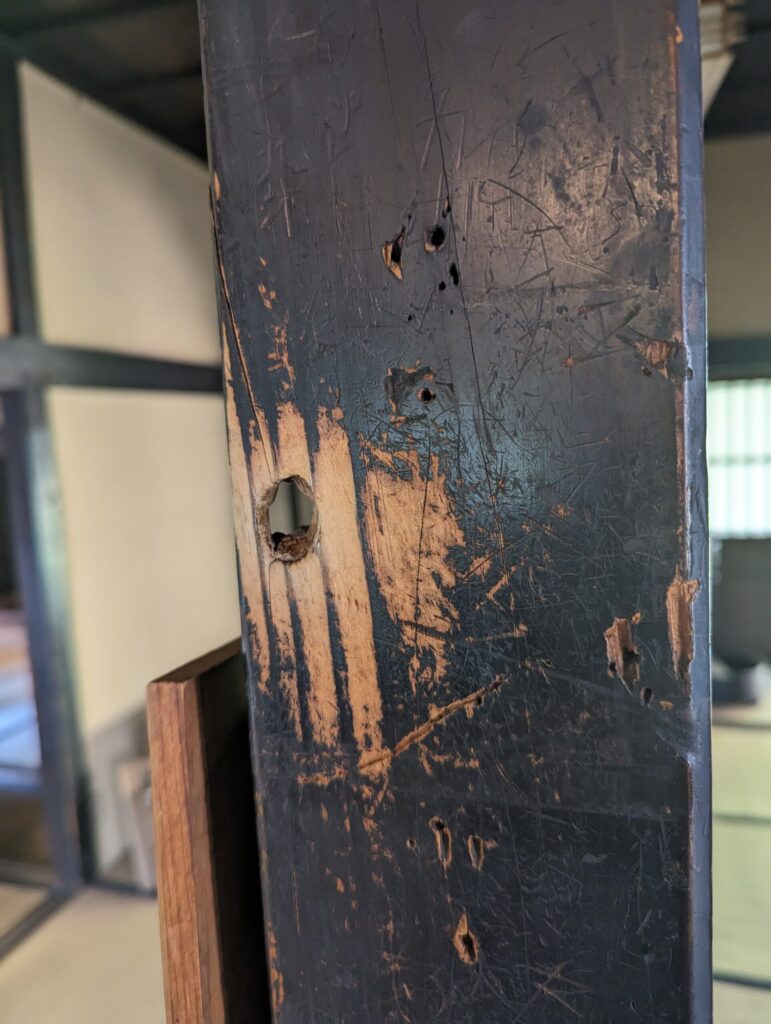
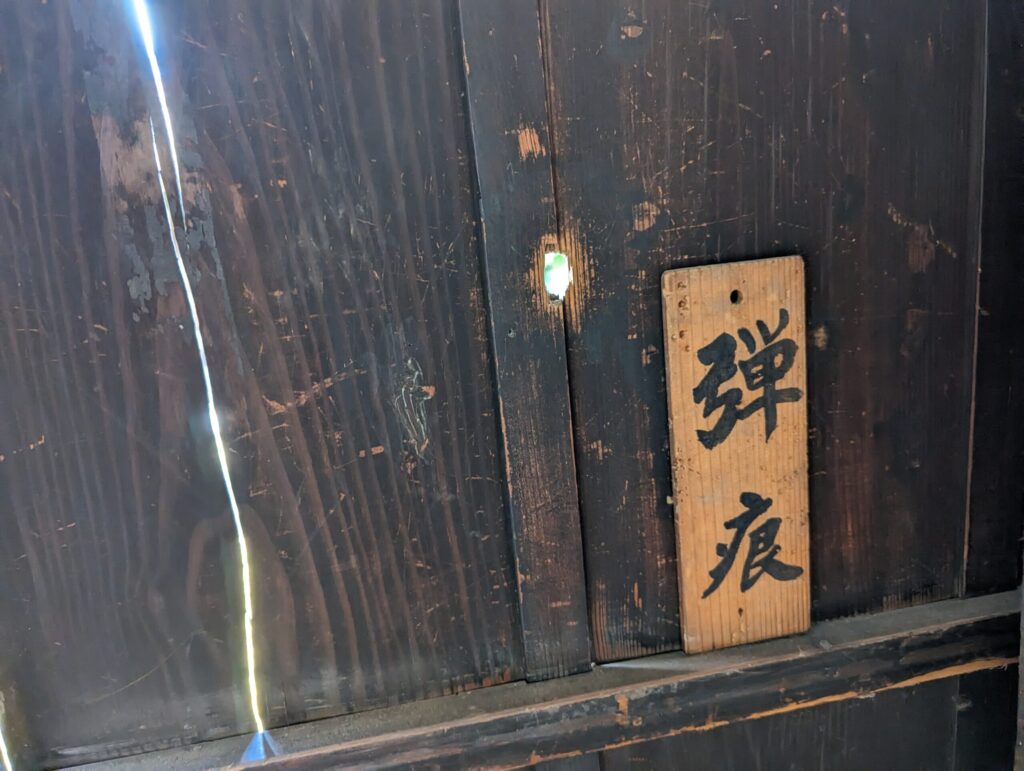
The single biggest draw of the Former Takizawa Honjin is that traces of the actual fighting are still visible inside. Bullet holes and sword cuts from when government forces stormed the building remain clearly etched into the sliding paper doors and pillars of the reception room — a level of preserved battle damage that’s hard to find in any other pre-Meiji building in Japan.
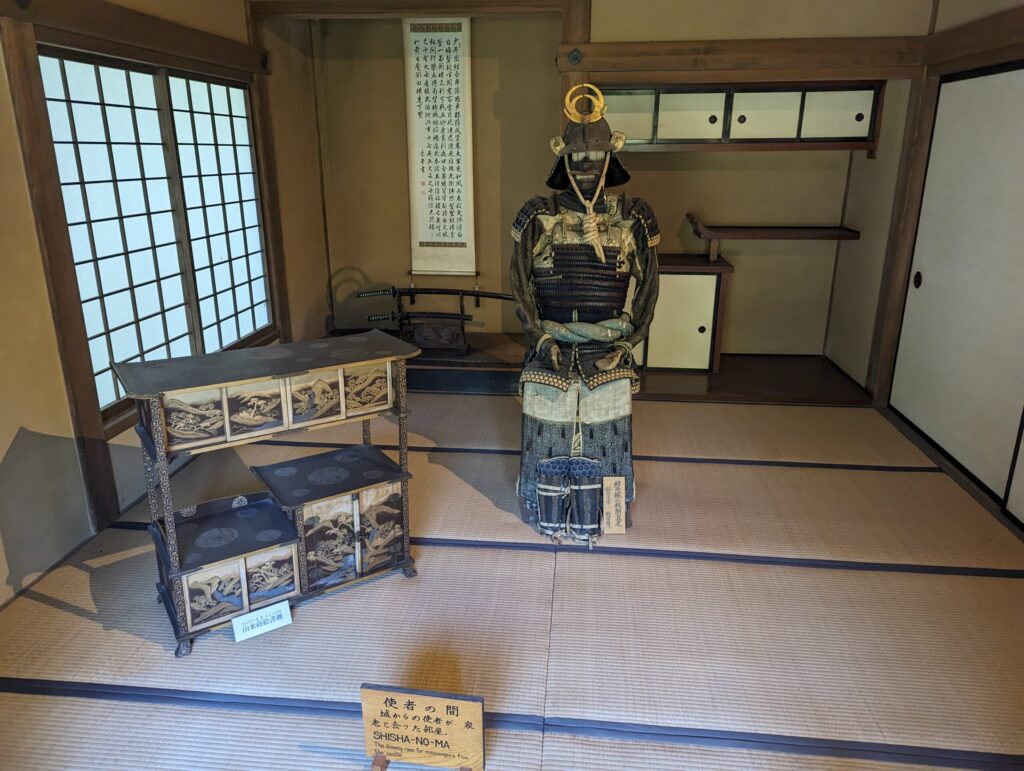
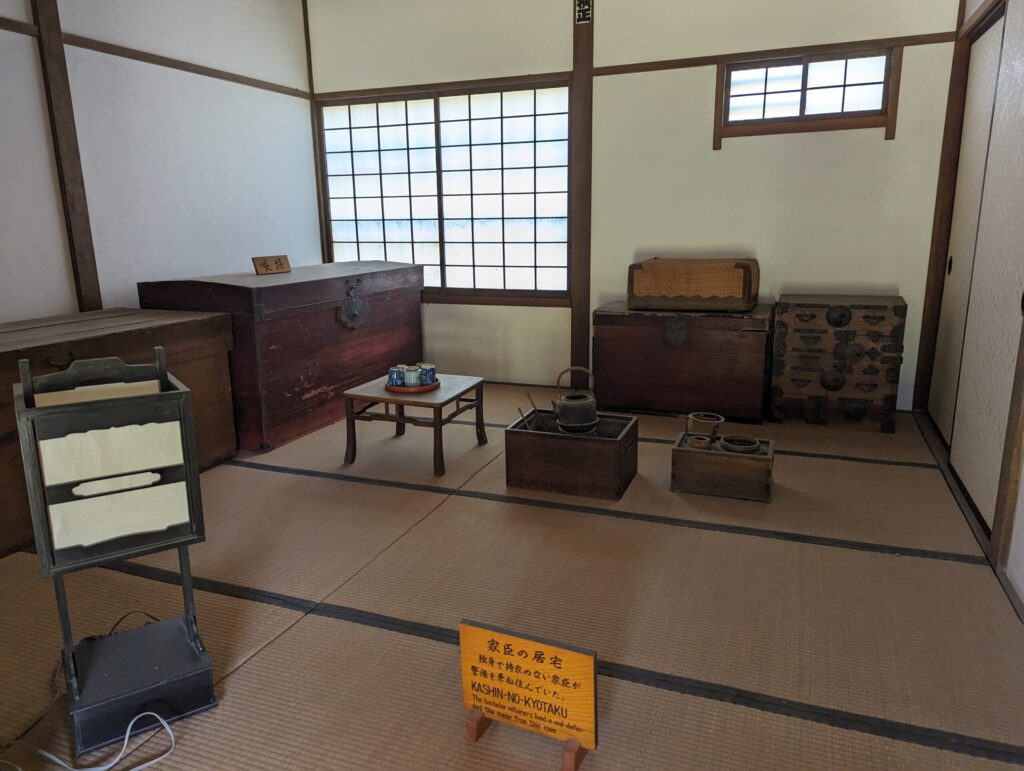
These marks aren’t limited to just one or two spots — they’re scattered throughout the building, a vivid reminder of how fierce the fighting was. Rooms such as the entrance gate, the lord’s audience chamber, and the adjoining chamber remain preserved much as they were, and the site also displays items once used by generations of domain lords, sankin-kotai travel equipment, and historical documents.
Things to Know Before You Visit
During quieter hours, there may be no staff at the reception desk. If that’s the case, simply place your admission fee in the collection box set up on the reception table.
Reservations are also required from December through March. If you plan to visit during this period, call ahead to book before you go.
Visitor Information (Hours, Admission, Access)
| Item | Details |
|---|---|
| Phone | 090-7334-9277 |
| Hours (April–September) | 9:00 AM–5:00 PM |
| Hours (October–November) | 9:00 AM–4:00 PM |
| Hours (December–March) | Reservation required |
| Closed | Open year-round (reservation required Dec–Mar) |
| Parking | Available (7 spaces) |
Admission
| Category | Price |
|---|---|
| Adult | ¥400 |
| High school student | ¥300 |
| Elementary/junior high student | ¥200 |
| Young children | ¥100 |
FAQ
Is the Former Takizawa Honjin close to Iimoriyama? Yes — many visitors combine the two, making it a natural fit for a Byakkotai-themed sightseeing route.
What should I do if I want to visit between December and March? Reservations are required during this period. Call the phone number listed above in advance to book your visit.
What if no one is at the reception desk when I arrive? Place your admission fee in the collection box on the reception table and go ahead with your visit.
Where exactly can I see the bullet holes and sword marks? Mostly on the sliding paper doors and pillars of the reception room, though traces are scattered throughout the building — a striking, firsthand record of the fighting that took place there.
Where to stay: Aizuwakamatsu
Staying overnight in Aizuwakamatsu lets you explore at a relaxed pace and head out early before the crowds arrive.
Final Thoughts
Closely tied to the story of the Byakkotai, the Former Takizawa Honjin began life as a resting place for sankin-kotai processions and territorial inspections. During the Boshin War, it became the Aizu domain’s field headquarters, and it was from here that the Byakkotai’s Second Company marched out to Tonokuchihara. The reception room still bears numerous bullet holes and sword marks from that fighting, offering a visceral sense of just how intense the battle was.
Keep in mind that staff may not always be at the reception desk — in which case, use the fee box — and that visits from December through March require a reservation, so be sure to call ahead before you go.
コメント