Marugame Castle in Marugame City, Kagawa Prefecture, is a castle with a small white keep standing on top of tall stone walls stacked in many tiers. Marugame City introduces it as the castle with “the tallest stone walls in Japan,” and its keep is one of only 12 original wooden keeps left in the country (the “12 original keeps”).
This article follows the history of Marugame Castle in order, from its construction through the Meiji and Shōwa eras, and introduces the highlights of the Ōte Gate, the stone walls, and the keep, along with access information. The photos were taken on May 4, 2024, the day of the Marugame Castle Festival.
Note: Opening hours, fees, and other details were checked on the official website of Marugame City on October 30, 2026.
- What Is Marugame Castle? A Hilltop Castle Built on Kameyama, About 66 m High
- History of Marugame Castle
- Highlight 1: From the Ōte Gate to Mikaeri-zaka Slope
- Highlight 2: The Tall Stone Walls and Their “Fan-Shaped Slope”
- Highlight 3: One of the 12 Original Keeps
- Marugame Castle on the Day of the Castle Festival
- Access to Marugame Castle
- Frequently Asked Questions
- Summary
What Is Marugame Castle? A Hilltop Castle Built on Kameyama, About 66 m High
Marugame Castle is a hilltop castle (hirayamajiro) built on Kameyama, a hill about 66 m above sea level, and it is also called “Kameyama Castle.” From the top of the hill down, there are the Honmaru (main enclosure), Ninomaru (second enclosure), Sannomaru (third enclosure), Obiguruwa (belt enclosure), and Sangeguruwa (lower enclosure). The area inside the inner moat is a National Historic Site.
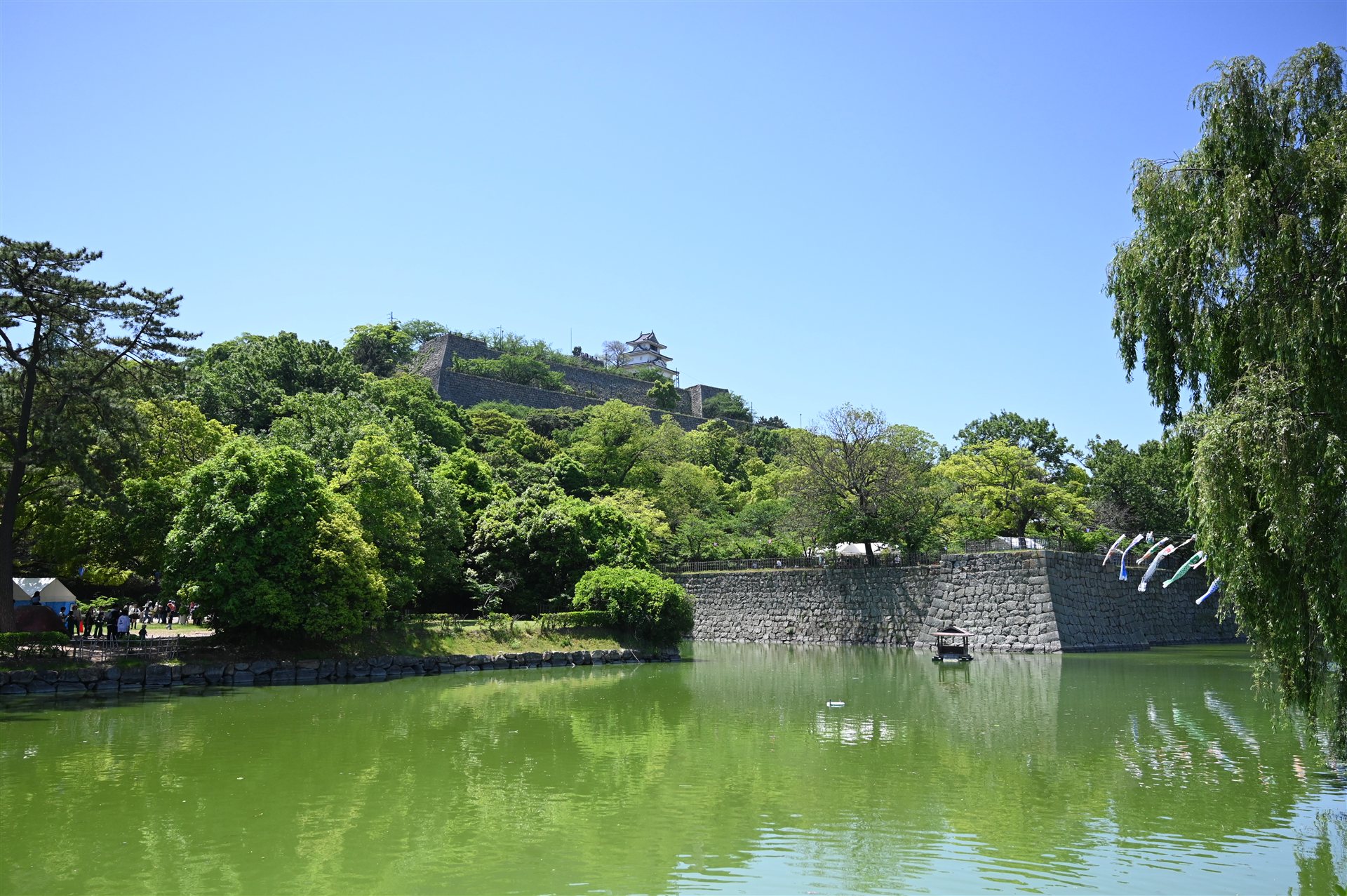
Looking up from below, you see the stone walls rising in tiers above the trees, with the keep standing small at the summit. A feature of Marugame Castle is that you can take in the whole shape of the castle at once: the moat, the stone walls, and the keep, in that order.
History of Marugame Castle
Built by Ikoma Chikamasa, Then Abandoned Under the One Castle per Province Law
The history of Marugame Castle began in 1597 (Keichō 2). Ikoma Chikamasa, the lord of Sanuki Province, and his son Kazumasa started building a castle on Kameyama. Marugame City explains that father and son spent five years building it.
When Kazumasa moved to Takamatsu Castle in 1602 (Keichō 7), a castle warden was placed in charge of Marugame Castle. Then in 1615 (Genna 1), under the Edo shogunate’s One Castle per Province law (Ikkoku Ichijō Rei), Marugame Castle was abandoned for a time.
Rebuilt by Yamazaki Ieharu, and the Kyōgoku Era
The castle came back to life in 1643 (Kan’ei 20). Yamazaki Ieharu, who had come to Marugame, rebuilt Marugame Castle with support of 300 kan of silver from the shogunate. In 1645 (Shōhō 2), on the shogunate’s orders, he submitted a plan of Marugame Castle (one of the Shōhō Castle Plans).
In 1658 (Manji 1), Kyōgoku Takakazu became lord of the Marugame Domain, and the present keep was completed in 1660 (Manji 3). In 1670 (Kanbun 10), the front entrance of the castle (the ōte) was moved to its current place on the north side.
From the Meiji Era to Today
After the return of the domains to the emperor (Hanseki Hōkan) in 1869 (Meiji 2), the residences inside the castle were destroyed by fire. In 1874 (Meiji 7), the army’s Marugame barracks were set up, and around 1876–1877 (Meiji 9–10), the turrets and the tamon-yagura (long, row-house-like turrets) were torn down.
Even so, the keep and the Ōte Gate survived. The keep was designated a National Treasure in 1943 (Shōwa 18), and when its dismantling and repair work was completed in 1950 (Shōwa 25), it became an Important Cultural Property. In 1953 (Shōwa 28), the Marugame Castle ruins became a National Historic Site, and in 1957 (Shōwa 32), the Ōte Gate was also designated an Important Cultural Property.
| Year | Event |
|---|---|
| 1597 (Keichō 2) | Ikoma Chikamasa and Kazumasa begin building the castle |
| 1615 (Genna 1) | Abandoned under the One Castle per Province law |
| 1643 (Kan’ei 20) | Rebuilt by Yamazaki Ieharu |
| 1660 (Manji 3) | The keep is completed in the Kyōgoku era |
| 1670 (Kanbun 10) | The front entrance (ōte) is moved to its current place on the north side |
| 1950 (Shōwa 25) | Dismantling and repair of the keep completed; designated an Important Cultural Property |
| 1957 (Shōwa 32) | The Ōte Gate is designated an Important Cultural Property |
Highlight 1: From the Ōte Gate to Mikaeri-zaka Slope
The Ōte Gate (Ōte Ichi-no-mon and Ni-no-mon)
The entrance to Marugame Castle is the Ōte Gate on the north side. After crossing the moat, you first come to the small Ni-no-mon (second gate), and beyond it stands the Ichi-no-mon (first gate), a two-story turret gate (yagura-mon). Marugame City describes the Ichi-no-mon as “a turret gate with the dignity and presence befitting the main front gate.”
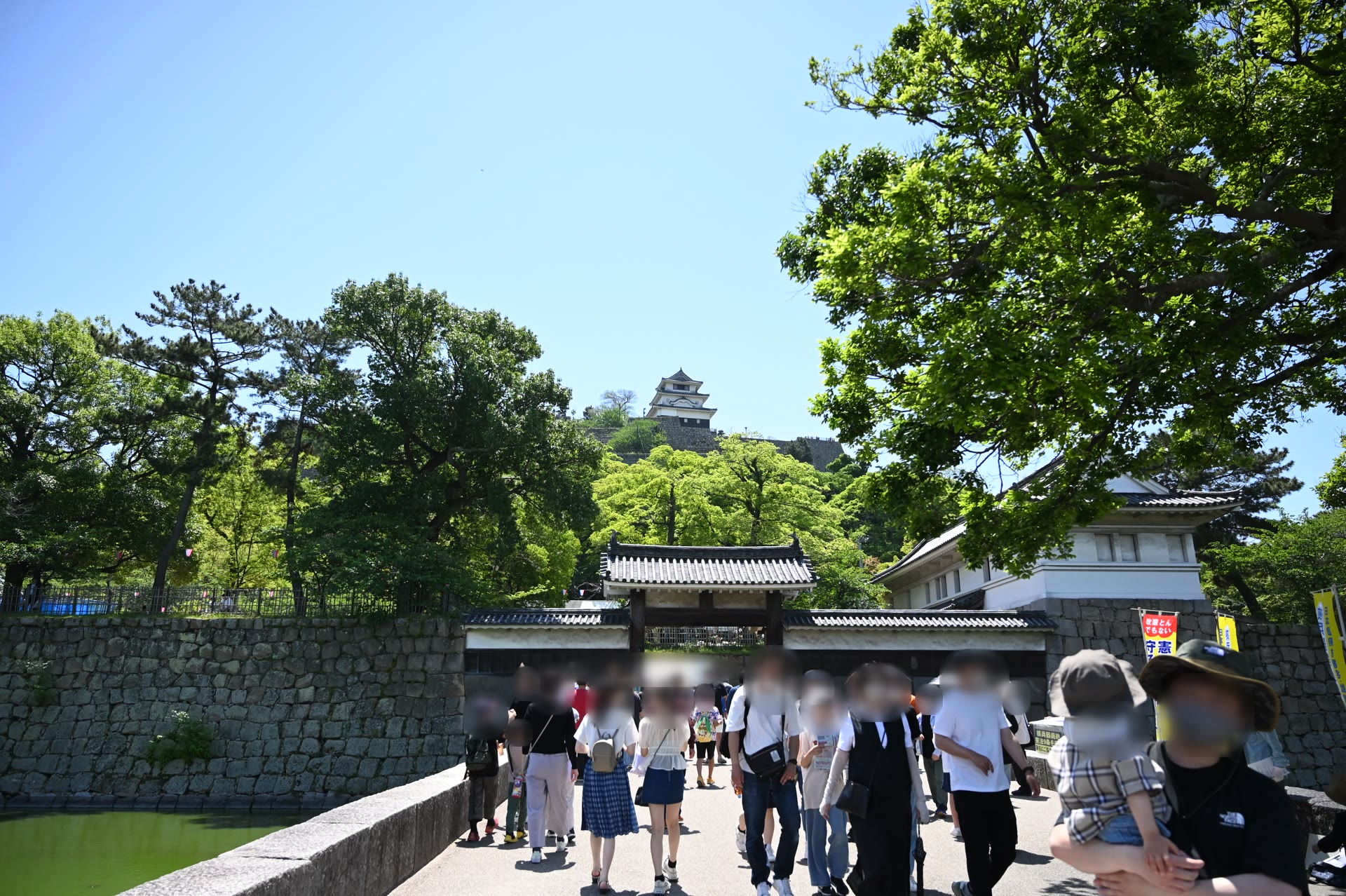
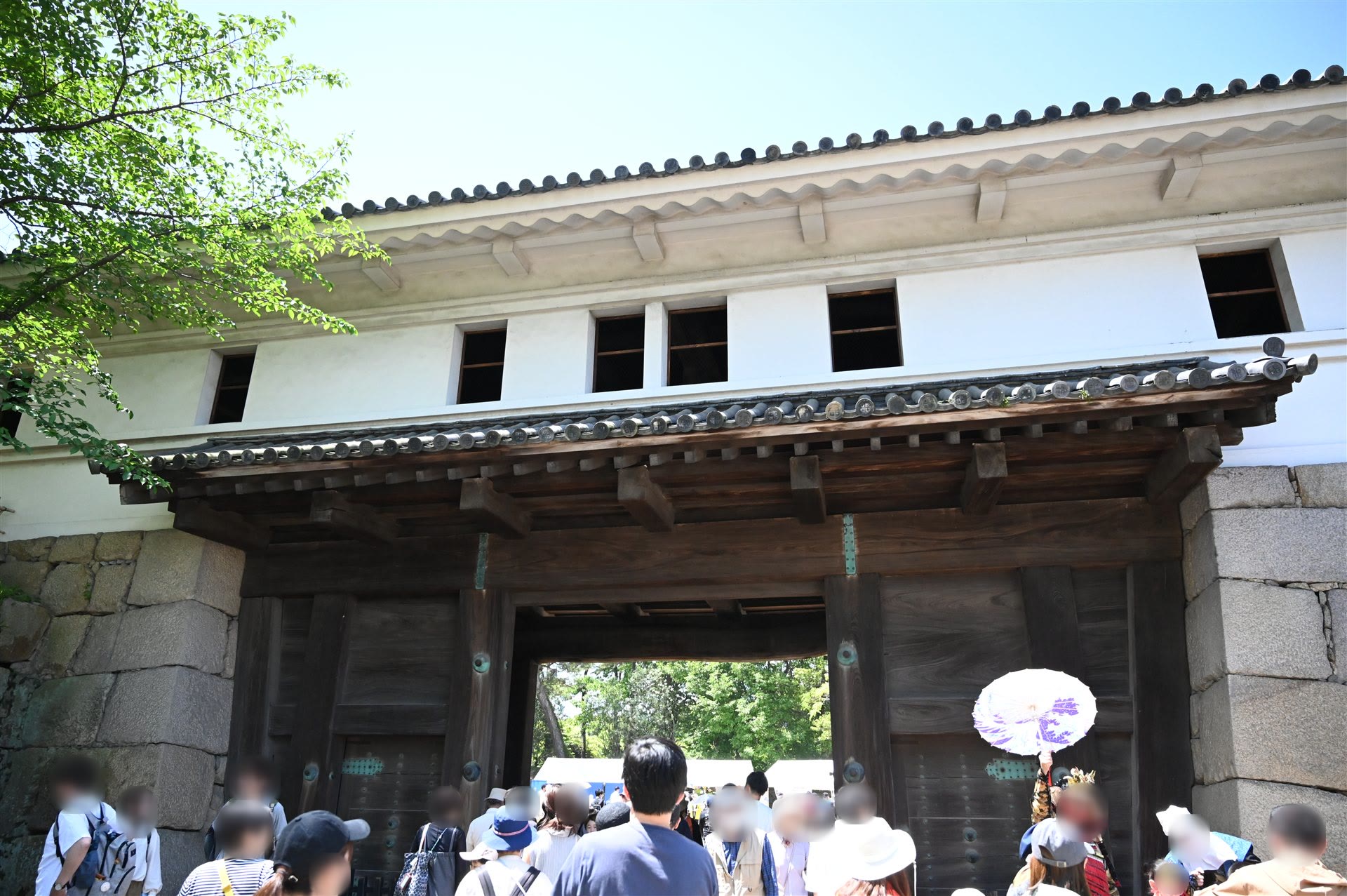
The stone walls around the Ichi-no-mon are built of large stones cut into squares. Together with the size of the gate, they give it the look of a true front entrance to the castle.
Mikaeri-zaka Slope
After passing through the Ōte Gate into the castle grounds, a slope leading up to the main enclosure begins. This is Mikaeri-zaka (“Looking-Back Slope”). It is said to have gotten its name because it is so steep that you want to stop and look back now and then. Tall stone walls continue alongside the slope.
Highlight 2: The Tall Stone Walls and Their “Fan-Shaped Slope”
The biggest highlight of Marugame Castle is its stone walls. From the foot of the hill to the summit, the walls are stacked in many tiers. In particular, the stone wall on the north side of the Sannomaru (facing the Seto Inland Sea) is a tall wall more than 20 m high.
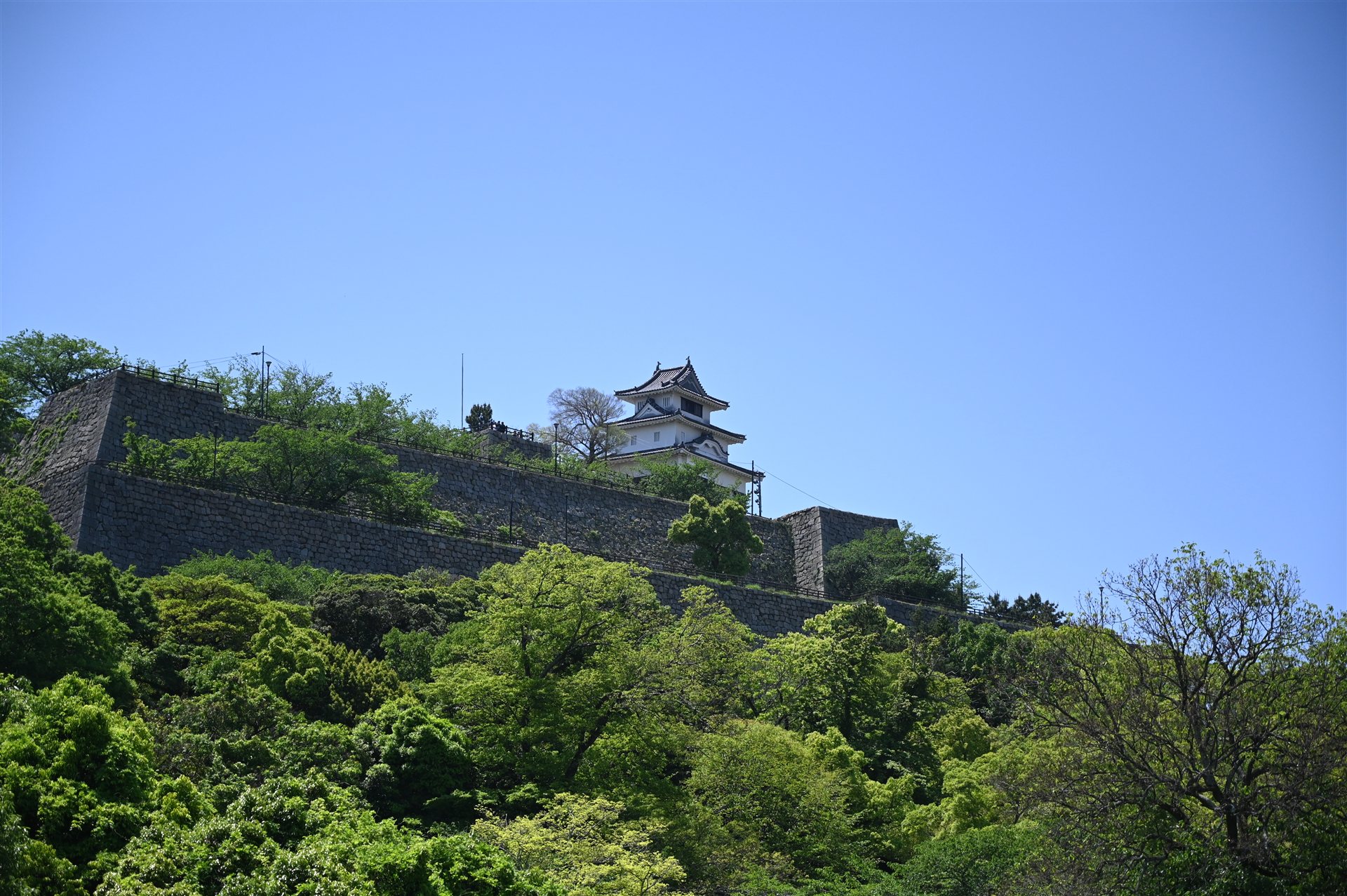
The corners of the stone walls are built with the sangizumi method, in which long stones are stacked with their direction alternating. The walls draw a curve that is gentle at the bottom and becomes nearly vertical toward the top. This shape is called “ōgi no kōbai” (the fan-shaped slope).
The Stone Wall Collapses and the Ongoing Restoration Work
On October 8, 2018 (Heisei 30), the west face of the Obiguruwa stone wall at Marugame Castle collapsed, and on the following day, the 9th, the wall at the site of the Hitsujisaru Yagura (southwest turret) in the Sannomaru collapsed as well. The collapse at the Sannomaru Hitsujisaru Yagura site reached a height of about 17 m.
Restoration work is still continuing, and Marugame City posts updates on its progress in the “Stone Wall Restoration Information” section of its official website. The target date for completion was once pushed back to the end of March 2028, and the city announced that it reviewed the construction period and project costs again in June 2025. According to news reports (KSB Setonaikai Broadcasting), completion after the review is scheduled for March 2031.
During the work, some areas may be closed to visitors. Please check the official website of Marugame City before you go.
Highlight 3: One of the 12 Original Keeps
The keep standing on top of the stone walls is about 15 m high, with three roofs and three floors. Completed in 1660 (Manji 3), it is a wooden keep from the Edo period and one of only 12 original keeps left in Japan.
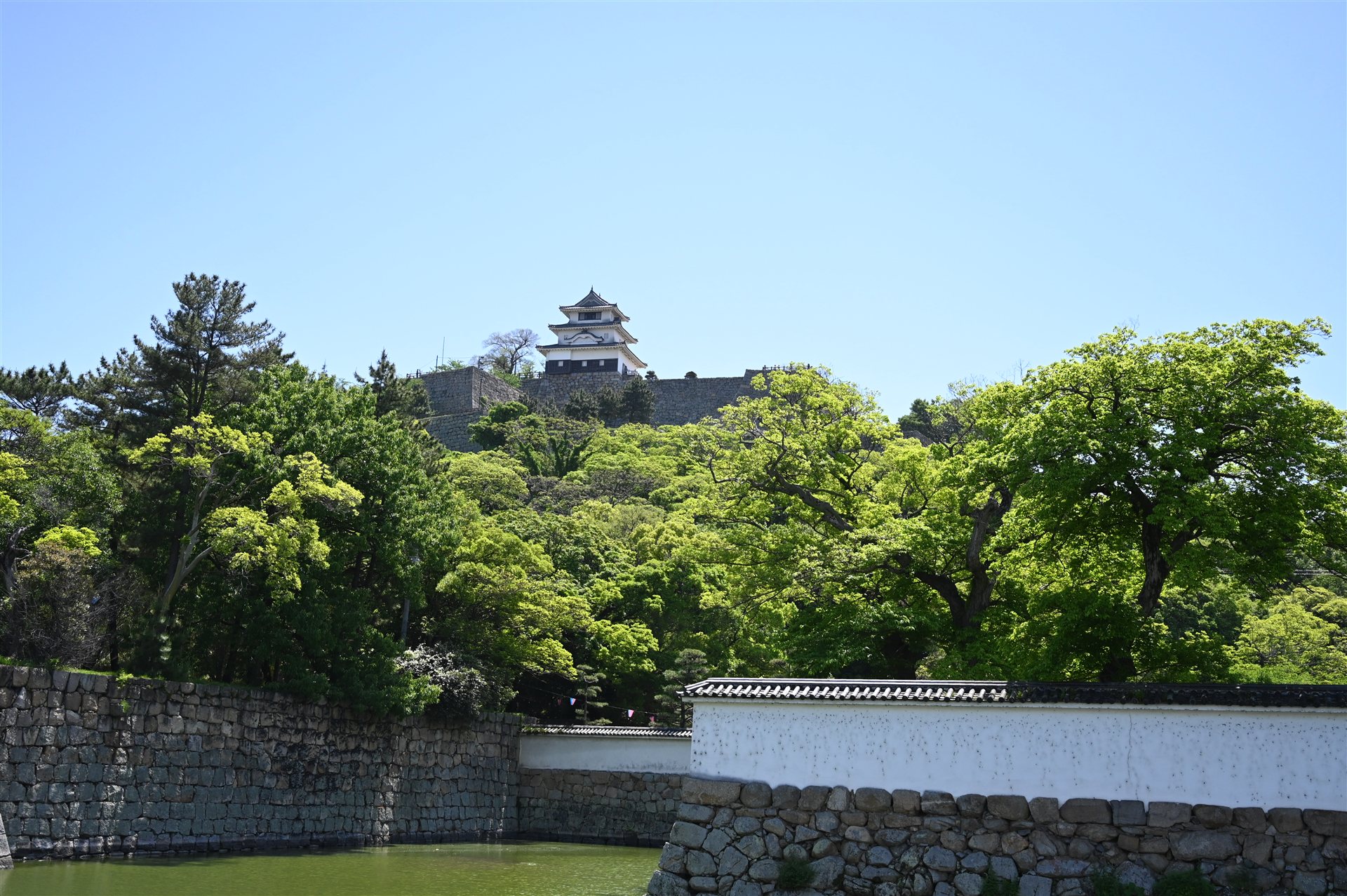
You can also go inside the keep (admission fee required). About the view from the site of the Tsukimi Yagura (moon-viewing turret), Marugame City says you can see the gently flowing Doki River and Mt. Iino (Sanuki Fuji) beautifully. In the Ninomaru, there is also the Ninomaru Well, which is more than 30 m deep and is said to be “the deepest well in Japan.”
Keep Opening Hours and Admission
| Item | Details |
|---|---|
| Opening hours | 9:00–16:30 (last entry 16:00) |
| Admission | Adults 400 yen, free for junior high school students and younger |
| Closed | No regular closing days (may close temporarily when weather warnings are issued, for inspections or construction, during events, etc.) |
Note: Checked on the official website of Marugame City on October 30, 2026. You can walk freely around the castle grounds (except the keep).
Marugame Castle on the Day of the Castle Festival
May 4, 2024, the day I took the photos, was the day of the Marugame Castle Festival (Marugame Oshiro Matsuri). This festival is held around Marugame Castle every May during Golden Week, and in 2026 the 77th festival took place on May 3 and 4.
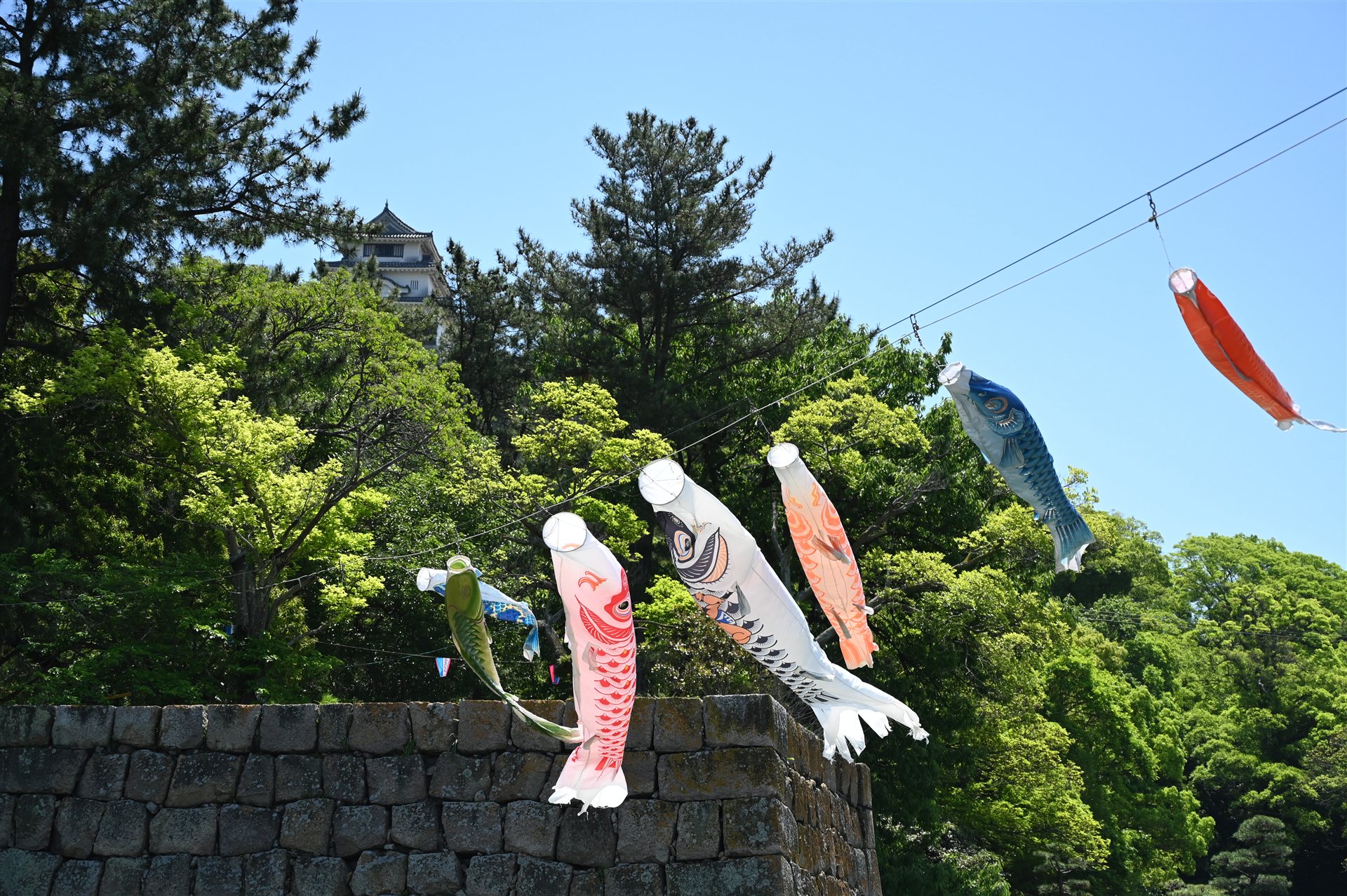
There were just so many people. There were all kinds of events inside the castle grounds too, so walking around was a bit of a struggle.
Access to Marugame Castle
| How to get there | Details |
|---|---|
| Train | About 15 minutes on foot from JR Marugame Station |
| Car | From Sakaide IC or Zentsūji IC on the Takamatsu Expressway, take National Route 11 toward Marugame. Either way, about 20 minutes to JR Marugame Station |
| Parking | Free parking lot on the south side of the Marugame Castle Museum (about 50 spaces, 6:00–19:00; may change during events). There are also paid municipal parking lots nearby |
Note: Checked on the official website of Marugame City on October 30, 2026.
Marugame is in the western part of Kagawa Prefecture, like Kotohira, home of Konpira-san (Kotohira-gū Shrine). On the day I took these photos, I also headed to Marugame Castle after visiting Kotohira-gū in Kotohira. I have written about the history of Konpira-san in this article.
Here are my travelogues from trips around Kagawa.
- To Kagawa for Udon! Sightseeing in “Udon Prefecture” on a 3-Day, 2-Night Long Drive (Part 1) (Japanese)
- Chichibugahama Beach (Mitoyo, Kagawa): Reflections at “Japan’s Uyuni Salt Flat,” Access, and Parking
Frequently Asked Questions
How much does it cost to enter the keep of Marugame Castle?
It is 400 yen for adults and free for junior high school students and younger. Opening hours are 9:00–16:30 (last entry 16:00) (checked on the official website of Marugame City on October 30, 2026).
Why are the stone walls of Marugame Castle famous?
The stone walls are stacked in many tiers from the foot of the hill to the summit, and Marugame City introduces them as “the tallest stone walls in Japan.” The wall on the north side of the Sannomaru is more than 20 m high, and its corners draw a beautiful curve called “ōgi no kōbai” (the fan-shaped slope).
Who built Marugame Castle?
Ikoma Chikamasa and his son Kazumasa began building it in 1597. After it was abandoned for a time under the One Castle per Province law, Yamazaki Ieharu rebuilt it in 1643, and the keep was completed in 1660, in the Kyōgoku era.
Summary
Marugame Castle was built by Ikoma Chikamasa, rebuilt by Yamazaki Ieharu, and had its keep completed in the Kyōgoku era. You can see its many tiers of stone walls, its wooden keep surviving from the Edo period, and the Ōte Gate, an Important Cultural Property, in order from the foot of the hill to the summit. Restoration work on the stone walls is still continuing, so please check which areas are open on the official website of Marugame City before you go.
References (checked on October 30, 2026)
- Marugame Castle (Marugame City official website) (Japanese)
- History of Marugame Castle (Marugame City) (Japanese)
- Highlights of Marugame Castle (Marugame City) (Japanese)
- Marugame Castle Keep (Marugame City) (Japanese)
- Access to Marugame Castle (Marugame City) (Japanese)
- Marugame Castle Stone Wall Construction Progress (Marugame City) (Japanese)
コメント