The Battle of Nagashino was fought in 1575 (Tenshō 3) in what is now Shinshiro City, Aichi Prefecture. The army of Takeda Katsuyori surrounded Nagashino Castle and clashed at Shitaragahara with the allied forces of Oda Nobunaga and Tokugawa Ieyasu, who had come to relieve the castle.
This article explains the course of the Battle of Nagashino in order — the siege of Nagashino Castle, the story of Torii Sune’emon, and the decisive battle at Shitaragahara — together with a timeline. I also introduce the highlights of the Nagashino Castle ruins and the Shitaragahara battlefield with photos from my own visit.
I visited the Nagashino Castle ruins and the Shitaragahara battlefield on the morning of October 12, 2026. All photos were taken on that day.
About the information in this article
- Information checked on: October 18, 2026 (Aichi Now, the official tourism website of Aichi Prefecture, and other sources)
- The numbers of soldiers and guns in the battle differ depending on the source. This article introduces the most widely known accounts.
- Please check the latest information before you go.
- 1. What Was the Battle of Nagashino? | Two Sites: Nagashino Castle and Shitaragahara
- 2. How the Battle of Nagashino Unfolded
- 3. Timeline of the Battle of Nagashino
- 4. Highlights of the Nagashino Castle Ruins
- 5. Highlights of the Shitaragahara Battlefield
- 6. How to Visit Nagashino Castle and Shitaragahara
- 7. Frequently Asked Questions (FAQ)
- 8. Summary
1. What Was the Battle of Nagashino? | Two Sites: Nagashino Castle and Shitaragahara
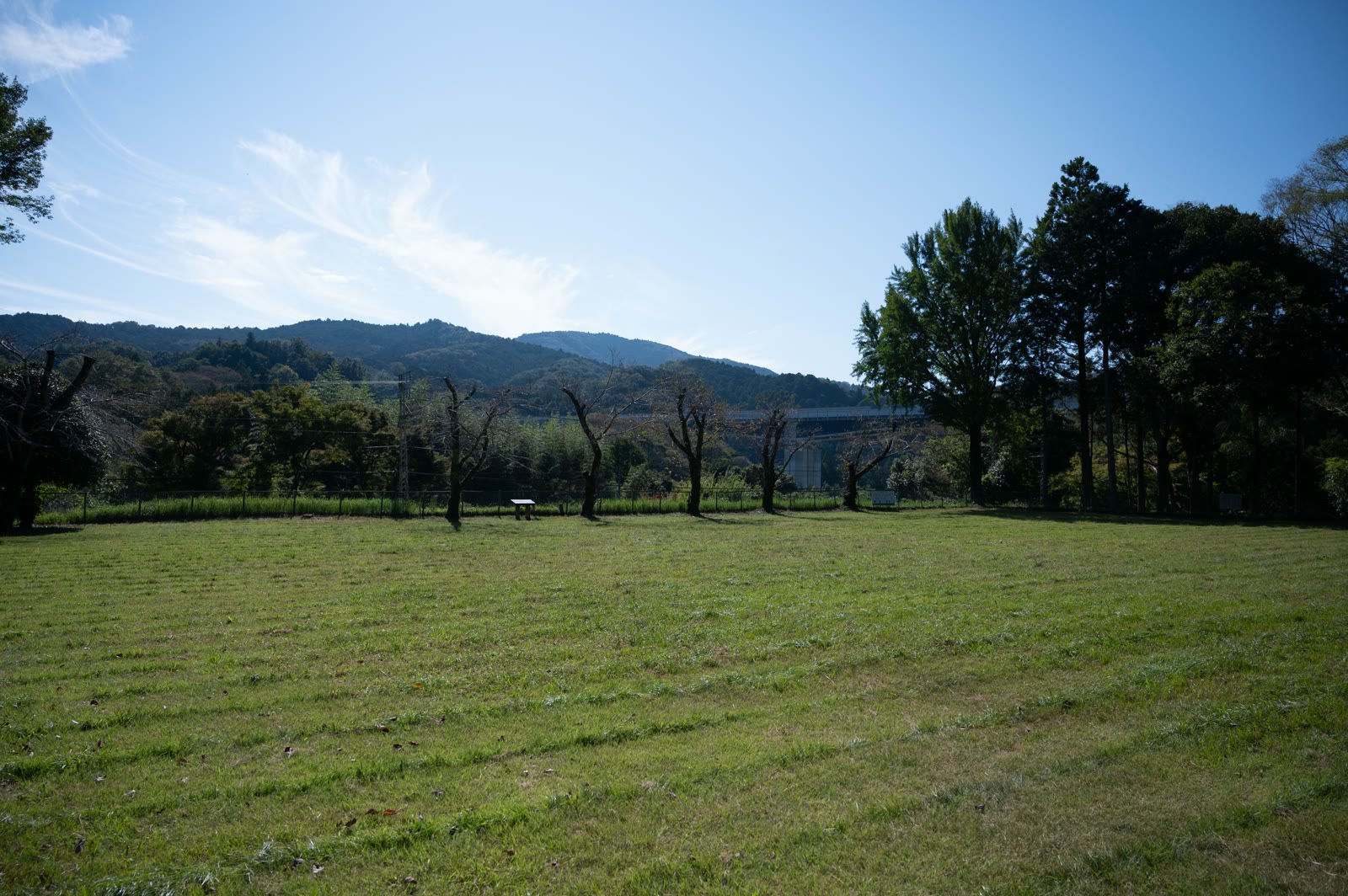
The Battle of Nagashino is also called the Battle of Nagashino-Shitaragahara. It began as a siege, with the Takeda army surrounding Nagashino Castle. The outcome, however, was decided at Shitaragahara, some distance west of the castle.
Today, both the castle ruins and the Shitaragahara battlefield can be visited in Shinshiro City. Near each site there is a museum that displays materials about the battle.
2. How the Battle of Nagashino Unfolded
Nagashino Castle, Built Where Two Rivers Meet
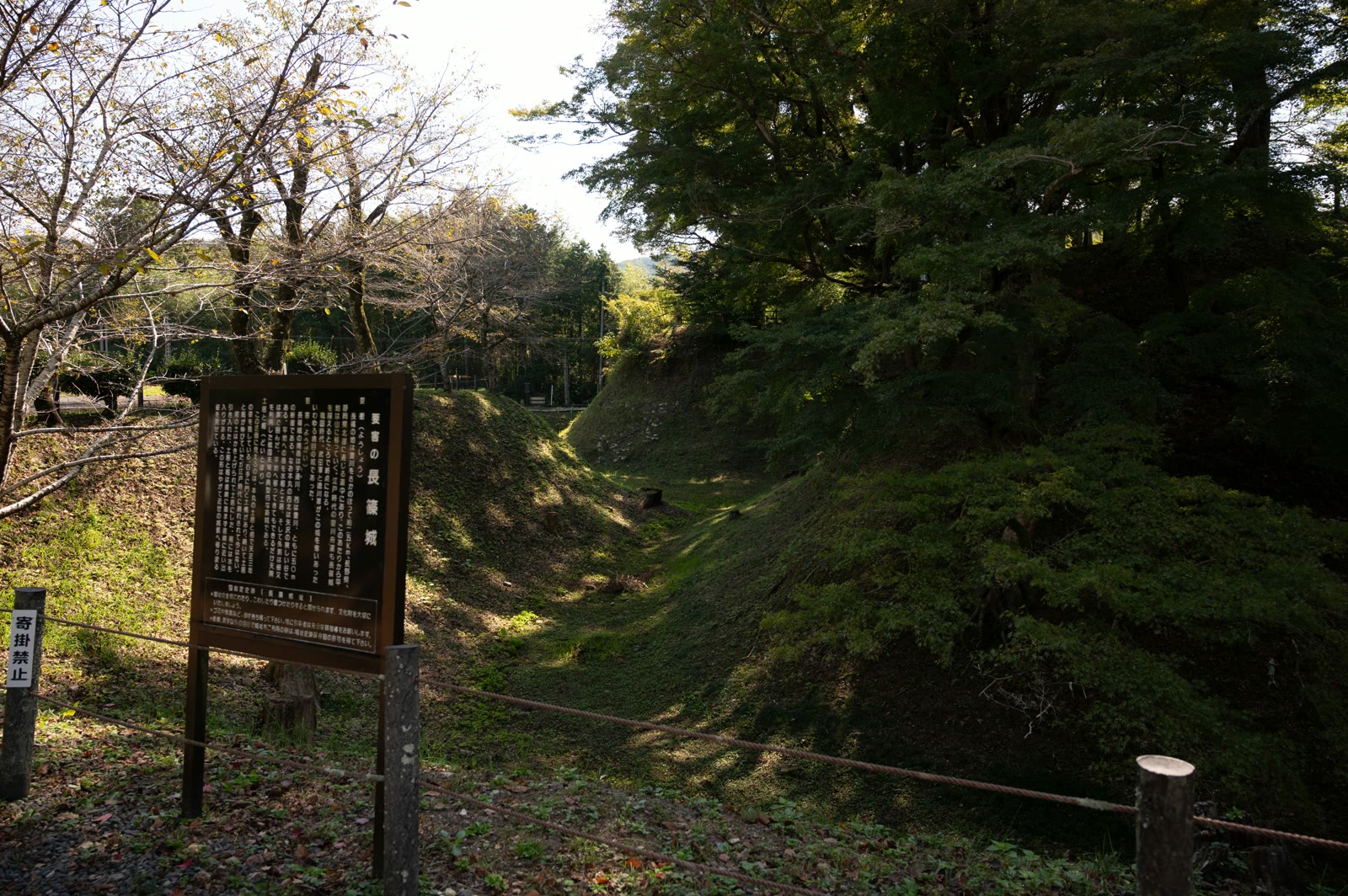
Nagashino Castle is said to have been built in 1508 (Eishō 5) by Suganuma Motonari, a local lord. It stood on cliffs where the Toyokawa and Ure Rivers meet, using the two rivers in place of moats. On the land side, earthen walls and moats were built.
Because it lay on the road linking Mikawa and Shinano, the castle was fought over by the Tokugawa and Takeda clans. In 1573 (Tenshō 1), Tokugawa Ieyasu took the castle and made Okudaira Sadamasa (later Okudaira Nobumasa) its lord.
Takeda Katsuyori Surrounds Nagashino Castle (May 1575)
In the 5th month of 1575 (Tenshō 3), Takeda Katsuyori surrounded Nagashino Castle with a large army. According to one account, the Takeda army numbered about 15,000, while the Okudaira force defending the castle had only about 500 men. The castle came under fierce attack and was pushed to the brink of falling.
Torii Sune’emon Goes to Call for Help
A soldier of the castle, Torii Sune’emon, set out for Okazaki Castle, where Ieyasu was, to ask for help. According to tradition, he slipped out of the castle on the night of the 14th, got past the Takeda lookouts, and reached Okazaki Castle the next day, the 15th.
Sune’emon headed back to tell the castle that reinforcements were coming, but he was captured by the Takeda army near Nagashino Castle. He was ordered to shout that “no reinforcements are coming,” but instead he called out to the castle that “reinforcements will come soon,” and is said to have been executed on the spot. Thanks to this message, the soldiers in the castle held out to the end.
The Decisive Battle at Shitaragahara | Horse Fences and Guns (May 21, 1575)
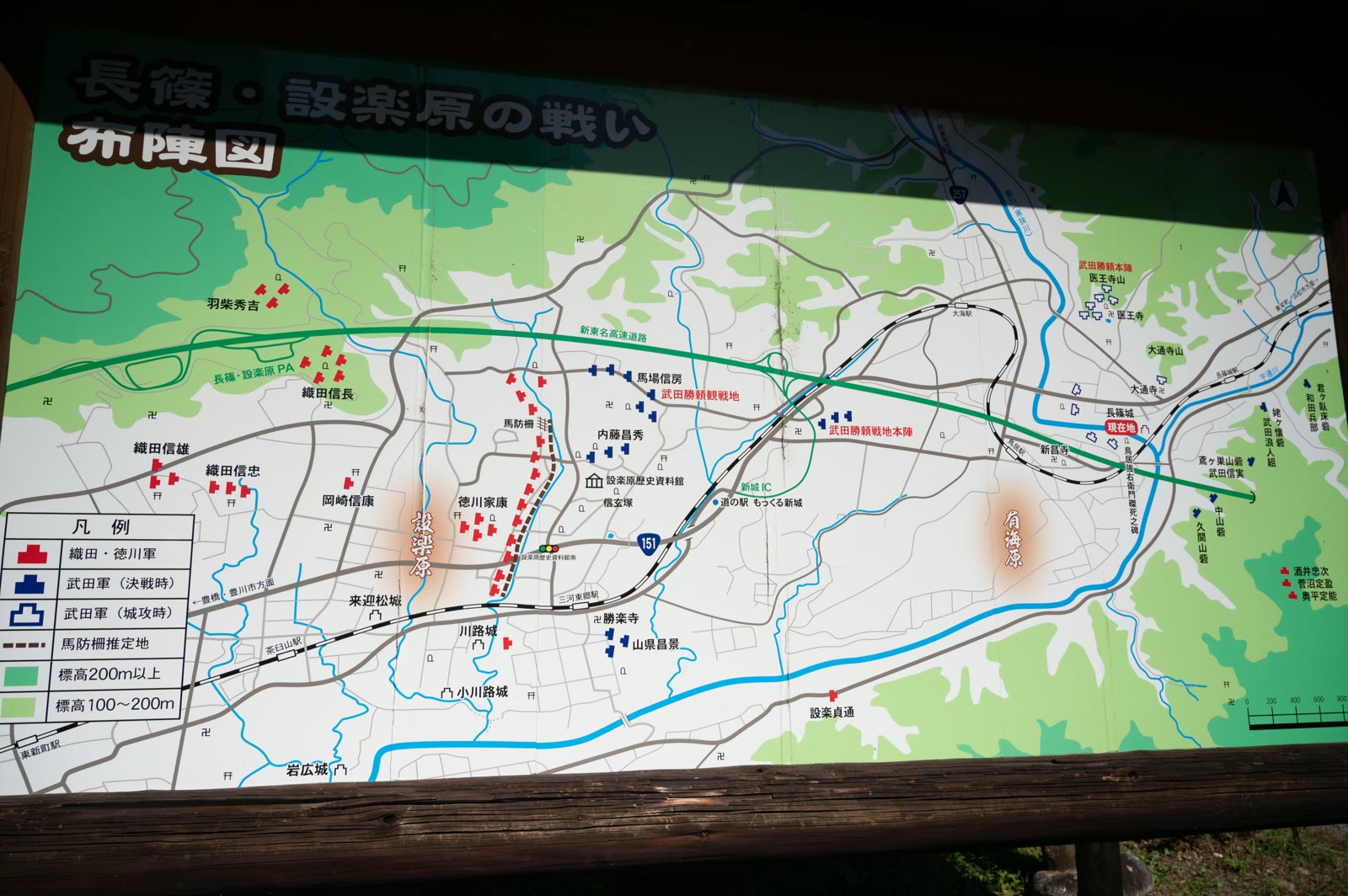
The allied forces of Oda Nobunaga and Tokugawa Ieyasu set up camp at Shitaragahara, west of Nagashino Castle. In front of a small stream they built wooden fences called babōsaku to stop cavalry charges, prepared a large number of guns, and waited.
On the 21st, the Takeda army attacked at Shitaragahara, but it was stopped by the fences and guns, lost many of its commanders, and suffered a heavy defeat. Nagashino Castle was saved, and the Takeda clan grew weaker after this battle.
The stories of “3,000 guns” and the “three-row volley,” with soldiers firing in turns in three lines, are well known, but researchers hold several different views on the number of guns and how they were fired.
3. Timeline of the Battle of Nagashino
| Year | Event |
|---|---|
| 1508 (Eishō 5) | Suganuma Motonari is said to have built Nagashino Castle |
| 1573 (Tenshō 1) | Tokugawa Ieyasu takes Nagashino Castle. Okudaira Sadamasa becomes its lord |
| 1575 (Tenshō 3), 5th month | Takeda Katsuyori surrounds Nagashino Castle |
| 1575, 14th–15th day of the 5th month | Torii Sune’emon slips out of the castle and goes to Okazaki Castle to ask for reinforcements |
| 1575, 21st day of the 5th month | The decisive battle at Shitaragahara. The Oda-Tokugawa allied forces defeat the Takeda army |
4. Highlights of the Nagashino Castle Ruins
The Main Enclosure and the Moat Ruins
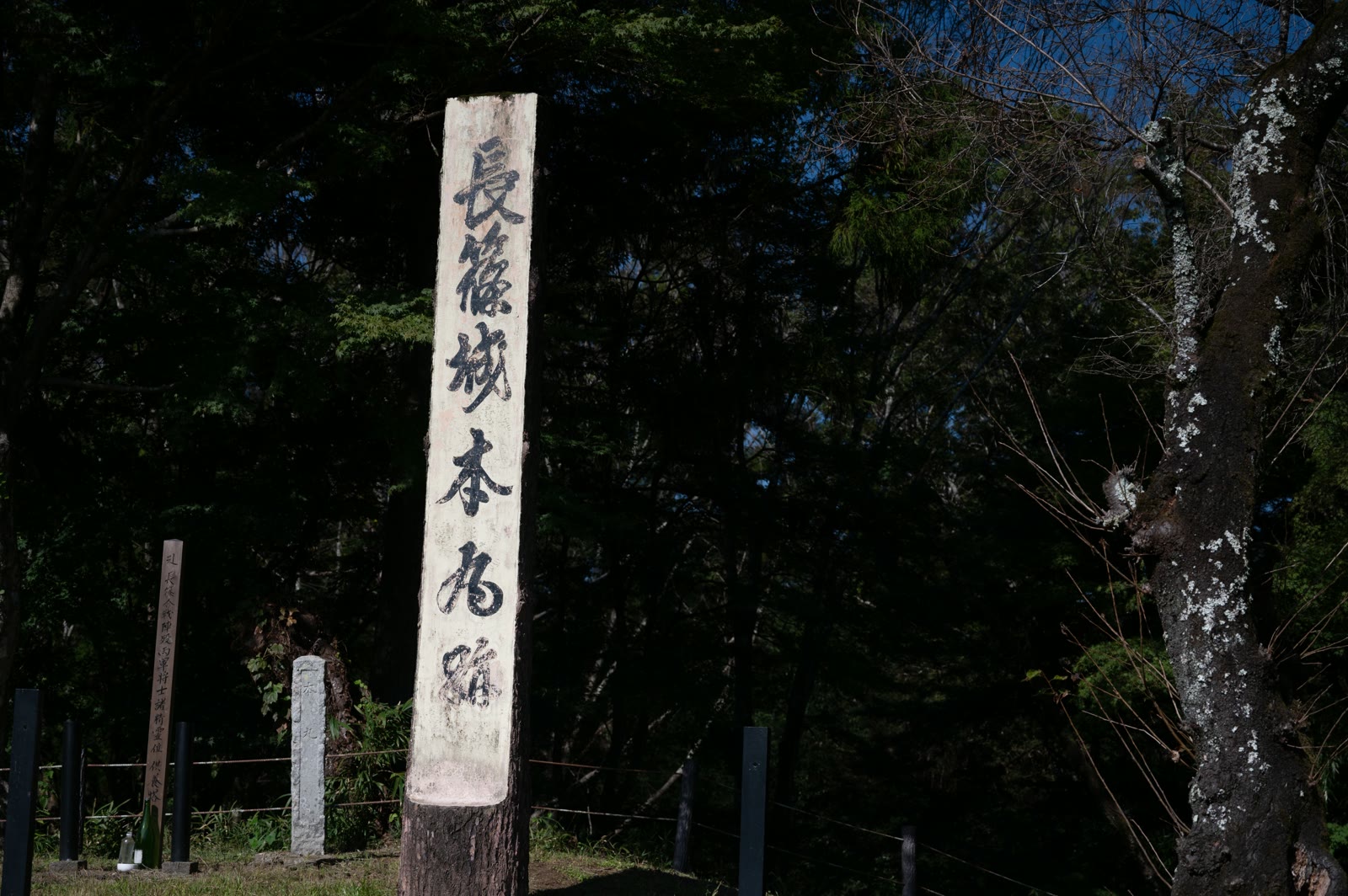
The Nagashino Castle ruins are a National Historic Site and one of Japan’s 100 Fine Castles. No keep or buildings remain, but the site of the main enclosure (honmaru) is now a wide lawn with a marker post reading “Site of the Main Enclosure of Nagashino Castle.” The remains of earthen walls and moats can be seen around it.
When I actually visited, I was struck that the defenders held out here despite being outnumbered many times over. The main enclosure sits on high ground, but it is by no means very high. It felt like the castle would fall at once if pushed by force. Holding it to the end was truly remarkable.
Nagashino Castle Ruins Historical Preservation Museum
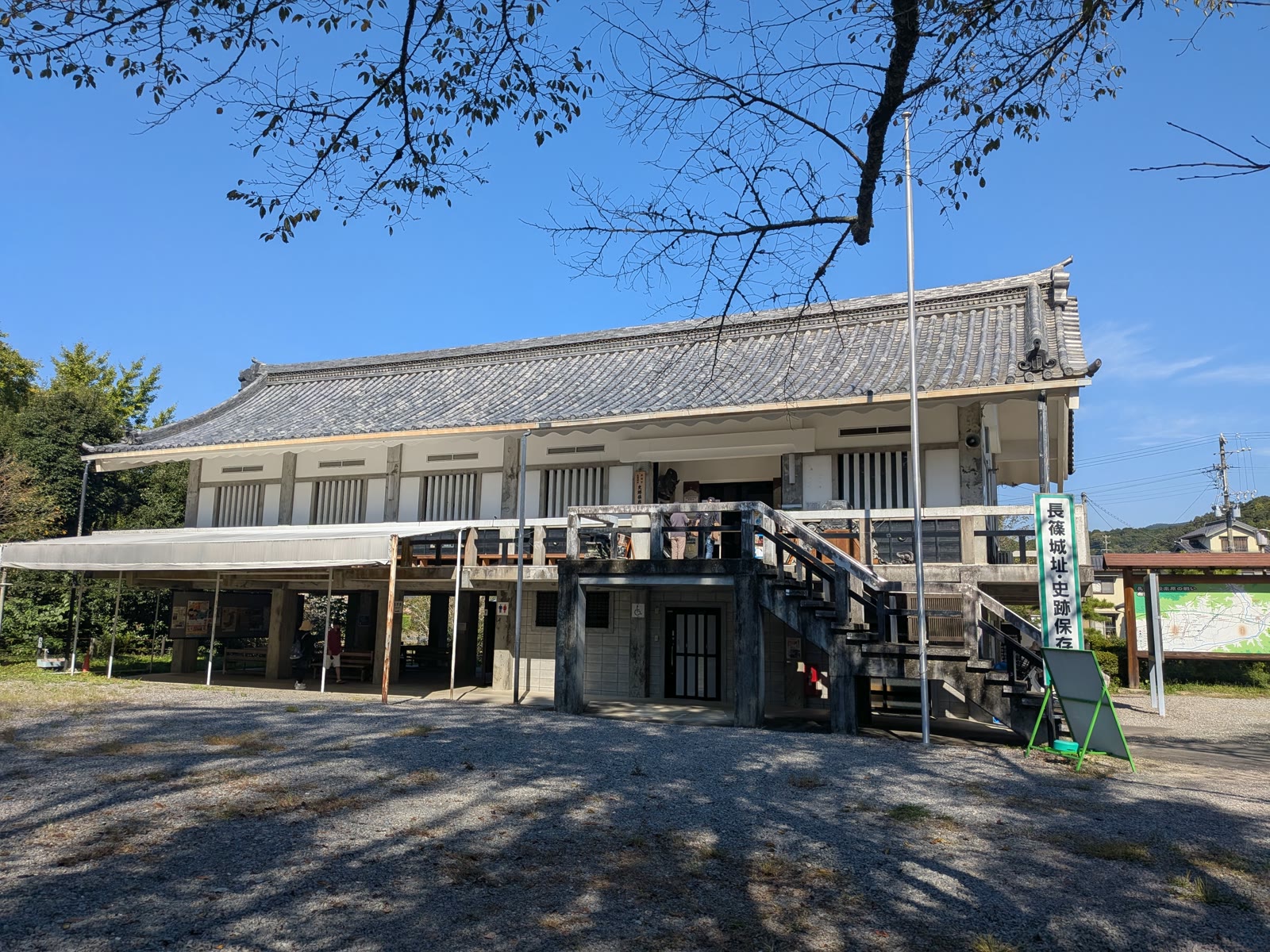
Within the castle ruins is the Nagashino Castle Ruins Historical Preservation Museum (Nagashino-jōshi Shiseki Hozonkan). It displays the “blood-stained war drum” handed down in the Okudaira family, items donated by descendants of samurai who fought in the battle, bullets found at the castle site, armor, helmets, and more.
I went inside and looked around the exhibits. Every exhibit was well worth seeing, and I came away satisfied. Honestly, 220 yen felt cheap for what you get. Note that photography is allowed for some exhibits but not for others.
| Opening hours | 9:00–17:00 (last entry 16:30) |
|---|---|
| Closed | Tuesdays (the next weekday if Tuesday is a national holiday), December 29–January 3 |
| Admission | Adults 220 yen, elementary and junior high school students 100 yen |
| Access | About 8 minutes on foot from Nagashinojō Station on the JR Iida Line. By car, about 5 minutes from Shinshiro IC on the Shin-Tōmei Expressway (free parking) |
5. Highlights of the Shitaragahara Battlefield
The Reconstructed Horse Fences
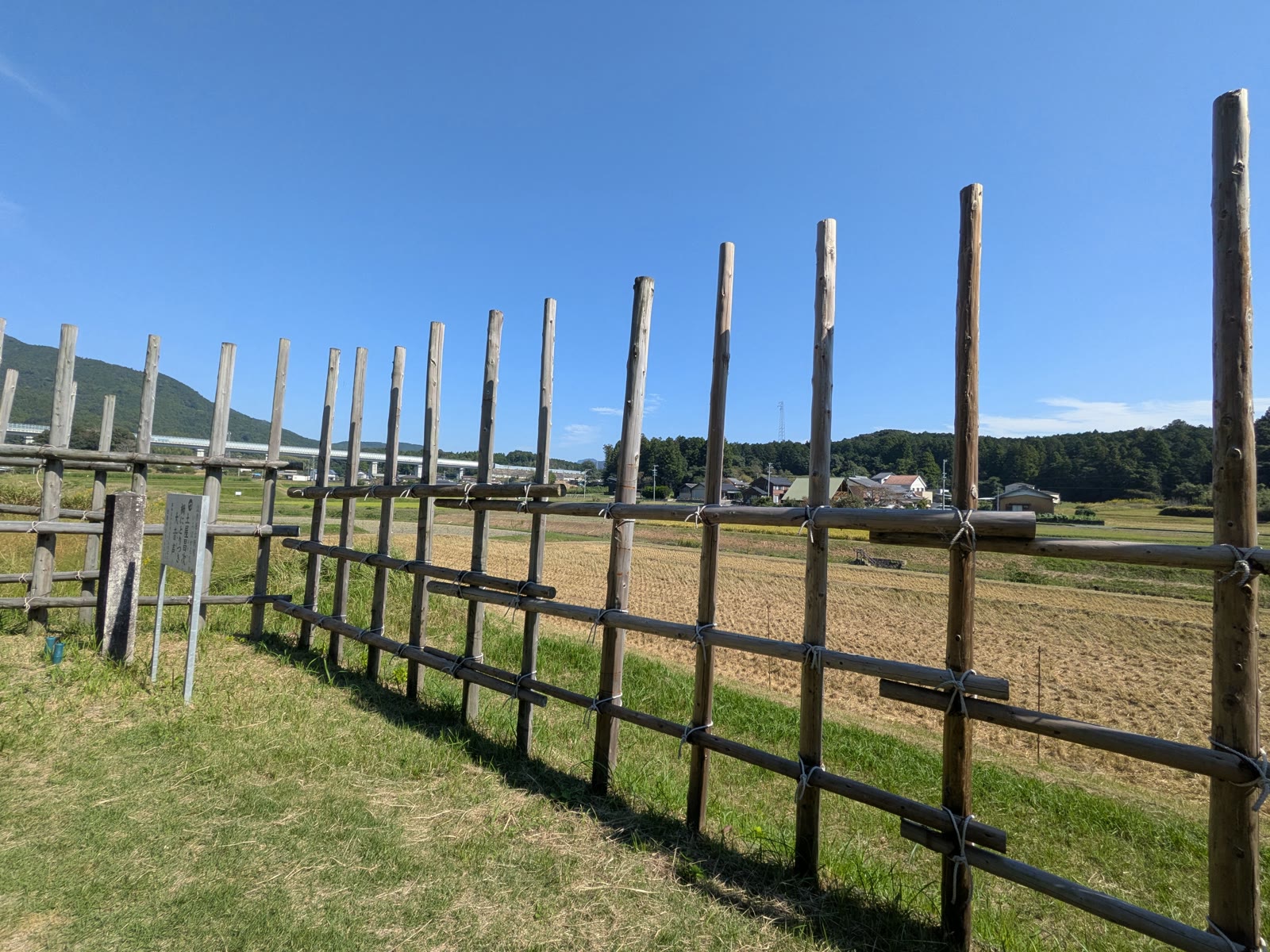
At the Shitaragahara battlefield, the horse fences from the battle have been reconstructed. A long line of fences made of logs tied with rope runs beside the rice fields, helping you imagine how the allied forces waited for the Takeda army.
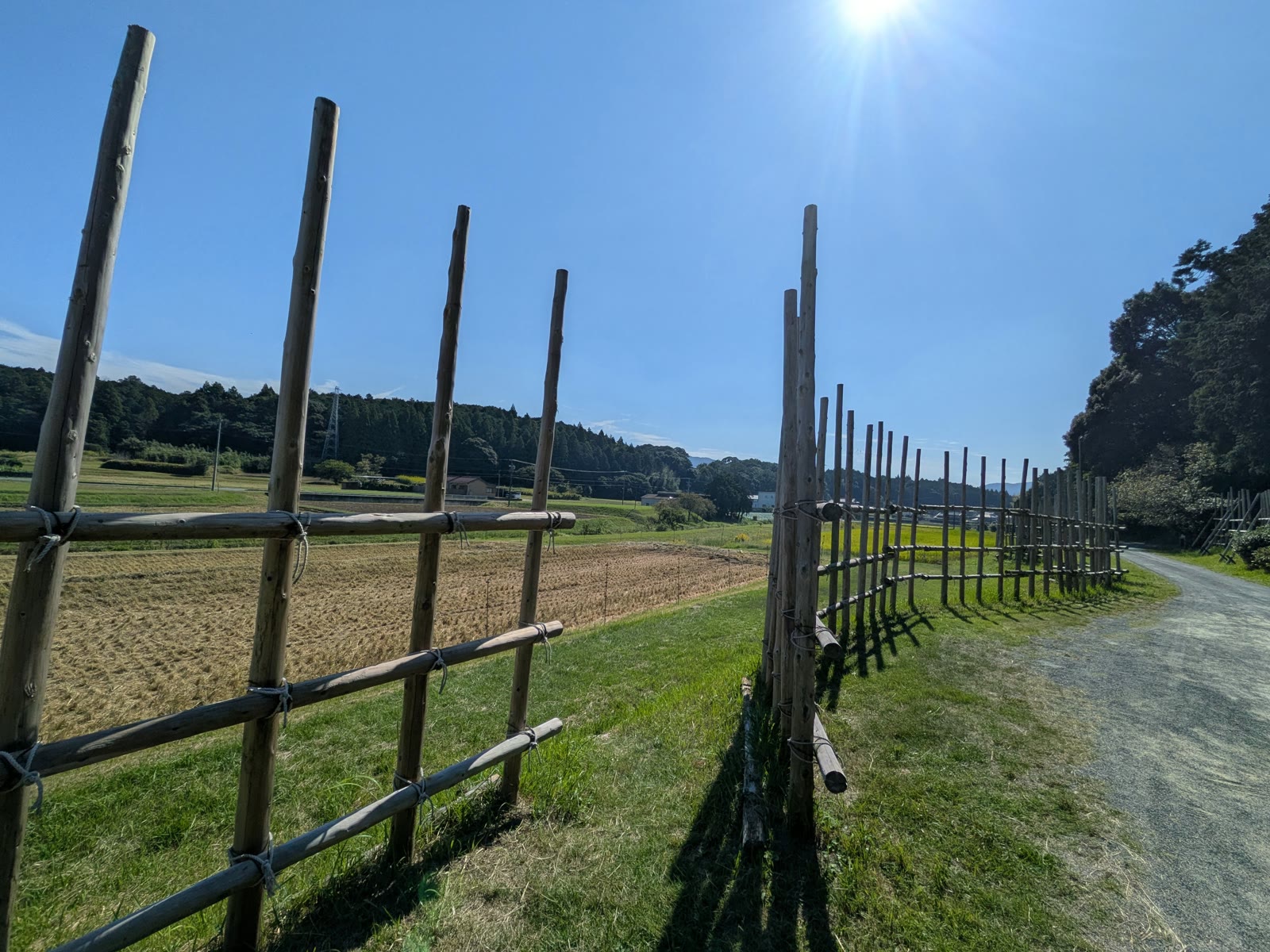
The fences are not the originals, but honestly, standing behind a fence like this felt frightening. With horses charging straight at you, it would feel far from reassuring.
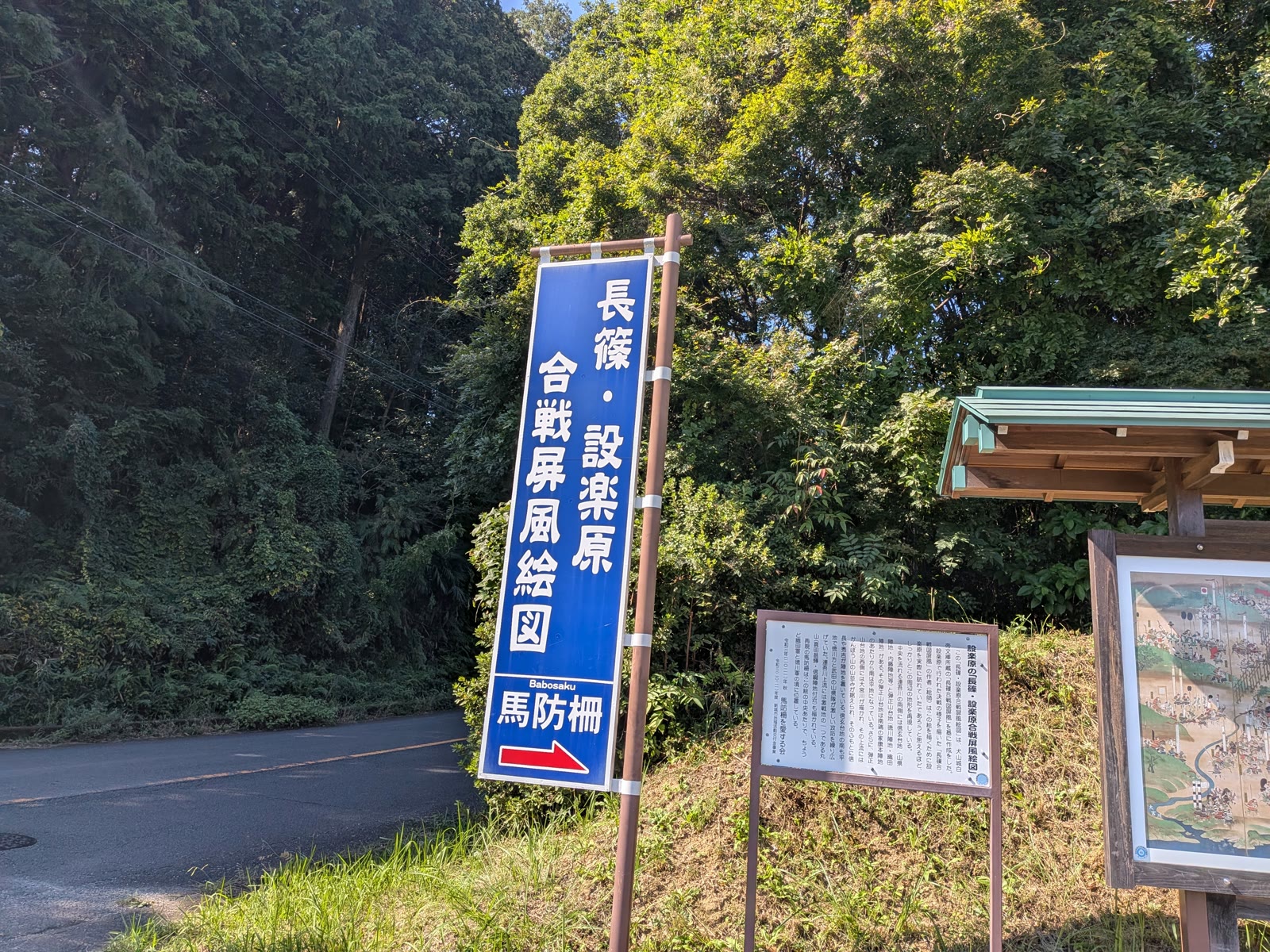
Along the road there are signboards for the folding-screen painting of the Battle of Nagashino-Shitaragahara and directions to the horse fences.
Shinshiro City Shitaragahara Historical Museum
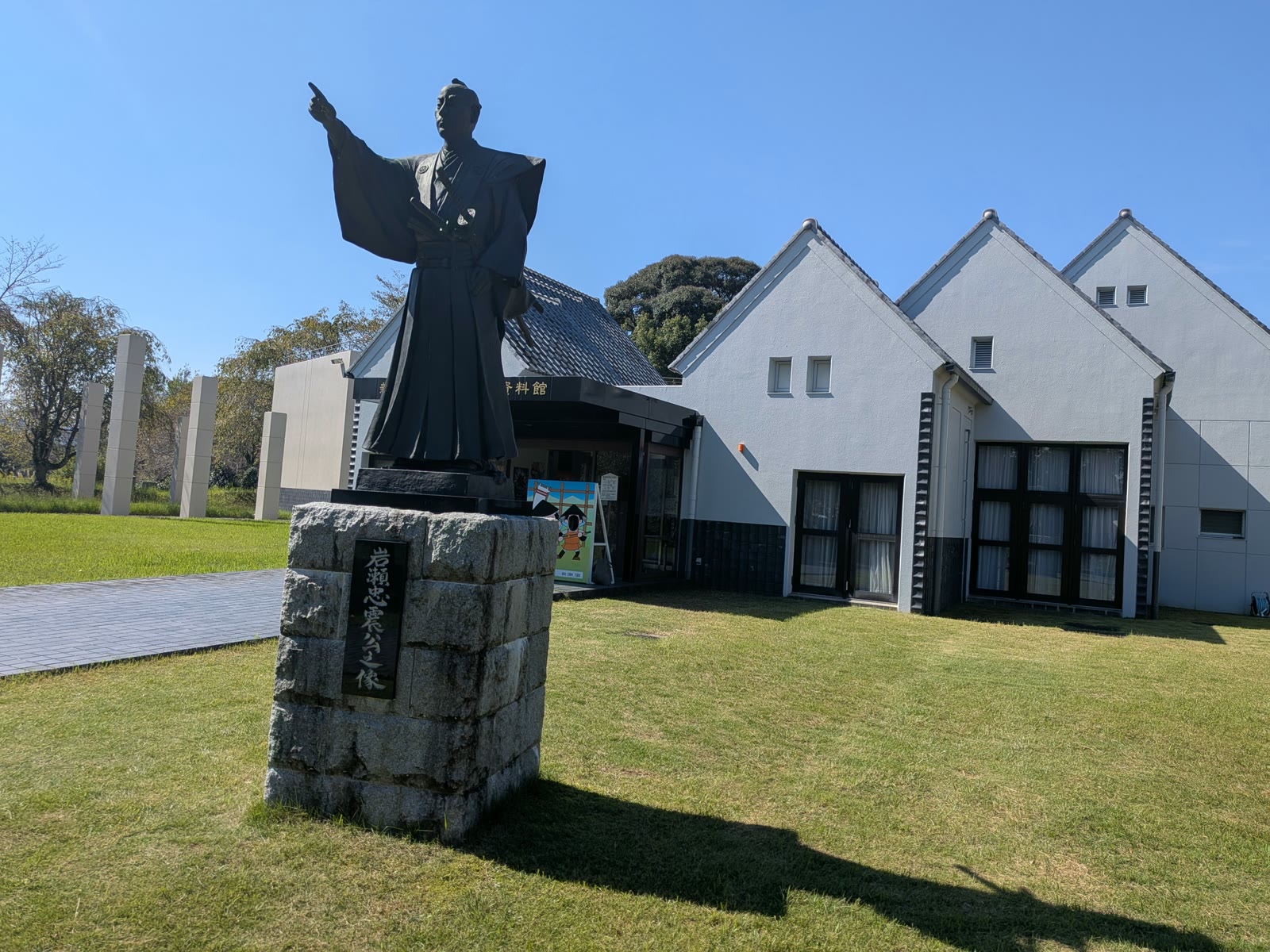
Near the battlefield is the Shinshiro City Shitaragahara Historical Museum. You can see materials on the Battle of Nagashino-Shitaragahara and matchlock guns. In front of the building stands a bronze statue of a samurai commander pointing into the distance.
| Opening hours | 9:00–17:00 (last entry 16:30) |
|---|---|
| Closed | Tuesdays (the next weekday if Tuesday is a national holiday), December 29–January 3 |
| Admission | Adults 330 yen, elementary and junior high school students 100 yen |
| Access | About 15 minutes on foot from Mikawa-Tōgō Station on the JR Iida Line. By car, about 5 minutes from Shinshiro IC on the Shin-Tōmei Expressway (free parking) |
6. How to Visit Nagashino Castle and Shitaragahara
The Nagashino Castle ruins and Shitaragahara are some distance apart, so a car is convenient. I saw the castle ruins in the morning and then headed to the Shitaragahara battlefield and museum. In the afternoon, I moved on to the city of Toyohashi.
If you go by train, the nearest stations are Nagashinojō and Mikawa-Tōgō on the JR Iida Line. Trains are not frequent, so it is a good idea to check the timetable in advance.
7. Frequently Asked Questions (FAQ)
Q. When and where did the Battle of Nagashino take place?
A. It took place in the 5th month of 1575 (Tenshō 3) in what is now Shinshiro City, Aichi Prefecture. The Takeda army surrounded Nagashino Castle, and the decisive battle was fought at Shitaragahara on the 21st.
Q. Are the “Battle of Nagashino” and the “Battle of Shitaragahara” different battles?
A. They are the same battle. Because it began with the siege of Nagashino Castle and was decided at Shitaragahara, it is also called the Battle of Nagashino-Shitaragahara.
Q. Who was Torii Sune’emon?
A. He was a soldier of the Okudaira force that defended Nagashino Castle. According to tradition, he slipped out of the castle to ask for reinforcements at Okazaki Castle, was captured by the Takeda army on his way back, and was executed after telling the castle that “reinforcements are coming.”
Q. Can you still see the horse fences today?
A. Reconstructed horse fences stand at the Shitaragahara battlefield. You can visit them together with the nearby Shinshiro City Shitaragahara Historical Museum.
8. Summary
The Battle of Nagashino began as the siege of a small castle and, with the decisive battle at Shitaragahara, greatly changed the balance of power between the Takeda clan and the Oda and Tokugawa clans.
- In the 5th month of 1575 (Tenshō 3), Takeda Katsuyori surrounded Nagashino Castle
- Torii Sune’emon went to Okazaki Castle for reinforcements, and the castle’s soldiers held out
- On the 21st, the Oda-Tokugawa allied forces won at Shitaragahara using horse fences and guns
- The Nagashino Castle ruins (a National Historic Site and one of Japan’s 100 Fine Castles) and the Shitaragahara battlefield can still be visited in Shinshiro City
Having visited both sites, I especially recommend the Nagashino Castle Ruins Historical Preservation Museum. If you go, be sure to stop by and look inside.
Find the history of other castles on our History HOME page.
References (checked on October 18, 2026)
- Nagashino Castle Ruins Historical Preservation Museum | Aichi Now (Japanese)
- Shinshiro City Shitaragahara Historical Museum | Aichi Now (Japanese)
- Nagashino Castle | nippon.com (Japanese)
コメント