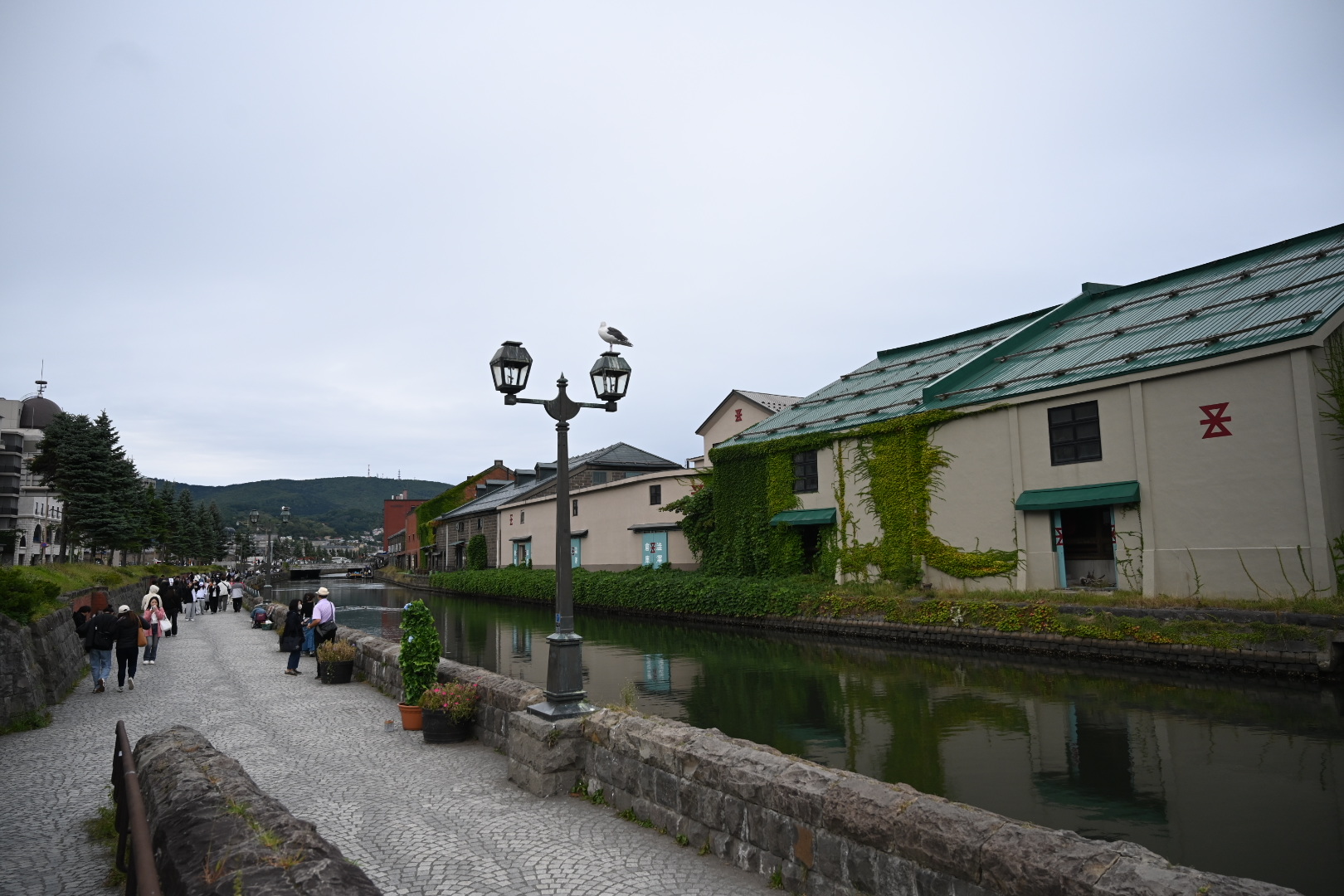
Otaru Canal is one of Hokkaido’s most photographed sightseeing spots, but few visitors know why it was actually built or what it took to survive into the present day. This guide walks through the full history of Otaru Canal — from Otaru’s rise as a herring-fishing and coal-shipping town, to the canal’s construction, its postwar decline, and the citizens’ movement that saved it.
How Otaru Grew Into the “Wall Street of the North”
To understand the canal, it helps to know Otaru’s history first.
From the late Edo period through the Meiji era, Otaru thrived as a herring fishing port. In the mid-Meiji era, Hokkaido’s very first railway line opened here, built to carry coal out from the Horonai mines inland.
Otaru quickly became both a coal shipping hub and a supply base for settlers arriving to develop Hokkaido. Banks and trading houses poured in, and at its peak the city was known as the “Wall Street of the North.”
Why Was Otaru Canal Built?
As Otaru Port grew busier, moving cargo efficiently became a serious challenge.
At the time, the port had no wharves where large ships could dock directly. Instead, small boats called hashike (barges) ferried cargo back and forth between ships anchored offshore and the warehouses on land.
The problem was that Otaru’s waters were rough, and bad weather regularly halted the barges altogether. Solving this bottleneck was the main reason the canal was built.
Building the Canal: The “Canal-Style” Controversy
Construction began in 1914 (Taisho 3). Because Otaru’s mountains run right down to the sea, there was no room to dig a canal inland. Engineers instead used a rare method: reclaiming land from the offshore shallows, then cutting a waterway between the new reclaimed land and the original shoreline — known as the “canal-style land reclamation method.”
The project was originally expected to take only a few years, but fierce local debate over the reclamation method dragged on, at one point even forcing the city ward chief to resign. After four years of delay, Otaru Canal was finally completed on December 27, 1923 (Taisho 12).
The Canal’s Decline
By the late 1950s, Otaru Port had built modern wharves where large ships could dock directly, and the barges — along with the canal itself — became obsolete almost overnight.
Left unused, the canal filled with sludge and began to smell. City planners proposed filling it in entirely to build a road. Local residents pushed back hard, launching a preservation campaign that lasted roughly a decade. In the end, a compromise was reached: only half of the canal’s width was filled in, and the rest was preserved.
Otaru Canal Today
In 1986 (Showa 61), a stone-paved promenade and gas lamps were installed along the canal, transforming it into one of Japan’s most popular tourist attractions.
Today, visitors stroll the canal by day and return after dark to see the old stone warehouses lit up alongside the gas lamps — a scene often described as one of Japan’s most romantic nightscapes. Canal cruises also run along the water, offering a different angle on the historic warehouses.
In Summary
Otaru Canal was built by a port town flourishing on herring and coal, purely to move cargo more efficiently. When its job became obsolete, it nearly disappeared — but a determined citizens’ movement saved half of it, turning a piece of industrial infrastructure into one of Hokkaido’s most beloved sights.
Next time you walk along Otaru Canal, this history might just change how you see it.
コメント