On August 9, 1945, at 11:02 a.m., an atomic bomb exploded over Nagasaki. It was the second atomic bomb used in war, three days after Hiroshima.
This article explains the history of the Nagasaki atomic bombing, based on materials published by Nagasaki City and the Nagasaki Atomic Bomb Museum. It covers the events leading up to the bombing, the scale of the damage, and the ruins that remain today. You will also find admission fees and access information for the Peace Park and the museum.
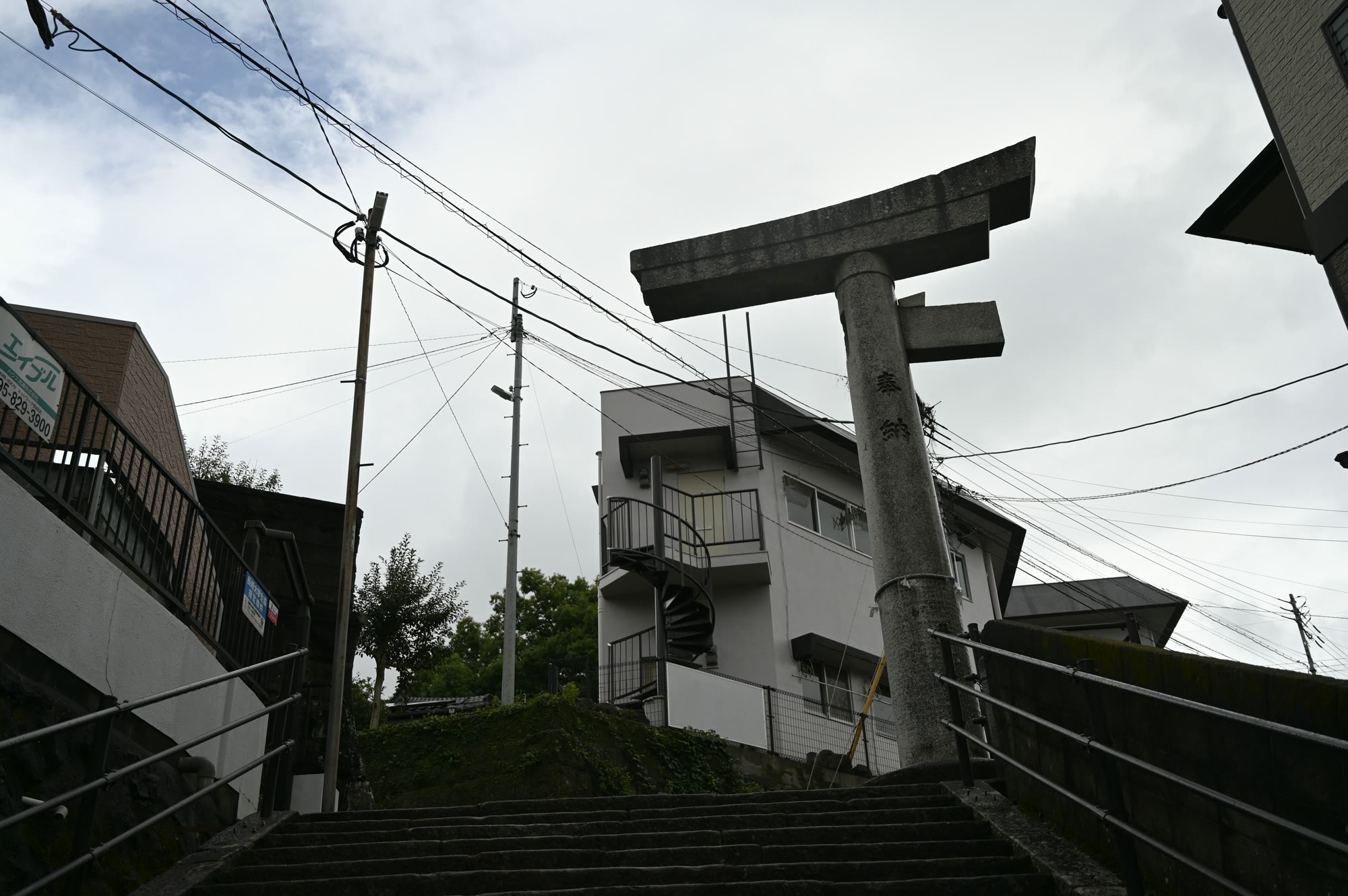
I visited the Nagasaki Atomic Bomb Museum and the one-legged torii gate of Sanno Shrine on October 22, 2024. The photos of the torii and the museum were taken on that day. I could not visit the Peace Park or the Hypocenter Park, so those two places are introduced using official information.
About the information in this article
- Fees, opening hours and access were checked on October 13, 2026 (official websites of the Nagasaki Atomic Bomb Museum and Nagasaki City).
- The damage figures are those published on “Nagasaki Peace”, the peace and atomic bomb website run by Nagasaki City.
- Fees and opening hours may change. Please check the official websites before you go.
- What Was the Nagasaki Atomic Bombing? | August 9, 1945, 11:02 a.m.
- The Road to the Bombing | The Primary Target Was Kokura
- The Damage in Nagasaki | 73,884 Deaths
- Timeline: The Bombing and the Years After
- Ruins That Remain Today | The National Historic Site “Nagasaki Atomic Bomb Ruins”
- Highlights of the Peace Park | The Peace Statue and the Fountain of Peace
- Nagasaki Atomic Bomb Museum: Fees and Opening Hours
- Access to the Peace Park and the Nagasaki Atomic Bomb Museum
- Frequently Asked Questions (FAQ)
- Q. When was the atomic bomb dropped on Nagasaki?
- Q. How many people died in the Nagasaki atomic bombing?
- Q. Why was Nagasaki bombed?
- Q. How did the Nagasaki bomb differ from the Hiroshima bomb?
- Q. How much is the Nagasaki Atomic Bomb Museum, and how long does a visit take?
- Q. Where is the one-legged torii gate?
- Summary
What Was the Nagasaki Atomic Bombing? | August 9, 1945, 11:02 a.m.
Here are the basic facts.
| Item | Details |
|---|---|
| Date and time | August 9, 1945, 11:02 a.m. |
| Place of explosion | About 500 meters above Matsuyama-machi, Nagasaki City |
| Type of bomb | An atomic bomb using plutonium-239 (known as “Fat Man”) |
| Aircraft | The U.S. B-29 bomber “Bockscar” |
| Deaths | 73,884 |
| Injured | 74,909 |
The numbers of deaths and injured were announced in July 1950 by the Nagasaki City Atomic Bomb Records Preservation Committee. Nagasaki City’s website describes them as the figures generally accepted today.
The height of the explosion differs slightly depending on the source. “Nagasaki Peace” gives 503 meters (plus or minus 10 meters) as the most reliable figure.
How It Differed from the Hiroshima Bomb
The Nagasaki bomb used a different material and a different mechanism.
| Hiroshima | Nagasaki | |
|---|---|---|
| Date | August 6, 1945 | August 9, 1945 |
| Nuclear material | Uranium-235 | Plutonium-239 |
| Mechanism | Gun-barrel type | Implosion type |
Source: What Is an Atomic Bomb? | Nagasaki Peace (Japanese)
The Road to the Bombing | The Primary Target Was Kokura
The primary target on August 9 was not Nagasaki. It was Kokura, now part of Kitakyushu City. The timeline below follows the records published on “Nagasaki Peace”.
| Time | Event |
|---|---|
| 2:47 a.m. | Bockscar, carrying the bomb, takes off on Tinian Island |
| 9:44 a.m. | The plane reaches the starting point of its bombing run over Kokura. The crew tries three times but cannot see the target |
| 10:50 a.m. | The crew gives up on Kokura and arrives over Nagasaki |
| 11:02 a.m. | The bomb explodes above Matsuyama-machi, Nagasaki |
Nagasaki was also covered with clouds. Through a gap in the clouds, the bombardier saw the area near two Mitsubishi arms factories and dropped the bomb there.
That point was north of the planned aiming point. As a result, the bomb exploded above the Urakami district in the northern part of the city.
Sources: Flight Route of the Bomber | Nagasaki Peace (Japanese), 11:02 | Nagasaki Peace (Japanese)
The Damage in Nagasaki | 73,884 Deaths
The damage was caused by three things: heat rays, the blast, and radiation. “Nagasaki Peace” lists the following figures.
| Item | Number | Notes |
|---|---|---|
| Deaths | 73,884 | Announced by the Nagasaki City Atomic Bomb Records Preservation Committee (July 1950) |
| Injured | 74,909 | Same as above |
| People who lost their homes | 120,820 | Members of households whose homes were burned down or destroyed within 4 km |
| Houses affected | 18,409 | All houses within 4 km. About 36% of all houses in the city |
| Houses burned down | 11,574 | Within 4 km. About one third of the city |
According to Nagasaki City’s official website, the city was destroyed or burned across an area of about 5 km north to south and about 2 km east to west.
The Urakami district near the hypocenter had schools, hospitals, a church and factories. Shiroyama National School, Nagasaki Medical College and Urakami Cathedral all suffered heavy damage.
Source: The Power of the Atomic Bomb | Nagasaki Peace (Japanese)
Timeline: The Bombing and the Years After
| Year | Event |
|---|---|
| 1914 | Urakami Cathedral is completed |
| 1925 | The twin towers of Urakami Cathedral are completed |
| August 9, 1945 | The atomic bomb is dropped on Nagasaki at 11:02 a.m. |
| 1950 | The Nagasaki City Atomic Bomb Records Preservation Committee announces the damage figures |
| 1955 | The Peace Statue is completed in the Peace Park |
| 1956 | The Hypocenter Monument is set up at the hypocenter |
| 1958 | The ruins of the bombed Urakami Cathedral are taken down |
| 1969 | The Fountain of Peace is built in the Peace Park |
| 1977 | The Bell of Nagasaki is made in the Peace Park |
| October 3, 2016 | The “Nagasaki Atomic Bomb Ruins” are designated a National Historic Site |
Ruins That Remain Today | The National Historic Site “Nagasaki Atomic Bomb Ruins”
Nagasaki still has ruins that show the damage of the bomb. Five of them were designated a National Historic Site, the “Nagasaki Atomic Bomb Ruins”, on October 3, 2016.
| Site | Distance to the hypocenter | Location |
|---|---|---|
| Hypocenter | – | Matsuyama-machi (Peace Park, Zone of Prayer) |
| Former Shiroyama National School building | About 500 m west | Shiroyama-machi (inside Shiroyama Elementary School) |
| Former belfry of Urakami Cathedral | About 500 m northeast | Motoo-machi (inside the Catholic Urakami Church) |
| Gate pillars of the former Nagasaki Medical College | About 700 m southeast | Sakamoto 1-chome (Nagasaki University Sakamoto Campus) |
| Second torii gate of Sanno Shrine | About 800 m southeast | Sakamoto 2-chome (on the approach to Sanno Shrine) |
The Hypocenter (Hypocenter Park)
The hypocenter is the point on the ground directly below the explosion. Today it is a park, and a monument about 6.5 meters tall stands there.
A layer of ground dating to the day of the bombing is also preserved in the park. You can see roof tiles, bricks, burned soil and melted glass still buried in the earth.
A relocated wall of Urakami Cathedral stands here as well. It is part of the south wall of the church, and a stone pillar that was pushed out of place is the point to look at.
The Second Torii Gate of Sanno Shrine (One-Legged Torii)
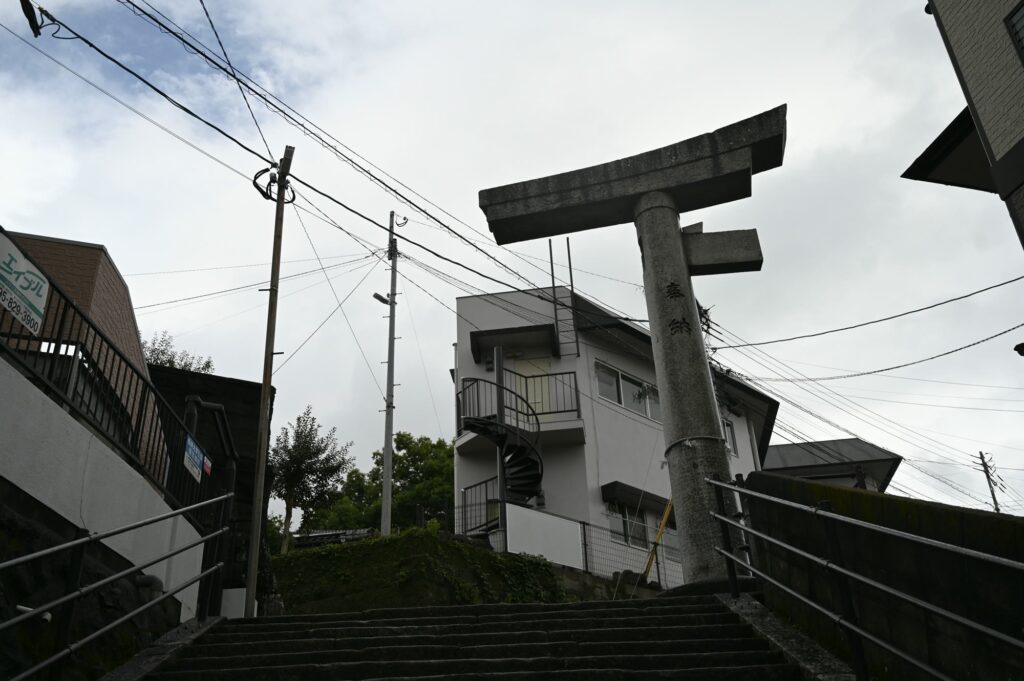
The second torii gate of Sanno Shrine stands on only one pillar. It is known as the “one-legged torii” (ippon-bashira torii).
According to “Nagasaki Peace”, the blast knocked down the north pillar. On the south side, which remained, the top beam was turned 13 degrees to the east. The surface of the pillar facing the hypocenter peeled off because of the heat rays.
The torii stands partway up a flight of stone steps. It had just stopped raining when I visited. Houses and apartment buildings stand all around it, and you can see that the torii remains as part of everyday life.
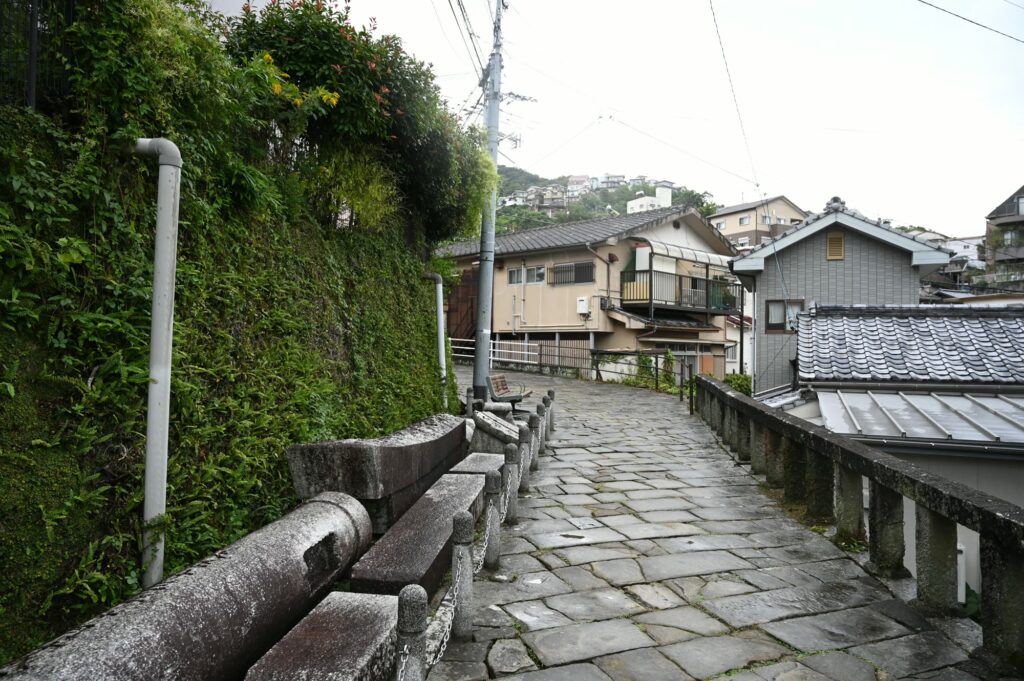
According to Nagasaki City’s official website, the steps in front of the torii and the stone bases of the lanterns are also the same as they were on the day of the bombing.
The shrine grounds also have camphor trees that survived the bombing. According to the August 2025 issue of the city newsletter “Koho Nagasaki”, a survey in 2018 confirmed them as a group of 19 trees.
The shrine is in a residential area, so please visit quietly. It has no parking lot.
Former Shiroyama National School Building
This reinforced concrete school building stood about 500 meters west of the hypocenter. In the stairway section that remains, you can see wooden blocks that were burned in the fire.
Former Belfry of Urakami Cathedral
This belfry once stood on top of a tower of Urakami Cathedral. The bombing sent it down to a small stream below the cliff on the north side of the cathedral. It is made of reinforced concrete and is estimated to weigh about 50 tons.
Gate Pillars of the Former Nagasaki Medical College
These stone gate pillars remain on the Sakamoto Campus of Nagasaki University. The blast moved one pillar by 9 centimeters, and it still stands at a tilt.
Sources: National Historic Site “Nagasaki Atomic Bomb Ruins” | Nagasaki Peace (Japanese), Nagasaki Atomic Bomb Ruins | Nagasaki City (Japanese)
Highlights of the Peace Park | The Peace Statue and the Fountain of Peace
The Peace Park is divided into several zones. The Peace Statue is in the “Zone of Hope”, and the hypocenter is in the “Zone of Prayer”. Every year on August 9, the Peace Memorial Ceremony is held in front of the Peace Statue.
| Highlight | Year | Details |
|---|---|---|
| Peace Statue | 1955 | A work by the sculptor Seibo Kitamura. A bronze statue about 9.7 meters tall, weighing about 30 tons |
| Fountain of Peace | 1969 | Built to pray for the souls of those who died searching for water |
| Bell of Nagasaki | 1977 | A bell made in the year of the 33rd memorial |
| Remains of the Urakami Branch of Nagasaki Prison | – | Part of the outer wall that stood at the time of the bombing remains |
The words of the sculptor are carved on the back of the base of the Peace Statue. They say that the right hand points to the atomic bomb, the left hand shows peace, and the face prays for the souls of the war victims.
Sources: Zone of Hope | Nagasaki City (Japanese), Zone of Prayer | Nagasaki City (Japanese)
Nagasaki Atomic Bomb Museum: Fees and Opening Hours
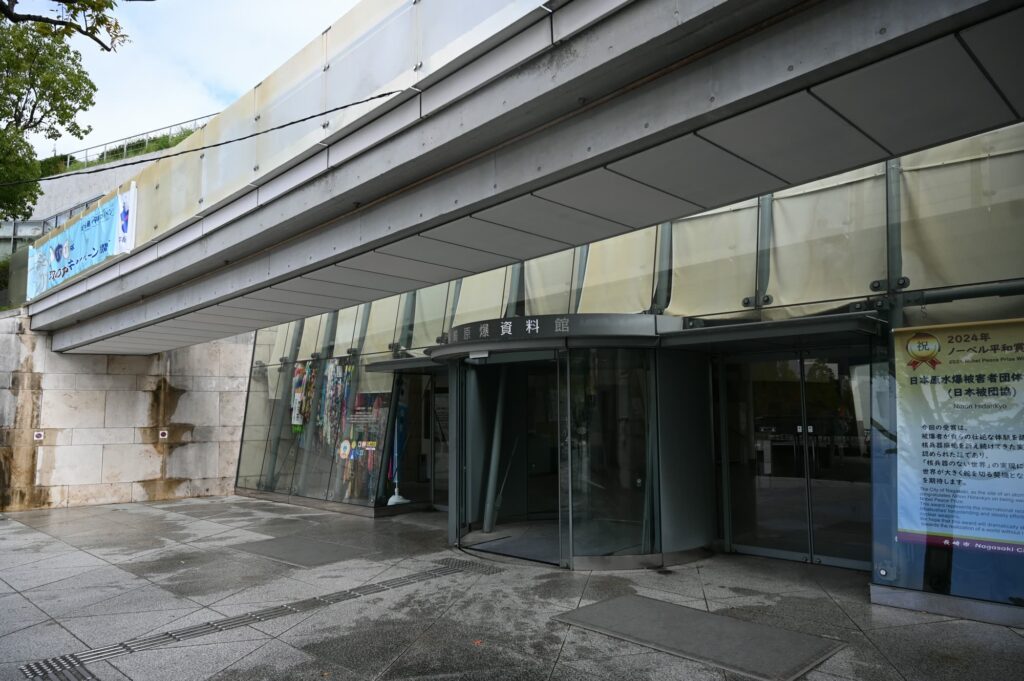
The Nagasaki Atomic Bomb Museum displays materials and photographs of the bombing. The official website suggests allowing about one hour for a visit.
| Item | Details |
|---|---|
| Address | 7-8 Hirano-machi, Nagasaki City, Nagasaki 852-8117 |
| Phone | 095-844-1231 |
| Hours (April, September to March) | 8:30 to 17:30 (last entry 17:00) |
| Hours (May to August) | 8:30 to 18:30 (last entry 18:00) |
| Hours (August 7 to 9) | 8:30 to 20:00 (last entry 19:30) |
| Closed | December 29 to 31 |
| Admission (adults, age 15 and over) | 200 yen |
| Admission (high school students and younger) | Free (show a student ID or similar) |
| Audio guide | 160 yen per device |
- Group rates ended on April 1, 2026. All adults pay 200 yen
- On August 9, adults can also enter the permanent exhibition for free
- You can re-enter on the same day by showing your ticket
- Coin lockers are next to the reception desk at the entrance
What I Felt Inside | Walking Down a Spiral Slope to 1945
When you enter the museum, you walk down a spiral slope. Years are written along the way, and you go back in time as you walk down. The last one is the year the bomb was dropped.
Many of the exhibits were very frightening. They taught me once again that the atomic bomb is a weapon people must never use.
Note: Exhibition Renewal Work (Until March 2027)
The permanent exhibition room is being renewed. The work areas are hidden behind partitions, so some parts cannot be seen.
| Area you cannot see | Period (schedule as of September 7, 2026) |
|---|---|
| Part of Corner A | September 10 to October 10, 2026 |
| Corner C | November 24, 2026 to March 2027 |
| Part of Corner B | Late December 2026 to March 2027 |
| Corner D | January to March 2027 |
Most of Corner B, where the bombed objects are displayed, can be seen as usual. The schedule may change, so please check the notices on the official website before you go.
Official: Nagasaki Atomic Bomb Museum (Japanese), Notice on the partial closure of the permanent exhibition (Japanese)
Access to the Peace Park and the Nagasaki Atomic Bomb Museum
By Tram, Starting at Nagasaki Station
At JR Nagasaki Station, take a tram bound for Akasako. The stop where you get off depends on where you are going.
| Destination | Tram stop | Walk |
|---|---|---|
| Second torii gate of Sanno Shrine | Daigaku-byoin (University Hospital) | 6 minutes |
| Nagasaki Atomic Bomb Museum | Genbaku-shiryokan (Atomic Bomb Museum) | About 5 minutes |
| Hypocenter (Hypocenter Park) | Heiwa-koen (Peace Park) | 1 minute |
If you go by bus, take a bus at Nagasaki Station bound for Nameshi, Togitsu, Nagayo or Menoto. Get off at the “Hamaguchi-machi” bus stop. The museum is about a 5-minute walk away.
Coming by Air via Nagasaki Airport
At Nagasaki Airport, take the limousine bus bound for Nagasaki Station (via Urakami and Sumiyoshi). The ride takes about 40 minutes. Get off at the “Heiwa-koen (Peace Park)” bus stop, and walk about 5 minutes to the museum.
By Car
Leave the Nagasaki Expressway at the Nagasaki-Tarami IC, take the Nagasaki Bypass, and exit at the Kawabira IC. The museum is about 5 minutes toward the city center.
The museum parking lot has space for 64 regular cars. The fee is 200 yen for the first hour and 200 yen for every 30 minutes after that. Reservations are not accepted.
Official: Access and Parking | Nagasaki Atomic Bomb Museum (Japanese)
Frequently Asked Questions (FAQ)
Q. When was the atomic bomb dropped on Nagasaki?
A. On August 9, 1945, at 11:02 a.m. It exploded about 500 meters above Matsuyama-machi in Nagasaki City.
Q. How many people died in the Nagasaki atomic bombing?
A. The figures are 73,884 deaths and 74,909 injured. They were announced by the Nagasaki City Atomic Bomb Records Preservation Committee in July 1950.
Q. Why was Nagasaki bombed?
A. The primary target on August 9 was Kokura. The crew could not see the target there, so the plane flew on to Nagasaki.
Q. How did the Nagasaki bomb differ from the Hiroshima bomb?
A. The material and the mechanism were different. Hiroshima was a gun-barrel type bomb using uranium-235. Nagasaki was an implosion type bomb using plutonium-239.
Q. How much is the Nagasaki Atomic Bomb Museum, and how long does a visit take?
A. Adults (age 15 and over) pay 200 yen. High school students and younger are free. Allow about one hour (checked on the official website on October 13, 2026).
Q. Where is the one-legged torii gate?
A. It is on the approach to Sanno Shrine (Sakamoto 2-chome, Nagasaki City). It is a 6-minute walk after you get off the tram at the Daigaku-byoin stop.
Summary
This article introduced the history of the Nagasaki atomic bombing and the ruins that remain today.
- The bomb was dropped on August 9, 1945, at 11:02 a.m. It exploded about 500 meters above Matsuyama-machi
- The primary target was Kokura, but the crew could not see it, and the target became Nagasaki
- 73,884 people died and 74,909 were injured (figures announced in July 1950)
- Five sites, including the hypocenter and the second torii gate of Sanno Shrine, became the National Historic Site “Nagasaki Atomic Bomb Ruins” in 2016
- The Nagasaki Atomic Bomb Museum costs 200 yen for adults and is free for high school students and younger. Until March 2027, parts of the exhibition are closed at certain times
- The Peace Park, the museum and Sanno Shrine can all be reached by tram once you arrive at Nagasaki Station
If you are also heading to Shimabara in Nagasaki Prefecture, see the Kumamoto Port to Shimabara Port ferry guide. If you are interested in wartime sites, there is also an article on the history of Okunoshima.
References and official information checked (October 13, 2026)
- Nagasaki Atomic Bomb Museum official website (Japanese)
- Access and Parking | Nagasaki Atomic Bomb Museum (Japanese)
- Notice on the partial closure of the permanent exhibition | Nagasaki Atomic Bomb Museum (Japanese)
- 11:02 | Nagasaki Peace (Japanese)
- The Power of the Atomic Bomb | Nagasaki Peace (Japanese)
- What Is an Atomic Bomb? | Nagasaki Peace (Japanese)
- Flight Route of the Bomber | Nagasaki Peace (Japanese)
- National Historic Site “Nagasaki Atomic Bomb Ruins” | Nagasaki Peace (Japanese)
- Nagasaki Atomic Bomb Ruins | Nagasaki City (Japanese)
- Peace Park, Zone of Hope | Nagasaki City (Japanese)
- Peace Park, Zone of Prayer | Nagasaki City (Japanese)
- Sanno Shrine Camphor Trees | Koho Nagasaki, August 2025 (Japanese)
コメント