Ogijima is a small island about 40 minutes by ferry from Takamatsu Port. Right above the port, houses are stacked up the hillside, and on this island, simply walking the sloping alleys is the main attraction.
This article is for first-time visitors to Ogijima. It covers how much time to plan around the ferry schedule, how to walk the hillside alleys, the road to Ogijima Lighthouse, and the current situation with rental bicycles. The photos were taken when I walked the island in May 2024.
*Ferry times and fares were checked on the ferry operator’s website on October 28, 2026. They may change, so please check again before you go.
- Ogijima Is About 40 Minutes from Takamatsu Port on the Ferry “Meon”
- How Much Time You Need on Ogijima: “One Ferry Interval” or “Two”
- Ogijima Koryukan “The Soul of Ogijima” in Front of the Port
- Walking the Hillside Alleys (Ogijima Village)
- Walking Along the Coast to Ogijima Lighthouse
- Are There Rental Bicycles on Ogijima?
- What to Bring and Tips for Walking Ogijima
- Summary: Explore Ogijima on Foot, Timed to the Ferry Schedule
Ogijima Is About 40 Minutes from Takamatsu Port on the Ferry “Meon”
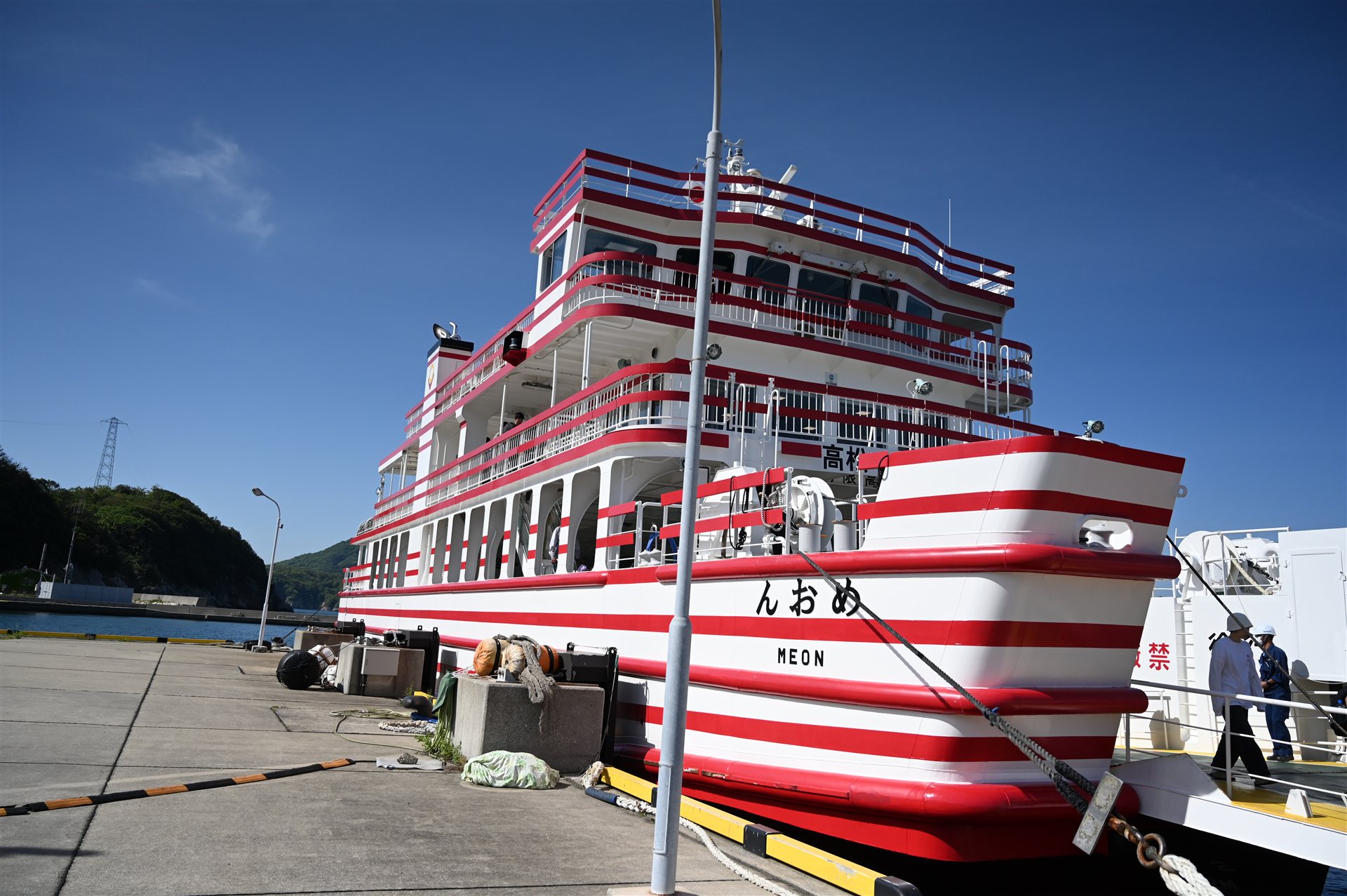
The ferry Meon, easy to spot with its red and white stripes
To reach Ogijima, take the Shiyujima Kaiun ferry Meon from Takamatsu Port. It stops at Megijima on the way, and the timetable shows about 40 minutes from Takamatsu Port to Ogijima.
| Item | Details (checked on October 28, 2026) |
|---|---|
| Number of sailings | 6 per day (both from Takamatsu and from Ogijima) |
| Travel time | About 40 minutes from Takamatsu Port (stops at Megijima) |
| Fare (Takamatsu–Ogi) | Adults: 510 yen one way, 1,020 yen round trip / Elementary school students: 260 yen one way |
| Note | A summer timetable applies from August 1 to August 20 |
Ferries run roughly every two hours. How you spend your time on Ogijima depends on which ferry you take back, so it is a good idea to check the return time first thing after you arrive. Timetables, boarding points, and how to buy tickets are covered in detail in the Complete Access Guide to Megijima and Ogijima (Japanese). Please check the latest times on the official Shiyujima Kaiun website.
How Much Time You Need on Ogijima: “One Ferry Interval” or “Two”
Ogijima is an island you explore on foot, so it is easiest to plan your time around the ferry interval (about two hours).
About 2 Hours (One Ferry Interval): The Port Area and the Hillside Village
This course takes in the Ogijima Koryukan in front of the port, climbs the sloping alleys, and returns after looking down on the port from the top of the village. You can also go a little farther to Toyotamahime Shrine above the village. The path to the shrine and the views are introduced in the Complete Guide to Toyotamahime Shrine (Ogijima).
About 4 Hours (Two Ferry Intervals): The Village Plus Ogijima Lighthouse
If you plan to walk to Ogijima Lighthouse at the northern tip of the island, taking one later ferry gives you time to spare. Tabilog’s Complete Guide to Getting to Ogijima Lighthouse puts the walk from the port to the lighthouse at about 25 minutes. Once you add the round trip, time at the lighthouse, and time walking through the village, two hours can easily fall short.
On either course, places to eat on the island and shop opening days may be limited. It is a good idea to buy drinks at Takamatsu Port before you leave.
Ogijima Koryukan “The Soul of Ogijima” in Front of the Port

The roof is made of letters from many different languages combined together
Right in front of you as you get off the ferry is the Ogijima Koryukan (Ogijima Exchange Center). It is “The Soul of Ogijima,” a work by the Spanish artist Jaume Plensa, created for the Setouchi Triennale in 2010. The white roof is designed from combined letters of eight languages.
The Koryukan is also used as a waiting room and a place to rest, and you can buy ferry tickets here too. Before you set off around the island, it is a good idea to check your return ferry here.
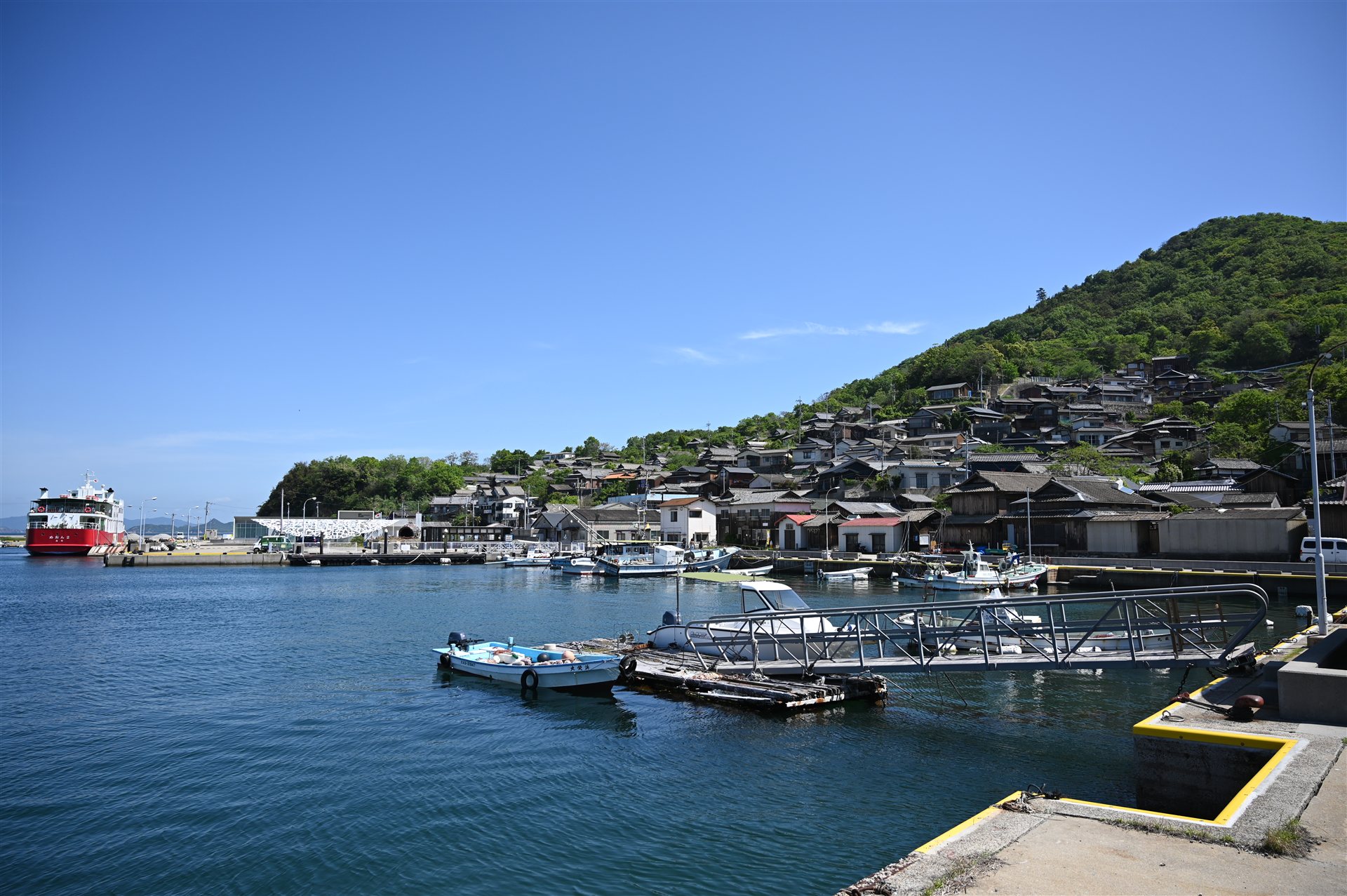
The village seen from the port. Houses are packed tightly up the slope
Looking back from the port, you can see houses built in tiers up the hillside. The sloping alleys you are about to walk run through the narrow gaps among these houses.
Walking the Hillside Alleys (Ogijima Village)
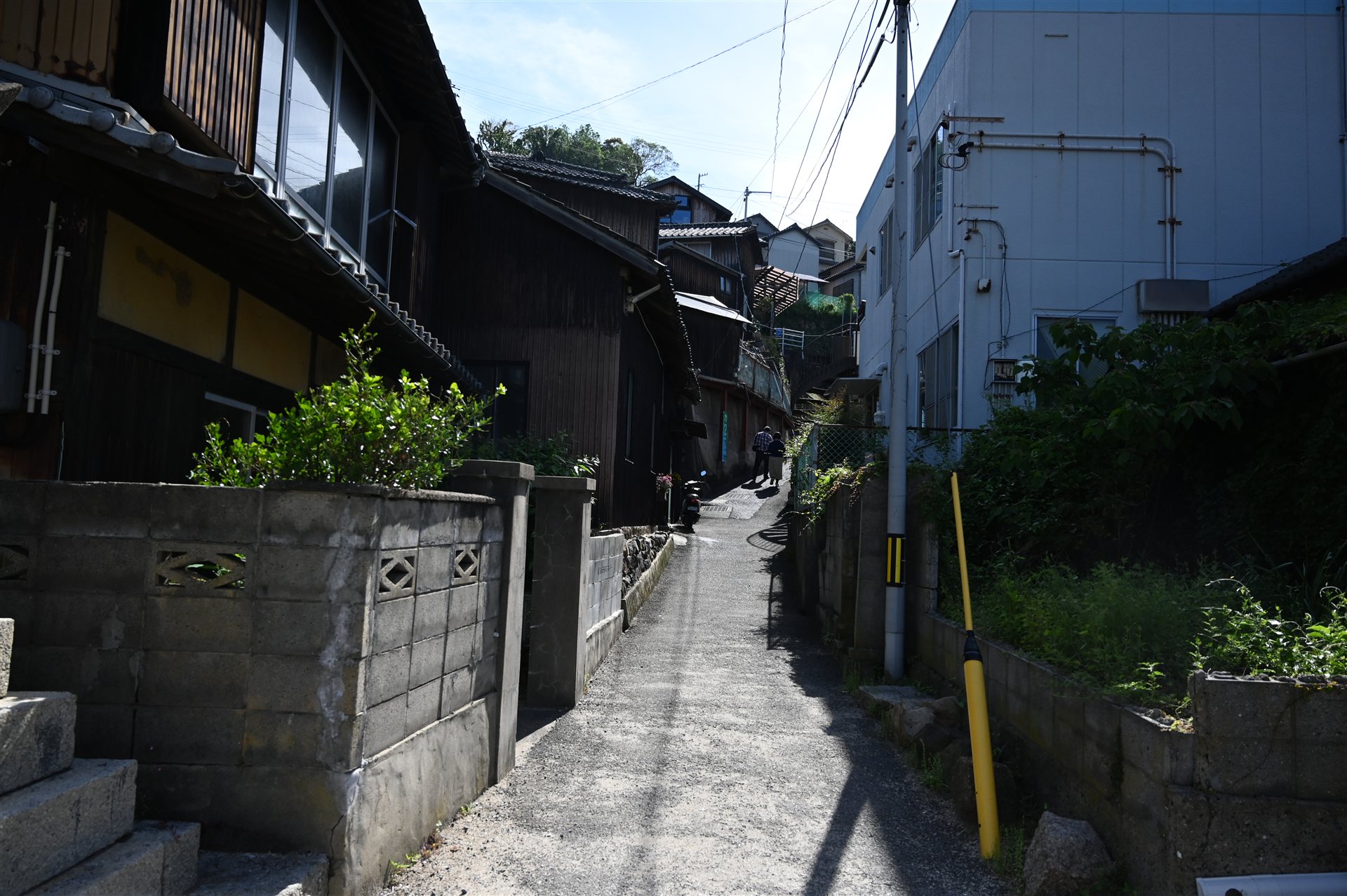
A narrow slope climbing up from near the port. It is too narrow for cars
In Ogijima village, narrow slopes and stone steps spread out like a spider’s web. The paths are just wide enough for two people to pass each other, and in places they turn into stone steps. The official Setouchi Triennale website also advises, “There are many steep slopes, so please wear comfortable shoes.”
If you visit, I recommend wearing athletic shoes or sneakers. Honestly, you are better off not wearing high heels.
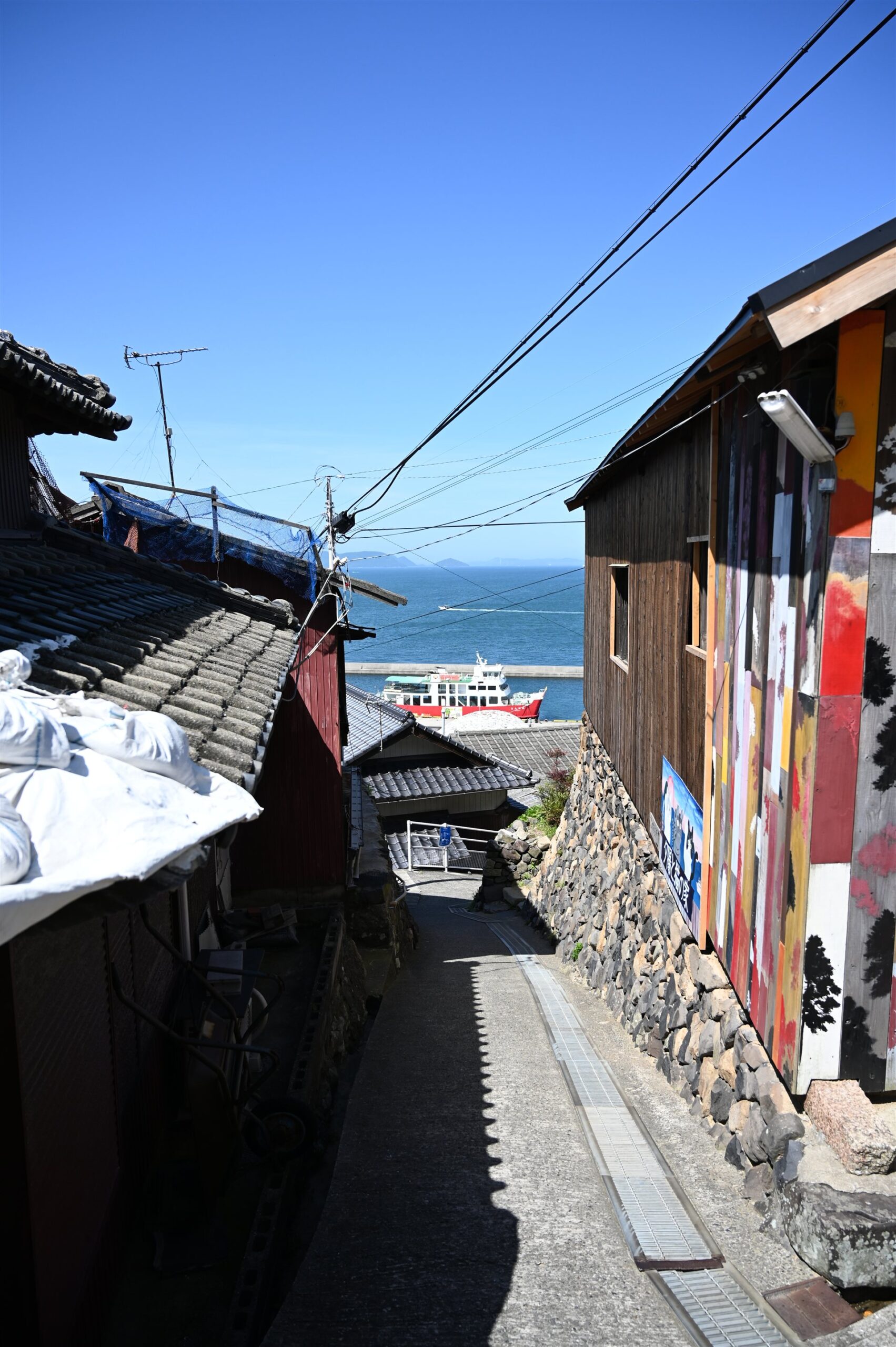
Looking down from the top of the slope, you can see the port and the ferry at the end of the alley
The higher you climb, the more you can glimpse the sea and the port through gaps in the alleys. There are many forks in the paths, so rather than following a map exactly, it is easier not to get lost if you think “walk uphill, then come down toward where you can see the port.”
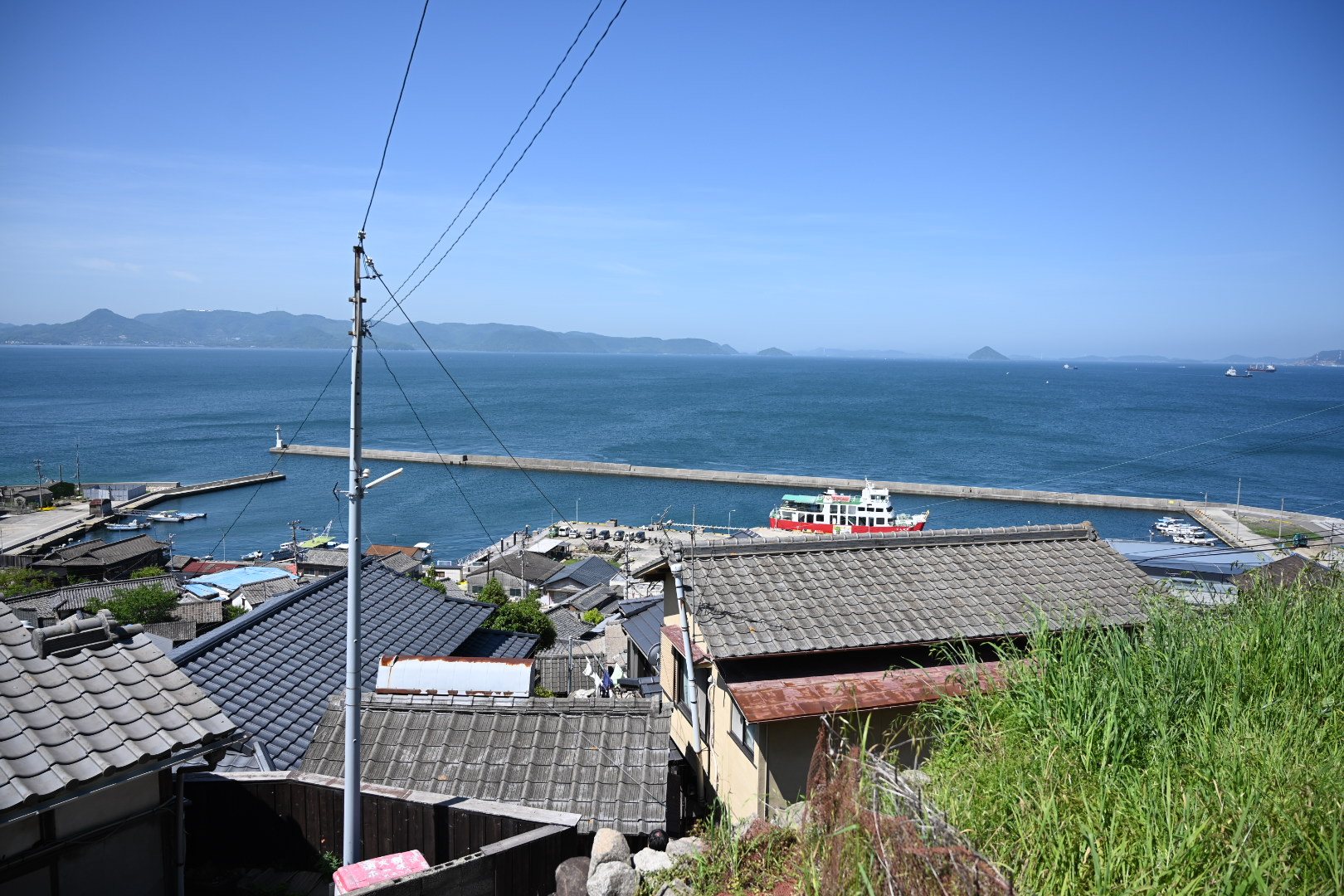
From the upper part of the village. Beyond the tiled roofs lie the breakwater and the Seto Inland Sea
Manners When Walking
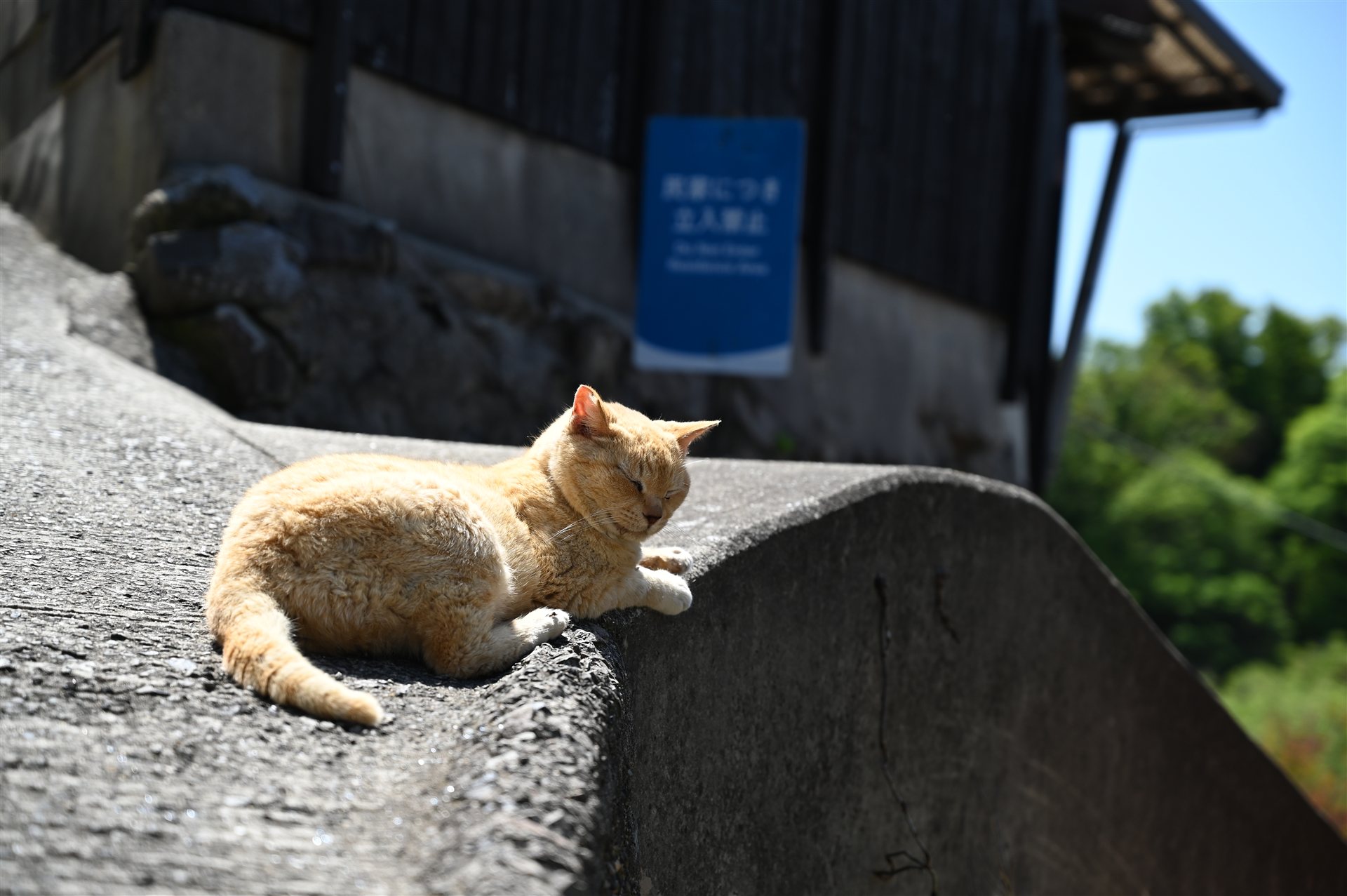
A cat sleeping partway up the slope. The sign behind it says “Private residence, no entry”
The sloping alleys are everyday paths used by the island’s residents. Please be considerate: do not enter private property, do not talk loudly, and when taking photos, do not capture the inside of homes or people. As in the photo above, some places have “No entry” signs in front of private houses.
You may also meet cats in the alleys. The current situation of Ogijima’s cats and the manners for feeding them are covered in Was Ogijima a Cat Island? The Island’s Cats Today and Where to Meet Them.
Walking Along the Coast to Ogijima Lighthouse
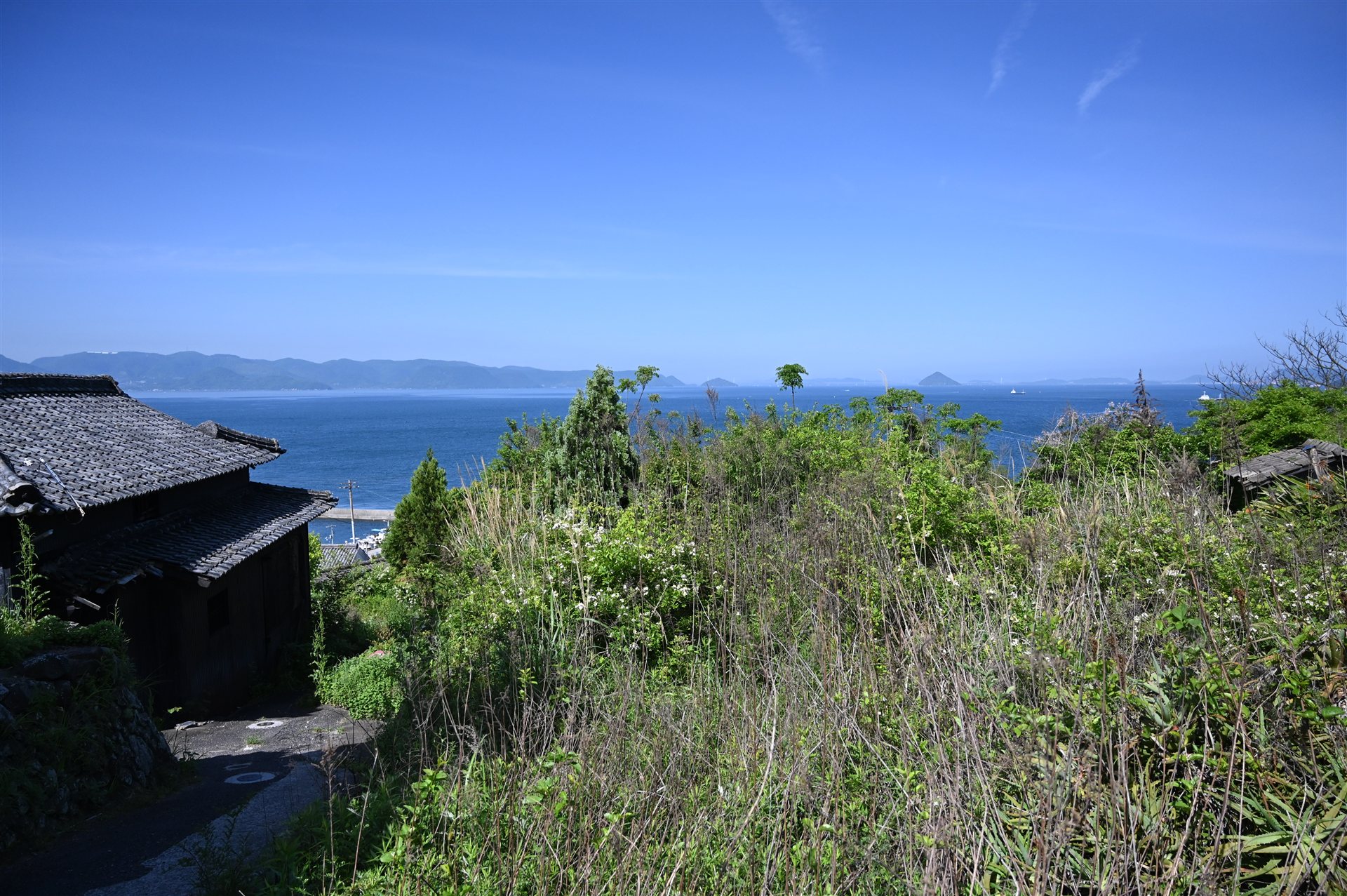
From high ground at the edge of the village. Beyond this point there are fewer houses
Leave the village and head north on the island, and the path becomes a coastal road. The easiest way to the lighthouse is to leave the port heading to the left, and at the fork along the way, go straight on rather than taking the uphill road (for details, see the article on getting to the lighthouse).
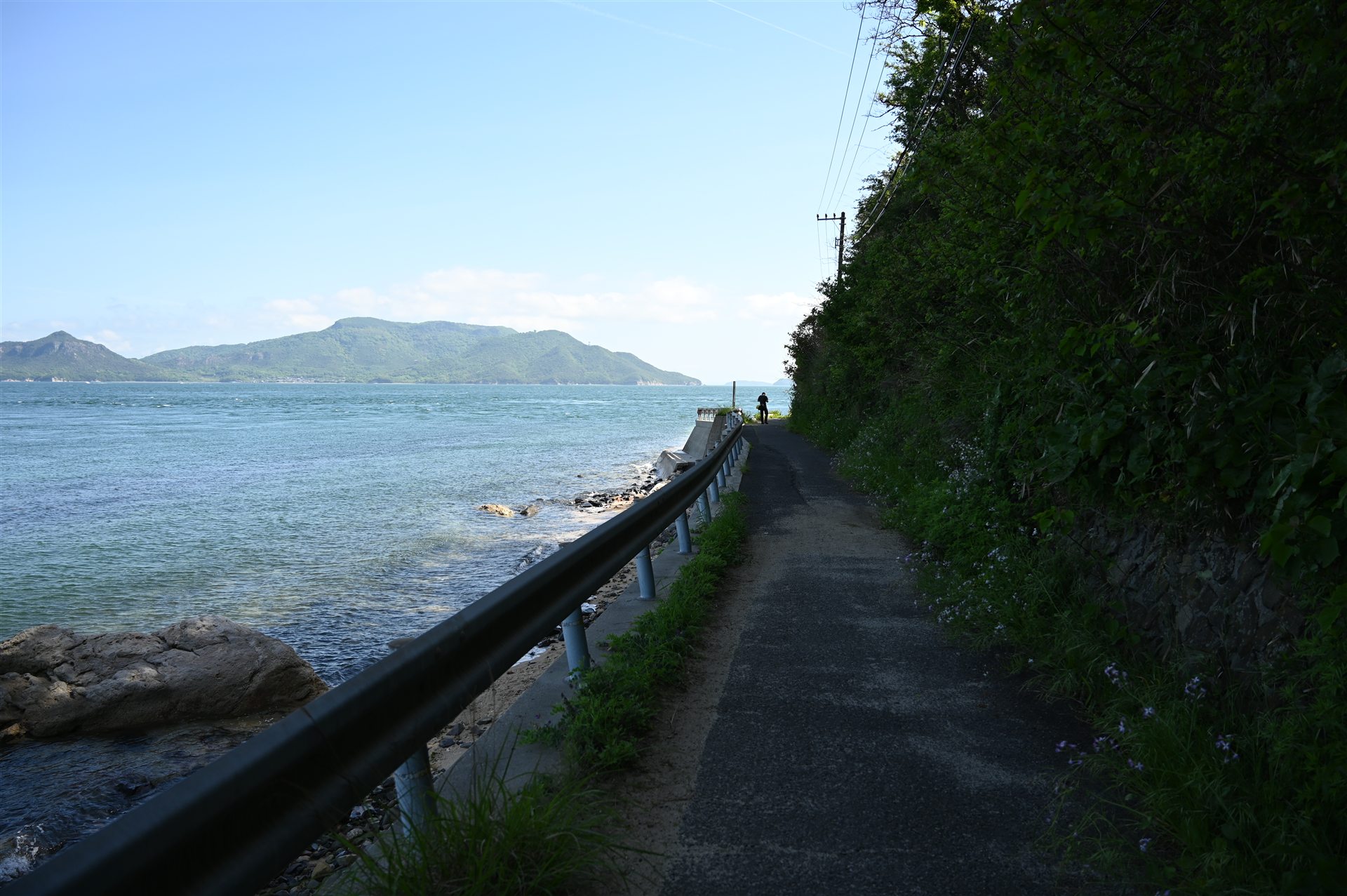
The coastal road toward the lighthouse. The sea is on one side and the mountain slope on the other
The road is paved, but in some places grass grows out from the mountain side. In summer, insect repellent is a good idea. Some stretches have little shade, so bring a hat and something to drink.
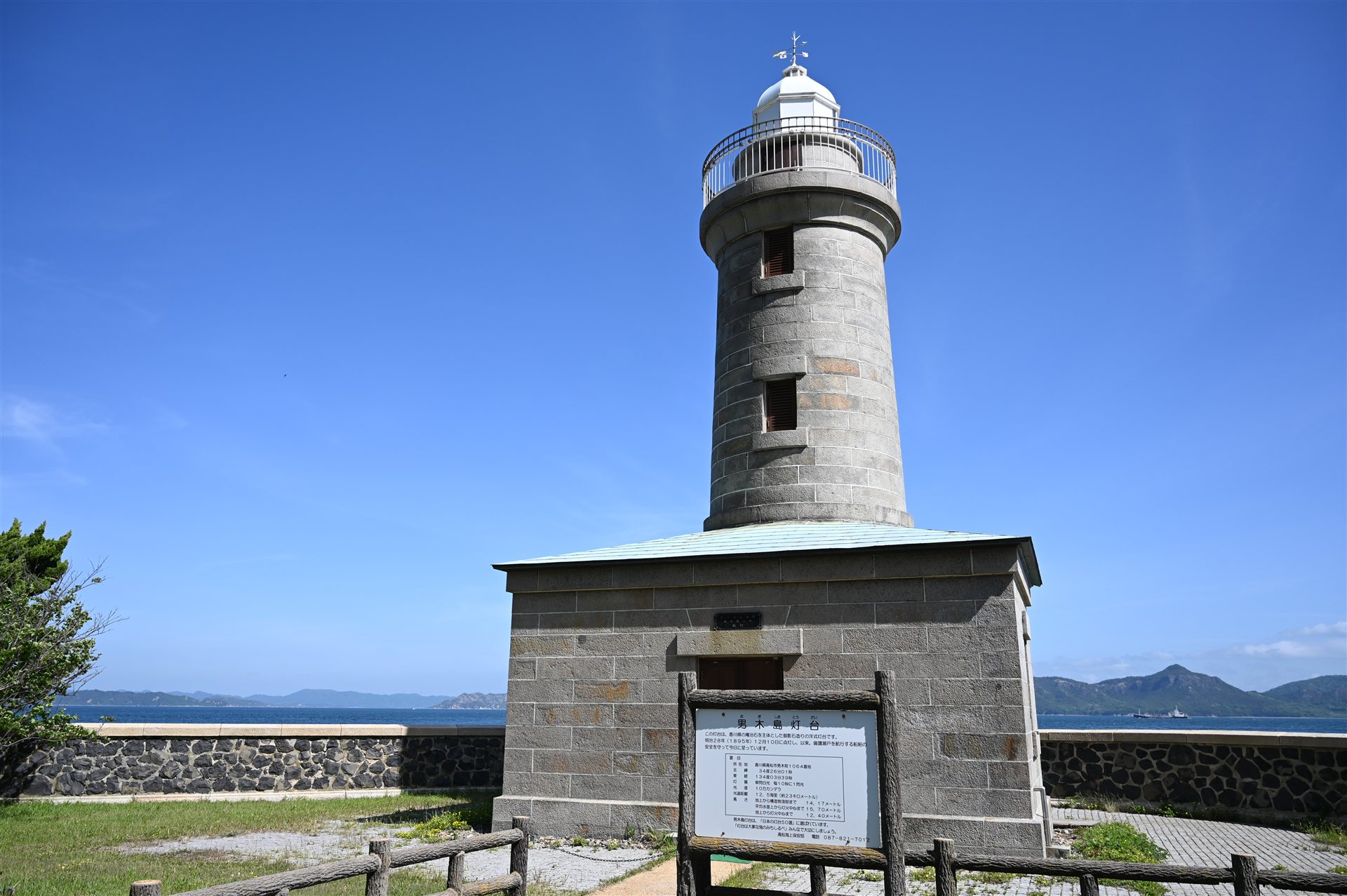
The stone Ogijima Lighthouse. There is an information board in front of it
Ogijima Lighthouse is built of stacked stone. The board in front of it explains that it is made of granite, mainly Aji stone from Kagawa Prefecture, that it was first lit on December 10, 1895 (Meiji 28), and that it has been selected as one of the “50 Best Lighthouses of Japan” (as of my visit in May 2024).
The history of the lighthouse and the nearby Ogijima Lighthouse Museum are introduced in What Is Ogijima Lighthouse? A Full Guide to the Unpainted Lighthouse, a National Important Cultural Property. Information indicates that the museum is open only on limited days.
In reality, it took me more than 20 minutes to reach Ogijima Lighthouse. I visited during the hot season, so I got bitten by mosquitoes along the way. Most lighthouses you see are white, but this one is unpainted, which makes it unusual, and reading the explanations taught me a lot.
Are There Rental Bicycles on Ogijima?
If you search for “Ogijima rental bicycle,” you will find old information saying electric bicycles can be rented. However, as of my research on October 28, 2026, I could not confirm from official information that they can still be rented.
- The official Setouchi Triennale website says that getting around Ogijima is “on foot only” and asks visitors to “please refrain from bringing bicycles or cars.”
- Tabilog’s article on getting to the lighthouse also states that there are no rental bicycles on the island.
- The ferry operator’s fare table includes a fare for carrying bicycles (340 yen one way), but I could not confirm whether bringing a bicycle is allowed outside the Triennale period.
Also, the village is full of stone steps and narrow slopes, and the paths are not suitable for cycling. Even if bicycles could be used, it would only be on parts of the coastal road. I recommend planning your trip with Ogijima in mind as “an island you explore on foot.”
On neighboring Megijima, there is a bus from the port to the Onigashima Great Cave. If you visit Megijima as well, see Megijima Bus Timetable and Fares.
What to Bring and Tips for Walking Ogijima
- Comfortable shoes: Slopes and stone steps continue one after another. Sandals and heels are hard to walk in.
- Drinks and a hat: Parts of the road to the lighthouse have little shade.
- Insect repellent (summer): Grass grows over parts of the road to the lighthouse.
- Your return ferry time: Ferries run roughly every two hours. If you miss one, you will have to wait for the next.
- Consideration for residents: The alleys are everyday paths. Please do not enter private property.
What I felt when I actually visited is that this is an island where you can relax. There are sights to see, but Ogijima is a place where you can sightsee at a leisurely pace, enjoying the scenery and spending time with the cats.
Summary: Explore Ogijima on Foot, Timed to the Ferry Schedule
- Ogijima is about 40 minutes from Takamatsu Port on the ferry Meon. Ferries run roughly every two hours, 6 times a day.
- As a guide to time needed: one ferry interval (about 2 hours) for the port area and the hillside village, and two intervals (about 4 hours) if you go to Ogijima Lighthouse.
- The sloping alleys are everyday paths for residents. Wear comfortable shoes and follow good manners.
- I could not confirm from official sources that rental bicycles are still available. It is safest to plan on exploring on foot.
My travel diary of a road trip around Kagawa is in Off to Kagawa to Eat Udon!! “Where Is Ogijima?” (Japanese). Please give it a read as well.
References (checked on October 28, 2026)
- Access to the Islands | Shiyujima Kaiun (Meon) (Japanese)
- Getting Around the Islands and Venues | Setouchi Triennale (Japanese)
コメント