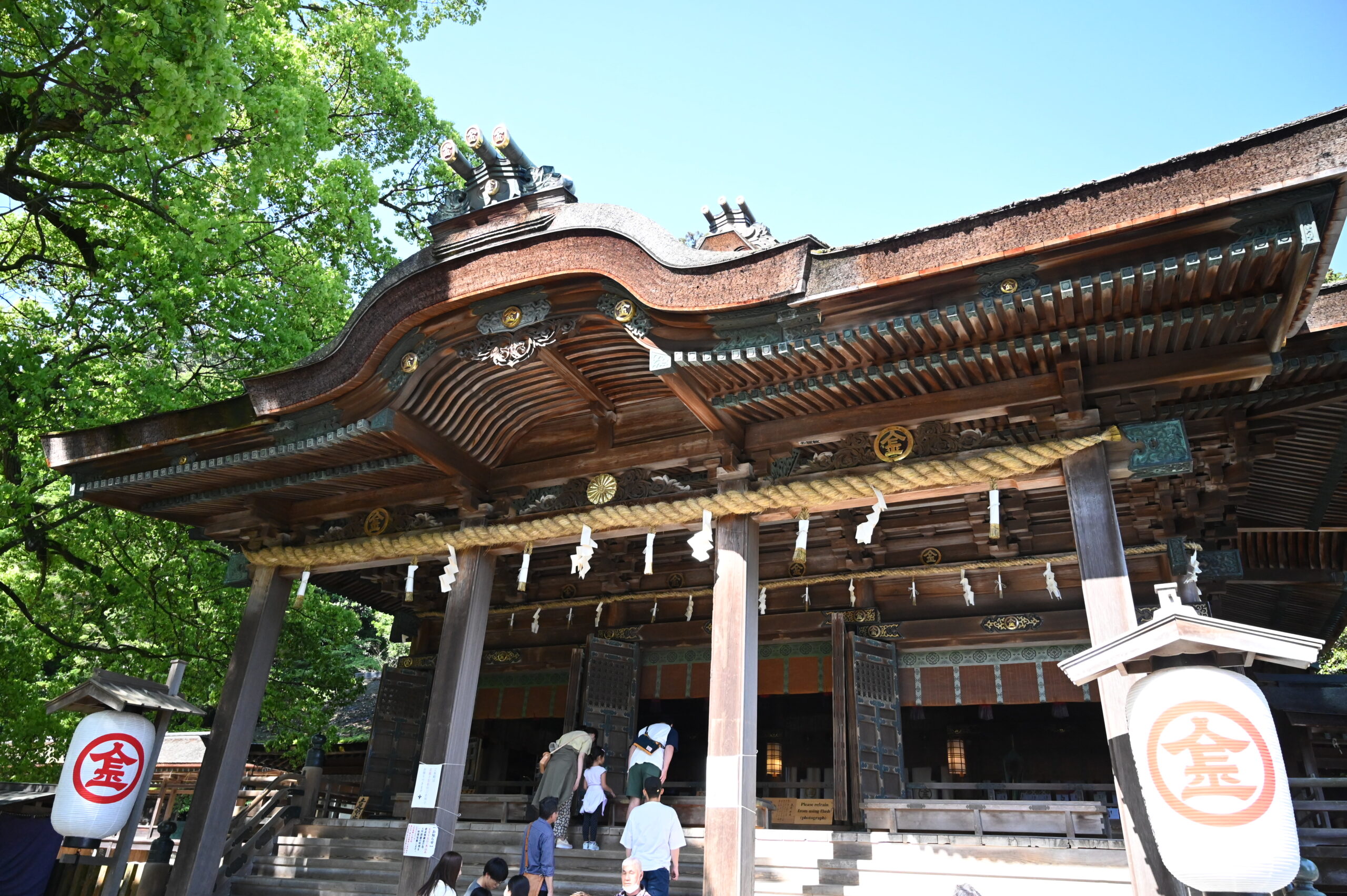
Halfway up Mount Zozu in Kotohira, Kagawa Prefecture, stands Kotohiragu Shrine, affectionately known as “Konpira-san.” Famous for its long stone stairway of 785 steps to the Main Shrine, it is one of the best-known shrines in Shikoku.
In the Edo period, people said you should make a Konpira pilgrimage at least once in your life, and visitors came from all over Japan. Today it is still revered as a guardian of the sea by sailors and fishermen.
This guide explains the history of Kotohiragu — from its founding legends and the era when it was called “Konpira Daigongen” to the separation of Shinto and Buddhism in the Meiji period and the shrine as it is today.
- What Is Kotohiragu Shrine?
- Kotohiragu History Timeline
- Founding Legends: Omononushi and Mount Zozu
- Emperor Sutoku Enshrined (1165)
- The Konpira Daigongen Era: Shinto-Buddhist Syncretism
- Konpira Pilgrimages in the Edo Period
- The 1868 Renaming to Kotohiragu
- Historic Highlights to See Today
- What Was Tough: Be Ready for the Steps
- Kotohiragu Shrine Basic Information
- FAQ
- Summary
What Is Kotohiragu Shrine?
Kotohiragu has long been worshipped as a protector of sea travel. Its main deity is Omononushi-no-Kami, and Emperor Sutoku is enshrined alongside. It is also the head shrine of the many Kotohira and Konpira shrines across Japan.
From the foot of the approach to the Main Shrine there are 785 steps, and 1,368 steps in total to the Inner Shrine (Izutama Shrine). Souvenir shops and inns line the lower approach, so you can enjoy the historic town as you climb.
Kotohiragu History Timeline
| Year | Event |
|---|---|
| Ancient times (legend) | Said to be founded on the site of a temporary palace built by Omononushi (originally “Kotohira Shrine”) |
| 1165 | Emperor Sutoku enshrined alongside the main deity |
| Medieval–early modern | Becomes known as “Konpira Daigongen” under Shinto-Buddhist syncretism |
| 1573 | Yuga, head of Matsuo-ji temple, is said to build a Konpira hall |
| 1647 | Shrine lands of 330 koku granted by the shogun |
| 1753 | Designated a place of imperial prayer |
| 1760 | Receives an imperial decree naming it “the foremost shrine in Japan” |
| 1837 | Asahi-sha hall is built |
| 1868 | Renamed Kotohiragu after the separation of Shinto and Buddhism |
| 2024 | The Main Shrine and 11 other buildings designated Important Cultural Properties |
Founding Legends: Omononushi and Mount Zozu
According to the shrine’s own history, when Mount Kotohira (Zozu) was still an island in the Seto Inland Sea, Omononushi-no-Kami built a temporary palace here, and the deity was later worshipped on that site. The shrine was originally called “Kotohira Shrine.”
Another legend says that En no Ozunu, founder of the Shugendo mountain ascetic tradition, encountered the power of the deity Konpira on this mountain — a sign that the mountain itself has long been sacred.
Emperor Sutoku Enshrined (1165)
At the end of the Heian period, Retired Emperor Sutoku, exiled to Sanuki Province after his defeat in the Hogen Rebellion, is said to have secluded himself at the shrine in prayer. In 1165, the year after his death, he was enshrined alongside the main deity, giving the shrine an even deeper bond with the people of Sanuki.
The Konpira Daigongen Era: Shinto-Buddhist Syncretism
In medieval times, influenced by the belief that Japanese gods were manifestations of Buddhist deities, the shrine came to be called “Konpira Daigongen.” The name “Konpira” is said to trace back to Kumbhira, a Buddhist guardian deity based on the crocodile of the Ganges, worshipped as a protector of water and sea travel.
Matsuo-ji temple managed the mountain, and in 1573 its head priest Yuga is said to have built a Konpira hall. Wars such as Chosokabe Motochika’s invasion of Sanuki brought hard times, but in the Edo period the shrine flourished thanks to Matsudaira Yorishige, the daimyo of Takamatsu.
In 1647 it received 330 koku of land from the shogun, and buildings such as the Great Gate (originally a Nio gate) were added. In 1753 it became a place of imperial prayer, and in 1760 it received an imperial decree naming it the foremost shrine in Japan.
Konpira Pilgrimages in the Edo Period
By the mid-Edo period, as sea travel grew, the Konpira pilgrimage became hugely popular among ordinary people. Pilgrimage groups called “Konpira-ko” formed across Japan, and the trip became as popular as the pilgrimage to Ise.
Unique customs were born from this devotion:
- Konpira dogs (Konpira-inu): When owners could not make the journey, their dogs are said to have traveled in their place, carrying offerings and travel money in a pouch around their necks and guided by fellow travelers. A statue of a Konpira dog stands along the approach.
- Nagashi-daru (floating barrels): Ships at sea would set adrift a barrel of offerings and sake flying a banner reading “Offering to Konpira,” and the fishermen who found it would deliver it to the shrine. The custom continues today.
Both reflect people’s strong wish to reach Konpira-san one way or another.
The 1868 Renaming to Kotohiragu
In 1868, the first year of the Meiji era, the new government’s policy of separating Shinto and Buddhism ended the syncretic worship. The name “Konpira Daigongen” was dropped; the shrine briefly returned to “Kotohira Shrine” and was soon renamed Kotohiragu. Omononushi was confirmed as the main deity, and many Buddhist buildings and statues changed form.
It was later ranked as a national shrine in 1871 and promoted in 1885.
Historic Highlights to See Today
In 2024, the Main Shrine’s worship hall and sanctuary and ten other buildings — twelve in total — were newly designated Important Cultural Properties. Climbing the stone steps, you pass buildings from many different eras.
The Great Gate (Omon)
The main gate along the approach, originally a Nio gate donated by Matsudaira Yorishige in the early Edo period. The shrine precincts begin here.
Asahi-sha (Important Cultural Property)
Built in 1837, this two-story hall stands about 18 meters tall, with a copper-tiled roof and detailed carvings that preserve the atmosphere of the Konpira Daigongen era.
The Main Shrine (Gohongu)
At the 785th step, the Main Shrine’s sanctuary was built in 1876. From the top you can look out over the Sanuki Plain.
Omote-shoin (Important Cultural Property)
Said to date from the 1658–1660 period, this reception hall holds sliding-door paintings by the Edo-period artist Maruyama Okyo, including Cranes and Tigers.
Konpira Dog Statue
A statue of the dogs who made the pilgrimage for their owners — a popular photo spot that brings Edo-period Konpira pilgrimages to life.
What Was Tough: Be Ready for the Steps
The hardest part of my visit was the long stairway to the Main Shrine. There are 785 steps from the foot of the approach, some of them steep, and you will soon be out of breath with tired legs.
So when you visit Kotohiragu, I strongly recommend wearing sports shoes or sneakers. Heels, sandals or stiff leather shoes make the climb and descent much harder and can hurt your feet.
Also, souvenir shops and other facilities along the Konpira-san main approach lend bamboo walking sticks for free. Borrow one before you start climbing — it takes pressure off your legs and is especially helpful on the way down.
Kotohiragu Shrine Basic Information
| Item | Details |
|---|---|
| Name | Kotohiragu Shrine (Konpira-san) |
| Address | 892-1 Kotohira-cho, Nakatado-gun, Kagawa |
| Main deity | Omononushi-no-Kami (with Emperor Sutoku) |
| Stone steps | 785 to the Main Shrine / 1,368 to the Inner Shrine |
| Visiting hours | 6:00–18:00 (varies by season) |
| Omote-shoin | 9:00–17:00 (last entry 16:30) / ¥800 |
| Official website | https://www.konpira.or.jp/ |
Hours and fees may change. Please check the official website before visiting.
How to Get There
- Train: About 10 minutes on foot from JR Kotohira Station or Kotoden Kotohira Station to the main approach
- Car: Use the town parking lot or private parking in the shrine town
FAQ
What deity is enshrined at Kotohiragu?
The main deity is Omononushi-no-Kami, long worshipped by sailors and fishermen across Japan as a guardian of sea travel.
What is the difference between “Konpira” and “Kotohira”?
Until the Edo period the shrine was called “Konpira Daigongen.” After the separation of Shinto and Buddhism in 1868, it was renamed Kotohiragu.
How many steps are there?
785 steps to the Main Shrine and 1,368 in total to the Inner Shrine.
What should I wear?
Sports shoes or sneakers are recommended for the 785 steps. Shops along the main approach lend bamboo walking sticks for free, which make the climb easier.
What is a Konpira dog?
In the Edo period, dogs are said to have made the pilgrimage to Kotohiragu on behalf of owners who could not go, guided by other travelers.
Why is Emperor Sutoku enshrined here?
Exiled to Sanuki, he is said to have prayed at the shrine, and in 1165, the year after his death, he was enshrined alongside the main deity.
Summary
From ancient worship of Omononushi to the enshrinement of Emperor Sutoku, the Konpira Daigongen era, the Edo-period pilgrimage boom and the Meiji renaming, Kotohiragu has changed with the times while drawing the faith of people across Japan.
Climbing the 785 steps one by one, you follow the same path as Edo-period travelers — and their faithful Konpira dogs. Learn the history first, then make your own pilgrimage to Konpira-san.
コメント